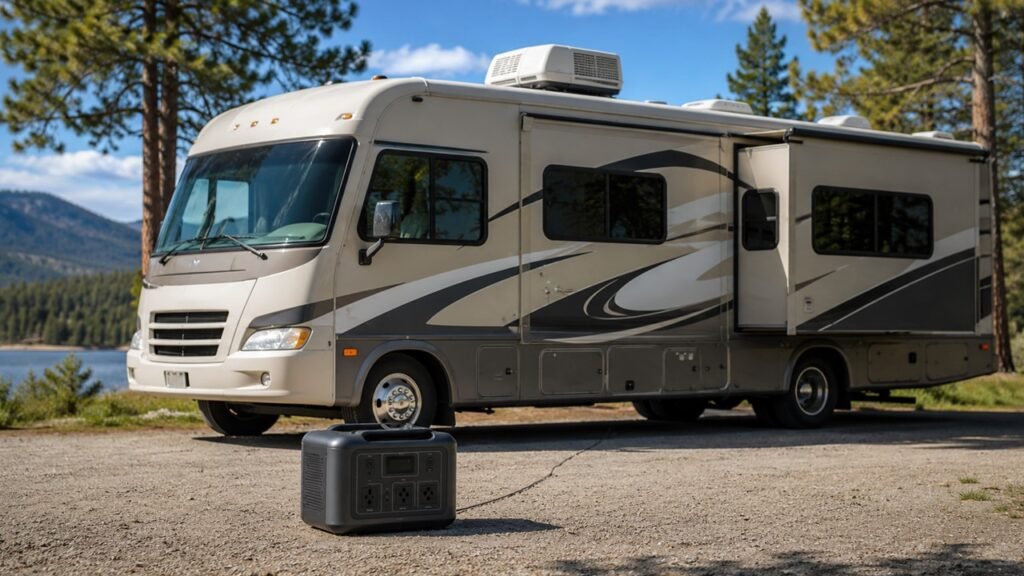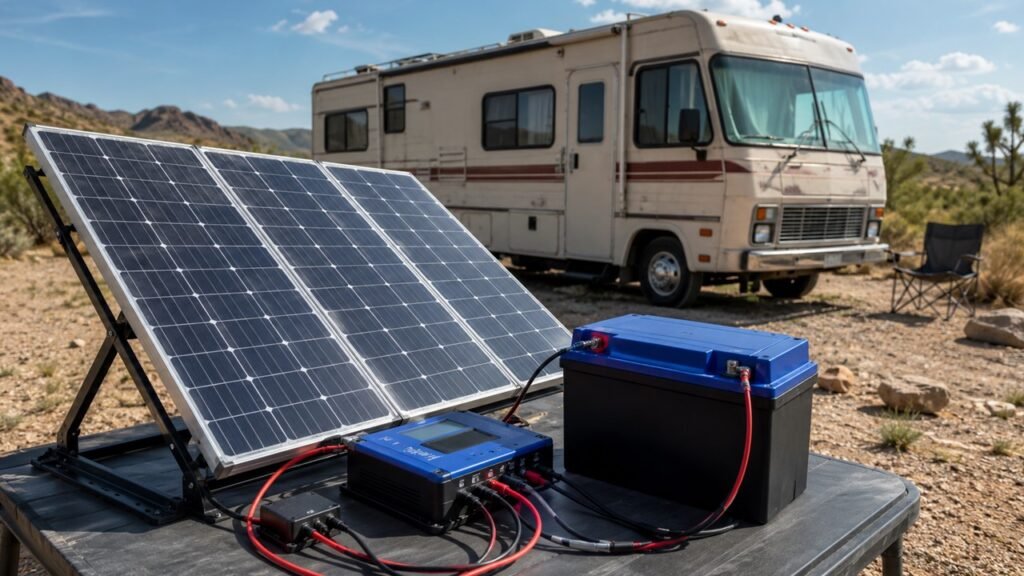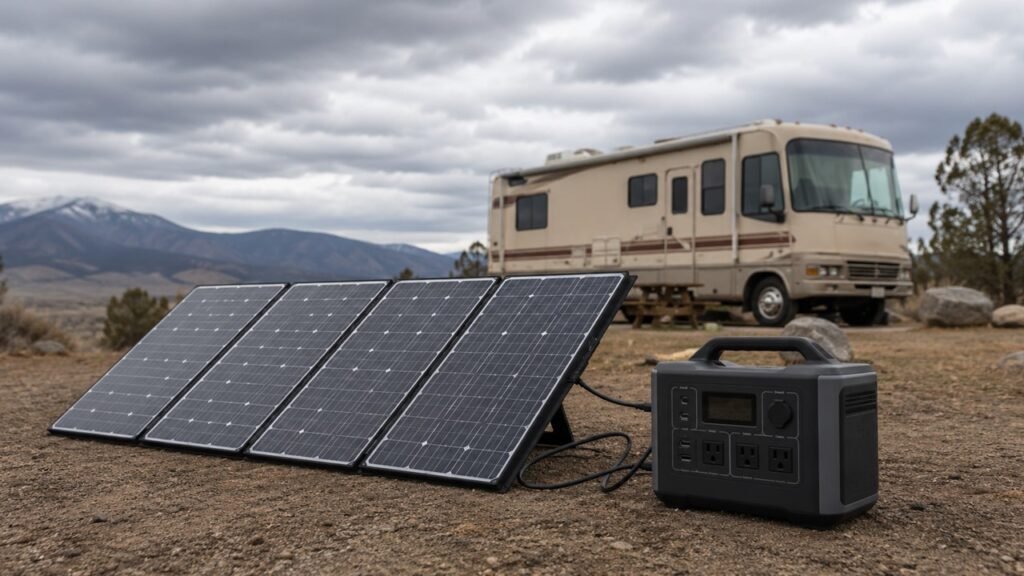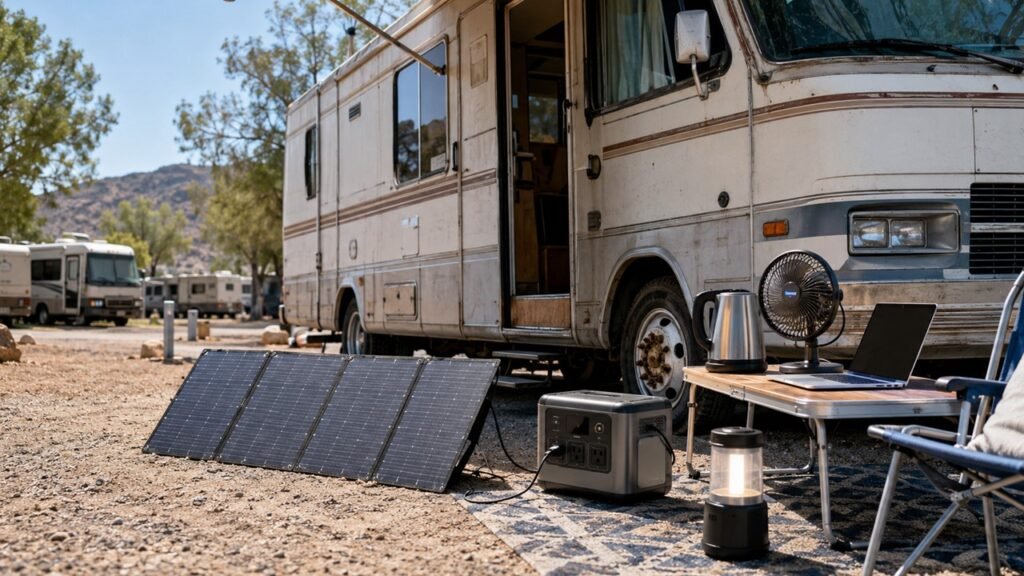
Most RVers need a battery bank between 100Ah and 400Ah at 12V. Weekend campers can often get by with 100Ah to 200Ah, while full-time boondockers may need 400Ah to 800Ah or more of lithium battery capacity.
The right size depends on how much power you use each day, how long you camp without hookups, and what appliances you want to run. A simple weekend setup is very different from a full-time off-grid RV setup with a fridge, inverter, microwave, laptop, and air conditioner.
In this guide, you will learn how RV battery bank size works, how to calculate your daily power needs, and how to choose the right battery setup for real camping, not just numbers on a spec sheet.
Key Takeaways
- Most RVers need 100Ah to 400Ah of battery capacity.
- Weekend campers usually need 100Ah to 200Ah.
- Moderate boondockers often need 200Ah to 400Ah.
- Full-time RVers may need 400Ah to 800Ah or more.
- Lithium batteries provide more usable power than lead-acid batteries.
- Air conditioners, microwaves, and induction cooktops need much larger battery banks.
- The best way to size your RV battery bank is to calculate daily watt-hours first.
- Solar panels recharge your battery bank, but they do not replace battery storage.
What Size Battery Bank Do You Need for an RV?
Most RV owners need a 100Ah to 400Ah RV battery bank for normal camping. A 100Ah battery can handle light use, while a 400Ah lithium bank gives much more comfort for boondocking.
A small battery bank can run LED lights, a water pump, phone chargers, and a roof vent fan. A larger battery bank is better if you run a 12V refrigerator, laptop, CPAP machine, TV, Wi-Fi router, or small inverter loads.
If you want to run high-draw 120V appliances, such as a microwave, coffee maker, induction cooktop, or air conditioner, you need a much larger lithium battery bank, a proper inverter, and reliable recharging from solar, shore power, alternator charging, or a generator.
Quick RV Battery Bank Size Chart
For many RVers, 200Ah to 400Ah of lithium capacity is the sweet spot. It gives enough usable power for common off-grid loads without making the system too expensive or complicated.
| RV Camping Style | Recommended Battery Bank | Best For | Typical Setup |
| Shore power or occasional camping | 100Ah | Lights, water pump, short stops | One 12V 100Ah battery |
| Weekend camping | 100Ah to 200Ah | Basic 12V loads, phones, fans | 1 to 2 batteries |
| Moderate boondocking | 200Ah to 400Ah | Fridge, laptops, CPAP, TV, fans | 2 to 4 100Ah batteries or one large lithium battery |
| Full-time RV living | 400Ah to 800Ah or more | Larger daily loads and inverter use | Large LiFePO4 battery bank |
| Heavy off-grid or AC use | 800Ah or more | Limited AC, microwave, induction cooking | Lithium bank, large inverter, solar, and backup charging |
What Does RV Battery Bank Size Actually Mean?
RV battery bank size means the total energy storage available from all batteries connected together. If your RV has two 100Ah batteries connected as one system, you have a 200Ah battery bank.
Amp-hours, or Ah, measure battery capacity. Watt-hours, or Wh, measure actual stored energy. Watt-hours are often more useful because they show how much work the battery can do.
Most RV house battery systems are 12V systems. A 12V 100Ah battery stores about 1,200Wh of energy before usable capacity limits.
The basic formula is:
Watt-hours = Volts × Amp-hours
So, a 12V 100Ah battery stores:
12V × 100Ah = 1,200Wh
That does not always mean you can safely use all 1,200Wh. Battery type matters. Lead-acid batteries should usually not be discharged as deeply as lithium batteries. That is why usable capacity is more important than the number printed on the battery label.
Usable Capacity: Why Battery Type Changes Everything
Two batteries can both say 100Ah on the label, but they may not give you the same usable power.
A 100Ah flooded lead-acid battery usually gives about 50Ah of practical usable capacity if you want to protect battery life. A 100Ah lithium LiFePO4 battery may give about 80Ah to 100Ah of usable capacity, depending on the battery and manufacturer limits.
That means lithium batteries can deliver more usable power from the same rated capacity.
Lead-Acid vs AGM vs Lithium Usable Capacity
A 200Ah lithium battery bank can often provide similar usable power to a much larger lead-acid setup. This is why many RVers upgrade to lithium when they start boondocking more often.
| Battery Type | Safe Usable Capacity | 100Ah Battery Gives You | Best For |
| Flooded lead-acid | Around 50% | About 50Ah usable | Budget, occasional camping |
| AGM | Around 50% | About 50Ah usable | Maintenance-free weekend use |
| Lithium LiFePO4 | Around 80% to 100% | About 80Ah to 100Ah usable | Boondocking and full-time RVing |
Why Lithium Batteries Need Fewer Amp-Hours
Lithium batteries need fewer rated amp-hours because they allow deeper discharge. They also charge faster, weigh less, and work better with solar charging.
A 200Ah lithium battery bank can give around 160Ah to 200Ah of usable capacity. A 200Ah lead-acid bank may give only about 100Ah of practical usable capacity.
Lithium also makes sense when weight matters. A 100Ah lead-acid battery may weigh around twice as much as a 100Ah lithium battery. That weight difference matters in smaller trailers, vans, and motorhomes with limited cargo capacity.
For occasional campers, AGM or flooded lead-acid can still work. For regular boondocking, lithium is usually the better long-term setup.
How to Calculate the Right RV Battery Bank Size
The best RV battery bank size comes from your daily power use. Guessing often leads to an undersized setup, especially if you run a fridge, fan, laptop, CPAP machine, or inverter.
You do not need to be an electrician to estimate your battery needs. You only need three numbers:
- Appliance wattage
- Hours used per day
- Battery voltage
Step 1: List Everything You Want to Power
Start by listing the devices you use in a normal camping day. Include both small 12V loads and larger 120V loads if you use an inverter.
Common RV power loads include:
- LED lights
- Water pump
- Roof vent fan
- Furnace blower
- 12V refrigerator
- Phone chargers
- Laptop
- TV
- CPAP machine
- Wi-Fi router
- Microwave
- Coffee maker
- Inverter standby draw
Small loads matter because they run for many hours. A fan, fridge, propane detector, router, and phone charger may not seem like much alone, but together they can drain a small battery bank overnight.
Step 2: Estimate Daily Watt-Hours
Use this formula:
Watts × Hours Used = Watt-hours per day
If a 60W laptop runs for 3 hours, it uses:
60W × 3 hours = 180Wh
Here is a simple example for a moderate RV day.
| Appliance | Average Watts | Hours Per Day | Daily Watt-Hours |
| LED lights | 20W | 5 | 100Wh |
| Vent fan | 30W | 4 | 120Wh |
| Water pump | 50W | 0.5 | 25Wh |
| 12V fridge | 60W | 8 | 480Wh |
| Laptop | 60W | 3 | 180Wh |
| Phone charging | 15W | 2 | 30Wh |
| TV | 80W | 2 | 160Wh |
| Total | 1,095Wh |
In this example, the RV uses about 1,095Wh per day. That is a realistic daily load for a camper running basic comforts and a 12V fridge.
Step 3: Convert Watt-Hours to Amp-Hours
Most RV batteries are rated in amp-hours, so you need to convert watt-hours back to amp-hours.
Use this formula:
Amp-hours = Watt-hours ÷ Battery voltage
For the example above:
1,095Wh ÷ 12V = about 91Ah per day
That means this RV uses about 91Ah per day from a 12V battery bank before adjusting for usable capacity.
Step 4: Adjust for Usable Capacity
Now you need to adjust for battery type.
If your RV uses about 91Ah per day, a 100Ah lead-acid battery is not enough because you should not use the full 100Ah. In real use, you would want about 180Ah to 200Ah of lead-acid capacity for one day.
With lithium, the same 91Ah daily load may need about 100Ah to 120Ah of rated capacity for one day, depending on how deeply you discharge the battery.
For example:
- 91Ah per day with lithium means about 100Ah to 120Ah for one day.
- 91Ah per day with lead-acid means about 180Ah to 200Ah for one day.
This is why lithium battery banks often look smaller on paper but perform better in real RV use.
Step 5: Multiply by Days Off-Grid
Your battery bank should match how long you camp without recharging. A one-night setup is very different from a three-day boondocking setup.
If you use 100Ah per day and want two days off-grid, you need enough usable capacity for 200Ah. With lithium, that may mean around 240Ah of rated capacity. With lead-acid, that may mean around 400Ah of rated capacity.
| Daily Use | 1 Day Off-Grid | 2 Days Off-Grid | 3 Days Off-Grid |
| 50Ah/day | 100Ah lead-acid / 60Ah lithium | 200Ah lead-acid / 120Ah lithium | 300Ah lead-acid / 180Ah lithium |
| 100Ah/day | 200Ah lead-acid / 120Ah lithium | 400Ah lead-acid / 240Ah lithium | 600Ah lead-acid / 360Ah lithium |
| 150Ah/day | 300Ah lead-acid / 180Ah lithium | 600Ah lead-acid / 360Ah lithium | 900Ah lead-acid / 540Ah lithium |
These numbers are estimates. Real use changes with weather, fridge cycling, furnace use, inverter losses, and how often you recharge.
Recommended RV Battery Bank Size by Camping Style
Your camping style is the easiest way to choose a starting battery size. A weekend camper does not need the same setup as someone living off-grid for weeks.
Weekend Campers: 100Ah to 200Ah
Weekend campers usually need 100Ah to 200Ah of battery capacity. This size works well for short trips, overnight stops, and basic 12V loads.
A 100Ah lithium battery can often handle lights, water pump use, phone charging, and roof vent fan use for a short trip. If you use a furnace blower at night or camp in cold weather, 200Ah is safer.
This setup is good for:
- LED lights
- Water pump
- Phone charging
- Roof vent fan
- Occasional furnace blower use
If you usually camp with hookups, one 100Ah battery may be enough. If you want more freedom for dry camping, 200Ah gives a better buffer.
Moderate Boondockers: 200Ah to 400Ah
Moderate boondockers usually need 200Ah to 400Ah of battery capacity. This is the best range for many RV owners because it supports common comforts without becoming a huge power system.
A 200Ah lithium bank can work for light boondocking. A 400Ah lithium bank is better if you use a 12V fridge, laptop, TV, fan, and small inverter loads every day.
This size is good for RVers who run:
- 12V fridge
- Laptops
- CPAP machine
- Fans
- TV
- Wi-Fi router
- Small inverter loads
If you boondock for 2 to 4 days at a time, start in this range. Pairing a 200Ah to 400Ah lithium bank with 400W to 800W of solar can make off-grid camping much easier.
Full-Time RVers: 400Ah to 800Ah or More
Full-time RVers usually need 400Ah to 800Ah or more of lithium battery capacity. Furthermore, full-time power use is different because the battery bank supports daily living, not just a weekend trip.
You may use laptops, routers, fans, lights, fridge power, water pump power, and inverter loads every day. You also need a buffer for cloudy days, colder nights, and unexpected power use.
Full-time RVers often need more capacity for:
- Remote work
- Residential-style comfort
- More fridge use
- More inverter use
- Longer off-grid stays
- Cloudy weather backup
A 400Ah bank may work if you manage power carefully and have solar. A 600Ah to 800Ah lithium bank gives more flexibility for long off-grid stays.
Heavy Power Users: 800Ah or More
Heavy power users may need 800Ah or more of lithium capacity. This applies if you want to run large 120V appliances from batteries.
Large appliances can drain batteries quickly because they pull a lot of watts in a short time. A microwave, coffee maker, hair dryer, or induction cooktop may use more power in 10 minutes than lights use all evening.
Heavy power users often run:
- Microwave
- Induction cooktop
- Coffee maker
- Hair dryer
- Air conditioner for limited periods
- Larger inverter loads
This type of setup needs more than batteries. You also need a properly sized inverter, correct wiring, fuses, charging sources, and a battery monitor.
Recommended Battery Bank Size by RV Type
RV type affects battery bank size because larger rigs usually have more appliances, more lighting, larger fridges, and more comfort loads.
A pop-up camper may only need a small battery. A fifth wheel or Class A motorhome may need a large lithium bank, especially if you camp away from hookups.
| RV Type | Recommended Battery Bank | Notes |
| Pop-up camper | 100Ah | Good for lights, fan, and water pump |
| Small travel trailer | 100Ah to 200Ah | Enough for weekend trips |
| Large travel trailer | 200Ah to 400Ah | Better for fridge, fans, and longer stays |
| Class B camper van | 200Ah to 400Ah | Common for compact off-grid setups |
| Class C motorhome | 200Ah to 400Ah | Works well with solar or generator charging |
| Fifth wheel | 400Ah to 800Ah | Better for larger loads and more living space |
| Class A motorhome | 400Ah to 800Ah or more | Often needs a larger lithium bank |
These are practical starting points, not fixed rules. A small camper with heavy power use may need more battery than a large RV that stays on shore power.
How Long Will an RV Battery Bank Last?
An RV battery bank can last a few hours or several days. Runtime depends on battery capacity, usable capacity, appliance loads, inverter losses, weather, and recharging.
A 100Ah lithium battery may last 1 to 2 days with light use. The same battery may last less than a day if you run a fridge, fans, laptop, and TV. It may last only a few hours with heavy inverter loads.
RV Battery Bank Runtime Chart
Light use means lights, water pump, phone charging, and occasional fan use. Moderate use includes a 12V fridge, laptop, TV, fans, and a few small electronics. Heavy use includes inverter appliances, cooking appliances, or limited air conditioner use.
Air conditioning changes the math fast. A rooftop RV air conditioner can use thousands of watt-hours in a short period, so even a large battery bank can drain quickly.
| Battery Bank Size | Light Use | Moderate Use | Heavy Use |
| 100Ah lithium | 1 to 2 days | Less than 1 day | A few hours |
| 200Ah lithium | 2 to 3 days | 1 to 2 days | Less than 1 day |
| 400Ah lithium | 4 to 6 days | 2 to 3 days | 1 day or less |
| 600Ah lithium | 6+ days | 3 to 5 days | 1 to 2 days |
| 800Ah lithium | 1 week+ | 4 to 6 days | 2+ days depending on loads |
Can an RV Battery Bank Run an Air Conditioner?
Yes, an RV battery bank can run an air conditioner, but only with the right setup. You need a large lithium battery bank, a powerful pure sine wave inverter, proper wiring, correct fusing, and often a soft start device.
Most rooftop RV air conditioners are not practical on small 100Ah to 400Ah battery banks. They draw too much power and may have a high startup surge.
A 13,500 BTU RV air conditioner may use roughly 1,200W to 1,800W while running. A 15,000 BTU unit may use even more. Startup surge can be much higher than running wattage.
For example, if an air conditioner uses 1,500W and runs for 3 hours, it uses:
1,500W × 3 hours = 4,500Wh
That is more than the total stored energy in many small RV battery banks.
A soft start device can reduce startup strain, but it does not make the air conditioner low-power. It mainly helps the compressor start more smoothly and reduces the surge load on the inverter or generator.
For serious off-grid air conditioning, many RVers still rely on a generator, shore power, or a very large lithium and solar system.
How Much Solar Do You Need With Your RV Battery Bank?
Solar panels recharge your battery bank during the day. The battery bank stores the power for nighttime, cloudy weather, and high-use periods.
A common RV solar starting point is 100W to 200W of solar for light use, 400W to 800W for moderate boondocking, and 1,000W or more for heavy off-grid camping.
Solar and Battery Bank Matching Chart
Solar output depends on sun hours, shade, panel angle, roof space, charge controller efficiency, and weather. A 400W solar array will not produce 400W all day. Real output changes throughout the day.
| Battery Bank Size | Suggested Solar Size | Best For |
| 100Ah | 100W to 200W | Light weekend use |
| 200Ah | 200W to 400W | Short boondocking trips |
| 400Ah | 400W to 800W | Moderate off-grid camping |
| 600Ah | 600W to 1,000W | Full-time RV living |
| 800Ah or more | 1,000W or more | Heavy boondocking |
Why Solar Does Not Replace Battery Capacity
Solar does not replace battery capacity because solar only produces power when sunlight is available. Your RV still needs batteries for night use, cloudy days, shaded campsites, and early morning loads.
A balanced system needs both storage and charging. If your battery bank is too small, you may run out of power before morning. If your solar array is too small, your batteries may not fully recharge during the day.
For regular boondocking, a good setup often combines lithium batteries, rooftop solar, a battery monitor, and a backup charging source.
12V vs 24V vs 48V RV Battery Banks
Most traditional RVs use 12V battery systems. This is the simplest setup because many RV lights, pumps, fans, control boards, and appliances are designed for 12V DC power.
Larger off-grid RV systems may use 24V or 48V battery banks. Higher-voltage systems can be more efficient for large inverters because they reduce current flow. Lower current can mean smaller cables and less voltage drop, depending on the design.
However, 24V and 48V systems are more complex. You may need DC converters to power standard 12V RV loads.
RV Battery Voltage Comparison
For most RV owners, a 12V lithium battery bank is the easiest choice. For large inverter systems, a qualified installer may recommend 24V or 48V.
| Battery Bank Voltage | Best For | Pros | Cons |
| 12V | Most RVs and travel trailers | Simple, common, compatible | Higher current for big loads |
| 24V | Larger inverter systems | More efficient for medium loads | May need DC converters |
| 48V | Large off-grid RV systems | Efficient for high-power loads | More complex and expensive |
How Many Batteries Do You Need for an RV Battery Bank?
The number of batteries you need depends on the amp-hour rating of each battery.
If you want a 200Ah battery bank, you can use two 100Ah batteries or one 200Ah battery. If you want a 400Ah battery bank, you can use four 100Ah batteries, two 200Ah batteries, or one large 400Ah battery if your space allows it.
Examples:
- 100Ah battery bank = one 100Ah battery
- 200Ah battery bank = two 100Ah batteries or one 200Ah battery
- 400Ah battery bank = four 100Ah batteries, two 200Ah batteries, or one 400Ah battery
- 800Ah battery bank = four 200Ah batteries or two 400Ah batteries
Fewer large batteries can save space and simplify wiring. Smaller batteries can be easier to lift, move, and replace. The best option depends on your compartment size, weight limits, budget, and future expansion plans.
Do not mix battery types, sizes, ages, or chemistries unless the manufacturer specifically allows it. Mixed batteries can charge unevenly and reduce system performance.
Common Mistakes When Sizing an RV Battery Bank
Many RV battery problems come from undersizing the system. A battery bank that looks good on paper may fail in real camping if it does not match daily use.
Common mistakes include:
- Choosing battery size based only on price
- Ignoring usable capacity
- Forgetting inverter losses
- Trying to run air conditioning from a small battery bank
- Undersizing the battery bank for cloudy weather
- Not matching solar size to battery capacity
- Mixing old and new batteries
- Mixing lithium and lead-acid batteries
- Forgetting space, weight, and ventilation
- Buying batteries before calculating daily power use
- Forgetting parasitic loads like detectors, clocks, routers, and control boards
- Not using a battery monitor
A battery monitor is especially useful because it shows real power use. After a few trips, you can see how much energy your RV actually uses instead of guessing.
RV Battery Bank Safety Tips
RV battery banks store a lot of energy. A poor installation can cause heat, melted cables, charging problems, or electrical failure. Larger lithium and inverter systems need careful planning.
Follow these safety tips:
- Use the correct fuse size.
- Use properly sized cables.
- Install batteries in a secure location.
- Follow the battery manufacturer’s charging limits.
- Use a lithium-compatible charger for LiFePO4 batteries.
- Do not mix battery types or battery ages.
- Keep lead-acid batteries properly ventilated.
- Protect cables from sharp edges and heat.
- Use a battery monitor to track real usage.
- Use a pure sine wave inverter for sensitive electronics.
- Hire a qualified RV electrician for large inverter systems.
Lead-acid batteries can release gas during charging, so ventilation matters. Lithium batteries do not need watering like flooded lead-acid batteries, but they still need correct charging settings, temperature protection, and secure installation.
For high-power systems, do not guess on cable and fuse size. The inverter manual and battery manual should guide the installation. When in doubt, use a qualified RV electrical installer.
Final Verdict
Most RV owners should start with 200Ah to 400Ah of lithium battery capacity if they want comfortable off-grid camping. That range can handle common RV loads like lights, fans, water pump use, a 12V fridge, laptops, phone charging, and some small inverter use.
Weekend campers can often use 100Ah to 200Ah, especially if they stay at campgrounds or only dry camp for one night. Full-time RVers should consider 400Ah to 800Ah or more, depending on appliances, solar, work needs, and time spent away from hookups.
If you mostly use shore power, keep the setup simple. If you boondock often, size your battery bank around your daily watt-hour use, add a buffer, and pair it with enough solar or backup charging.
Related FAQs
Is 100Ah enough for an RV?
Yes, 100Ah can be enough for weekend camping and basic loads like LED lights, a water pump, phone charging, and a roof vent fan. It is usually not enough for extended boondocking or running larger appliances through an inverter.
Is 200Ah enough for boondocking?
Yes, 200Ah is often enough for light to moderate boondocking, especially with lithium batteries and solar charging. For longer stays or higher power use, a 300Ah to 400Ah battery bank is a better choice.
How many amp-hours do I need for my RV?
Most RV owners need between 100Ah and 400Ah of battery capacity, depending on daily power consumption and camping style. Calculate your daily energy use first to determine the right battery bank size.
How long will a 100Ah lithium battery run an RV?
A 100Ah lithium battery can typically power basic RV loads for about 1 to 2 days with light usage. Running a refrigerator, fans, laptops, or other electronics regularly will reduce runtime significantly.
What size battery bank do I need to run an RV refrigerator?
Most 12V RV refrigerators use around 30Ah to 60Ah per day, depending on size, temperature, and compressor cycling. A 200Ah lithium battery bank is usually a good starting point if you also power other common RV devices.
Can I run an RV microwave from batteries?
Yes, but you need a properly sized inverter and enough battery capacity to handle the microwave’s power draw. Even short microwave use can drain a small battery bank quickly.
What size battery bank do I need for full-time RV living?
Most full-time RVers should consider 400Ah to 800Ah or more of lithium battery capacity. The ideal size depends on your appliances, work setup, solar system, and time spent off-grid.
Do I need lithium batteries for my RV?
No, lithium batteries are not required, and many RVs still use AGM or flooded lead-acid batteries. However, lithium batteries provide more usable capacity, faster charging, lower weight, and a longer lifespan.
Can I mix lithium and lead-acid batteries in an RV?
No, mixing lithium and lead-acid batteries is generally not recommended. Different charging and discharge characteristics can cause poor performance and shorten battery life.
What is the best battery bank size for RV solar?
For many RV solar setups, a 200Ah to 400Ah battery bank offers a good balance of storage and cost. Full-time boondockers or heavy power users may need 600Ah or more of lithium capacity.

Daniel Brooks writes about RV living, gear, and travel planning with a focus on everyday usability. His guides break down complex topics into simple advice for real RV owners. He reviews products with long-term use in mind, not marketing hype.