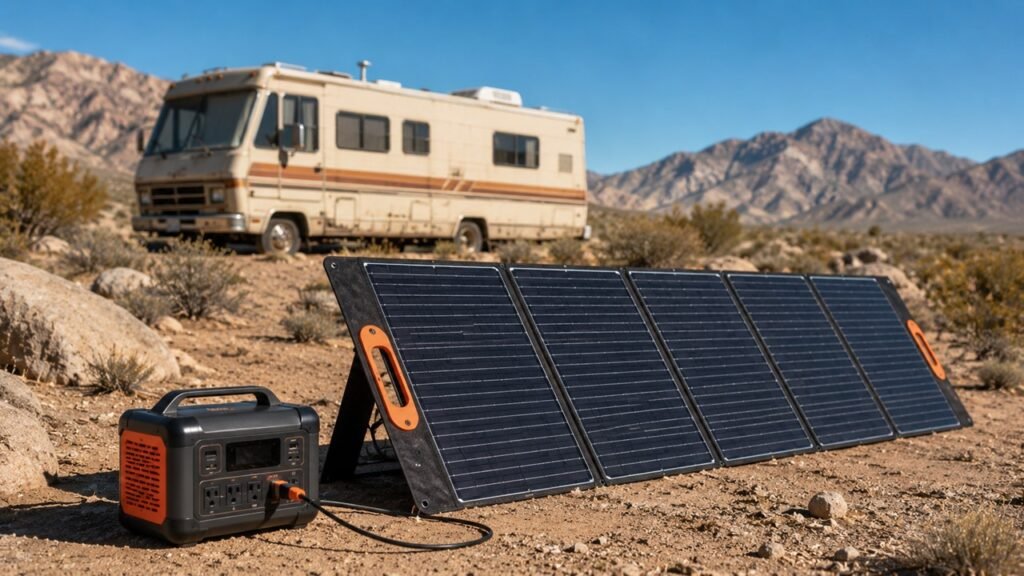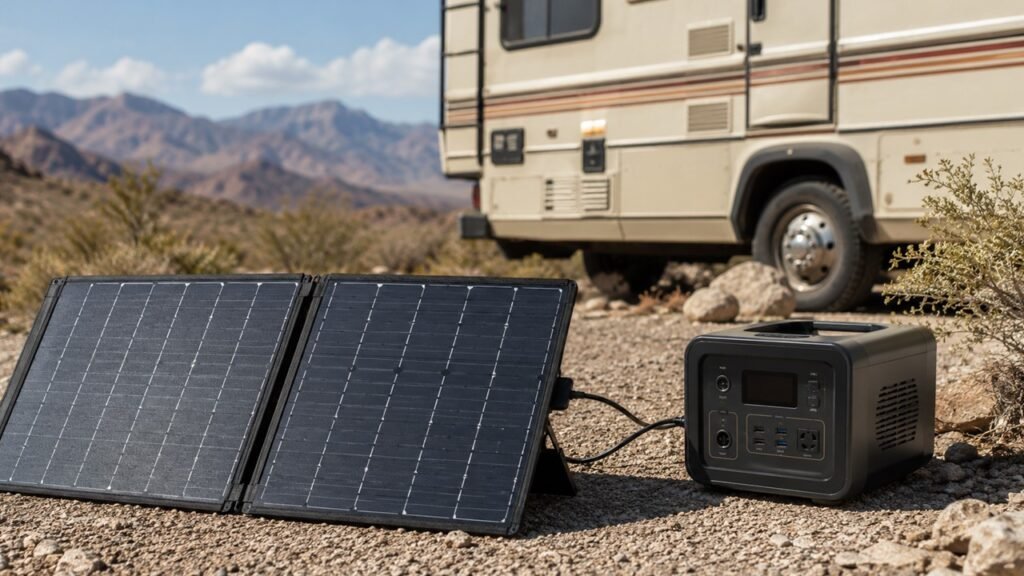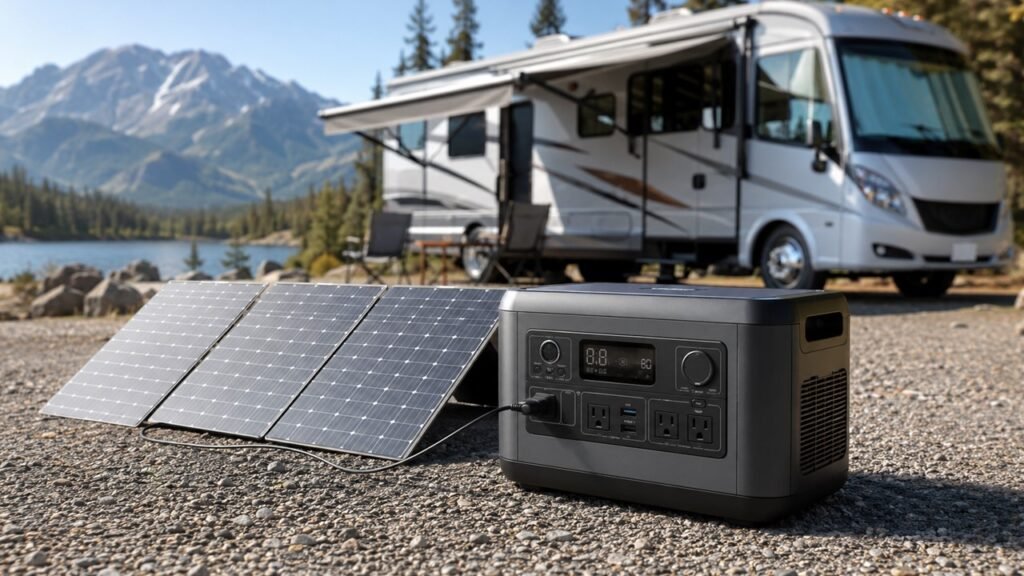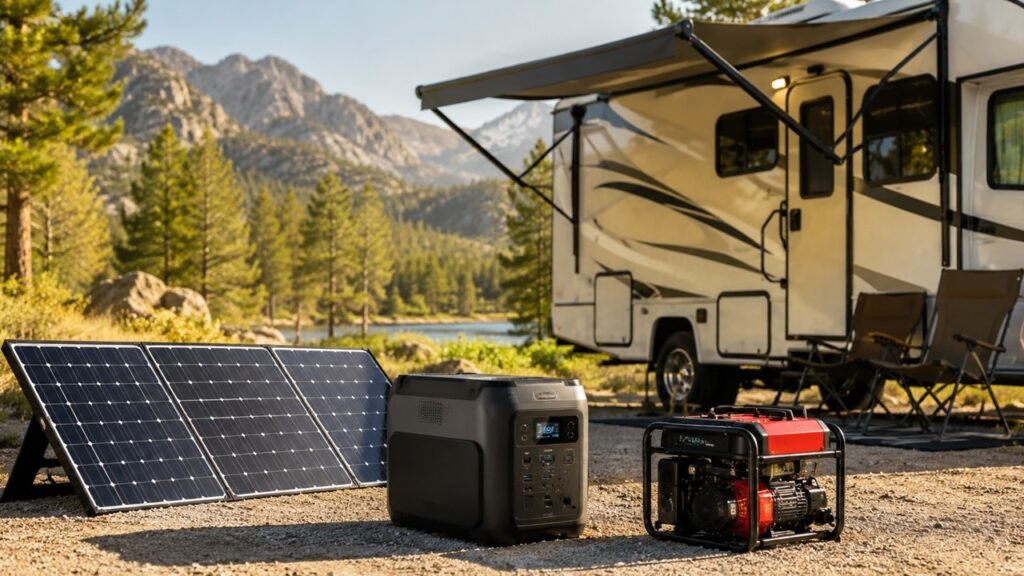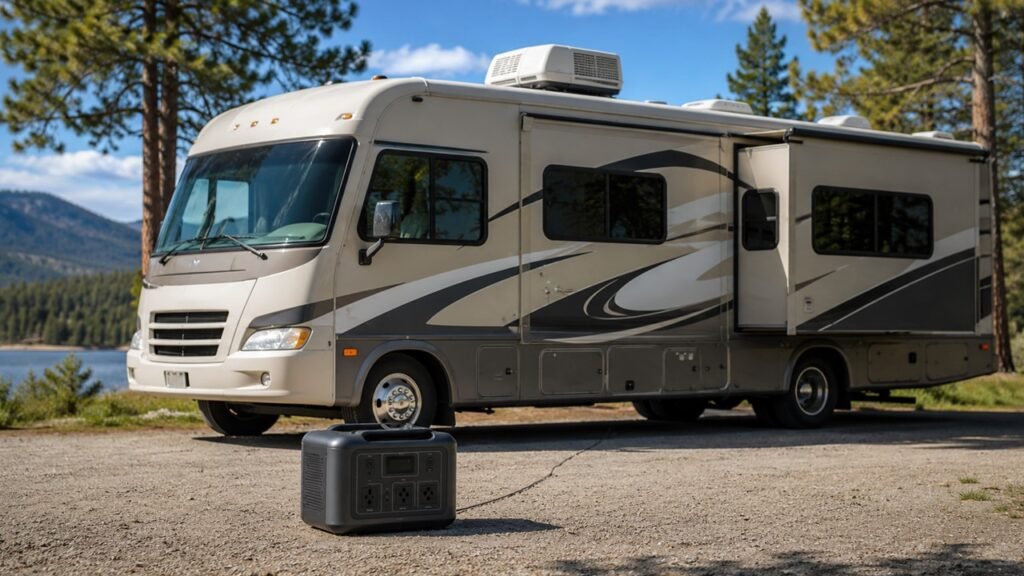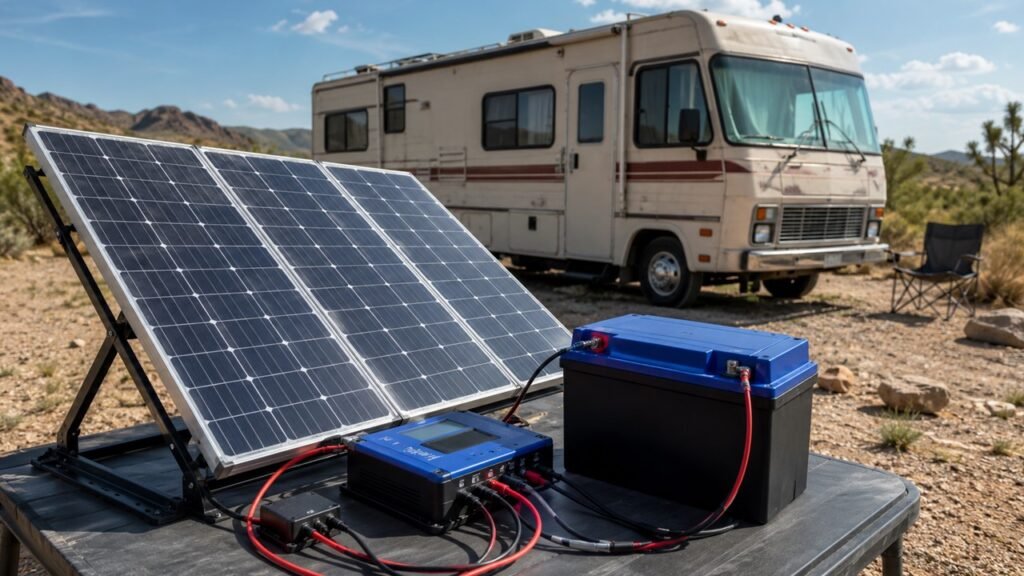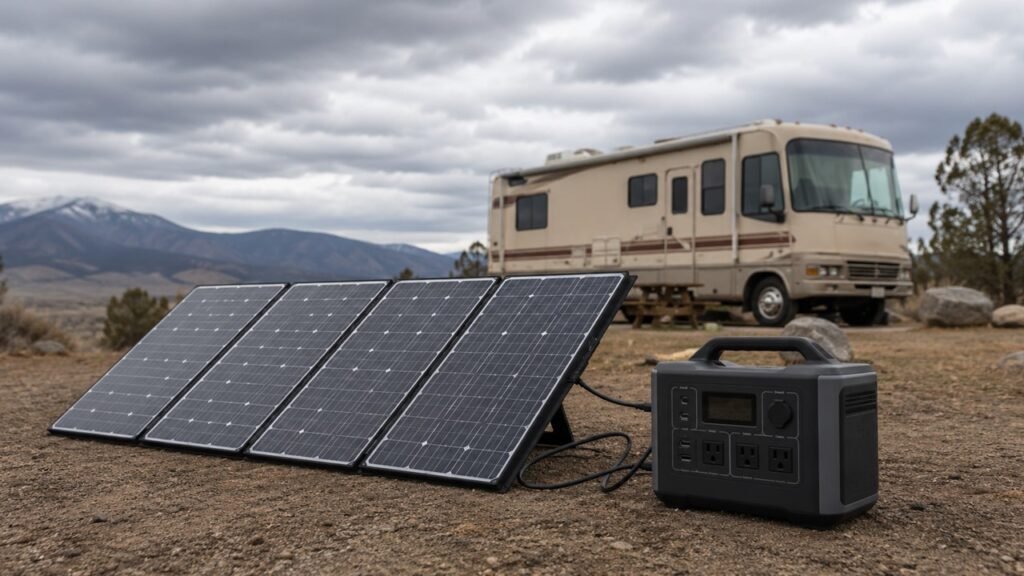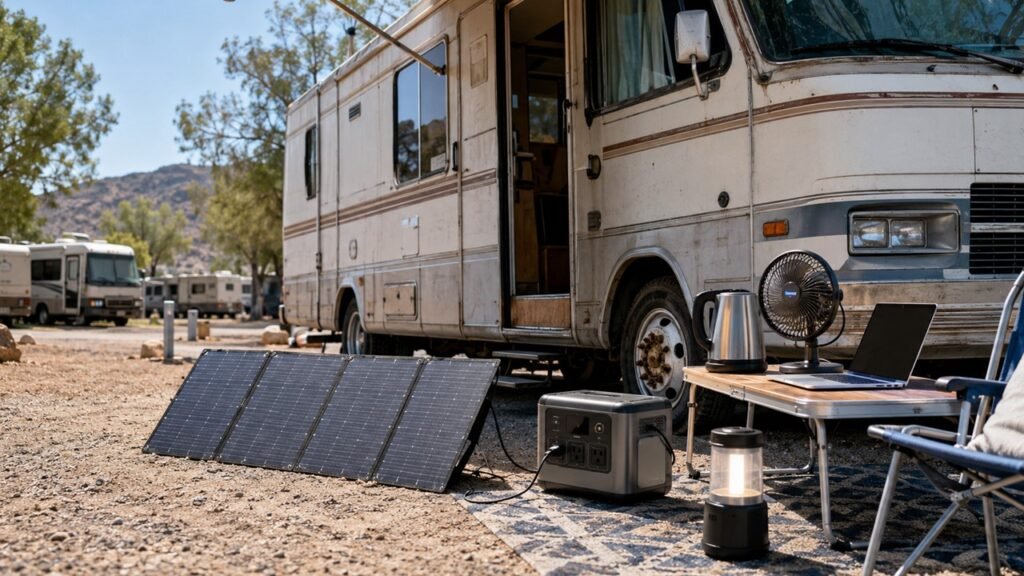
A 12V 100Ah lithium battery can usually run an RV for about 1 to 3 days, depending on how much power you use. If you only run LED lights, a water pump, phone chargers, a roof vent fan, and small 12V loads, it can last a weekend. If you run a 12V fridge, laptop, TV, microwave, coffee maker, or other inverter-powered appliances, the runtime gets much shorter.
For most RVers, the real answer comes down to daily power use. A 100Ah lithium battery stores about 1,200 to 1,280 watt-hours of energy, but your actual runtime depends on battery voltage, usable capacity, inverter losses, appliance wattage, weather, and whether solar is recharging the battery during the day.
If you are trying to plan a weekend trip, a 100Ah lithium battery can work well for basic camping. If you want to boondock longer, run a fridge full-time, work from your RV, or use high-wattage appliances, you will likely need more battery capacity.
Key Takeaways
- A 12V 100Ah lithium battery stores about 1,200 to 1,280Wh of energy.
- A 100Ah lithium battery can run light RV loads for about 2 to 3 days.
- Moderate RV use with a 12V fridge, fan, lights, and laptop usually lasts about 1 to 2 days.
- High-wattage 120V appliances drain a 100Ah lithium battery quickly through an inverter.
- A 100Ah lithium battery is enough for basic RV camping, but not enough for practical air conditioner use.
- Adding 200W to 400W of solar can make a 100Ah battery much more useful for off-grid camping.
How Long Will A 100Ah Lithium Battery Run An RV?
A 100Ah lithium battery will usually run an RV for one full day of comfortable use or up to three days with careful power management. This assumes you are not plugged into shore power and you are not recharging the battery with solar.
If your RV use is light, the battery can last a weekend. Incase, if you run a 12V compressor fridge, fan, laptop, lights, and phone chargers each day, expect closer to 1 to 1.5 days. If you use a microwave, coffee maker, toaster, or air conditioner, a single 100Ah battery will drain much faster.
A 100Ah lithium battery is best for basic 12V RV loads. It is not meant to replace a large battery bank for heavy off-grid living.
| RV Use Style | Typical Loads | Daily Power Use | Estimated Runtime |
| Minimal Use | LED lights, water pump, phone charging | 300 to 500Wh/day | 2 to 3 days |
| Light Camping | Lights, pump, fan, phone, small devices | 500 to 700Wh/day | 1.5 to 2 days |
| Moderate Use | 12V fridge, lights, fan, laptop, pump | 700 to 1,000Wh/day | 1 to 1.5 days |
| Heavy Inverter Use | Microwave, coffee maker, TV, outlets | 1,200Wh+/day | Less than 1 day |
| Air Conditioner Use | Rooftop AC through inverter | 1,500W+ load | Usually not practical |
The table gives a practical starting point. Your actual runtime may be higher or lower depending on appliance efficiency, outside temperature, battery condition, and how often each device runs.
What Does 100Ah Mean On A Lithium RV Battery?
Amp-hours, or Ah, measure how much electrical charge a battery can store. A 100Ah battery can theoretically deliver 100 amps for 1 hour, 10 amps for 10 hours, or 5 amps for 20 hours.
For RV owners, watt-hours are often more useful than amp-hours because most appliances list power in watts. Watt-hours show how much energy the battery can provide to your devices.
The formula is simple:
Battery watt-hours = Amp-hours × Voltage
A 12V 100Ah lithium battery stores about 1,200Wh of energy.
100Ah × 12V = 1,200Wh
Many LiFePO4 batteries use 12.8V as the nominal voltage. In that case, a 100Ah lithium battery stores about 1,280Wh.
100Ah × 12.8V = 1,280Wh
That means a 100Ah lithium battery can theoretically run a 100W load for about 12 hours before losses. In real RV use, the result changes because some appliances cycle on and off, and inverter-powered appliances lose some energy during conversion.
How Much Usable Power Does A 100Ah Lithium Battery Provide?
A 100Ah lithium battery gives you more usable power than a 100Ah lead-acid battery. This is one reason many RVers upgrade from lead-acid or AGM batteries to lithium.
A lead-acid battery is commonly treated as about 50% usable if you want to protect battery life. A lithium iron phosphate battery, often called LiFePO4, can usually use about 80% to 100% of its rated capacity, depending on the battery design and manufacturer guidance.
| Battery Type | Rated Capacity | Typical Usable Capacity | Usable Watt-Hours |
| Lead-Acid / AGM | 100Ah | About 50Ah | About 600Wh |
| Lithium / LiFePO4 | 100Ah | About 80 to 100Ah | About 960 to 1,280Wh |
This means a 100Ah lithium battery can often last nearly twice as long as a 100Ah lead-acid battery in the same RV setup.
Lithium batteries also hold voltage more steadily during discharge. That helps 12V appliances run more consistently as the battery drains.
How To Calculate How Long A 100Ah Lithium Battery Will Last In An RV
The most reliable way to estimate runtime is to convert battery capacity into watt-hours, adjust for usable capacity, adjust for inverter losses if needed, and then divide by your appliance load.
Step 1: Convert Amp-Hours To Watt-Hours
Start with this formula:
Battery watt-hours = Amp-hours × Voltage
For a 12V 100Ah lithium battery:
100Ah × 12V = 1,200Wh
For a 12.8V 100Ah LiFePO4 battery:
100Ah × 12.8V = 1,280Wh
This number is your battery’s total stored energy before real-world losses.
Step 2: Adjust For Usable Capacity
Lithium batteries usually allow deeper discharge than lead-acid batteries. Many lithium batteries can use about 80% to 100% of their rated capacity, but you should always follow the battery manual.
For example, if you use 90% of a 1,200Wh battery:
1,200Wh × 90% = 1,080Wh
That gives you about 1,080Wh of usable DC power.
Step 3: Adjust For Inverter Losses
RV batteries store DC power. RV outlets and many household-style appliances use AC power. An inverter converts DC power into AC power, but the conversion is not perfect.
If your inverter is about 90% efficient, the math looks like this:
1,080Wh × 90% = 972Wh usable AC power
This is why 12V appliances are better for battery runtime. They use battery power directly and avoid inverter loss.
Step 4: Divide By Your Appliance Load
Use this formula:
Runtime = Usable watt-hours ÷ total watts
Example:
1,080Wh ÷ 100W = 10.8 hours
This means a 100Ah lithium battery could run a continuous 100W load for about 10.8 hours under that setup.
Daily RV runtime is different because many loads do not run continuously. A water pump runs for short bursts. A fridge cycles on and off. LED lights may only run at night. That is why daily watt-hour use gives a better real-world estimate than instant wattage alone.
100Ah Lithium Battery Runtime Chart For Common RV Appliances
A 100Ah lithium battery can run small RV loads for a long time, but it drains quickly under high-wattage appliances. The table below uses about 1,080Wh to 1,200Wh of usable energy as a practical range.
| RV Appliance | Typical Watts | Estimated Runtime On 100Ah Lithium |
| LED Lights | 10 to 30W | 40 to 100+ hours |
| Phone Charging | 10 to 20W | 50 to 100+ hours |
| Roof Vent Fan | 20 to 50W | 20 to 60 hours |
| Water Pump | 50 to 80W | Many short uses |
| Laptop | 50 to 100W | 10 to 24 hours |
| 12V Compressor Fridge | 300 to 600Wh/day | 2 to 4 days by itself |
| RV TV | 50 to 100W | 10 to 24 hours |
| Coffee Maker | 700 to 1,200W | About 45 to 90 minutes |
| Microwave | 1,000 to 1,500W | About 35 to 70 minutes |
| Rooftop RV AC | 1,300 to 1,800W+ | Usually less than 1 hour |
These are estimates, not fixed runtimes. A fridge may use 50W while running, but it does not run every minute. A water pump may draw 60W, but it only runs when water is flowing. A microwave may run for only 2 to 5 minutes at a time, but it pulls a lot of power while active.
RV Runtime With A 100Ah Lithium Battery
Battery math is useful, but real RV use is easier to understand through camping scenarios. The same 100Ah lithium battery can last three days for one camper and less than one day for another.
Minimal RV Use: 2 To 3 Days
A 100Ah lithium battery can last 2 to 3 days if your RV power use is very light. This setup works best for weekend campers who use propane for cooking, heating, and refrigeration.
Typical loads include:
- LED lights
- Water pump
- Phone charging
- Occasional roof vent fan use
- Propane fridge control board
- Propane furnace thermostat or control board
This type of setup uses very little power compared with a modern electric fridge or inverter-powered kitchen appliances. If you mostly need battery power for lights, water, and basic comfort, 100Ah can be enough for a short trip.
Moderate RV Use: 1 To 2 Days
Moderate RV use is the most realistic setup for many modern campers. This usually includes a 12V compressor fridge, lights, fan, phone charging, laptop use, and water pump use.
In this setup, a 100Ah lithium battery often lasts about 1 to 2 days. If your fridge runs often, the weather is hot, or you work from your laptop for several hours, expect the lower end of that range.
A sample moderate-use day may look like this:
| Device | Estimated Daily Use |
| 12V compressor fridge | 400 to 600Wh/day |
| LED lights | 50 to 100Wh/day |
| Roof vent fan | 100 to 250Wh/day |
| Laptop | 150 to 300Wh/day |
| Phone charging | 20 to 60Wh/day |
| Water pump | 20 to 50Wh/day |
| Total | 740 to 1,360Wh/day |
This is why many RVers find that 100Ah works, but 200Ah feels much more comfortable.
Heavy Inverter Use: Less Than 1 Day
A 100Ah lithium battery drains quickly when you use high-wattage 120V appliances through an inverter. These appliances are designed for short bursts of power, not long battery runtime.
Heavy loads include:
- Microwave
- Coffee maker
- Hair dryer
- Toaster
- Induction cooktop
- Electric kettle
- Space heater
A 100Ah lithium battery can technically run some of these appliances, but not for long. Short use is fine if your inverter and battery BMS support the load. Regular use needs a larger battery bank.
For example, a 1,000W appliance can use most of a 100Ah battery in about one hour of continuous runtime after losses. A few minutes of microwave use is manageable. Cooking full meals with electric appliances is not practical on a single 100Ah battery.
Air Conditioner Use: Usually Not Practical
A 100Ah lithium battery is not a practical battery bank for running a rooftop RV air conditioner. Most rooftop AC units use a large amount of power and may also need a high startup surge.
Even with a soft start, the battery will not last long. A soft start can help the AC compressor start more easily, but it does not change the total energy needed to cool the RV.
For RV air conditioning, you usually need a much larger lithium battery bank, a properly sized inverter, strong solar charging, alternator charging, shore power, or a generator backup.
How Long Will A 100Ah Lithium Battery Run A 12V RV Fridge?
A 100Ah lithium battery can usually run a 12V RV fridge for about 2 to 3 days by itself. The exact runtime depends on fridge size, outdoor temperature, ventilation, temperature setting, and how often you open the door.
A 12V fridge does not pull power nonstop. Its compressor cycles on and off, so daily energy use matters more than the running wattage printed on the label.
Most 12V compressor fridges use about 300 to 600Wh per day in normal conditions. Smaller fridges in mild weather stay closer to the low end. Larger fridges in hot weather use more power because the compressor runs more often.
| Fridge Use Condition | Daily Energy Use | Estimated Runtime |
| Small efficient fridge, mild weather | 300 to 400Wh/day | Around 3 days |
| Mid-size fridge, normal use | 400 to 500Wh/day | 2 to 3 days |
| Hot weather or frequent opening | 500 to 700Wh/day | 1.5 to 2 days |
| Large fridge, heavy use | 700Wh+/day | Around 1 to 1.5 days |
A 100Ah lithium battery is usually enough for overnight fridge use. For multi-day boondocking, add solar or increase battery capacity.
Can A 100Ah Lithium Battery Run RV Outlets?
Yes, a 100Ah lithium battery can run RV outlets if your RV has an inverter. RV outlets usually provide 120V AC power, while the battery stores 12V DC power. The inverter converts battery power into outlet power.
The important point is this: the outlet does not determine runtime, the appliance does. A phone charger may use very little power through an outlet. A microwave, coffee maker, toaster, or hair dryer can drain the battery quickly.
Inverter losses also reduce runtime. If you want the longest battery life, use 12V appliances whenever possible and turn off the inverter when you are not using AC power.
Can A 100Ah Lithium Battery Run An RV Microwave?
Yes, a 100Ah lithium battery can run an RV microwave, but only for short use. A microwave may be rated around 1,000W, but the battery may see a higher load after inverter losses.
Example:
1,080Wh usable power ÷ 1,200W microwave load = about 0.9 hours
That looks like close to one hour of continuous microwave use, but real-world runtime may be lower because of inverter efficiency, high current draw, battery BMS limits, wiring size, and microwave surge behavior.
In normal RV use, reheating food for a few minutes is usually fine if your inverter and battery are rated for it. Cooking repeatedly with a microwave needs more battery capacity.
Can A 100Ah Lithium Battery Run An RV Air Conditioner?
A 100Ah lithium battery is generally too small for running an RV air conditioner in a practical way. Most rooftop RV AC units use around 1,300W to 1,800W or more while running.
Startup surge can also be much higher than the running wattage. A soft start can reduce startup strain, but it does not make a small battery last long.
For air conditioning, most RVers need a larger battery bank, a strong inverter, solar charging, and often generator or shore power support. If air conditioning is part of your off-grid plan, think in terms of several hundred amp-hours, not one 100Ah battery.
What Factors Affect How Long A 100Ah Lithium Battery Runs An RV?
Several factors affect how long a 100Ah lithium battery runs an RV. The battery size matters, but your power habits matter just as much.
- Daily power use: More appliances mean shorter runtime.
- Battery voltage: A 12.8V LiFePO4 battery stores slightly more energy than simple 12V math suggests.
- Depth of discharge: Some batteries allow more usable capacity than others.
- Inverter efficiency: AC appliances waste some battery power during conversion.
- Fridge duty cycle: A fridge that cycles less uses less energy.
- Weather: Hot weather increases fridge, fan, and cooling loads.
- Battery age: Older batteries may hold less usable capacity.
- Wiring and system losses: Poor wiring can waste energy and reduce performance.
- Battery BMS limit: The battery management system may limit high current loads.
- Charging sources: Solar, alternator charging, generator charging, or shore power can extend runtime.
The biggest mistake is looking only at the battery size. A 100Ah lithium battery can feel large with small 12V loads, but it can feel tiny when powering kitchen appliances or cooling equipment.
Is A 100Ah Lithium Battery Enough For An RV?
A 100Ah lithium battery is enough for some RVers, but not for everyone. It depends on how you camp, what appliances you use, and how often you recharge.
When 100Ah Is Enough
A 100Ah lithium battery is enough if you:
- Camp mostly on weekends
- Use propane for heating, cooking, and fridge operation
- Run mostly 12V lights, fans, and water pump
- Charge phones and small devices
- Use a laptop only lightly
- Have solar or drive often enough to recharge
- Do not rely on electric cooking or air conditioning
For simple camping, 100Ah can be a good starting point. It keeps your RV comfortable without adding too much weight or cost.
When 100Ah Is Not Enough
A 100Ah lithium battery is not enough if you:
- Boondock for several days without solar
- Run a 12V compressor fridge full-time
- Work remotely from your RV
- Use a microwave, coffee maker, or induction cooktop often
- Want to run air conditioning
- Travel with multiple people using electronics
- Camp in hot weather where fans and fridge cycles increase
If your RV lifestyle depends on steady off-grid power, 100Ah may feel limiting. In that case, 200Ah to 400Ah is usually a better starting range.
Better Battery Sizes By RV Use
Choosing the right battery size depends on how you use your RV and how long you camp without hookups. Here’s a quick guide to matching battery capacity with common RV power needs.
| RV Use Case | Better Lithium Battery Size |
| Weekend camping | 100Ah to 200Ah |
| Light boondocking | 200Ah |
| Moderate off-grid camping | 300Ah to 400Ah |
| Full-time RV living | 400Ah to 600Ah |
| Heavy inverter loads or AC | 600Ah to 800Ah+ |
A larger battery bank does not just give longer runtime. It also gives you more comfort, more backup for cloudy weather, and more flexibility with appliance use.
How Many Solar Panels Do You Need With A 100Ah Lithium Battery?
Solar does not change your battery size, but it can replace energy during the day. This makes a 100Ah lithium battery much more useful for off-grid RV camping.
A 100Ah lithium battery stores about 1,200 to 1,280Wh. In real-world conditions, solar panels do not produce their full rated power all day. Shade, clouds, angle, controller efficiency, heat, and wiring losses all reduce output.
| Solar Setup | Daily Solar Output Estimate | Practical Use |
| 100W solar | 300 to 500Wh/day | Light top-off only |
| 200W solar | 600 to 1,000Wh/day | Good for light RV use |
| 400W solar | 1,200 to 2,000Wh/day | Better for fridge and daily loads |
| 600W solar | 1,800 to 3,000Wh/day | Stronger boondocking setup |
For many RVers, 200W of solar is a useful minimum with a 100Ah lithium battery. If you run a 12V fridge every day, 400W is often more comfortable.
Solar output depends on your location, peak sun hours, panel angle, shade, controller quality, wiring, and weather. Always size solar with a buffer instead of assuming perfect conditions.
How To Make A 100Ah Lithium Battery Last Longer In An RV
You can extend runtime by reducing waste and avoiding high-wattage appliances. Small changes make a noticeable difference when you only have one 100Ah battery.
- Use 12V appliances instead of inverter-powered appliances.
- Run the fridge on propane if it is an absorption fridge.
- Use a 12V compressor fridge instead of a residential fridge through an inverter.
- Pre-cool the fridge before leaving.
- Put cold food into the fridge instead of warm food.
- Keep the fridge shaded and ventilated.
- Limit how often you open the fridge door.
- Turn off the inverter when not using AC appliances.
- Use LED lights only.
- Charge laptops and phones during solar hours.
- Avoid electric heat, electric cooking, and hair dryers.
- Add 200W to 400W of solar if you camp off-grid often.
- Monitor battery state of charge with a battery monitor.
The goal is not to avoid electricity completely. The goal is to use the battery for the jobs it handles well and avoid making it power loads that are better handled by propane, shore power, a generator, or a larger battery bank.
100Ah Lithium Battery Vs 200Ah Lithium Battery For RV Use
A 100Ah lithium battery is a good starting point for basic RV power. A 200Ah lithium battery is more comfortable for campers who use a fridge, fans, laptops, and small electronics every day.
| Battery Bank | Usable Energy | Best For | Limitation |
| 100Ah Lithium | About 1,200Wh | Weekend trips, light RV loads | Limited for fridge plus inverter use |
| 200Ah Lithium | About 2,400Wh | Better boondocking and 12V fridge use | Still limited for AC |
| 400Ah Lithium | About 4,800Wh | Full-time RVers and heavier loads | Needs more charging support |
If you only camp on weekends and use propane for major loads, 100Ah can work well. Furthermore, if you camp off-grid often, 200Ah is usually a better minimum. If you want to run larger inverter loads or live from your RV, 300Ah to 600Ah may make more sense.
Common Mistakes When Estimating 100Ah RV Battery Runtime
Many runtime estimates are wrong because they ignore real-world conditions. A 100Ah lithium battery can be very useful, but only if you calculate with realistic loads.
Common mistakes include:
- Assuming 100Ah lithium and 100Ah lead-acid last the same
- Forgetting inverter losses
- Using appliance peak watts instead of daily watt-hours
- Ignoring fridge cycling
- Expecting a 100Ah battery to run air conditioning
- Not checking the battery’s BMS discharge limit
- Forgetting that other RV loads share the same battery
- Starting with a half-charged battery
- Not adding a weather buffer
- Assuming solar panels produce full rated output all day
The easiest way to avoid mistakes is to list every appliance, estimate daily watt-hours, and compare that number against your usable battery capacity.
Final Verdict
A 100Ah lithium battery will usually run an RV for 1 to 3 days, depending on how much power you use. For simple 12V loads like lights, fans, water pump, and phone charging, it can last a weekend. With a 12V fridge, laptop, and regular daily use, expect closer to one full day or a little more.
If you camp lightly, 100Ah can work well. If you boondock often, run a 12V fridge, or want more comfort, start with 200Ah to 400Ah of lithium capacity and add solar charging.
A single 100Ah lithium battery is best viewed as a light-duty RV power setup. It is useful, efficient, and much better than a same-size lead-acid battery, but it is not a complete off-grid power system for heavy appliances.
Related FAQs
How Long Will A 100Ah Lithium Battery Last In An RV?
A 100Ah lithium battery usually lasts 1 to 3 days in an RV. Light users may get a weekend from it, while moderate users with a fridge, fan, laptop, and lights may get closer to one day.
Is A 100Ah Lithium Battery Enough For An RV Fridge?
Yes, a 100Ah lithium battery is usually enough for a 12V RV fridge. By itself, it can often run a 12V compressor fridge for about 2 to 3 days, depending on fridge size, temperature, and usage.
Can A 100Ah Lithium Battery Run An RV Air Conditioner?
A 100Ah lithium battery is usually not practical for running an RV air conditioner. Rooftop AC units use too much power and need a much larger battery bank, inverter, and charging setup.
How Long Will A 100Ah Lithium Battery Run A Microwave?
A 100Ah lithium battery may run a microwave for about 35 to 70 minutes of continuous use, depending on microwave wattage and inverter efficiency. In real RV use, it is better for short reheating sessions.
How Many Watts Are In A 100Ah Lithium Battery?
A 12V 100Ah lithium battery stores about 1,200Wh of energy. A 12.8V LiFePO4 battery stores about 1,280Wh.
How Long Will A 100Ah Lithium Battery Run A 1000W Inverter?
It depends on the actual load, not just the inverter size. If the inverter is powering a full 1,000W load, a 100Ah lithium battery may last around 1 hour or less after losses.
Is 100Ah Or 200Ah Better For RV Camping?
A 100Ah battery is fine for light camping. A 200Ah lithium battery is better if you run a 12V fridge, laptops, fans, and other daily RV loads while camping off-grid.
Do I Need Solar With A 100Ah Lithium RV Battery?
Solar is not required, but it helps a lot. A 200W to 400W solar setup can make a 100Ah lithium battery much more useful for off-grid RV camping.
Can I Run RV Outlets From A 100Ah Lithium Battery?
Yes, you can run RV outlets from a 100Ah lithium battery if your RV has an inverter. Runtime depends on what you plug into the outlets, and high-wattage appliances will drain the battery quickly.
Is A 100Ah Lithium Battery Good For Boondocking?
A 100Ah lithium battery is okay for light boondocking, especially with solar. For longer off-grid stays, a 200Ah to 400Ah lithium setup is usually more practical.

Daniel Brooks writes about RV living, gear, and travel planning with a focus on everyday usability. His guides break down complex topics into simple advice for real RV owners. He reviews products with long-term use in mind, not marketing hype.