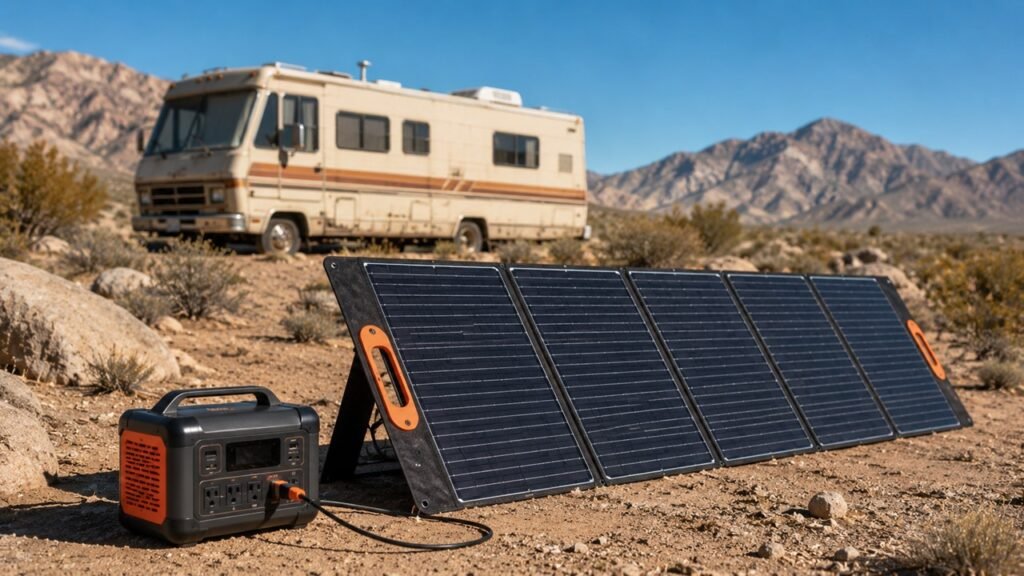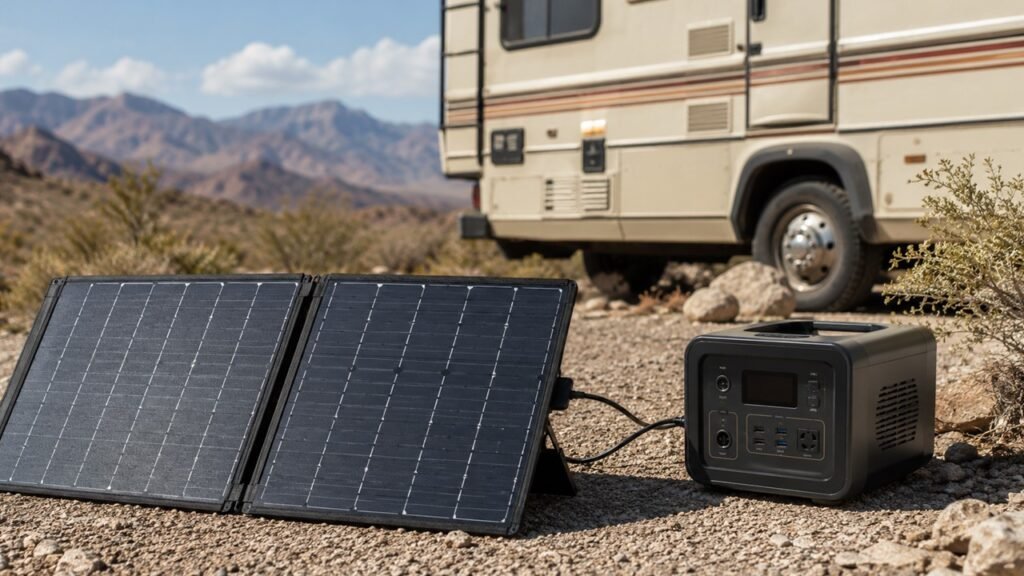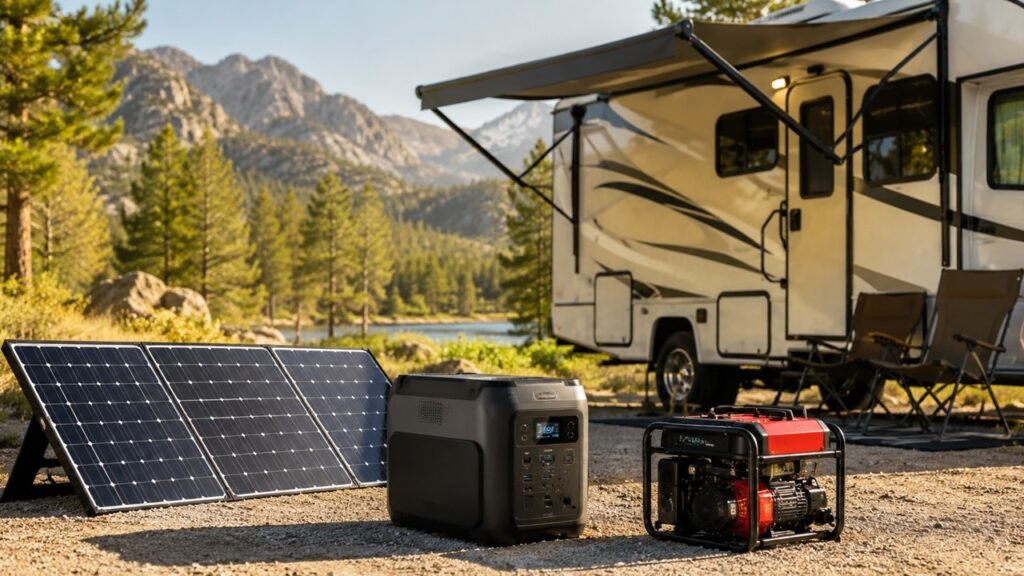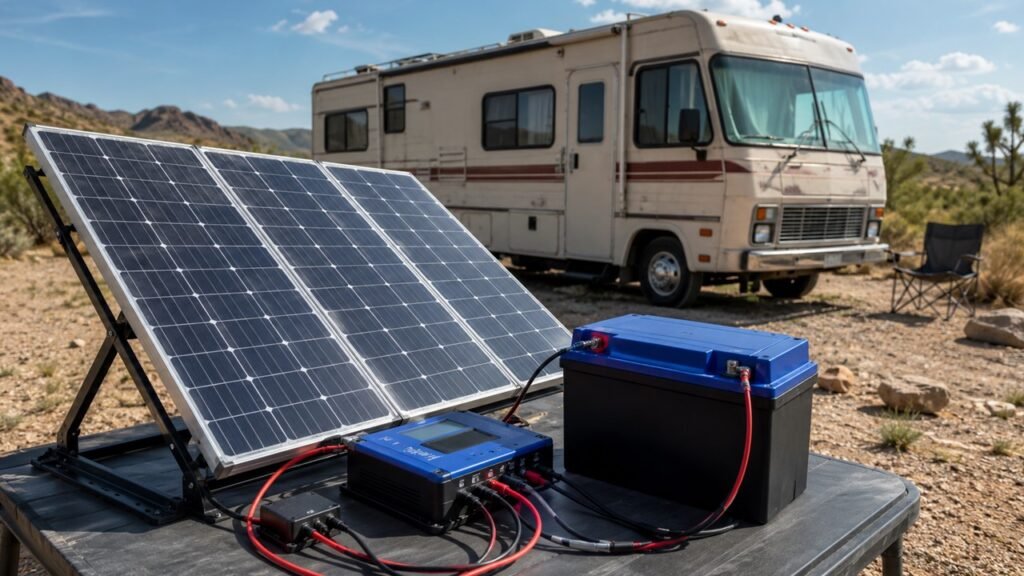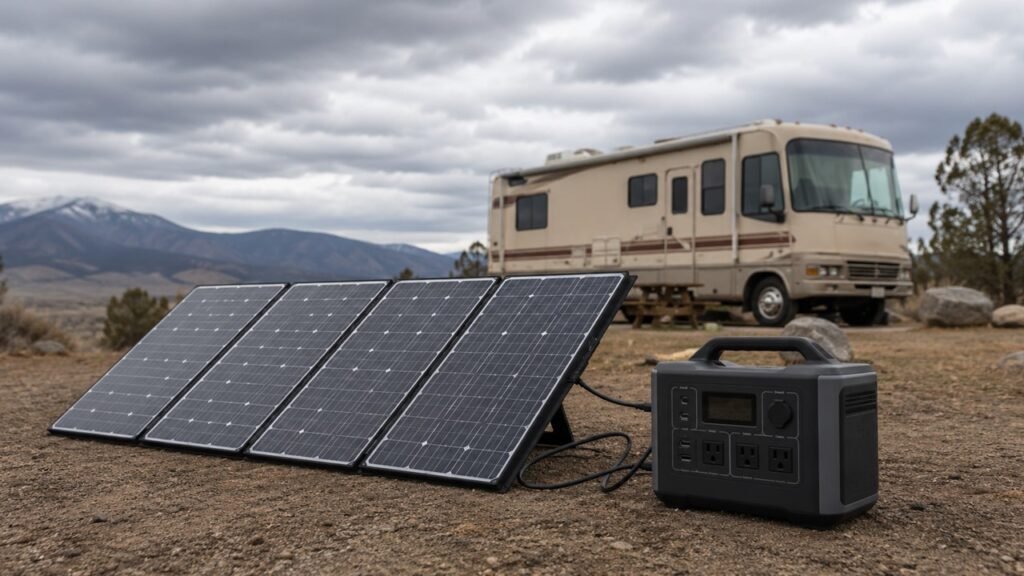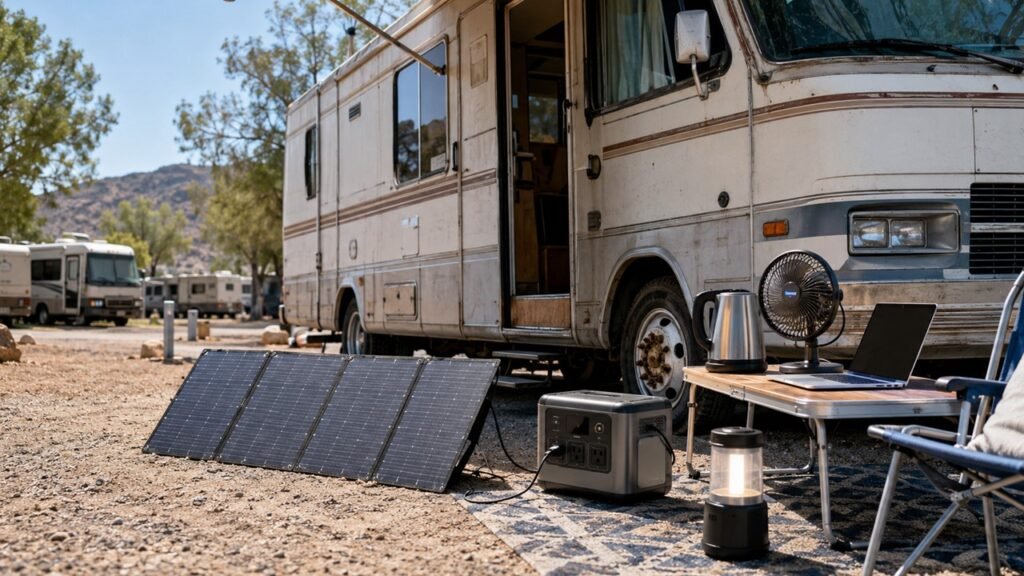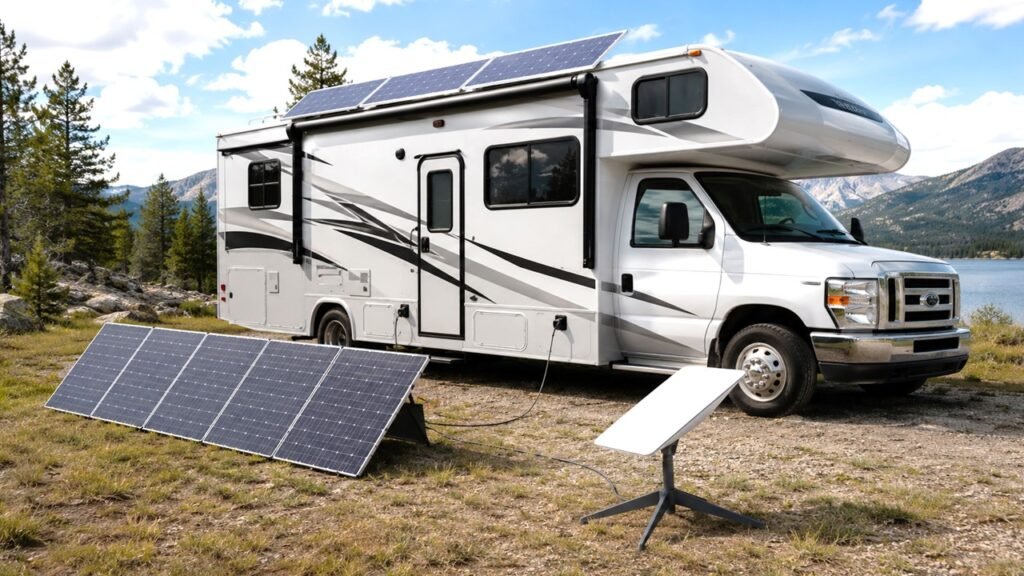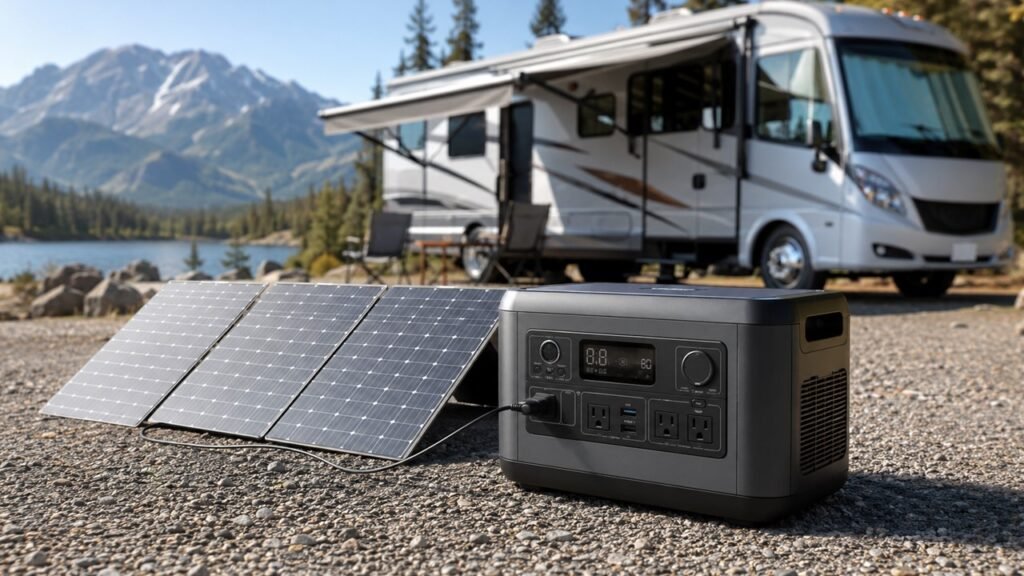
An RV solar generator is worth it if you camp off-grid, want quiet power, and need a cleaner way to run small RV appliances without relying on gas. It stores solar energy in a portable battery and lets you power essentials like lights, fans, phones, laptops, CPAP machines, and small refrigerators.
For RV owners who mostly stay at full-hookup campgrounds, the cost may not make sense. But for boondockers, weekend dry campers, van lifers, and travelers who want backup power, an RV solar generator can be a practical investment.
The real question is not just, “Is an RV solar generator worth it?” The better question is, “Does an RV solar generator match your camping style, power needs, and budget?”
Key Summary
- An RV solar generator is worth it if you camp off-grid, boondock often, or need quiet power away from hookups.
- An RV solar generator powers small RV essentials like lights, fans, phones, laptops, CPAP machines, routers, and 12V fridges.
- An RV solar generator is not ideal for long air conditioner runtime because RV AC units use high wattage and drain batteries quickly.
- An RV solar generator saves fuel and reduces maintenance, but the upfront cost is higher than many basic gas generator setups.
- An RV solar generator works best for quiet camping, weekend dry camping, emergency backup, and low to moderate daily power needs.
What Is an RV Solar Generator?
An RV solar generator is a portable power system that stores electricity in a battery and recharges from solar panels. Unlike a traditional gas generator, it does not burn fuel to create electricity. Instead, it captures energy from sunlight, stores it in a battery, and supplies power through AC outlets, USB ports, and DC connections when you need it.
Most RV solar generators combine several components into one unit, including a battery, an inverter, and a solar charge controller. The solar panels collect sunlight, the battery stores the energy, and the inverter converts that stored power into usable electricity for common RV devices and appliances.
RV owners often use solar generators to run lights, fans, phones, laptops, CPAP machines, routers, and portable refrigerators. They are popular for boondocking and dry camping because they operate quietly, produce no exhaust fumes, and require very little maintenance compared to fuel-powered generators.
When Is an RV Solar Generator Worth It?
If you’re wondering whether an RV solar generator is worth the investment, the answer really depends on how you camp. You’ll get the most value from one if you spend time away from hookups, want quiet and fuel-free power, and mainly run everyday RV essentials instead of heavy-duty appliances.
You Camp Off-Grid or Boondock Often
If you regularly camp off-grid or enjoy boondocking, an RV solar generator can be a great fit for your setup. When you’re away from shore power, you still need electricity for things like lights, fans, devices, food storage, and other daily comforts.
Because you’re not relying on campground hookups, a solar generator gives you a quiet and convenient way to keep your essentials running without hauling extra fuel.
The more nights you spend camping without hookups, the more useful a solar generator becomes. If dry camping is a big part of your RV lifestyle, the upfront cost is often easier to justify.
You Want Quiet Power at Campsites
If you’ve ever been annoyed by the constant noise of a gas generator, you’ll appreciate one of the biggest benefits of solar power: silence.
Unlike gas generators, solar generators don’t use engines to produce electricity. That means you can run lights, fans, laptops, and other small devices without adding noise to your campsite.
This can make a big difference when you’re camping near other RVers, sleeping inside your rig, or enjoying a peaceful outdoor setting. It’s especially useful in national parks, family campgrounds, and quiet boondocking locations where noise can affect everyone’s experience.
You Want to Avoid Gas Generator Maintenance
If you’d rather spend your time camping than maintaining equipment, a solar generator may be worth it for that reason alone.
Gas generators require ongoing maintenance, including fuel management, oil changes, spark plug inspections, air filter cleaning, and safe fuel storage.
With a solar generator, there’s much less to worry about. You’ll still need to charge and store the battery properly and protect it from extreme conditions, but overall maintenance is minimal.
If you want a simpler power solution without fuel smells, engine noise, or routine service tasks, a solar generator is often the easier option.
You Need Backup Power for Small RV Appliances
If your goal is to keep everyday RV essentials powered, a solar generator can work very well. These systems are best suited for low- to moderate-power devices rather than large, energy-hungry appliances.
A properly sized solar generator can typically power:
- Lights
- Fans
- Phone chargers
- Laptops
- CPAP machines
- 12V fridge
- WiFi router
These types of devices use relatively little electricity, allowing your battery to last longer and making solar recharging much more practical.
When Is an RV Solar Generator Not Worth It?
While RV solar generators offer plenty of benefits, they’re not the right choice for everyone. Depending on how you travel and what you expect from your power system, you may get less value from the investment.
You Mostly Stay at RV Parks With Hookups
If you usually stay at RV parks with full hookups, you may not need a solar generator at all.
Shore power already provides reliable electricity for lights, outlets, air conditioning, kitchen appliances, and charging devices. In many cases, a large solar generator would end up serving as an expensive backup that rarely gets used.
You might still benefit from a small portable power station for emergencies, but a full solar generator setup may be unnecessary.
You Rarely Use Your RV
If your RV only leaves the driveway a few times each year, a solar generator may not provide enough value to justify the cost.
Because solar generators require a larger upfront investment than some basic power options, occasional use can make it difficult to see a meaningful return on that investment.
If you camp infrequently, campground hookups, a small battery backup, or even a basic generator may be more practical for your needs.
You Need Long Air Conditioner Runtime
If your main goal is running an RV air conditioner for long periods, a solar generator may not be the best standalone solution.
Air conditioners consume a significant amount of power and can drain even large battery systems surprisingly fast.
While some high-capacity solar generators can start and run smaller AC units for a limited time, keeping a standard RV air conditioner running for hours typically requires a large battery bank, a powerful inverter, and a substantial solar array.
For most RV owners, solar generators are much better suited for powering fans, lights, refrigerators, laptops, CPAP machines, and other smaller loads.
You Camp in Shaded or Cloudy Areas
Solar power works best when your panels receive plenty of direct sunlight. If you frequently camp under heavy tree cover, in cloudy climates, or during seasons with shorter daylight hours, solar charging may be less effective.
Shade can significantly reduce charging performance, especially when panels remain blocked for much of the day. Cloudy conditions can still generate some power, but charging is usually much slower than it is in full sun.
If you often camp in low-sunlight environments, you may need additional solar panels, more battery capacity, access to shore power, or a backup generator to meet your energy needs.
RV Solar Generator Pros and Cons
Before you decide, it’s important to weigh both the advantages and limitations. An RV solar generator gives you quiet, low-maintenance power, but it also comes with tradeoffs. In simple terms, you’re exchanging fuel-powered convenience for cleaner, quieter energy that depends on battery capacity and available sunlight.
| Pros | Cons |
| Quiet operation | High upfront cost |
| No fuel needed for solar charging | Weather-dependent charging |
| Low maintenance | Limited AC runtime |
| Safe battery power indoors | Slower recharge than gas refueling |
| Useful for RV and home backup | Larger units can be heavy |
Can an RV Solar Generator Run an Air Conditioner?
If you’re wondering whether an RV solar generator can run an air conditioner, the short answer is yes—but only if your system is sized correctly. You’ll need enough power to handle the AC unit’s startup surge, ongoing power draw, and the amount of time you want to keep it running. In most situations, solar generators are better suited for smaller AC units than standard RV rooftop air conditioners.
Small AC Units May Work With a Large Solar Generator
If you have a large enough solar generator, you may be able to run a small air conditioner without any issues. Compact window units, portable ACs, and efficient low-BTU models typically use much less power than full-size RV rooftop units.
One thing many RV owners overlook is battery capacity. Even if your inverter can start the AC, the battery still needs enough stored energy to keep it running.
For example, a small AC that draws around 600 watts can drain a 2,000Wh battery in just a few hours once you factor in normal efficiency losses. That’s why it’s important to think about both power output and runtime before relying on solar for cooling.
Standard RV Air Conditioners Need Much More Power
This is where things get more challenging. Most RV rooftop air conditioners use roughly 1,200 to 1,800 running watts, and their startup surge can be significantly higher unless you’ve installed a soft start device.
Because of that high power demand, running an RV AC for long periods on solar alone can be difficult. Even a large solar generator can lose battery capacity surprisingly fast during hot weather.
If you want extended cooling time, you’ll usually need a larger battery bank, a powerful inverter, plenty of solar input, and sometimes even a backup generator. Solar generators can help with air conditioning, but it’s best to think of AC as one of the most demanding loads in your RV.
Solar Is Better for Fans, Fridges, and Electronics
For most RV owners, solar generators really shine when powering everyday essentials. Things like fans, fridges, lights, laptops, phones, CPAP machines, and other electronics use far less energy than an air conditioner.
A fan, for example, uses only a fraction of the power required by an AC unit. A 12V fridge also cycles on and off throughout the day, making it much easier to support with battery power.
If your goal is to stay comfortable while reducing generator use, a solar generator is often best used for these daily essentials. Air conditioning is possible, but it requires much more careful planning and system sizing.
How Much Does an RV Solar Generator Cost?
The price of an RV solar generator can vary quite a bit depending on battery capacity, inverter size, solar panel wattage, charging speed, battery chemistry, and whether the system can be expanded later.
| Setup Type | Typical Use |
| Small setup | Weekend camping and device charging |
| Medium setup | Fridge, CPAP, fans, and electronics |
| Large setup | Longer boondocking and small appliances |
| Expandable setup | Full-time RV use and backup power |
If you mainly need to charge phones, run lights, and power a laptop during weekend trips, a small setup may be all you need. A medium-sized system is often a better fit if you’re running a 12V fridge, CPAP machine, fans, or internet equipment.
For longer boondocking trips or heavier power needs, a large or expandable system usually makes more sense. Before you buy, compare battery capacity, inverter wattage, solar input limits, warranty coverage, and how quickly the unit can realistically recharge.
Is an RV Solar Generator Worth It for Boondocking?
If you spend a lot of time boondocking, an RV solar generator is often well worth the investment. When you’re camping away from hookups, you still need power for things like lights, fans, phones, laptops, a CPAP machine, a fridge, or a WiFi router.
That’s why solar generators tend to be especially valuable for boondockers. Instead of firing up a gas generator every time you need electricity, you can quietly power your essentials from stored battery energy.
The quiet operation is a major advantage. You get to enjoy nature without engine noise, fuel odors, or exhaust fumes disrupting the experience.
Solar can also help reduce fuel runs. On sunny days, you can recharge from the sun instead of constantly worrying about refilling gasoline or propane.
For many RV owners, the biggest benefit isn’t just saving money. It’s having the freedom to camp farther from crowded campgrounds while still enjoying the comforts of reliable power.
Is an RV Solar Generator Worth It for Weekend Camping?
It can be. If you regularly camp without hookups, an RV solar generator can make weekend trips much more comfortable by powering your devices and keeping small appliances running.
On the other hand, if you usually stay at campgrounds with full hookups, you may not need a large solar setup. Shore power already covers most of your electrical needs, including outlets, lights, air conditioning, cooking appliances, and charging devices.
Ultimately, it comes down to how you camp. If your weekends often include boondocking, state parks, national forests, or campsites with limited electrical access, a solar generator can be a great addition. If you mostly stay at full-hookup campgrounds, a smaller backup power station may be all you need.
Final Verdict
You should buy an RV solar generator if you camp off-grid, want quiet power, and mainly use realistic RV appliances. It works well for lights, fans, phones, laptops, CPAP machines, routers, small fridges, and other everyday essentials.
An RV solar generator is especially worth it for boondockers, dry campers, van lifers, and RV owners who want to reduce fuel use. It gives you cleaner, quieter power without the maintenance needs of a gas generator.
However, an RV solar generator is not the right choice for everyone. If you mostly stay at RV parks with full hookups, you may not use it enough to justify the cost.
It is also not the best standalone option if your main goal is running an RV air conditioner for many hours. Air conditioners need a lot of power, and even large solar generators can drain quickly under that load.
The best choice depends on your camping style. If you value quiet power, off-grid flexibility, and low-maintenance energy, an RV solar generator can be a smart investment. If you rely on shore power or need heavy-duty cooling, a gas generator or hybrid setup may make more sense.
Related FAQs
Are RV Solar Generators Worth the Money?
Yes, RV solar generators are worth it for frequent off-grid campers. They provide quiet, low-maintenance power and help reduce fuel costs compared to gas generators.
Can a Solar Generator Power an RV?
Yes, a solar generator can power many RV essentials such as lights, fans, phones, laptops, and small appliances. The exact capacity depends on the generator’s battery size and inverter rating.
Can a Solar Generator Run an RV Air Conditioner?
Yes, but only if the solar generator is large enough to handle the air conditioner’s power requirements. Most RV AC units need a high-capacity battery and inverter.
What Size Solar Generator Do I Need for My RV?
For basic RV use, a 1,000Wh–2,000Wh solar generator is usually sufficient. Larger setups of 2,000Wh–5,000Wh or more are better for extended trips and heavier power demands.
How Long Will a Solar Generator Power an RV?
Runtime depends on battery capacity and how much electricity you use. A properly sized system can power basic RV essentials for several hours to a few days.
Is Solar Better Than a Generator for an RV?
Solar is better for quiet, clean, and low-maintenance power. Gas generators are better for heavy loads and long runtimes, so many RV owners use both.
How Many Solar Panels Do I Need for an RV Solar Generator?
Most RV setups need between 200W and 600W of solar panels for basic charging. Larger energy needs may require 800W or more.
Do RV Solar Generators Work on Cloudy Days?
Yes, RV solar generators still work on cloudy days, but charging is slower. Extra battery capacity or additional panels can help during periods of limited sunlight.

Daniel Brooks writes about RV living, gear, and travel planning with a focus on everyday usability. His guides break down complex topics into simple advice for real RV owners. He reviews products with long-term use in mind, not marketing hype.