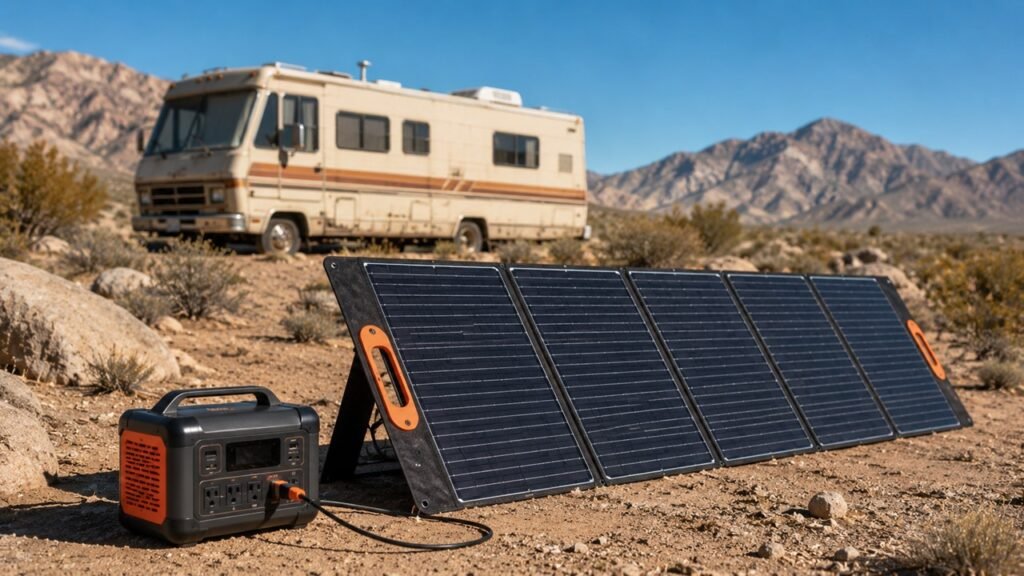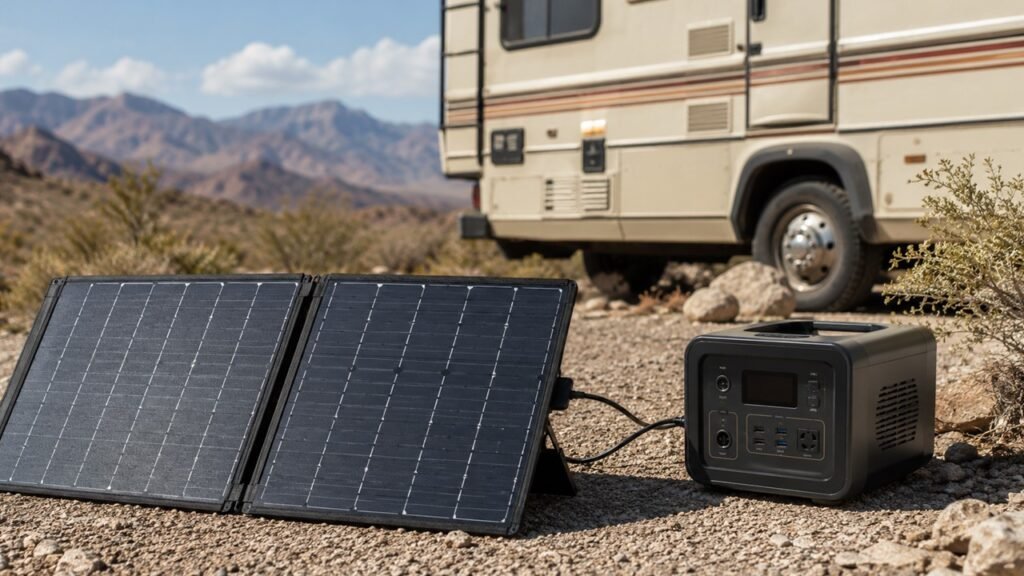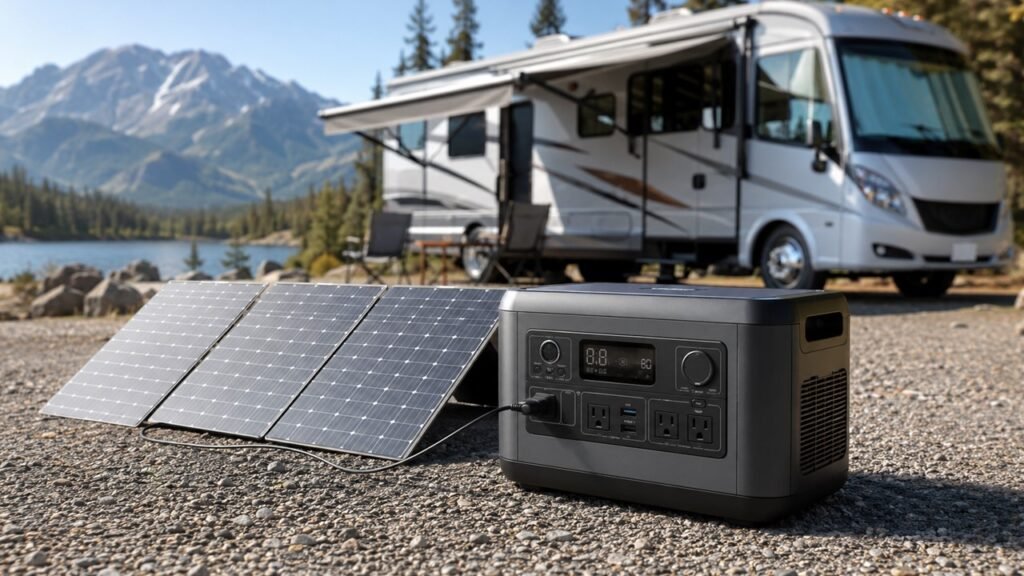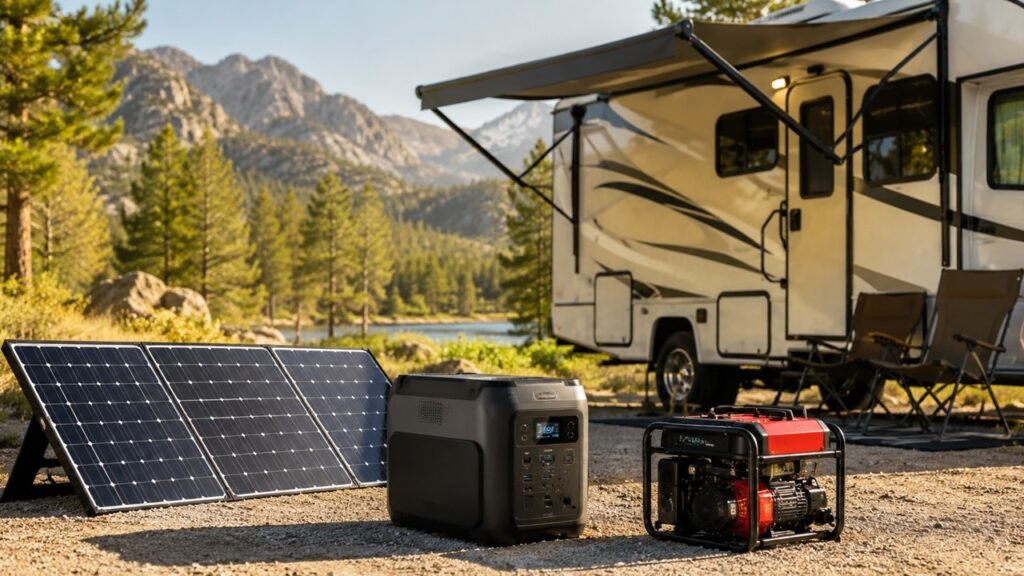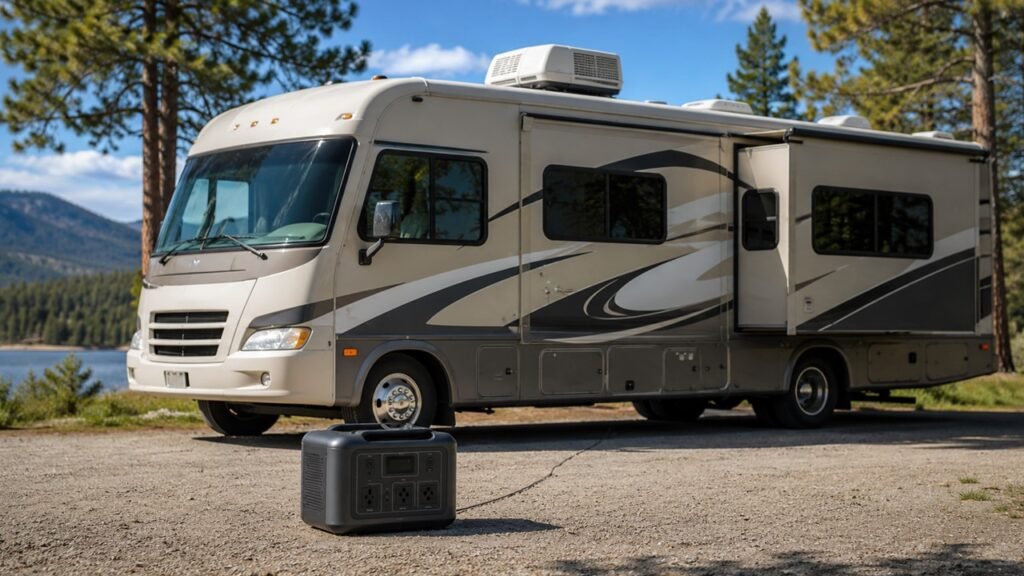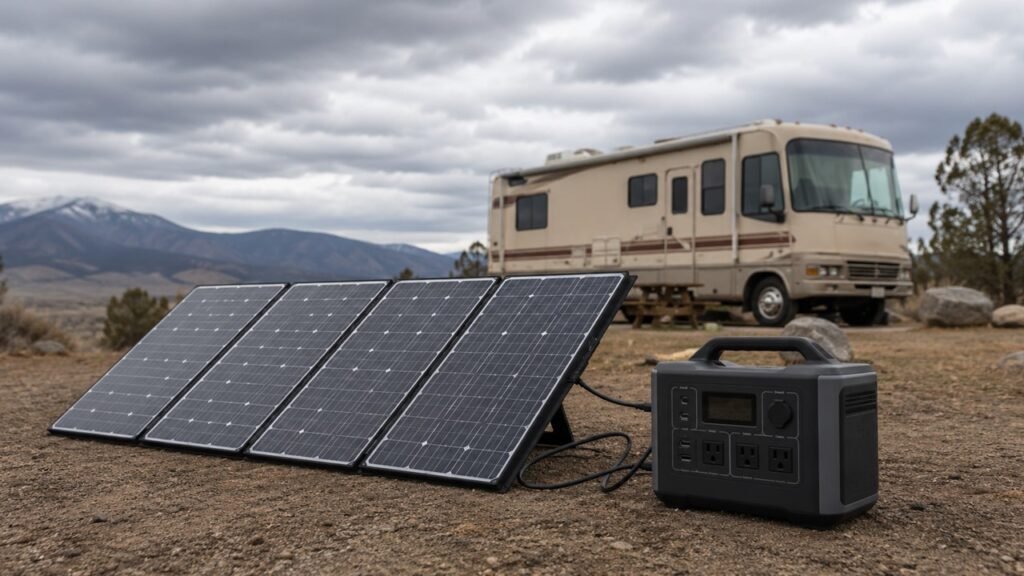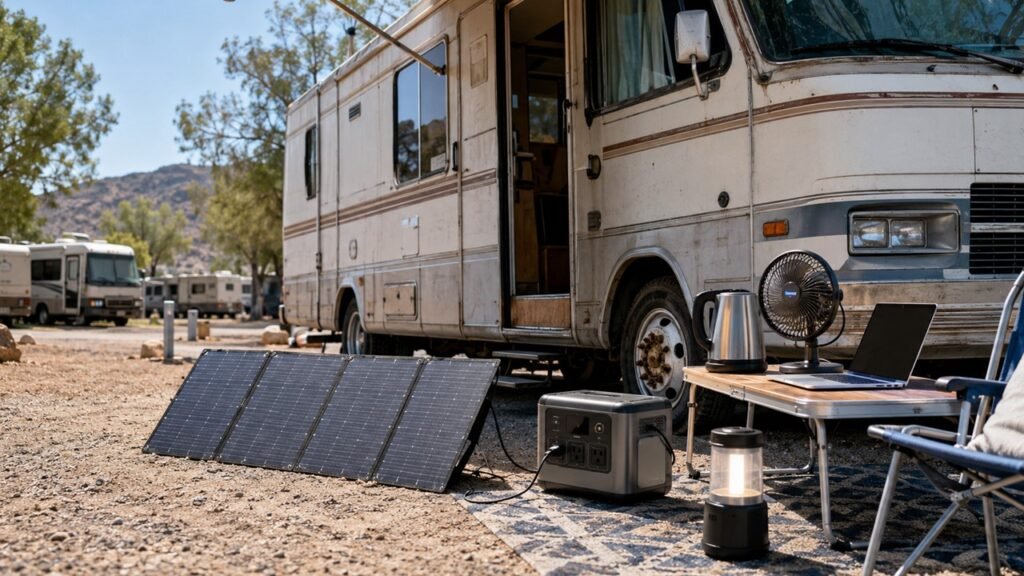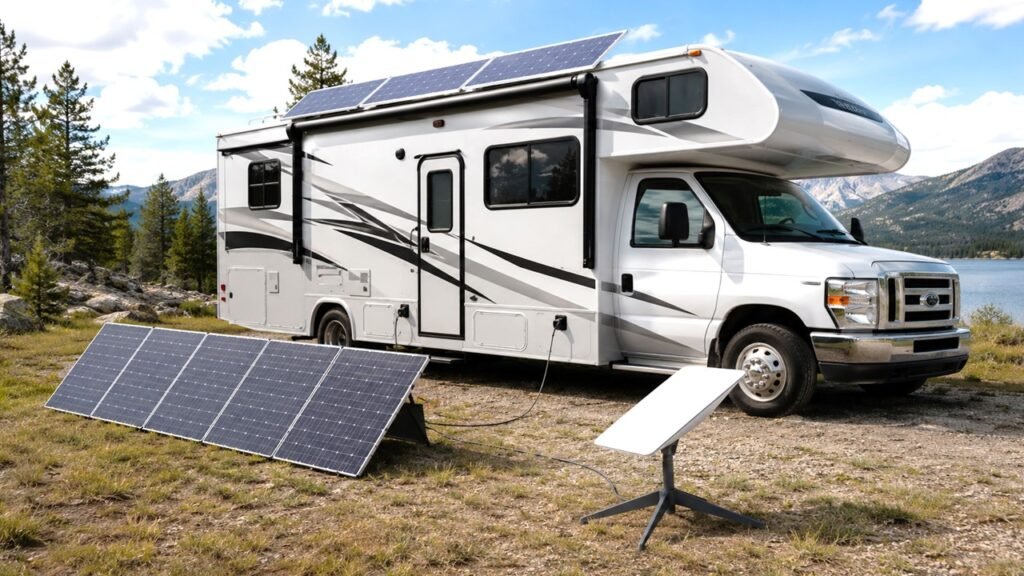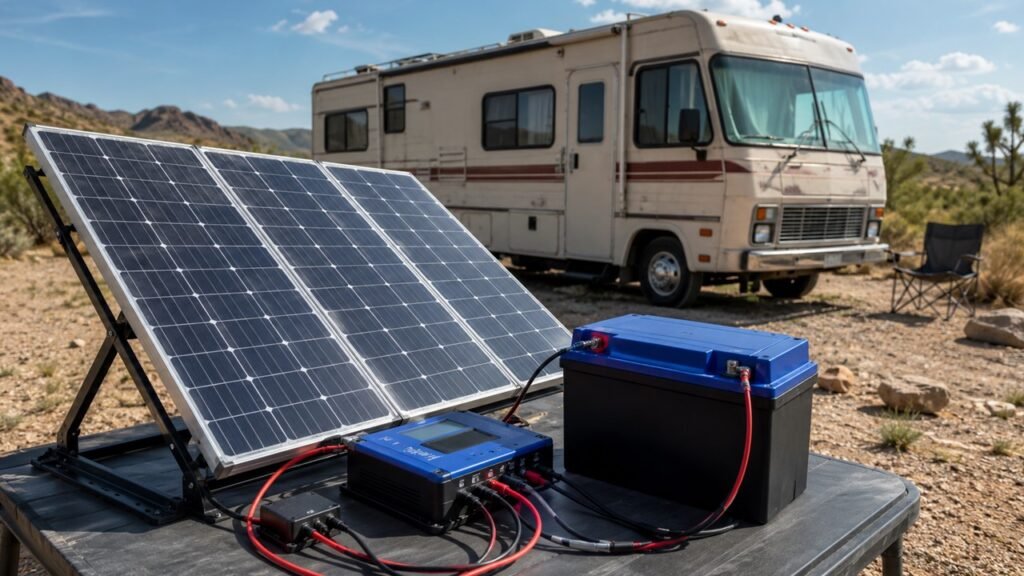
If you’re wondering how fast RV solar panels charge batteries, the simple answer is this: charging speed depends on your solar panel wattage, battery size, sunlight hours, battery type, and charge controller. A small 100W RV solar panel may take 2 to 3 sunny days to recharge a 12V 100Ah battery, while a 200W to 400W setup can often do it in about one good day.
But real-world RV solar charging is not always perfect. Shade, clouds, flat roof panels, heat, wiring loss, and daily power use can all slow things down. That’s why the proper way to estimate charging time is to look at your battery capacity, your solar output, and how much energy you actually use while camping.
Key Summary
- RV solar panel charging speed depends on panel wattage, battery capacity, battery type, sunlight hours, and charge controller efficiency.
- A 100W RV solar panel usually takes 10 to 15 peak sun hours to recharge a 12V 100Ah battery.
- A 200W RV solar setup can often recharge a 12V 100Ah battery in 5 to 8 peak sun hours.
- Lithium RV batteries usually charge faster and more efficiently than lead-acid batteries.
- MPPT charge controllers improve solar charging efficiency compared with PWM controllers.
- Real-world RV solar output is usually lower than the rated panel wattage because of heat, shade, wiring loss, roof angle, and weather.
How Fast Do RV Solar Panels Charge Batteries?
RV solar panels usually charge batteries in a few peak sun hours to a few sunny days. The exact speed depends on your solar panel size, battery capacity, sunlight, battery type, and charge controller.
The key phrase here is peak sun hours. Peak sun hours are the strong sunlight hours when your solar panels produce their best usable power. Most RVers get around 4 to 5 good peak sun hours per day, depending on location, season, and weather.
A 200W RV solar panel does not send 200W into the battery all day. That 200W rating is based on ideal lab conditions. In real camping conditions, you usually get less because of roof angle, heat, dust, wiring loss, clouds, and shade.
Most RV solar panels charge batteries at about 60% to 85% of their rated output in real-world use. So a 200W RV solar panel may realistically deliver around 120W to 170W during the best sunlight hours.
That is why two RVers can use the same 200W solar panel and get different results. One camper parked in full desert sun may recharge quickly. Another camper parked under trees or using flat roof panels in winter may charge much slower.
RV Solar Battery Charging Time: Quick Reference Table
This table gives a quick overview of how long common RV solar panel sizes take to recharge a typical 12V 100Ah battery under average conditions.
| RV Solar Panel Size | Estimated Daily Solar Output | Time To Recharge 12V 100Ah Lithium Battery | Time To Recharge 12V 100Ah Lead-Acid Battery |
| 100W | 400Wh to 500Wh/day | 2 to 3 sunny days | 3 to 4 sunny days |
| 200W | 800Wh to 1,000Wh/day | 1 to 1.5 sunny days | 1.5 to 2.5 sunny days |
| 300W | 1,200Wh to 1,500Wh/day | 1 sunny day or less | 1 to 2 sunny days |
| 400W | 1,600Wh to 2,000Wh/day | Half day to 1 sunny day | 1 to 1.5 sunny days |
| 600W | 2,400Wh to 3,000Wh/day | A few peak sun hours | Half day to 1 sunny day |
| 800W | 3,200Wh to 4,000Wh/day | Fast recovery for larger banks | Faster recovery for larger banks |
These charging times are realistic estimates based on 4 to 5 peak sun hours per day and normal system losses. Your actual RV solar charging speed may be faster in strong summer sun or slower with clouds, shade, flat panels, or older batteries.
The Simple Formula To Estimate RV Solar Charging Time
The easiest way to estimate RV solar charging time is to compare how much energy your battery needs with how much real charging power your solar panels can produce.
Use this simple formula:
Charging time = Battery energy needed ÷ Real solar charging output
First, convert your RV battery size into watt-hours. This makes the math easier because solar panels are rated in watts.
12V battery watt-hours = Battery Ah × Battery voltage
So a 12V 100Ah RV battery stores about 1,200Wh of energy.
Here are the main numbers you need:
- Battery capacity means how much energy the RV battery can store.
- Depth of discharge means how much battery capacity you used before recharging.
- Solar panel wattage means the rated output of your RV solar panels.
- Efficiency loss means power lost through the charge controller, wiring, heat, angle, and battery charging process.
Example: 200W Solar Panel Charging A 12V 100Ah RV Battery
Let’s say you have a 12V 100Ah RV battery and you used 80% of it overnight.
The math looks like this:
- Battery size: 12V × 100Ah = 1,200Wh
- Energy used: 80% of 1,200Wh = 960Wh
- Real solar output: 200W × 75% = 150W
- Charging time: 960Wh ÷ 150W = 6.4 peak sun hours
So, a 200W RV solar panel would need about 6.4 peak sun hours to replace that energy.
If you get 5 peak sun hours per day, this setup would usually recharge in about one sunny day to one and a half days. If the day is cloudy or your panels are partly shaded, expect it to take longer.
How Battery Size Changes RV Solar Charging Speed
The bigger your RV battery bank is, the longer it takes to recharge. That sounds obvious, but it is one of the biggest mistakes RVers make when sizing solar.
A 200W solar panel may work fine for a small 50Ah or 100Ah battery. But that same panel will feel slow if you are trying to recharge a 200Ah, 300Ah, or 400Ah battery bank.
| Battery Bank Size | Approx Battery Capacity | 200W Solar Charging Time | 400W Solar Charging Time | 600W Solar Charging Time |
| 12V 50Ah | 600Wh | 3 to 5 peak sun hours | 2 to 3 peak sun hours | 1 to 2 peak sun hours |
| 12V 100Ah | 1,200Wh | 6 to 8 peak sun hours | 3 to 5 peak sun hours | 2 to 3 peak sun hours |
| 12V 200Ah | 2,400Wh | 12 to 16 peak sun hours | 6 to 8 peak sun hours | 4 to 6 peak sun hours |
| 12V 300Ah | 3,600Wh | 18 to 24 peak sun hours | 9 to 12 peak sun hours | 6 to 8 peak sun hours |
| 12V 400Ah | 4,800Wh | 24 to 32 peak sun hours | 12 to 16 peak sun hours | 8 to 11 peak sun hours |
Larger battery banks are great for RV boondocking because they let you store more power for nighttime and cloudy days. But they also need larger solar arrays if you want to recharge them quickly.
Lithium vs Lead-Acid: Which RV Battery Charges Faster?
Lithium RV batteries usually charge faster than lead-acid batteries. They also waste less energy during charging and give you more usable capacity from the same rated amp-hours.
That does not mean lead-acid batteries are useless. They can still work for budget RV setups. But if fast solar charging matters to you, lithium is usually the better choice.
Lithium RV Batteries Charge Faster And Waste Less Energy
LiFePO4 lithium batteries accept solar charging more efficiently than lead-acid batteries. They can also handle deeper discharge without the same level of damage.
In simple terms, a 100Ah lithium battery gives you more usable power than a 100Ah lead-acid battery. It also spends less time in the slow top-off stage near full charge.
That makes lithium better for modern RV solar setups, especially if you boondock often, run a 12V fridge, use an inverter, or depend on solar as your main charging source.
Lead-Acid RV Batteries Charge Slower Near Full
Lead-acid batteries charge in stages: bulk, absorption, and float.
The bulk stage is the faster part. This is when the battery accepts more current and charges from a lower state of charge.
The absorption stage is slower. This happens near the top of the charge, usually after the battery reaches around 80%. At this point, the battery accepts power more slowly.
The float stage maintains the battery once it is full.
This is why a lead-acid RV battery may look like it charges quickly at first, then slows down near full. That last 20% can take several extra hours, especially when charging from solar.
Lithium vs Lead-Acid Solar Charging Comparison
When estimating how fast RV solar panels charge batteries, battery chemistry matters just as much as solar panel size. Lithium and lead-acid batteries accept solar energy differently, which can significantly affect real-world charging times.
| Battery Type | Usable Capacity | Charging Efficiency | Top-Off Speed | Best For |
| LiFePO4 Lithium | 80% to 95% | Very high | Faster | Boondocking, solar-heavy RVs, long-term use |
| AGM Lead-Acid | Around 50% | Moderate | Slower | Budget setups, occasional camping |
| Flooded Lead-Acid | Around 50% | Lower | Slowest | Older RV systems, low-cost replacements |
How Solar Panel Wattage Affects RV Battery Charging
Solar panel wattage has a direct impact on RV battery charging speed. More solar wattage usually means faster charging, as long as the rest of your system can handle it.
Your battery, charge controller, wiring, and fuse sizing all need to match the solar array. Adding more panels without checking the system limit can create poor performance or safety issues.
For most RVers, the real question is not just “how much solar can I fit?” It is “how much solar do I need to replace my daily battery use?”
How Fast Does A 100W RV Solar Panel Charge A Battery?
A 100W RV solar panel is best for light use. It works well for battery maintenance, LED lights, phone charging, roof vent fans, and small 12V loads.
It can recharge a 12V 100Ah battery, but you need patience. From a deep discharge, a 100W panel usually takes 2 to 3 sunny days to recharge a 100Ah lithium battery.
For lead-acid batteries, it can take even longer because the final charging stage is slower.
How Fast Does A 200W RV Solar Panel Charge A Battery?
A 200W RV solar setup is a better minimum for weekend camping. It gives you enough solar to recover light to moderate daily use in good sunlight.
In real-world conditions, 200W of solar can often replace around 40Ah to 60Ah of battery use in one sunny day.
That can be enough for lights, phone charging, a water pump, fans, and limited 12V fridge use, depending on your setup.
How Fast Does A 400W RV Solar Panel Charge A Battery?
A 400W RV solar setup is a strong starting point for regular off-grid camping. It can recharge a 100Ah lithium battery fairly quickly in good sun.
It can also support more normal RV use, including lights, fans, water pump, device charging, laptops, and a 12V fridge.
For many RVers, 400W feels like the first solar size that actually keeps up with daily camping use instead of only slowing down battery drain.
How Fast Does A 600W To 800W RV Solar Setup Charge Batteries?
A 600W to 800W RV solar setup is more realistic for larger battery banks and longer boondocking trips.
This size range makes sense if you have 200Ah to 400Ah of battery capacity, run a portable power station, use an inverter, work from your RV, or camp off-grid for several days at a time.
With good sun, 600W to 800W of solar can recover a lot of daily use and charge larger batteries much faster than a small 100W or 200W setup.
How Many Amp-Hours Can RV Solar Replace Per Day?
Many RVers think in amp-hours instead of watt-hours. That is fine, but remember that amp-hours only make sense when the battery voltage is known.
For a 12V RV battery system, here is a simple daily estimate.
| Solar Panel Size | Estimated Daily Output | Approx 12V Amp-Hours Replaced Per Day |
| 100W | 400Wh to 500Wh | 30Ah to 40Ah |
| 200W | 800Wh to 1,000Wh | 65Ah to 80Ah |
| 400W | 1,600Wh to 2,000Wh | 130Ah to 165Ah |
| 600W | 2,400Wh to 3,000Wh | 200Ah to 250Ah |
| 800W | 3,200Wh to 4,000Wh | 265Ah to 330Ah |
These numbers are useful for planning, but they are not guaranteed. Actual amp-hours can drop when your panels are flat on the RV roof, partly shaded, dirty, used in winter, or exposed to weak sunlight for most of the day.
How Long Does RV Solar Take To Recover Daily Battery Use?
Most RVers do not need to recharge their battery from 0% to 100% every day. What really matters is replacing the power you used yesterday.
For example, if you used 60Ah overnight, your solar setup only needs to recover that 60Ah the next day. That is why daily battery recovery is often more useful than full battery recharge time.
If your solar panels can replace your daily power use in one sunny day, your RV battery bank stays balanced. If your daily use is higher than your solar production, your battery will slowly drop over time.
| Daily RV Power Use | Common Loads | Solar Needed To Recover In One Sunny Day |
| 30Ah to 40Ah | Lights, phone charging, water pump | 100W to 200W |
| 50Ah to 80Ah | Lights, fans, pump, 12V fridge | 200W to 400W |
| 100Ah to 150Ah | Fridge, fans, laptops, inverter use | 400W to 600W |
| 200Ah+ | Heavy inverter use, long boondocking days | 800W+ |
These numbers assume decent sunlight and normal RV solar losses. If you camp in shade, winter, rain, or heavy cloud cover, you may need more solar or a backup charging option.
What Affects RV Solar Battery Charging Speed?
Several factors determine how quickly your RV solar panels can recharge your batteries. Even with the same solar setup, charging times can vary based on weather, battery type, and overall system efficiency.
- Solar panel wattage affects how much charging power your RV system can produce.
- Peak sun hours affect how many strong charging hours you get each day.
- Battery capacity affects how long the battery takes to refill.
- Battery chemistry affects how efficiently the battery accepts solar energy.
- Charge controller type affects how much panel power reaches the battery.
- Roof panel angle affects solar output because flat panels usually produce less than tilted panels.
- Shade reduces charging speed sharply, even when only part of the panel is covered.
- Heat can reduce solar panel output during hot summer camping.
- Dirty panels reduce charging speed by blocking sunlight.
- Wiring size affects voltage drop between the panels, controller, and battery.
MPPT vs PWM Charge Controllers: Does It Change Charging Speed?
Yes, the charge controller can change RV solar charging speed. It controls how power moves from your solar panels into your RV battery.
An MPPT controller usually charges faster because it can pull more usable power from the same solar panels. A PWM controller can still work, but it is usually less efficient.
MPPT Controllers Charge RV Batteries More Efficiently
MPPT stands for Maximum Power Point Tracking. In simple terms, it helps your solar panels operate closer to their best power range.
This is especially useful when your panel voltage is higher than your battery voltage. Instead of wasting that extra potential, an MPPT controller converts it into more usable charging current.
For RV solar systems above 200W, MPPT is usually the better choice. It costs more, but it helps you get more power from the panels you already have.
PWM Controllers Are Cheaper But Slower
PWM stands for Pulse Width Modulation. It is a simpler and cheaper type of solar charge controller.
A PWM controller can work for small solar setups, battery maintainers, and light trickle-charging systems. But for serious RV solar charging, it usually leaves more power unused.
If you only have a small 50W or 100W panel, PWM may be acceptable. If you have 200W, 400W, or more, MPPT is usually worth the upgrade.
MPPT vs PWM Quick Comparison
| Feature | MPPT Controller | PWM Controller |
| Efficiency | Higher | Lower |
| Charging speed | Faster | Slower |
| Cost | More expensive | Cheaper |
| Best use | RV solar systems above 200W | Small trickle-charge setups |
| Upgrade value | High | Limited |
Fixed Roof Panels vs Portable Solar Panels For Charging RV Batteries
Both fixed and portable solar panels can charge RV batteries. The better choice depends on how you camp.
Fixed roof panels are easier to live with because they are always installed and always connected. Portable panels can charge better in some campsites because you can move them into the sun.
Fixed RV Roof Panels Are Convenient
Fixed RV roof panels are simple because they charge whenever sunlight hits the roof. They can charge while you are parked, and in many setups, they can also charge while you are driving.
The downside is that roof panels are harder to aim. If your RV is parked in shade or the panels are lying flat, charging speed can drop.
They are still a great option if you want hands-off solar charging without setting up panels every time you stop.
Portable Solar Panels Can Charge Faster In Shade-Prone Campsites
Portable solar panels give you more control. You can park the RV in shade and place the panels in direct sunlight.
This can make a big difference at wooded campsites, state parks, and hot summer locations where you do not want your RV sitting in full sun all day.
The tradeoff is setup time. You have to carry them, position them, connect them, and store them again when you leave.
Fixed vs Portable RV Solar Charging Comparison
| Setup Type | Charging Advantage | Main Limitation | Best For |
| Fixed roof panels | Always connected and convenient | Hard to aim at the sun | Full-time RVers, simple charging |
| Portable panels | Easier to aim and move | Must be set up manually | Shaded campsites, flexible camping |
| Mixed setup | Best overall charging flexibility | Higher cost and more gear | Boondocking and longer trips |
Can RV Solar Fully Recharge Batteries While You Are Camping?
Yes, RV solar can fully recharge batteries while you are camping if the solar array is large enough for your daily power use.
The important part is balance. Your solar panels need to replace at least as much energy as your RV uses each day.
For example, if your RV uses 1,200Wh per day and your solar panels produce 1,500Wh per day, your battery can recover well in good sun.
But if your RV uses 1,200Wh per day and your solar panels only produce 800Wh per day, you are short by 400Wh daily. After a few days, your battery will slowly drain even though the solar panels are working.
Can RV Solar Panels Charge Batteries While Driving?
Yes, fixed RV solar panels can charge batteries while driving if they are properly wired through a solar charge controller to the RV battery bank.
This can be helpful on travel days because your panels may keep adding power while you are on the road. The amount of charge still depends on sunlight, roof angle, shade from roof accessories, and weather.
Solar charging while driving is separate from alternator charging. Your alternator can charge the RV battery through a different system, usually with a battery isolator or DC-to-DC charger.
So, if your RV has both solar and alternator charging, they can help in different ways. Solar uses sunlight. Alternator charging uses engine power while driving.
Can RV Solar Panels Overcharge Batteries?
RV solar panels should not overcharge batteries if the system has a properly sized solar charge controller.
The charge controller regulates voltage and current before power reaches the battery. It helps protect the battery from overcharging, unsafe voltage, and poor charging behavior.
This is why you should not connect solar panels directly to an RV battery without a charge controller. Direct connection can damage the battery and create a safety risk.
How To Make RV Solar Panels Charge Batteries Faster
- Use an MPPT charge controller instead of a PWM controller.
- Add more solar panel wattage if your roof or campsite allows it.
- Keep solar panels clean and free from dust, pollen, and bird droppings.
- Park where panels get direct sun during peak charging hours.
- Use portable panels when your RV roof is shaded.
- Use properly sized wiring to reduce voltage drop.
- Upgrade to LiFePO4 batteries if you camp off-grid often.
- Avoid running heavy inverter loads while trying to recharge quickly.
- Monitor battery state of charge with a battery monitor.
Common Mistakes That Slow Down RV Solar Charging
- Assuming a 200W panel produces 200W all day.
- Ignoring peak sun hours when estimating charge time.
- Using undersized wiring between panels, controller, and battery.
- Parking under partial shade and expecting full solar output.
- Using lead-acid batteries without allowing enough absorption time.
- Installing too little solar for a large RV battery bank.
- Forgetting that daily appliance use slows down net battery recovery.
- Relying only on the RV factory battery monitor instead of a real shunt-based monitor.
What Size RV Solar Setup Do You Need For Fast Battery Charging?
The right RV solar setup depends on how much power you use each day. Battery size matters, but daily watt-hour use matters more.
A huge battery bank is useful, but it will still recharge slowly if your solar array is too small. For fast battery charging, your solar panels should match your camping style and daily loads.
| RV Camping Style | Suggested Solar Size | Suggested Battery Size | Expected Charging Result |
| Weekend camping | 100W to 200W | 50Ah to 100Ah | Maintains light use and recovers slowly |
| Regular off-grid camping | 300W to 400W | 100Ah to 200Ah | Recovers daily use in good sun |
| Boondocking | 600W to 800W | 200Ah to 400Ah | Supports heavier daily use |
| Full-time RV living | 800W to 1,200W+ | 400Ah+ | Better for long off-grid stays |
Use this table as a starting point, not a fixed rule. The best RV solar size should match your daily watt-hour use, your battery bank, and how often you camp without shore power.
Real-World Example: Charging An RV Battery After A Normal Camping Day
Let’s say you have a 200Ah lithium battery bank, 400W of RV solar panels, and around 5 peak sun hours.
Now let’s say your RV uses about 1,500Wh in a normal camping day. That may include a 12V fridge, lights, fans, water pump, phone charging, and some laptop use.
| Item | Estimate |
| Daily RV power used | 1,500Wh |
| 400W solar daily production | 1,600Wh to 2,000Wh |
| Net result | Battery can recover in one sunny day |
In this example, the 400W solar setup can usually replace the daily battery use in good sun. That means the battery bank can stay healthy without dropping lower every day.
But this setup still depends on weather. A cloudy day may cut solar production sharply, so you may need to reduce power use or use a backup charger.
Do You Need A Backup Charger With RV Solar?
Solar is great for quiet, fuel-free battery charging, but many RVers still keep a backup charging option.
That does not mean your solar setup failed. It just means real camping conditions are not always perfect.
A few cloudy days, heavy shade, winter camping, or higher inverter use can drain batteries faster than solar can refill them.
Common backup options include shore power, a generator, a DC-to-DC alternator charger, a portable power station, or a larger battery bank.
For weekend trips in good sun, solar may be enough by itself. For long boondocking trips, a backup charger gives you more control and less stress.
Final Verdict
RV solar panels can charge batteries in a few peak sun hours or several days. The real speed depends on your solar wattage, battery size, battery chemistry, charge controller, sunlight conditions, and how much power you are using while charging.
For most RV owners, a 200W to 400W RV solar setup is the sweet spot for recharging a 12V 100Ah battery in about one sunny day. A 100W panel can work, but it is slower and better for light use or battery maintenance.
If you only use lights, fans, phone chargers, and a water pump, a small 100W to 200W setup may be enough. If you run a 12V fridge, laptops, inverter loads, or camp off-grid for several days, 400W to 800W of solar with lithium batteries is a much safer starting point.
Related FAQs
How Long Does A 100W Solar Panel Take To Charge An RV Battery?
A 100W solar panel typically takes 2 to 3 sunny days to fully charge a 12V 100Ah RV battery from a low state of charge. Charging time varies based on battery type, sunlight, and system efficiency.
How Long Does A 200W Solar Panel Take To Charge A 12V 100Ah Battery?
A 200W solar panel can charge a 12V 100Ah battery in about 6 to 8 peak sun hours under ideal conditions. In real-world RV use, it usually takes around 1 day of good sunlight.
How Long Does A 400W Solar Panel Take To Charge An RV Battery?
A 400W solar setup can recharge a 12V 100Ah lithium RV battery in about 3 to 5 peak sun hours. With strong sunlight, many RV batteries can recover within a single day.
Can A 100W Solar Panel Keep An RV Battery Charged?
Yes, a 100W solar panel can keep an RV battery charged if your daily power use is low. It works well for lights, phone charging, fans, and battery maintenance.
How Many Solar Panels Do I Need To Charge My RV Battery?
Most RVs need 200W to 400W of solar for regular off-grid camping, while heavy power users may need 600W or more. The right size depends on your battery capacity and daily energy consumption.
Do RV Solar Panels Charge Batteries On Cloudy Days?
Yes, RV solar panels still charge batteries on cloudy days, but output is significantly reduced. Expect slower charging and lower energy production compared to full sun.
Is Lithium Better Than Lead-Acid For RV Solar Charging?
Yes, lithium batteries are generally better for RV solar systems because they charge faster, discharge deeper, and are more efficient. They also provide more usable capacity than lead-acid batteries.
Can I Charge My RV Battery Directly From A Solar Panel?
No, you should not connect a solar panel directly to an RV battery. A solar charge controller is required to regulate voltage and prevent battery damage.
Why Is My RV Solar Charging So Slow?
RV solar charging may be slow due to shade, cloudy weather, dirty panels, poor panel angle, or an undersized solar system. Battery type and wiring issues can also reduce charging speed.
Can RV Solar Panels Charge Batteries While Driving?
Yes, RV solar panels can charge batteries while driving as long as sunlight reaches the panels and they are connected through a charge controller. This charging works independently of the vehicle alternator.

Daniel Brooks writes about RV living, gear, and travel planning with a focus on everyday usability. His guides break down complex topics into simple advice for real RV owners. He reviews products with long-term use in mind, not marketing hype.