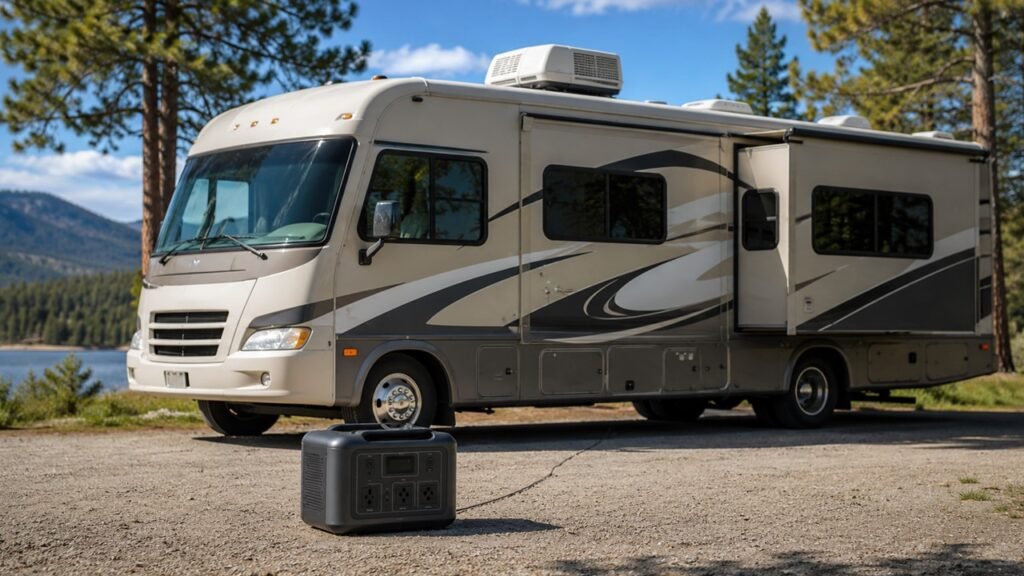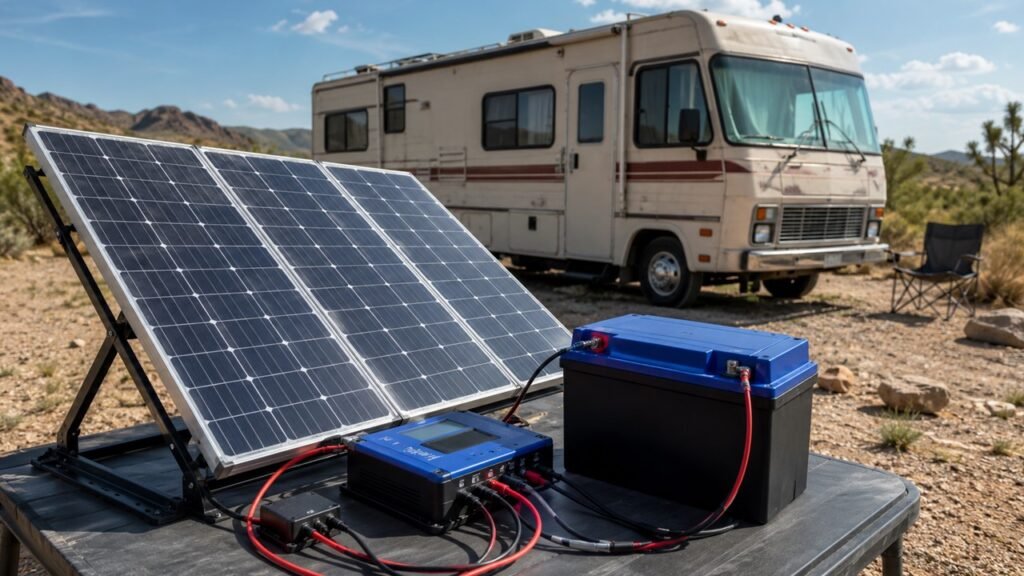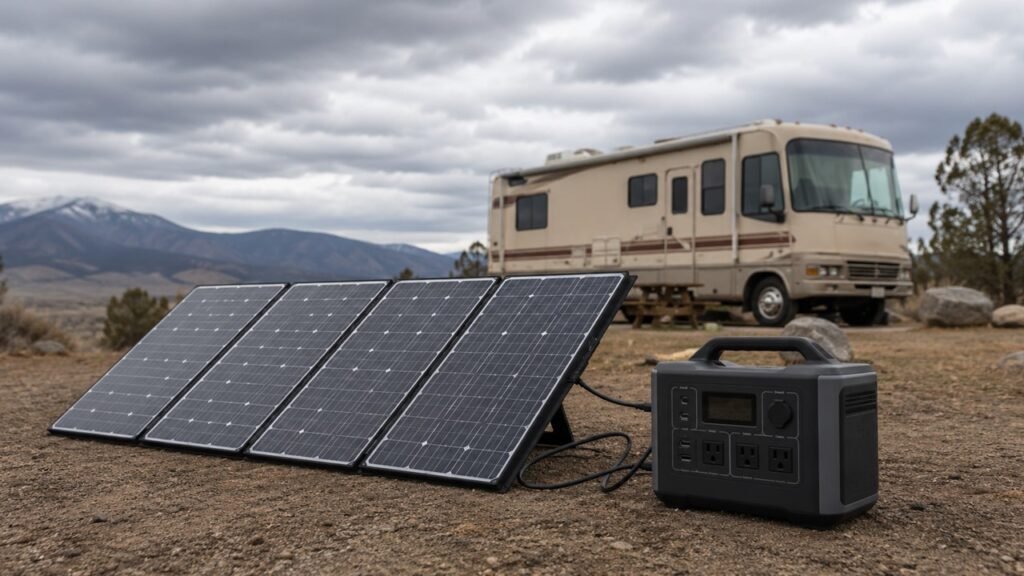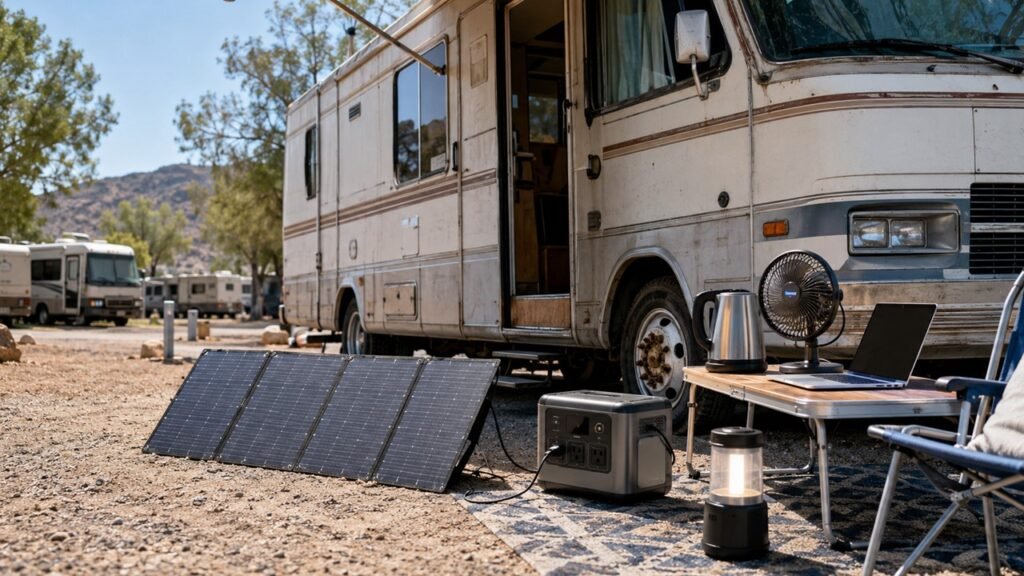
To keep RV batteries healthy in winter, store them at the correct charge level, disconnect hidden power drains, and keep them clean and dry. Lead-acid and AGM batteries are typically stored fully charged, while lithium LiFePO4 batteries are often stored at a partial charge, depending on manufacturer guidance.
Cold weather reduces battery performance and can increase the risk of storage-related damage. The right winter care routine depends on your battery type, especially when it comes to charging and storage.
Key Takeaways
- Lead-acid and AGM RV batteries should be stored fully charged before winter.
- Lithium LiFePO4 batteries are usually better stored partially charged, often around 40 to 60%.
- Disconnect the negative cable or use the RV battery disconnect switch to prevent parasitic drain.
- Do not charge a LiFePO4 battery below 32°F / 0°C unless it has low-temperature charging protection, a heater, or the manufacturer clearly allows it.
- Check stored batteries every 30 to 60 days, especially lead-acid batteries.
- Clean and protect terminals before storage to reduce corrosion.
- Use a smart maintainer only if it matches your battery chemistry.
Disclaimer: This article is for informational purposes only. Always follow your battery manufacturer’s instructions and safety guidelines. If you are unsure about battery maintenance, charging, or storage procedures, consult a qualified RV technician or battery professional.
Why Winter Is Hard on RV Batteries
Winter affects RV batteries in two main ways: it reduces available power and increases the risk of storage damage. A battery may still be charged, but it may not deliver the same usable capacity in cold weather.
Lead-acid batteries face a special winter risk. When a lead-acid battery is discharged, its electrolyte becomes more water-like and freezes at a much higher temperature. Trojan Battery notes that a fully charged battery electrolyte can freeze around -92°F, while a battery at 40% state of charge can freeze around 16°F [1].
Lithium batteries have a different winter problem. They usually store well in cold conditions, but charging them below freezing can damage the cells. That is why lithium RV owners need to pay close attention to battery temperature, BMS protection, and charger settings [4].
The main winter battery risks are:
- Reduced battery capacity in cold weather
- Hidden power drains from RV electronics
- Freezing risk in discharged lead-acid batteries
- Sulfation in undercharged lead-acid batteries
- Cold-charging damage in lithium batteries
- Corrosion from moisture around terminals
- Wrong charger settings for AGM or lithium batteries
Know Your RV Battery Type Before Winter Storage
The most common mistake RV owners make is treating every battery the same. A flooded lead-acid battery, an AGM battery, and a LiFePO4 battery do not need the same winter routine.
Flooded Lead-Acid Batteries
Flooded lead-acid batteries need the most winter maintenance. They contain liquid electrolyte, so state of charge matters a lot in freezing weather.
Store flooded lead-acid RV batteries at or near 100% charge. A discharged lead-acid battery is more likely to freeze, sulfate, and lose capacity.
Before storage, inspect the case, clean the top of the battery, and check electrolyte levels if your battery has removable caps. Use distilled water only, and follow the battery label or manual. Do not overfill cells.
For flooded lead-acid batteries:
- Store at or near 100% charge.
- Check electrolyte levels before winter storage.
- Use distilled water only if topping off is needed.
- Keep the battery case clean and dry.
- Disconnect the battery from RV loads.
- Recharge if voltage drops too low during storage.
AGM Batteries
AGM batteries are sealed lead-acid batteries. AGM stands for Absorbent Glass Mat, which means the electrolyte is held in fiberglass mats inside the battery. AGM batteries are usually maintenance-free and do not require water additions [3].
However, AGM batteries still need a full charge before winter storage. They can still lose charge over time, and they can still suffer from sulfation if stored undercharged for too long.
For AGM batteries:
- Store fully charged.
- Keep them disconnected from RV power loads.
- Use an AGM-compatible smart maintainer if stored for months.
- Check voltage every 30 to 60 days.
- Keep terminals clean and dry.
Lithium LiFePO4 Batteries
Lithium LiFePO4 batteries are popular in RVs because they are lightweight, charge quickly, and provide more usable capacity than lead-acid batteries. They also have low self-discharge during storage.
The biggest winter risk is not storage. The biggest risk is charging below freezing. Many LiFePO4 batteries should not be charged below 32°F / 0°C unless they have low-temperature charging protection, a self-heating system, or a manufacturer-approved cold-charge design [4].
Important warning: Do not charge a LiFePO4 RV battery below 32°F / 0°C unless the battery manual clearly says it is safe. A BMS may block charging when the battery is too cold, but you should not rely on guesswork.
For lithium LiFePO4 batteries:
- Store around 40 to 60% charge, or follow the manufacturer’s storage recommendation.
- Battle Born’s manual says to store its batteries at least 50% charged and disconnected from charge or discharge sources [4].
- Disconnect lithium batteries from all loads.
- Store indoors if possible.
- Avoid charging below freezing.
- Check state of charge every few months.
- Make sure the solar controller, converter, or charger has a lithium profile.
Quick RV Battery Winter Storage Comparison
Use this table as a fast reference for the best winter storage practices for each RV battery type. Always follow your battery manufacturer’s recommendations when they differ.
| Battery Type | Best Winter Storage Charge | Main Winter Risk | Maintenance Needed | Best Storage Method |
| Flooded lead-acid | 100% | Freezing and sulfation | Check water and voltage | Fully charged, disconnected, maintained |
| AGM | 100% | Slow discharge and sulfation | Check voltage | Fully charged with an AGM-compatible maintainer |
| Lithium LiFePO4 | 40 to 60%, or manufacturer recommendation | Charging below freezing | Check SOC and BMS status | Partially charged, disconnected, above freezing if possible |
Step-by-Step: How to Store RV Batteries for Winter
A simple winter storage routine can prevent battery damage, reduce spring maintenance, and extend battery life. Follow the steps below in order, adjusting the charging and storage recommendations to match your specific battery chemistry.
Step 1: Turn Off RV Power Loads
RVs can drain batteries even when everything looks turned off. These small hidden drains are called parasitic loads. Over a few weeks or months, they can pull a battery down far enough to cause winter storage damage.
Common RV parasitic loads include:
- LP gas detector
- Carbon monoxide detector
- Stereo memory
- Refrigerator control board
- Inverter standby draw
- Tank monitor panel
- Clocks and control boards
- Solar controller standby draw
- WiFi router or booster
- USB outlets with indicator lights
Turning off lights and appliances is not always enough. If the RV will sit unused, disconnect the battery or use a real battery disconnect switch.
Step 2: Charge the Battery Based on Battery Type
Charge level is one of the most important winter battery health factors.
Lead-acid and AGM batteries should be fully charged before storage. A fully charged lead-acid battery is much more resistant to freezing than a discharged one [1].
Lithium LiFePO4 batteries usually should not be stored full for long periods unless the battery manufacturer says so. Many lithium manufacturers recommend partial-charge storage, often around 40 to 60%, or at least 50% state of charge.
Do not use one rule for every battery. The right storage charge depends on chemistry.
Step 3: Disconnect the Battery
Disconnecting the battery protects it from hidden RV loads. It also makes storage safer and easier to monitor.
Follow this basic order:
- Turn off shore power.
- Turn off the inverter.
- Turn off the RV battery disconnect switch if available.
- Disconnect the negative cable first.
- Disconnect the positive cable second if removing the battery.
- Label cables before removal if your battery bank has multiple connections.
- Keep metal tools away from both terminals at the same time.
When reconnecting in spring, connect the positive cable first, then the negative cable.
Step 4: Clean the Battery Case and Terminals
Dirty batteries can create small current paths across the case, especially when moisture is present. Corroded terminals also add resistance and can cause weak performance when you reconnect the RV in spring.
Clean the battery before storage:
- Remove dirt and moisture from the case.
- Clean corrosion from terminals.
- Use baking soda and water carefully for lead-acid corrosion cleanup.
- Do not allow cleaning solution to enter battery cells.
- Dry everything completely.
- Apply terminal protectant or dielectric grease after cleaning.
- Replace damaged cables or loose terminals before storage.
Step 5: Choose the Right Storage Location
A good storage location is dry, ventilated, stable, and protected from extreme temperature swings. A battery sitting in a wet, freezing, dirty compartment is more likely to have problems by spring.
Good storage locations include:
- Heated garage
- Basement
- Climate-controlled storage room
- Dry indoor utility area
- Insulated RV battery compartment
- RV storage with reliable shore power and a smart maintainer
You can leave some batteries installed if the RV has safe shore power, a compatible charger, and no uncontrolled parasitic loads. However, removing the batteries is often safer when the RV is stored outdoors without power.
Step 6: Use a Smart Battery Maintainer When Needed
A smart battery maintainer is better than an old manual trickle charger for winter storage. A smart maintainer can charge the battery, switch to float or maintenance mode, and help prevent overcharging when used correctly [6].
The key phrase is “when used correctly.” The maintainer must match the battery chemistry.
Use the right mode for:
- Flooded lead-acid
- AGM
- Gel, if applicable
- Lithium LiFePO4
Do not connect a random charger and leave it all winter without checking compatibility. Older converters and basic chargers may overcharge lead-acid batteries or use the wrong profile for lithium batteries.
Step 7: Check Battery Voltage During Winter
Even stored batteries need occasional checks. Lead-acid batteries need more attention than lithium batteries because they self-discharge faster and are more vulnerable when stored undercharged.
| Battery Type | How Often to Check | What to Check |
| Flooded lead-acid | Every 30 days | Voltage and water level |
| AGM | Every 30 to 60 days | Voltage |
| Lithium LiFePO4 | Every 2 to 3 months | State of charge and BMS status |
Use a multimeter, battery monitor, or manufacturer app if your battery has Bluetooth. Write down the readings so you can see if the battery is slowly losing charge.
Should You Remove RV Batteries for Winter?
You should remove RV batteries for winter if the RV will be stored outdoors without shore power, if freezing temperatures are common, or if you cannot fully shut off parasitic loads.
Removing the battery gives you more control. You can store it in a cleaner, drier, more stable place. You can also connect it to the correct maintainer without depending on the RV converter.
Remove RV batteries if:
- Your RV is stored without shore power.
- Temperatures stay below freezing for long periods.
- Your RV has parasitic draws you cannot fully shut off.
- You have flooded lead-acid batteries that need water checks.
- You have lithium batteries without low-temperature charging protection.
- You cannot check the RV regularly during winter.
You may leave RV batteries installed if:
- The RV is connected to safe shore power.
- The converter or charger has the correct profile.
- You can check batteries monthly.
- The battery compartment stays dry.
- Flooded batteries can be checked and watered safely.
- Lithium batteries are not being charged below freezing.
Can You Leave an RV Plugged In All Winter?
Yes, you can leave an RV plugged in all winter if the converter or charger has a proper maintenance mode and is compatible with your battery type.
For lead-acid and AGM batteries, the charger should have a safe float or maintenance stage. Battery University explains that lead-acid charging voltage should be temperature-aware, and lower temperatures affect charging behavior [2].
For lithium batteries, the charger should have a lithium-compatible profile. The system should also prevent charging when the battery temperature is below the safe limit.
Be careful with older RV converters. Some older converters are not ideal for long-term battery maintenance. They may undercharge, overcharge, or fail to maintain the battery correctly. If you are unsure, check the converter model and compare it with your battery manufacturer’s charging recommendations.
How to Protect RV Batteries While Winter Camping
Winter camping is different from winter storage. In storage, the goal is to stop drain and preserve the battery. During winter camping, the goal is to keep the battery warm enough, charged enough, and protected from heavy overnight use.
Keep Batteries Warmer
Cold batteries deliver less usable power. Lithium batteries also need enough warmth to accept a charge safely.
Ways to keep RV batteries warmer include:
- Use an insulated battery box.
- Add closed-cell foam around the battery compartment.
- Keep batteries inside a heated compartment when possible.
- Avoid mounting batteries directly against cold metal surfaces.
- Seal drafts around the battery compartment.
- Keep battery cables tight and clean.
Do not fully seal flooded lead-acid batteries in an airtight box. Flooded batteries can vent gas while charging, so they need proper ventilation.
Use Battery Heating Pads or Blankets
Battery heating pads and battery blankets can help in freezing weather, especially for lithium RV batteries. A heating pad keeps the battery warm enough so the cells can accept charge from solar, shore power, generator power, or the alternator.
Use heating products designed for batteries. Do not use random household heating pads, space heaters, or unsafe DIY heat sources near batteries.
For lithium batteries, a self-heating battery can be a good choice for cold-weather RVing. Many heated lithium batteries use incoming charge power to warm the cells first, then allow charging after the internal temperature reaches a safe level.
Reduce Overnight Battery Drain
Winter camping often uses more battery power because the furnace fan, lights, fans, and electronics run longer. The furnace fan can be one of the biggest overnight 12V loads in cold weather.
To reduce overnight battery drain:
- Turn off the inverter when not needed.
- Use LED lights.
- Lower furnace runtime with better insulation.
- Charge devices during generator or solar charging windows.
- Avoid leaving DC appliances running overnight without checking load.
- Monitor battery state of charge before sleeping.
- Keep a backup charging plan in extreme cold.
Monitor Battery State of Charge
A battery monitor helps you see how much power is going in and out of your RV battery bank. This is more useful than guessing from lights, appliance behavior, or voltage alone.
A shunt-based battery monitor is especially helpful for lithium batteries because LiFePO4 voltage stays fairly steady through much of the discharge cycle. That makes voltage-only readings less useful for estimating remaining capacity.
Common Winter Battery Mistakes to Avoid
Many winter battery failures come from a few preventable mistakes. Avoiding these common errors can help extend battery life and reduce springtime surprises.
- Leaving batteries connected to parasitic loads for months
- Storing lead-acid batteries partly discharged
- Charging lithium batteries below freezing
- Using the wrong charger profile
- Forgetting to check flooded battery water levels
- Leaving corrosion on terminals
- Assuming shore power always means safe charging
- Mixing old and new batteries in the same bank
- Mixing different battery chemistries in one bank
- Storing batteries in wet or dirty areas
- Using an old manual charger as a long-term maintainer
- Forgetting to check battery voltage during winter
Spring Checklist: Bringing RV Batteries Back After Winter
Use this checklist before your first spring RV trip.
- Inspect the battery case for cracks, swelling, leaks, or damage.
- Check terminal condition and clean if needed.
- Measure voltage before reconnecting.
- Fully charge lead-acid or AGM batteries before use.
- Warm lithium batteries before charging if they were stored cold.
- Confirm lithium BMS status is normal.
- Reconnect the positive cable first.
- Reconnect the negative cable second.
- Test lights, water pump, fridge controls, and inverter.
- Confirm the converter, solar controller, or charger is working correctly.
- Check that your battery monitor is calibrated.
- Watch battery voltage and state of charge closely during the first trip.
Quick Winter Battery Maintenance Schedule
Use this simple schedule as a reminder throughout the off-season. Regular checks help catch problems early and keep batteries ready for spring use.
| Time | What to Do |
| Before winter storage | Charge battery, clean terminals, disconnect loads |
| First month | Check voltage and confirm there is no unexpected drain |
| Every 30 to 60 days | Recharge lead-acid or AGM batteries if needed |
| Every 2 to 3 months | Check lithium state of charge and BMS status |
| Before spring trip | Inspect, recharge, reconnect, and test RV systems |
When to Replace an RV Battery Before Winter
Winter exposes weak batteries. A battery that barely worked in fall may be dead by spring if it is already sulfated, damaged, or near the end of its service life.
Replacing a weak battery before winter can be smarter than storing a failing one for months. This is especially true if you depend on your RV battery for cold-weather camping, furnace power, or emergency backup power.
Signs your RV battery may need replacement include:
- It will not hold a charge.
- Voltage drops quickly after charging.
- Runtime is much shorter than before.
- The case is swollen, cracked, or leaking.
- Terminals are badly damaged.
- Flooded battery cells need water constantly.
- The battery smells unusual during charging.
- The battery gets hot while charging.
- The battery is past its expected service life.
If one battery in a multi-battery bank fails, test the others too. A weak battery can pull down the performance of the entire bank.
Conclusion
Keeping RV batteries healthy in winter comes down to four habits: charge them correctly, disconnect hidden loads, store them dry, and check them during the season.
Lead-acid and AGM batteries need full-charge storage because discharged lead-acid batteries are more likely to freeze and sulfate. Lithium LiFePO4 batteries need a different approach because cold charging is the main risk.
A few minutes of winter battery care can prevent spring starting problems, protect your RV’s electrical system, and help your batteries last for more camping seasons.
Related FAQs
Should I disconnect my RV battery for winter?
Yes, disconnect your RV battery if the RV will sit unused for weeks or months. This prevents hidden loads like detectors, clocks, control boards, and inverter standby draw from slowly draining the battery.
Should RV batteries be stored fully charged?
Lead-acid and AGM RV batteries should be stored fully charged. Lithium LiFePO4 batteries are usually better stored partially charged, often around 40 to 60%, unless the manufacturer recommends something different.
Can RV batteries freeze in winter?
Lead-acid batteries can freeze if they are discharged. A fully charged lead-acid battery is much more freeze-resistant because its electrolyte has a much lower freezing point [1].
Can I charge my lithium RV battery in freezing weather?
Do not charge a lithium LiFePO4 battery below 32°F / 0°C unless it has low-temperature charging protection, built-in heating, or manufacturer approval. Charging cold lithium cells can cause permanent damage [4].
How often should I check RV batteries in winter?
Check flooded lead-acid batteries about once a month. Check AGM batteries every 30 to 60 days. Lithium batteries usually need less attention, but checking every 2 to 3 months is still a good habit.
Is a trickle charger safe for RV batteries all winter?
A modern smart maintainer is safer than an old-style trickle charger. It should match your battery type and switch to maintenance mode after the battery is charged [6].
Can I leave my RV plugged into shore power all winter?
Yes, if your converter has a proper float or maintenance mode and is compatible with your battery type. For flooded lead-acid batteries, check electrolyte levels during long-term charging.
Are AGM batteries better than flooded batteries for winter storage?
AGM batteries are easier to store because they are sealed and maintenance-free. However, they are still lead-acid batteries, so they should be stored fully charged and checked during winter.
Do lithium RV batteries need a maintainer in winter?
Usually, lithium LiFePO4 batteries do not need constant maintenance charging because they have low self-discharge. Store them partially charged, disconnected, and check the manufacturer’s storage instructions.
What is the biggest winter mistake with RV batteries?
The biggest mistake is storing batteries while they are still connected to RV loads. A small hidden drain can discharge the battery over time and cause damage before spring.

Daniel Brooks writes about RV living, gear, and travel planning with a focus on everyday usability. His guides break down complex topics into simple advice for real RV owners. He reviews products with long-term use in mind, not marketing hype.