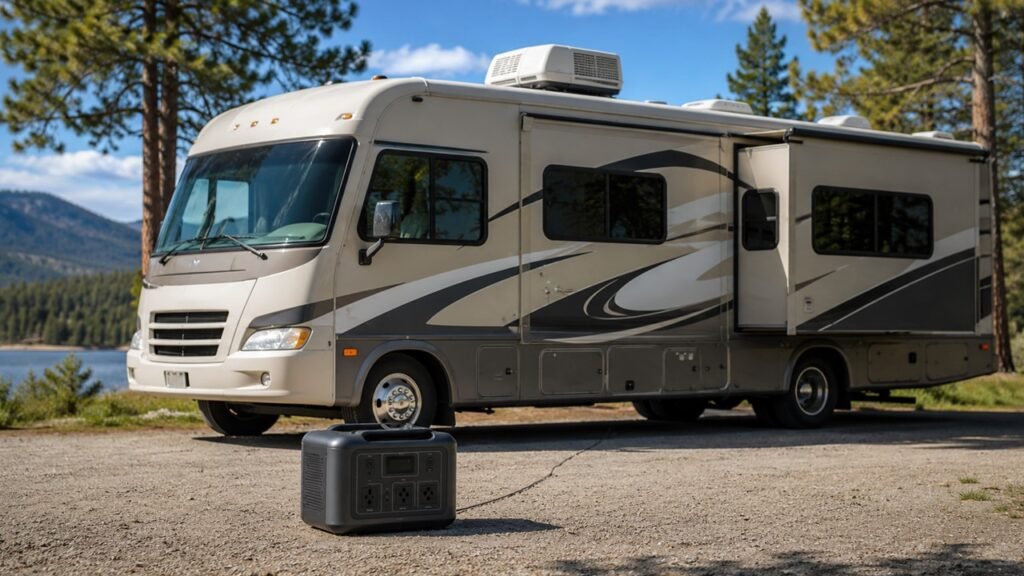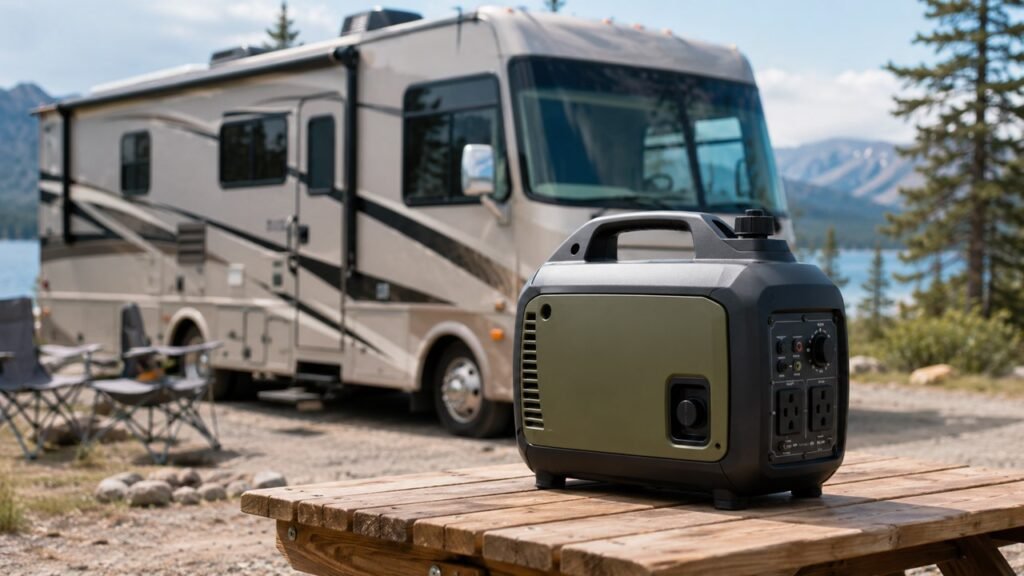
A 2000-watt generator can power essential RV items like lights, chargers, a TV, fans, and the water pump. It can also handle appliances like a microwave or coffee maker, but typically only one high-watt device at a time.
Its main limitation is the RV air conditioner, which usually requires more startup power than a 2000-watt generator can provide without a soft starter and careful load management.
Key Takeaways
- Runs basic RV essentials easily (lights, chargers, TV, fans)
- Can power high-watt appliances one at a time
- Not ideal for running RV air conditioners without modifications
- Requires careful power management to avoid overload
Quick Answer: What Can a 2000-Watt Generator Run in an RV?
A 2000-watt generator can run basic RV essentials such as LED lights, phone chargers, laptops, a small TV, roof vent fan, water pump, and battery charger. It can also run a microwave, coffee maker, toaster, or hair dryer for short periods, but you should run those high-draw appliances one at a time.
A 2000-watt generator is usually not enough for easy RV air conditioner use. Some smaller or efficient AC units may work with a soft starter, but many standard rooftop units need more starting power than a 2000-watt generator can provide.
Here is a quick overview:
| RV Appliance | Can a 2000W Generator Run It? | Best Usage |
| LED lights | Yes | Run with other small loads |
| Phone chargers | Yes | Safe with other essentials |
| Laptop charger | Yes | Usually low draw |
| Small TV | Yes | Easy to run |
| Roof vent fan | Yes | Low power use |
| Water pump | Yes | Runs in short bursts |
| RV refrigerator | Usually | Best on propane mode |
| Battery charger/converter | Yes | Depends on charge rate |
| Microwave | Usually | Run alone |
| Coffee maker | Usually | Run alone |
| Toaster | Usually | Run alone |
| Hair dryer | Maybe | Use low setting if possible |
| Space heater | Maybe | Uses most available power |
| Rooftop RV AC | Usually no | Possible only in some setups with soft start |
So, the simple answer is this: a 2000-watt RV generator is great for basic camping power, but it requires power management. It is not a full replacement for 30-amp shore power.
Understanding 2000-Watt Generator Power in an RV
Before deciding what your generator can run, you need to understand how generator wattage works. Many RVers overload a small generator because they only look at the appliance name, not the actual wattage.
A microwave, coffee maker, water heater, and air conditioner are very different from LED lights or phone chargers. Some appliances use steady power, while others need a short burst of extra power when starting.
Running Watts vs Starting Watts
Running watts are the continuous watts your generator can supply while appliances are running. This is the number you should pay the most attention to when adding up your RV loads.
Starting watts, also called surge watts, are the extra watts needed for a few seconds when certain appliances start. Motors and compressors often need more power at startup than they need while running.
For example, an RV air conditioner may use around 1,300 to 1,700 watts while running. However, it may need much more power for a few seconds when the compressor starts. That starting surge is often what causes a small generator to overload.
This is also why a generator may run your TV, lights, and chargers easily, but struggle badly when you turn on the AC or microwave.
Why a “2000-Watt Generator” May Not Give 2000 Running Watts
Not every generator labeled as 2000 watts gives you 2000 watts continuously. Some models use the peak or starting watt number in the product name.
For example, a generator marketed as a 2000-watt generator may provide only 1600 to 1800 running watts. The full 2000 watts may only be available briefly as surge power.
That difference matters in an RV. If your generator provides 1800 running watts, then a 1500-watt microwave leaves only about 300 watts for everything else. If your converter is charging batteries at the same time, the generator may overload.
So, always check two numbers:
- Rated running watts
- Peak or starting watts
For RV use, the rated running watts are more important for daily power planning.
The Simple Formula: Volts × Amps = Watts
If an appliance label lists amps instead of watts, you can calculate watts using this formula:
Watts = Volts × Amps
Most RV appliances running on standard AC power use 120 volts.
For example:
120 volts × 10 amps = 1,200 watts
So, if your microwave uses 10 amps, it needs about 1,200 watts while running.
This formula helps when checking appliance labels, extension cords, RV adapters, and generator outlets.
RV Appliances a 2000-Watt Generator Can Run Easily
A 2000-watt generator is very useful for basic RV comfort. It can run many small appliances together because they use low wattage.
These RV items are usually easy for a 2000-watt generator:
- LED interior lights: 10–50 watts total
- Phone chargers: 5–20 watts each
- Tablet chargers: 10–30 watts
- Laptop charger: 45–100 watts
- Small TV: 50–150 watts
- WiFi router or hotspot: 5–30 watts
- Roof vent fan: 20–60 watts
- Portable fan: 20–100 watts
- Water pump: 50–150 watts while running
- CPAP machine: often 30–90 watts without humidifier
- Battery charger/converter: varies by battery condition
- Small radio or speaker: 10–50 watts
These items are ideal for a 2000-watt generator because they do not usually create a large startup surge. You can often run several of them at the same time without getting close to the generator’s limit.
However, the RV converter is one hidden load many campers forget. If your RV batteries are low, the converter may draw several hundred watts while charging them. That can affect how much power remains for other appliances.
For example, lights, phone chargers, a fan, and a TV might only use 250 watts together. But if your converter is charging batteries and drawing 500 watts, your total load becomes much higher.
This does not mean you should avoid charging batteries. It only means you should count battery charging as part of your generator load.
RV Appliances a 2000-Watt Generator Can Run One at a Time
A 2000-watt generator can run some high-draw RV appliances, but you need to use them carefully. These appliances often take most of the available generator capacity.
| Appliance | Typical Running Watts | Can You Run It? | Practical Advice |
| Microwave | 900–1,500W | Usually | Turn off other heavy loads |
| Coffee maker | 800–1,200W | Usually | Use briefly |
| Toaster | 800–1,500W | Usually | Run alone |
| Electric kettle | 1,000–1,500W | Maybe | Check the label first |
| Hair dryer | 1,200–1,875W | Maybe | Use low heat setting |
| Space heater | 750–1,500W | Maybe | Uses most generator capacity |
| Instant Pot | 700–1,200W | Usually | Avoid microwave at same time |
| Blender | 300–1,000W surge | Usually | Short use only |
| Electric griddle | 1,200–1,800W | Maybe | Usually needs most capacity |
| Portable induction cooktop | 800–1,800W | Maybe | Use lower power setting |
The key is not just whether one appliance can run. The real question is whether the total load stays under your generator’s running watt rating.
For example, a 1000-watt coffee maker may run fine. But if your converter is charging batteries at 500 watts and your electric water heater is on, your total load can overload the generator quickly.
The safest approach is simple: run one high-watt appliance at a time.
Before using the microwave, turn off the coffee maker, toaster, space heater, electric water heater, and air conditioner. Keep only small loads running, such as LED lights or phone chargers.
This habit makes a 2000-watt generator much more reliable for RV camping.
Can a 2000-Watt Generator Run an RV Air Conditioner?
A 2000-watt generator usually cannot run a standard RV air conditioner easily. This is the most important limitation to understand before buying or using one.
Some RVers do run an AC with a small generator, but that usually requires the right generator, the right AC unit, a soft starter, and careful load management.
Why Most RV Air Conditioners Are Too Much for 2000 Watts
Most rooftop RV air conditioners have a compressor. When that compressor starts, it needs a large burst of power for a few seconds. This starting surge can be much higher than the AC’s normal running wattage.
A 13,500 BTU RV air conditioner may run around the upper range of what a 2000-watt generator can handle. A 15,000 BTU AC can be even harder. The problem is not always the running wattage. The problem is often the startup surge.
If the generator cannot handle that starting surge, one of three things may happen:
- The generator overloads
- The AC fails to start
- The generator shuts down
- Other appliances lose power
- The AC starts once but fails during the next compressor cycle
Even if the AC starts, the generator may be running near its limit. That leaves little room for the converter, refrigerator, lights, or other loads.
When a 2000-Watt Generator Might Run an RV AC
A 2000-watt generator may run an RV air conditioner in some situations. However, it is not guaranteed.
It may work if:
- The AC is a smaller or efficient unit
- The AC has a soft starter installed
- The generator has strong surge capacity
- The batteries are not heavily charging
- The refrigerator is on propane
- The water heater is not on electric mode
- The microwave is off
- The campsite is not at high altitude
- The weather is not extremely hot
- The generator is properly maintained
Even then, you should test your exact setup before depending on it during a hot camping trip.
How a Soft Starter Changes the Equation
A soft starter helps reduce the startup surge from an RV air conditioner. It does not make the AC use no power, but it can reduce the sudden electrical spike when the compressor starts.
This can make it more realistic for a small generator to start and run certain RV AC units. Many RVers install soft starters because they want to run an air conditioner from a smaller inverter generator.
However, a soft starter is not magic. Your generator still needs enough running watts to keep the AC operating. You also need to turn off other high-draw appliances before the AC starts.
A soft starter improves your chances, but it does not guarantee every 2000-watt generator will run every RV air conditioner.
Bottom Line on RV AC
A 2000-watt generator is not the best choice if you need regular RV air conditioning. It may work with a soft starter and careful load management, but it is still close to the limit.
For more comfortable AC use, a 3000-watt to 3500-watt generator is usually a better match for many 30-amp RVs. For two AC units, you normally need much more power.
What a 2000-Watt Generator Usually Cannot Run in an RV
A 2000-watt generator has real limits. It can power many small items, but it struggles when several high-watt appliances run together.
A 2000-watt generator usually cannot run these RV loads comfortably:
- Rooftop AC without a soft starter
- Air conditioner and microwave together
- Coffee maker and toaster together
- Microwave and electric water heater together
- Space heater and coffee maker together
- Hair dryer and microwave together
- Washer/dryer combo
- Multiple air conditioners
- Large electric water heater
- Large battery charger at full output with other loads
- Full 30-amp RV load
- Normal 50-amp RV comfort loads
This is where many campers get frustrated. They expect a 2000-watt generator to act like shore power, but it does not.
A 30-amp RV outlet at a campground can supply up to 3600 watts. A 2000-watt generator supplies much less than that. So, you must choose what matters most at each moment.
For light camping, that is easy. For hot-weather camping with AC, microwave cooking, and electric water heating, 2000 watts can feel too small.
Realistic 2000-Watt Generator Load Examples for RV Camping
The best way to understand a 2000-watt generator is to look at realistic RV power setups. These examples use estimated wattages, so your exact numbers may vary.
Always check your own appliance labels for accurate power use.
Example 1: Basic Nighttime Setup
| Item Running | Estimated Watts |
| LED lights | 30W |
| Phone chargers | 30W |
| Laptop charger | 60W |
| Roof vent fan | 40W |
| Small TV | 100W |
| Total | 260W |
This is an easy setup for a 2000-watt generator. You could also charge batteries at the same time in many cases.
This is where a 2000-watt generator performs very well. It gives you quiet, efficient power for basic evening comfort without using much fuel.
Example 2: Morning Coffee Setup
| Item Running | Estimated Watts |
| Coffee maker | 1,000W |
| LED lights | 30W |
| Phone chargers | 30W |
| RV converter | 300W |
| Total | 1,360W |
This setup is usually fine. However, you should not use the microwave, toaster, or electric kettle at the same time.
The coffee maker is a high-draw appliance, but it usually runs for a short time. Once the coffee is made, your generator load drops again.
Example 3: Microwave Lunch Setup
| Item Running | Estimated Watts |
| Microwave | 1,300W |
| Roof vent fan | 40W |
| RV converter | 300W |
| LED lights | 30W |
| Total | 1,670W |
This setup is close to the limit for many small generators. If your generator has only 1600 running watts, this may overload it.
Before using the microwave, turn off other heavy loads. If your RV converter is drawing too much power, you may need to reduce battery charging or pause other appliances.
Example 4: Space Heater Setup
| Item Running | Estimated Watts |
| Space heater | 1,500W |
| LED lights | 30W |
| Phone charger | 20W |
| Roof vent fan | 40W |
| Total | 1,590W |
A small space heater may run on a 2000-watt generator, but it uses most of the available power. That leaves very little room for other appliances.
For RV heating, propane heat is often a better choice when using a small generator. The generator can help run the furnace blower, while propane provides the heat.
Example 5: AC With Soft Starter Setup
| Item Running | Estimated Watts |
| RV AC after startup | 1,300–1,700W |
| LED lights | 30W |
| Phone charger | 20W |
| Total | 1,350–1,750W |
This may work in some RVs, especially with a soft starter. But it is not guaranteed.
The AC startup surge is still the biggest challenge. Also, if the converter, fridge, or water heater adds extra load, the generator may overload.
2000-Watt Generator and a 30-Amp RV: What to Know
A 30-amp RV uses 120-volt power. The basic calculation is:
30 amps × 120 volts = 3,600 watts
That means a 30-amp RV can theoretically use up to 3600 watts from shore power. A 2000-watt generator gives you much less than that.
So, yes, you can plug a 30-amp RV into a 2000-watt generator using the correct adapter. But you cannot use the RV the same way you would at a full-hookup campground.
A 2000-watt generator is best for a 30-amp RV when you:
- Run only one high-watt appliance at a time
- Keep the refrigerator on propane
- Keep the water heater off electric mode
- Avoid using AC unless you have a soft starter
- Use LED lights
- Watch battery charger load
- Avoid electric space heating when possible
- Turn off the microwave before using another appliance
- Use a watt meter or EMS to monitor load
This setup can work very well for weekend camping, light boondocking, and basic off-grid power. But it requires discipline.
If you want to use your RV like a small home, with AC, microwave, coffee maker, and electric heating, a larger generator will be more comfortable.
Is a 2000-Watt Generator Enough for a 50-Amp RV?
A 2000-watt generator is usually not enough for normal 50-amp RV use. A 50-amp RV can support far more power than a 2000-watt generator can provide.
However, that does not mean a 2000-watt generator is useless for a 50-amp RV. You may still use it for basic loads, such as lights, battery charging, TV, phone chargers, and a few small appliances.
The problem is comfort. Many 50-amp RVs have two air conditioners, larger converters, residential refrigerators, electric water heaters, and more appliances. A 2000-watt generator cannot support that kind of power demand.
If you own a large fifth wheel or Class A motorhome, a 2000-watt generator should be viewed as emergency or light-duty power. It is not a full power solution for normal 50-amp camping.
How Long Can You Run RV Appliances on a 2000-Watt Generator?
The runtime of a 2000-watt generator depends on the fuel tank size, engine efficiency, load level, eco mode, altitude, and maintenance condition.
A generator running lights, chargers, and a fan may run for many hours on a tank of fuel. The same generator powering a microwave, space heater, or air conditioner will use fuel much faster.
Fuel Runtime Depends on Load
Generators usually run longer at lower loads. For example, a light load of 300 to 500 watts is much easier on the engine than a 1500-watt load.
That is why inverter generators are popular for RV use. They can adjust engine speed based on power demand. When you only need small loads, the generator can run quieter and use less fuel.
Why Running at Full Load Is Not Ideal
Running a generator near full capacity for long periods is not ideal. It can be louder, hotter, and less fuel-efficient. It also gives you no room for sudden startup surges.
For better performance, try to leave a safety margin. Instead of using every available watt, aim to stay below the generator’s maximum running capacity when possible.
For example, if your generator provides 1800 running watts, try not to run it constantly at 1750 watts. A lower steady load is usually more comfortable and reliable.
How to Avoid Overloading a 2000-Watt RV Generator
Overloading a generator is common in RVs because many appliances turn on automatically. The converter may charge batteries, the fridge may switch modes, and the air conditioner compressor may cycle.
Use these steps to avoid overloads:
- Check your generator’s running watts. Do not rely only on the peak watt number.
- List every appliance you plan to use. Include hidden loads like the converter and fridge.
- Check each appliance label. Look for watts, amps, or volts.
- Use the watts formula if needed. Multiply volts by amps to estimate watts.
- Add the running watts. Count only the appliances running at the same time.
- Account for startup surge. Motors and compressors may need extra power briefly.
- Run one heavy appliance at a time. This is the easiest way to stay safe.
- Use propane when possible. Keep the fridge and water heater on propane to save watts.
- Turn off electric heat. Space heaters can use most of a small generator’s capacity.
- Watch your battery charger. Low batteries can make the converter draw more power.
- Use a watt meter or EMS. This helps you see real-time power use.
- Leave a safety margin. Do not run the generator at its absolute limit all day.
These simple habits make a 2000-watt generator far more useful in an RV.
Tips to Make a 2000-Watt Generator Work Better in an RV
A 2000-watt generator works best when your RV is set up for low power use. Small changes can make a big difference.
Use these tips to get better performance:
- Install a soft starter on the RV air conditioner.
- Keep the refrigerator on propane mode.
- Use propane for water heating.
- Switch interior lights to LED.
- Use low-watt appliances when possible.
- Run the microwave by itself.
- Avoid using a toaster and coffee maker together.
- Charge batteries during low-load periods.
- Turn off the converter when using a high-draw appliance if needed.
- Use eco mode for light loads.
- Keep the generator air filter clean.
- Use fresh fuel.
- Avoid long extension cords with voltage drop.
- Reduce load at high altitude.
- Consider a parallel kit if your generator supports it.
If you camp often, these habits become natural. You start thinking in terms of power priority.
For example, you may charge batteries in the morning, make coffee after charging slows down, and use the microwave only when other large loads are off.
That simple power routine can make a small generator feel much more capable.
2000-Watt Inverter Generator vs Traditional Generator for RV Use
Not all 2000-watt generators are the same. For RV camping, the type of generator matters almost as much as the wattage.
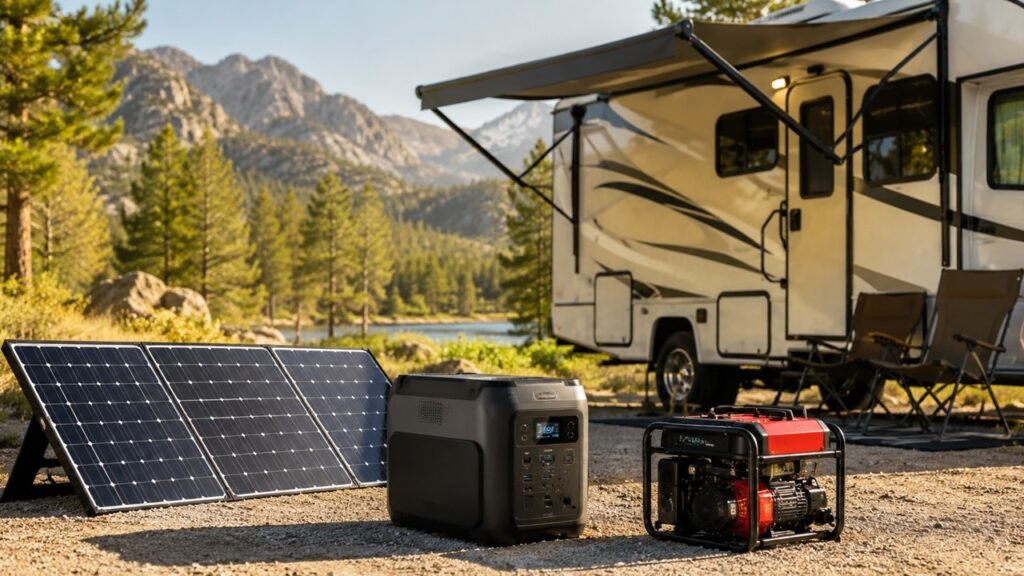
The three common options are inverter generators, traditional generators, and solar generators or portable power stations.
Inverter Generator
An inverter generator is usually the best choice for RV camping. It provides cleaner power for sensitive electronics, such as laptops, phones, TVs, and battery chargers.
Inverter generators are also usually quieter than traditional open-frame generators. Many models have eco mode, which helps reduce noise and fuel use when power demand is low.
For small RVs, campervans, and travel trailers, a 2000-watt inverter generator can be a very practical choice.
Traditional Generator
A traditional generator can provide reliable power, but it is often louder and less campground-friendly. Open-frame generators may be cheaper, but noise can be a major issue at campsites.
Some traditional generators also produce less stable power than inverter models. That may not matter for simple tools or basic loads, but it can matter for electronics.
If you camp around other people, noise level should be a serious consideration.
Solar Generator or Portable Power Station
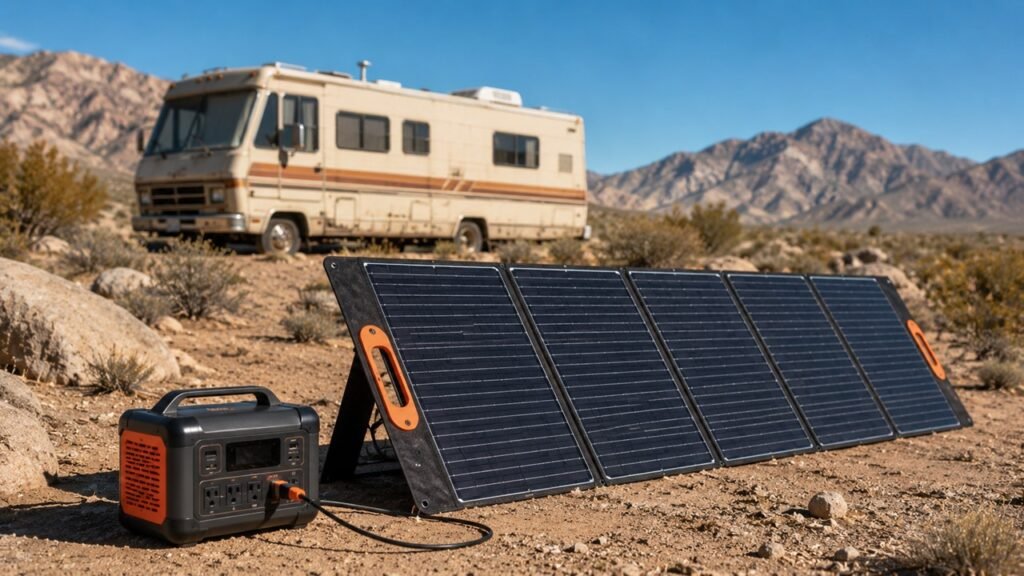
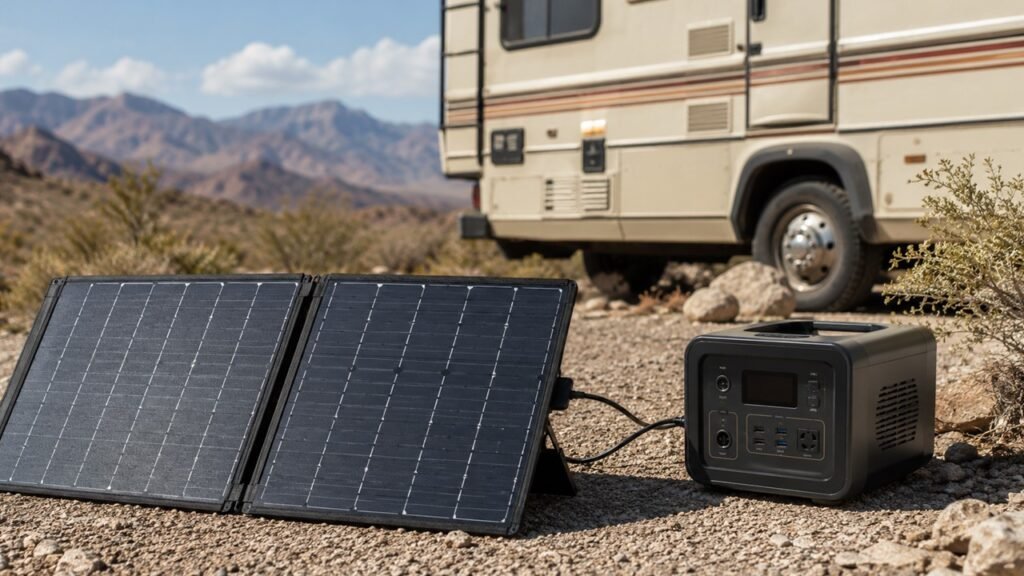
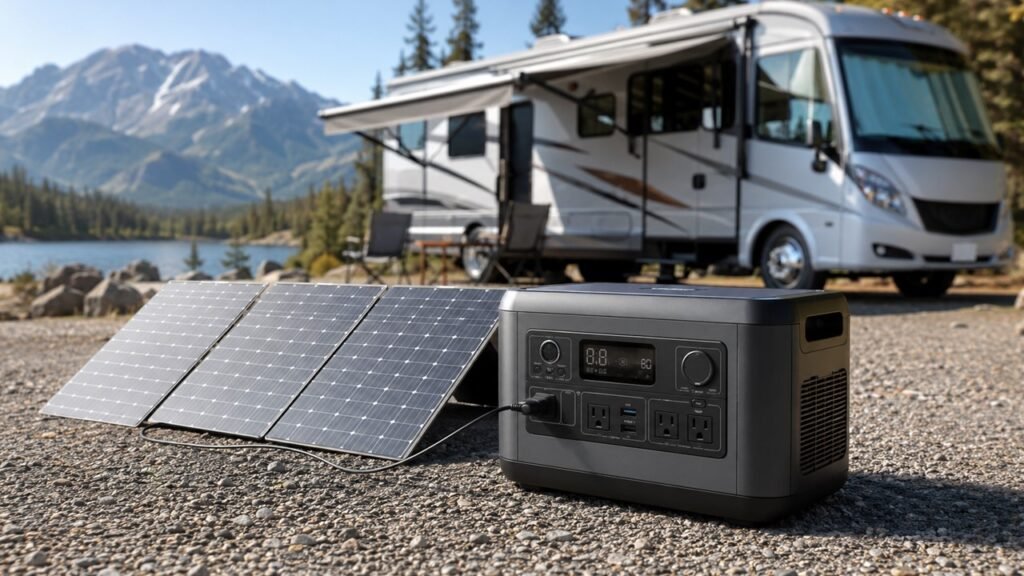
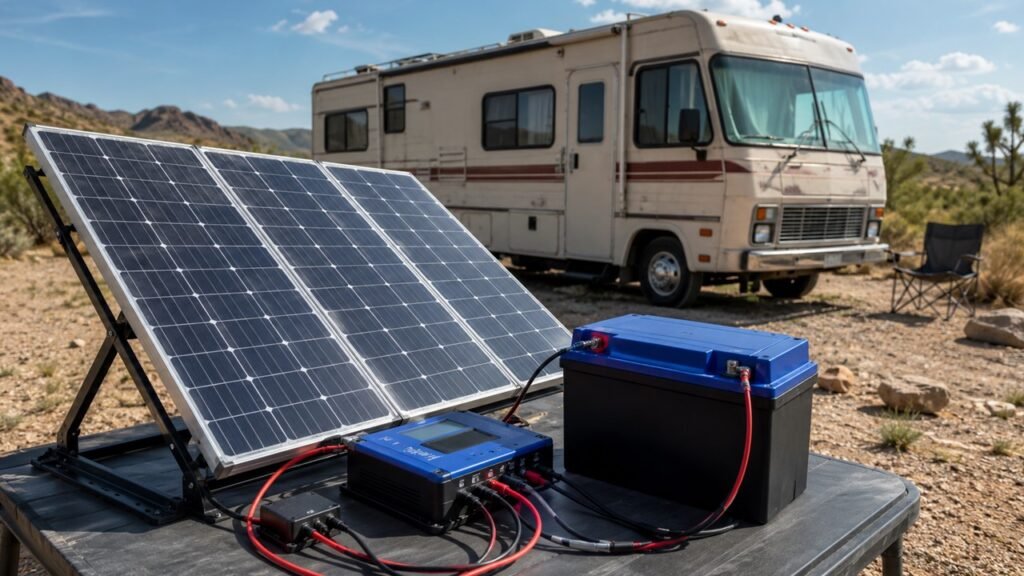
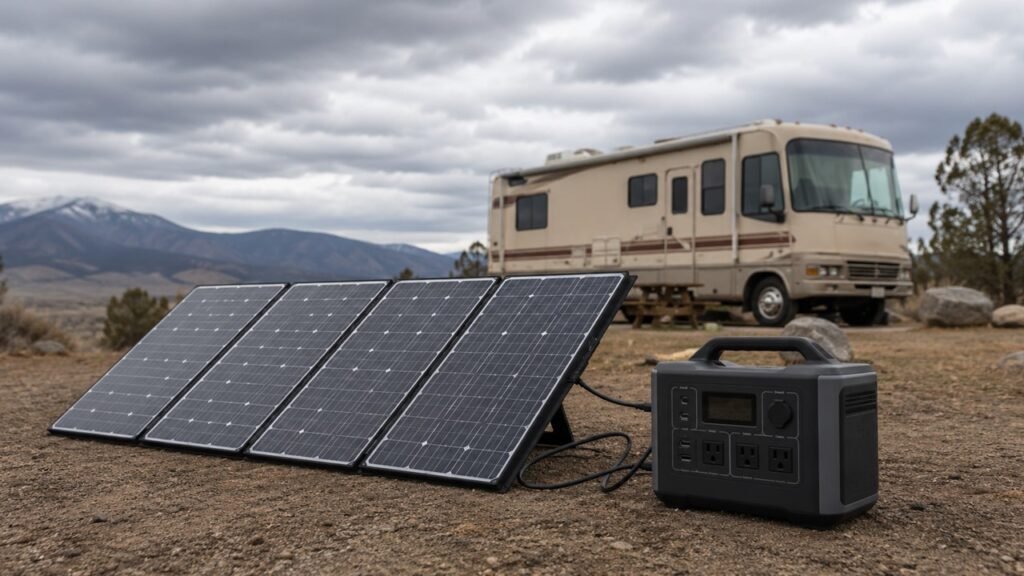
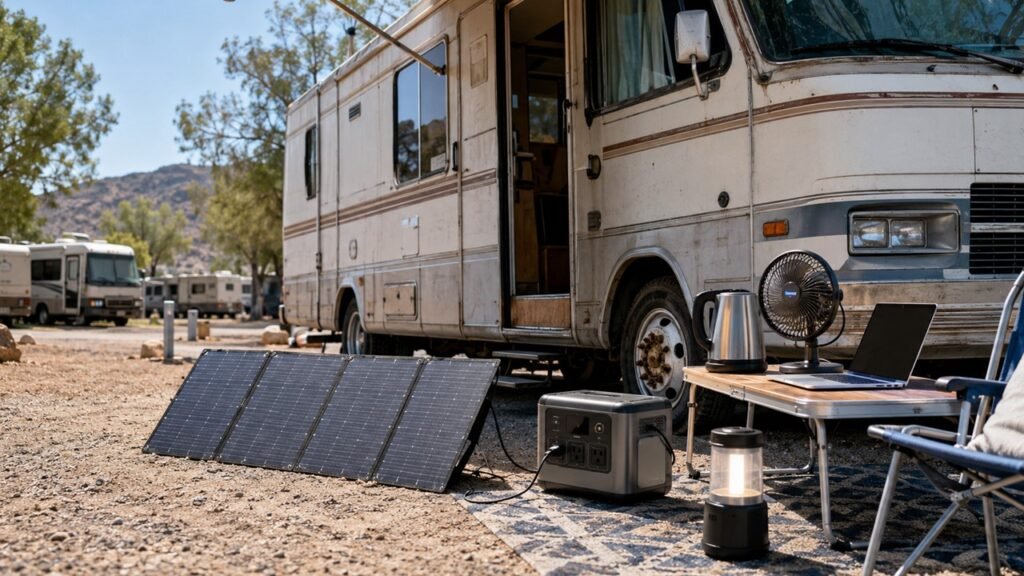
A solar generator is not the same as a gas generator. It is usually a portable power station with a battery and inverter. Solar panels can recharge it when sunlight is available.
Solar generators are quiet and useful for lights, phones, laptops, fans, CPAP machines, and small appliances. However, they are limited by battery capacity and inverter output.
A 2000-watt power station may run a microwave or coffee maker, but only for as long as the battery has enough stored energy. A gas generator can keep running as long as you have fuel.
For many RVers, the best setup is a combination of solar, batteries, and a small generator.
Should You Choose a 2000-Watt, 3000-Watt, or 3500-Watt Generator for an RV?
A 2000-watt generator is not always the wrong choice. It depends on how you camp.
If you only need lights, charging, fans, TV, and occasional microwave use, 2000 watts can be enough. If you want regular air conditioning, electric cooking, and more comfort, you may need a larger generator.
| Generator Size | Best For | Main Limitation |
| 2000 watts | Lights, chargers, TV, fan, microwave one at a time | Not ideal for AC |
| 2500 watts | Small RVs needing more breathing room | Still limited for AC |
| 3000 watts | Better AC and microwave management | Heavier than 2000W |
| 3500 watts | Stronger match for 30-amp RV comfort | Less portable |
| 5500+ watts | Large RVs or two AC units | More fuel, weight, and noise |
A 2000-watt generator is best for RVers who value portability. It is easier to carry, easier to store, and often more fuel-efficient under light loads.
A 3000-watt or 3500-watt generator is better if you want to run an RV air conditioner more reliably. It also gives you more room for the microwave, converter, and other appliances.
For large fifth wheels, Class A motorhomes, or 50-amp RVs, a 2000-watt generator is usually only a backup option.
Important Safety Tips When Using a 2000-Watt Generator With an RV
Generator safety matters as much as wattage. A generator can produce carbon monoxide, heat, noise, and electrical hazards if used incorrectly.
Always place your generator outside and far away from windows, doors, and vents. Never run a generator inside an RV, garage, storage bay, or enclosed shelter.
Follow these safety tips:
- Keep the generator outdoors at all times.
- Point exhaust away from the RV.
- Keep it away from windows and vents.
- Use a carbon monoxide detector inside the RV.
- Use proper RV-rated cords and adapters.
- Keep the generator dry during rain.
- Do not refuel while the generator is hot.
- Avoid overloading the generator.
- Follow campground generator-hour rules.
- Read the owner’s manual before use.
Also, make sure your RV has working smoke and carbon monoxide detectors. These are essential whenever using fuel-burning equipment near your campsite.
Final Verdict
A 2000-watt generator can run many RV essentials, including LED lights, phone chargers, laptops, a small TV, roof vent fan, water pump, and battery charging. It can also run a microwave, coffee maker, toaster, or small space heater, but those appliances should usually be used one at a time.
The main limitation is air conditioning. A 2000-watt generator usually cannot run a standard RV rooftop AC without help. A soft starter may make it possible in some setups, but it is still not guaranteed.
For small travel trailers, campervans, weekend camping, and light boondocking, a 2000-watt generator can be a smart and portable power source. It is especially useful if you are willing to manage loads and use propane for heating, refrigeration, and water heating.
However, if you want to run an RV air conditioner regularly or use several large appliances together, you should consider a 3000-watt to 3500-watt generator instead.
In simple terms, a 2000-watt generator is enough for basic RV power, but not enough for full RV comfort without careful planning.
Related FAQs
Is a 2000-watt generator enough for an RV?
Yes, a 2000-watt generator is enough for basic RV essentials like lights, chargers, TV, fans, water pump, and battery charging. It is not ideal for running several high-watt appliances at the same time.
Will a 2000-watt generator run an RV air conditioner?
Usually, a 2000-watt generator will not run a standard RV air conditioner without a soft starter. Some smaller or efficient AC units may work, but the startup surge is often too high.
Can a 2000-watt generator run an RV microwave?
Yes, many RV microwaves can run on a 2000-watt generator. You should turn off the coffee maker, toaster, space heater, and air conditioner before using it.
Can a 2000-watt generator charge RV batteries?
Yes, a 2000-watt generator can charge RV batteries through the converter or battery charger. The wattage draw depends on the charger size and how low the batteries are.
Can a 2000-watt generator run a coffee maker in an RV?
Yes, most RV coffee makers use around 800 to 1200 watts. It is best to run the coffee maker by itself or with only small loads like lights and phone chargers.
Can a 2000-watt generator run a space heater in an RV?
A small space heater may run on a 2000-watt generator, but it can use most of the available power. A propane furnace is usually a better option for heating an RV with a small generator.
Can I plug a 30-amp RV into a 2000-watt generator?
Yes, you can plug a 30-amp RV into a 2000-watt generator using the correct adapter. However, you will not get full 30-amp power and must manage your appliance loads carefully.
What should I turn off before using a microwave on a 2000-watt generator?
Turn off the air conditioner, electric water heater, coffee maker, toaster, space heater, and hair dryer. Keep only small loads running, such as LED lights or phone chargers.
Is a 2000-watt generator good for boondocking?
Yes, a 2000-watt generator can be good for light boondocking. It works well for battery charging, lights, fans, electronics, and short use of kitchen appliances.
What size generator is better if I want to run RV air conditioning?
A 3000-watt to 3500-watt generator is usually better for running one RV air conditioner. Larger RVs or rigs with two AC units often need 5500 watts or more.

Daniel Brooks writes about RV living, gear, and travel planning with a focus on everyday usability. His guides break down complex topics into simple advice for real RV owners. He reviews products with long-term use in mind, not marketing hype.