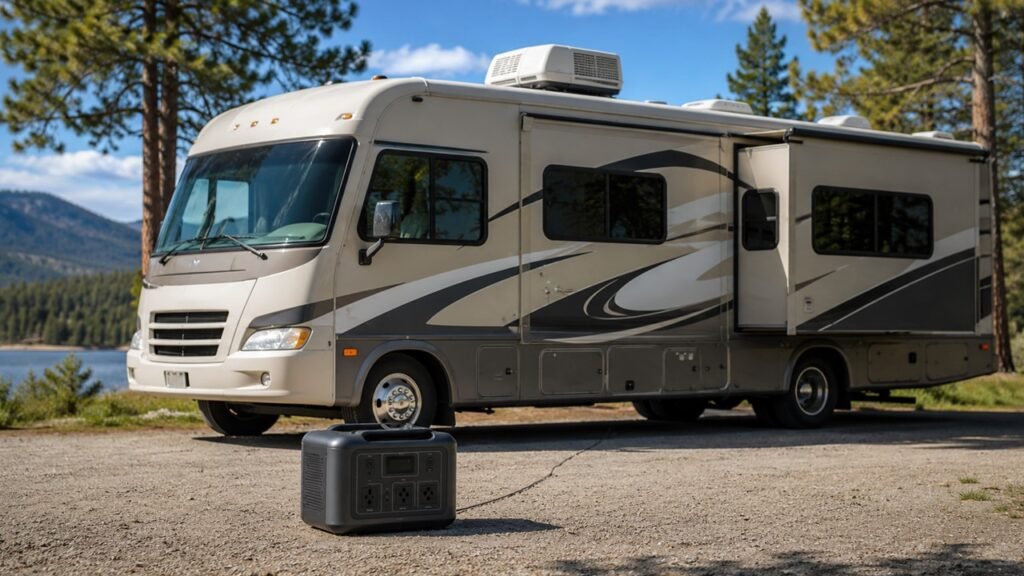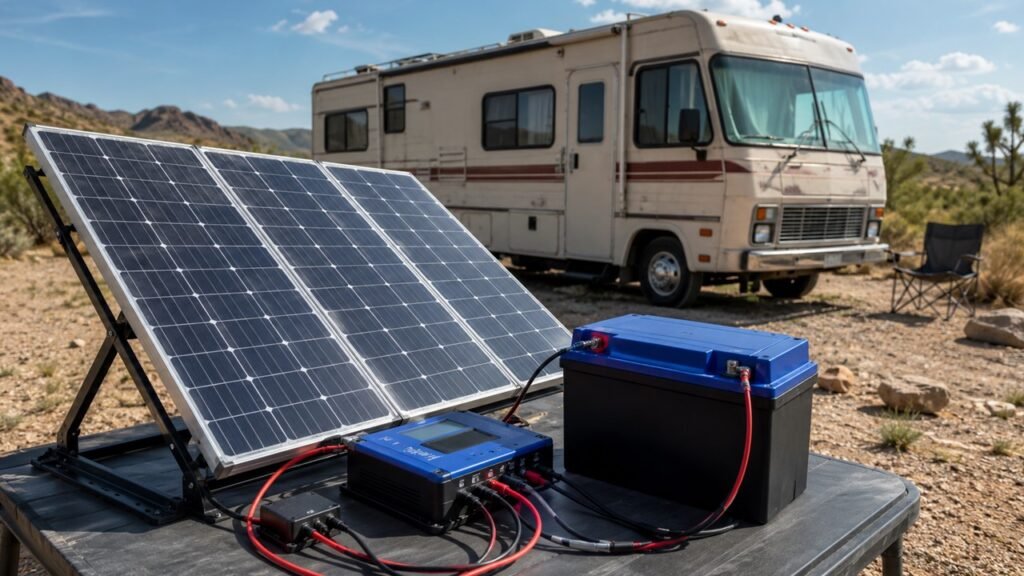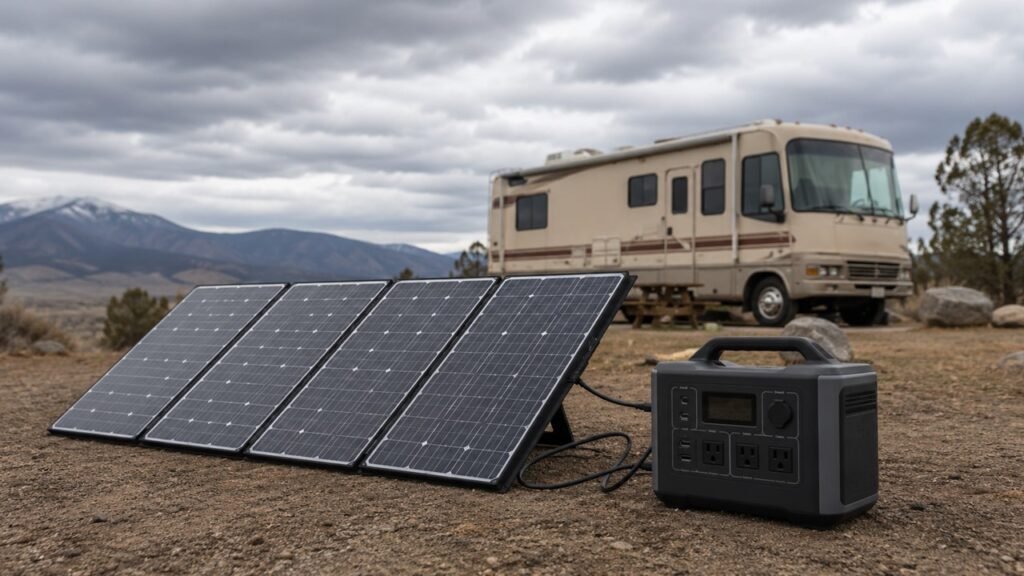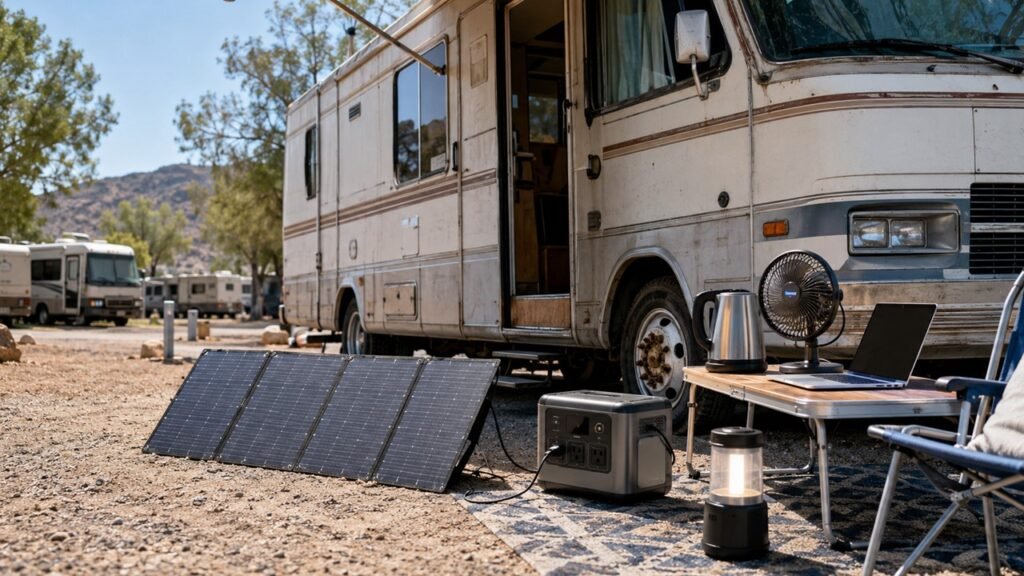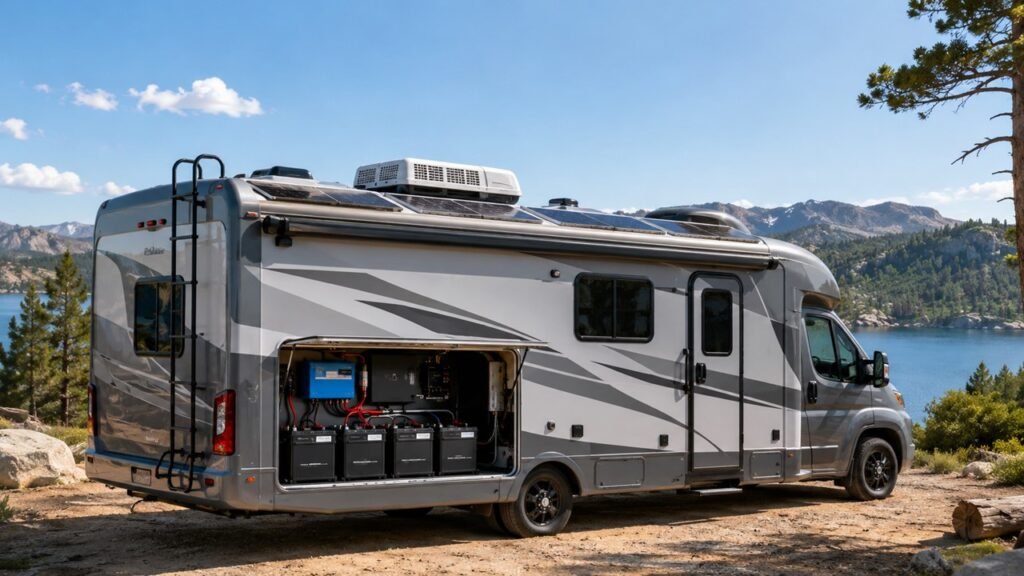
You can run an RV AC on lithium batteries, but not for as long as many RVers expect. A standard 13,500 to 15,000 BTU rooftop RV air conditioner can run for about 30 minutes to 2 hours per 100Ah of lithium battery capacity, depending on the AC wattage, inverter efficiency, weather, insulation, and thermostat setting.
For short cooling breaks, a 100Ah to 200Ah lithium setup may be enough. Several hours of cooling, you may need 400Ah to 600Ah. For realistic overnight RV AC use, most setups need around 600Ah to 800Ah+ of lithium capacity, especially with a standard rooftop AC.
The main thing to remember is simple: RV air conditioners use a lot of power. Lithium batteries can handle the load better than lead-acid batteries, but runtime still depends on how much usable energy your battery bank stores.
Key Takeaways
- A standard RV rooftop AC typically uses 1,300W to 1,800W while running.
- A 100Ah lithium battery usually powers an RV AC for less than 1 hour.
- A 200Ah battery bank may provide around 1 to 2 hours of cooling.
- For several hours of AC use, most RVers need 400Ah to 600Ah of lithium capacity.
- Overnight RV AC operation generally requires 600Ah to 800Ah+ of lithium batteries.
- A 3,000W pure sine wave inverter is commonly needed for standard rooftop AC units.
- A soft start helps reduce startup surge and improves inverter compatibility.
- Solar panels can extend runtime and recharge batteries, but most systems cannot run a rooftop AC directly without battery support.
Quick Answer: RV AC Runtime on Lithium Batteries
A standard RV rooftop AC usually pulls around 1,300W to 1,800W while running. Because of that, a single 100Ah lithium battery will not run it all night. It may only give you a short cooling window.
Here is a realistic estimate using a 1,500W RV AC and about 90% inverter efficiency.
| Lithium Battery Bank | Approx. Battery Energy | Estimated Runtime With 1,500W RV AC |
| 100Ah | 1,280Wh | 40 to 50 minutes |
| 200Ah | 2,560Wh | 1.3 to 1.5 hours |
| 300Ah | 3,840Wh | 2 to 2.3 hours |
| 400Ah | 5,120Wh | 2.7 to 3 hours |
| 600Ah | 7,680Wh | 4 to 4.6 hours |
| 800Ah | 10,240Wh | 5.5 to 6 hours |
These numbers are based on continuous AC runtime. In real life, your AC may cycle on and off after the RV cools down, so the total cooling window can be longer. But in extreme heat, the compressor may run almost nonstop and drain the batteries faster.
How to Calculate RV AC Runtime on Lithium Batteries
The easiest way to estimate runtime is to convert your battery capacity into watt-hours.
Use this formula:
Battery Watt-Hours = Battery Ah × Battery Voltage
Most 12V lithium batteries are around 12.8V.
So a 200Ah lithium battery gives you:
200Ah × 12.8V = 2,560Wh
Then use this runtime formula:
Runtime = Battery Watt-Hours × Inverter Efficiency ÷ AC Running Watts
For example, if you have a 200Ah lithium battery bank, a 1,500W RV AC, and a 90% efficient inverter:
2,560Wh × 0.90 ÷ 1,500W = 1.5 hours
So, a 200Ah lithium battery bank may run a standard RV AC for around 1.5 hours under steady load.
How Much Power Does an RV AC Use?
RV AC power use depends on BTU size, age, compressor type, fan speed, and outside temperature. Larger rooftop units use more power and drain lithium batteries faster.
| RV AC Type | Typical Running Watts | Battery Runtime Impact |
| Small 5,000 BTU AC | 400W to 700W | Easier to run |
| 8,000 BTU AC | 700W to 1,000W | Moderate draw |
| 13,500 BTU rooftop AC | 1,300W to 1,600W | Heavy draw |
| 15,000 BTU rooftop AC | 1,500W to 1,800W | Very heavy draw |
| 12V DC RV AC | Varies | More battery-friendly |
| Mini-split AC | Often lower draw | Better for long runtime |
A standard rooftop RV AC can run on lithium batteries, but it is not the most efficient option. If battery-powered cooling is your main goal, a 12V DC air conditioner, variable-speed rooftop AC, or mini-split system can stretch runtime much further.
Runtime by Lithium Battery Size
How Long Will a 100Ah Lithium Battery Run an RV AC?
A 100Ah lithium battery can usually run a standard RV AC for about 30 minutes to 1 hour through an inverter. This is enough for a quick cool-down, but not enough for overnight use.
If you use a smaller AC, 12V DC AC, or mini-split, the runtime may be longer.
How Long Will a 200Ah Lithium Battery Run an RV AC?
A 200Ah lithium battery bank can usually run a rooftop RV AC for about 1 to 2 hours. This can work for a short nap, lunch stop, or cooling the RV before bedtime.
It is still not enough for all-night cooling with a standard rooftop AC.
How Long Will a 400Ah Lithium Battery Run an RV AC?
A 400Ah lithium battery bank can run a standard RV AC for around 3 hours of continuous use. In mild weather, runtime may feel longer if the AC cycles on and off.
This is a more useful size for evening cooling, but it may still fall short for a full night.
How Long Will a 600Ah Lithium Battery Run an RV AC?
A 600Ah lithium battery bank can usually run a rooftop RV AC for about 4 to 5 hours of continuous draw. With good insulation, shade, and a higher thermostat setting, it may cover much of the night.
This is a better starting point if you want quiet nighttime cooling without a generator.
How Long Will an 800Ah Lithium Battery Run an RV AC?
An 800Ah lithium battery bank can usually run a standard rooftop AC for about 5.5 to 7 hours of continuous draw. If the compressor cycles during the night, this may be enough for overnight cooling.
This setup works best when paired with solar, alternator charging, or generator backup for daytime recharging.
What Size Inverter Do You Need to Run RV AC?
Most standard RV rooftop air conditioners run on 120V AC power, while lithium batteries store 12V DC power. That means you need a pure sine wave inverter to convert battery power into usable AC power.
For most 13,500 to 15,000 BTU RV air conditioners, a 3,000W pure sine wave inverter is the common starting point. Larger systems may need a 4,000W to 5,000W inverter, especially if you run other appliances at the same time.
| RV AC Setup | Suggested Inverter Size |
| Small 5,000 to 8,000 BTU AC | 1,500W to 2,000W |
| 13,500 BTU rooftop AC with soft start | 3,000W+ |
| 15,000 BTU rooftop AC with soft start | 3,000W to 4,000W+ |
| RV AC plus other heavy appliances | 4,000W to 5,000W+ |
Also check your battery’s BMS discharge rating. Even if your battery bank has enough capacity, it must also be able to deliver enough current safely.
Do You Need a Soft Start for RV AC on Lithium Batteries?
A soft start is strongly recommended if you want to run a standard rooftop RV AC on lithium batteries. It reduces the compressor startup surge and helps the inverter start the AC more smoothly.
However, a soft start does not greatly increase runtime. It mainly helps with startup, not normal running power.
A soft start can help:
- Reduce compressor startup surge
- Prevent inverter overload
- Reduce stress on the AC compressor
- Make generator or inverter operation smoother
- Help smaller power systems start the AC more reliably
If your RV AC struggles to start on battery power, a soft start may solve the startup problem. But you still need enough lithium capacity for actual runtime.
Can Solar Panels Keep RV AC Running?
Solar panels can help, but most RV solar setups cannot run a full-size rooftop AC by themselves. A 1,500W RV air conditioner uses more power than many RV solar arrays can produce in real time.
| Solar Array Size | Realistic Output in Good Sun | RV AC Support |
| 200W | 100W to 160W | Too small |
| 400W | 250W to 350W | Helps recharge only |
| 800W | 500W to 700W | Offsets some AC use |
| 1,200W | 800W to 1,000W | Strong support |
| 1,600W+ | 1,100W+ | More realistic with batteries |
Solar is best used to recharge your lithium batteries during the day. For long AC runtime, you still need a large battery bank between the solar panels and the air conditioner.
How Many Lithium Batteries Do You Need for Overnight RV AC?
For overnight RV AC, a small lithium battery bank is usually not enough. Most RVers need at least 600Ah to 800Ah of lithium capacity for realistic overnight cooling with a standard rooftop AC.
| Cooling Goal | Suggested Lithium Capacity |
| Quick cooling break | 100Ah |
| Short nap or lunch stop | 200Ah |
| Evening cooling | 300Ah to 400Ah |
| Several hours at night | 400Ah to 600Ah |
| Overnight cooling | 600Ah to 800Ah+ |
| Long off-grid AC use | 800Ah+ with solar or backup charging |
If you only need AC for an hour or two, a smaller setup can work. If you want to sleep comfortably through a hot night, plan for a much larger system.
Best Setup for Running RV AC on Lithium Batteries
A good battery-powered RV AC setup should include more than just batteries. You also need the right inverter, wiring, charging system, and protection devices.
For most RVers, a practical setup includes:
- 400Ah to 800Ah lithium battery bank
- 3,000W+ pure sine wave inverter
- Soft start for standard rooftop AC
- 600W to 1,200W+ solar if roof space allows
- DC-DC alternator charging
- Battery monitor with shunt
- Proper fuses, breakers, and wire sizing
- Good window insulation and shade control
High-current RV electrical systems should be installed or checked by a qualified RV electrician. Large lithium banks and inverters can pull serious current, so wire size and protection matter.
How to Make Your RV AC Run Longer on Lithium Batteries
You can stretch runtime by reducing how hard the AC has to work. Small changes can make a big difference in hot weather.
Try these tips:
- Pre-cool the RV while plugged into shore power.
- Park in shade when solar charging is not your priority.
- Use Reflectix or insulated window covers.
- Set the thermostat around 75°F to 78°F.
- Use fans to move cool air around the RV.
- Clean your AC filter regularly.
- Close blinds during the hottest part of the day.
- Cook outside to avoid heating the RV.
- Run AC more at night when outdoor temperatures drop.
- Upgrade to a more efficient AC if you boondock often.
The less heat your RV absorbs, the less power your AC needs.
Is It Worth Running RV AC on Lithium Batteries?
Running RV AC on lithium batteries is worth it if you boondock often, camp in hot weather, dislike generator noise, or want quiet cooling at night. It gives you more freedom and comfort when you are away from shore power.
However, it is not cheap. You may need several lithium batteries, a large inverter, a soft start, solar panels, heavy wiring, and professional installation.
If you only need AC occasionally, a generator may be the cheaper option. If you want regular off-grid cooling, lithium batteries can be a better long-term setup.
Final Verdict
You can run an RV AC on lithium batteries for less than 1 hour or for most of the night, depending on your battery bank size, AC wattage, inverter efficiency, and weather conditions. A single 100Ah lithium battery may only run a standard rooftop AC briefly, while a 600Ah to 800Ah lithium bank makes overnight cooling much more realistic.
For short cooling breaks, 200Ah may be enough. For serious off-grid AC use, plan around 400Ah to 800Ah of lithium capacity, a 3,000W+ pure sine wave inverter, a soft start, and a strong recharge source like solar, alternator charging, or generator backup.
Related FAQs
Can You Run an RV AC on Lithium Batteries?
Yes, you can run an RV AC on lithium batteries if your battery bank, inverter, and wiring are sized correctly. Standard rooftop AC units need a large setup because they draw a lot of power.
How Long Will a 100Ah Lithium Battery Run an RV AC?
A 100Ah lithium battery usually runs a standard RV AC for about 30 minutes to 1 hour through an inverter. Smaller or more efficient AC units may run longer.
How Many Lithium Batteries Do I Need to Run RV AC Overnight?
Most RVers need around 600Ah to 800Ah of lithium capacity for realistic overnight RV AC use. Runtime depends on AC wattage, outside temperature, insulation, and compressor cycling.
Do I Need a Soft Start to Run RV AC on Batteries?
A soft start is highly recommended for many rooftop RV AC units. It reduces startup surge and helps the inverter start the compressor more smoothly.
Can Solar Panels Run an RV AC?
Solar panels can help, but most RV solar setups cannot run a full-size rooftop AC by themselves. You usually need lithium batteries to store power and support the AC load.
What Size Inverter Do I Need to Run an RV Air Conditioner?
Most 13,500 to 15,000 BTU RV air conditioners need at least a 3,000W pure sine wave inverter. Larger setups may need 4,000W or more if other appliances run too.
Is a 200Ah Lithium Battery Enough for RV AC?
A 200Ah lithium battery can run a standard RV AC for a short time, usually around 1 to 2 hours. It is useful for quick cooling, but not for all-night AC.
Is Lithium Better Than Lead-Acid for Running RV AC?
Yes, lithium is much better for RV AC use because it provides more usable capacity and handles high-power loads better. Lead-acid batteries are usually not practical for running AC.

Daniel Brooks writes about RV living, gear, and travel planning with a focus on everyday usability. His guides break down complex topics into simple advice for real RV owners. He reviews products with long-term use in mind, not marketing hype.