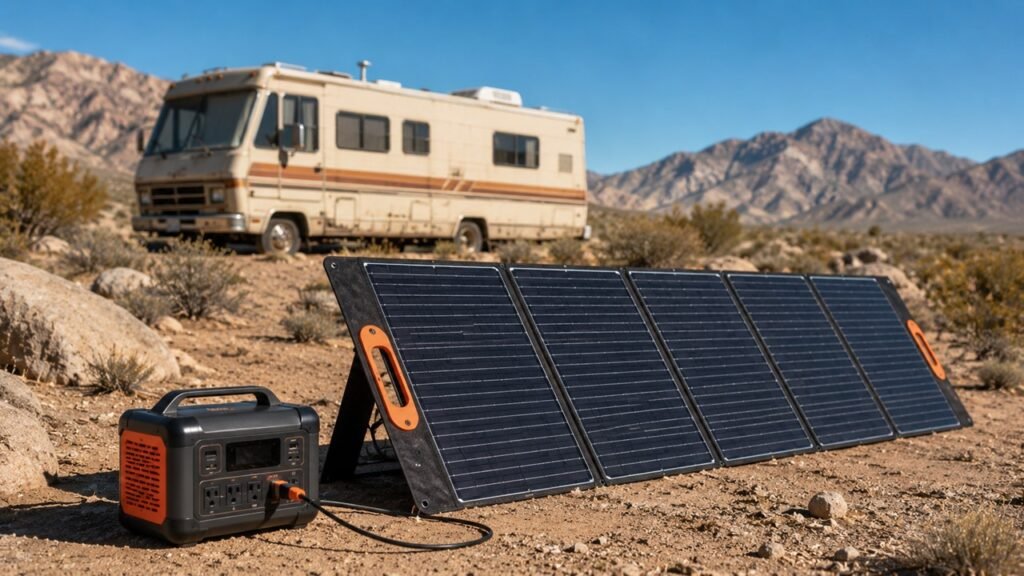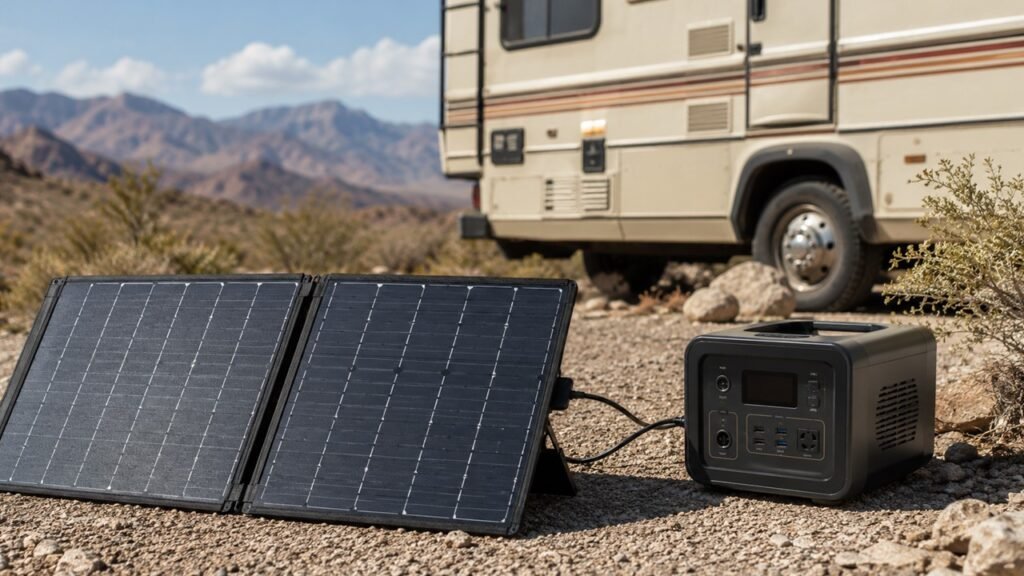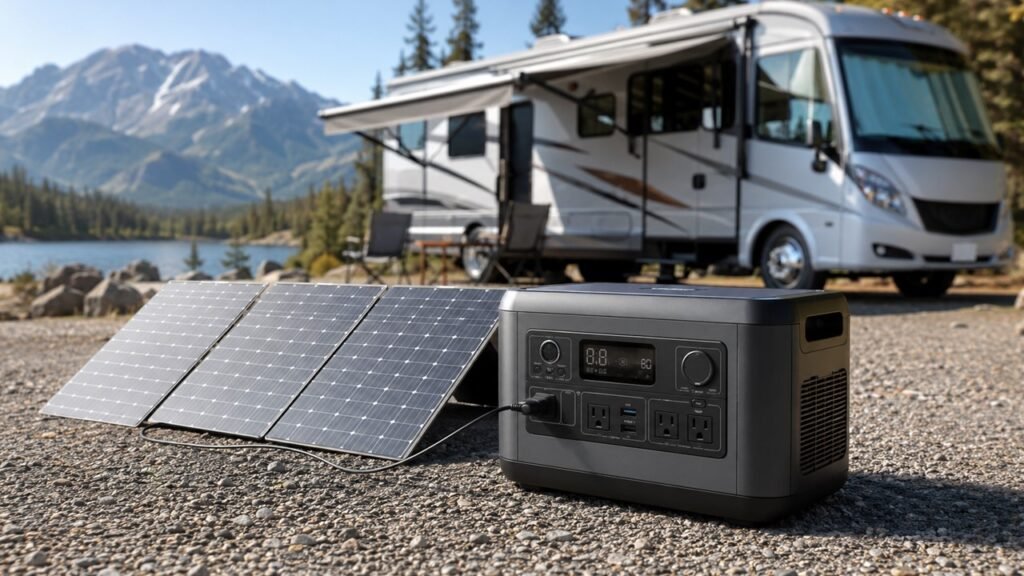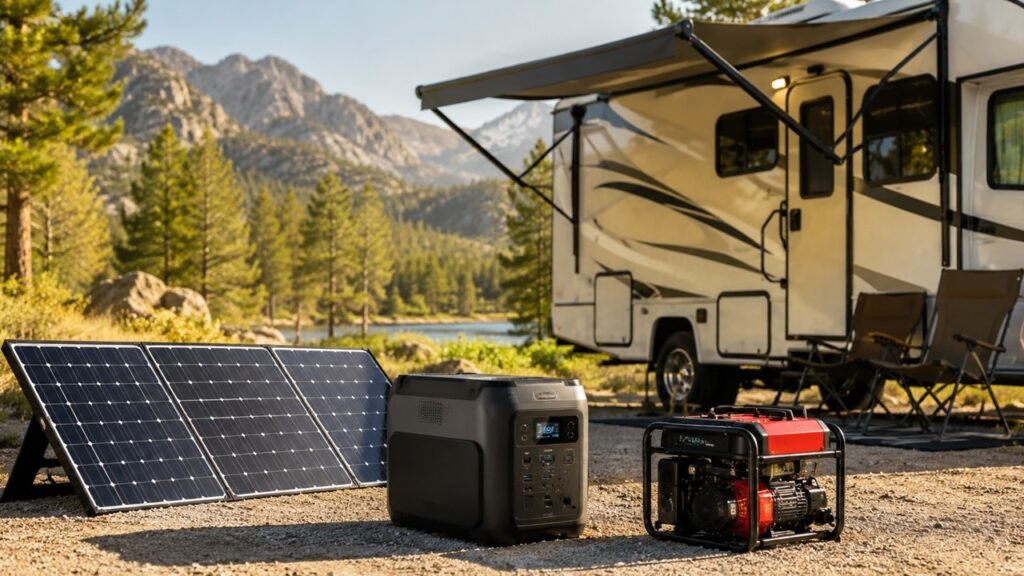
An RV fridge can run on battery for anywhere from 8 hours to more than 3 days. The exact runtime depends on the fridge type, battery size, battery chemistry, outside temperature, and whether the fridge runs directly on 12V DC power or through an inverter.
A 12V compressor fridge is usually the most battery-friendly option for boondocking. A residential fridge can run on batteries, but it needs an inverter and a larger battery bank. An absorption fridge should usually run on propane when camping off-grid because its 12V electric mode can drain batteries very quickly.
Key Takeaways
- An RV fridge can run on battery from about 8 hours to more than 3 days depending on fridge type and battery capacity.
- A 12V compressor RV fridge is usually the most efficient choice for battery-powered camping.
- A 100Ah lithium battery can often run a 12V compressor fridge for about 2 to 3+ days in normal conditions.
- A residential RV fridge usually needs an inverter and may run only 12 to 24 hours on a 100Ah lithium battery.
- An absorption fridge on 12V electric power can drain a battery fast and is better used on propane when boondocking.
- Hot weather, frequent door openings, poor ventilation, inverter losses, and other RV loads can reduce runtime.
- Solar panels can extend fridge runtime and may keep the fridge running continuously when solar production replaces daily fridge use.
Quick Answer: How Long Will An RV Fridge Run On Battery?
An RV fridge will run on battery much longer if it is a 12V compressor fridge. These fridges cycle on and off, use power only when cooling, and work well with lithium batteries and solar panels.
If you have a 100Ah lithium battery, a typical 12V compressor RV fridge may run for about 48 to 72+ hours. A residential fridge using an inverter may run for about 12 to 24 hours. An absorption fridge running on 12V electric mode may last only 8 to 18 hours because it uses electricity to create heat for the cooling process.
| RV Fridge Type | Estimated Runtime On 100Ah Lithium Battery | Best Use |
| 12V Compressor RV Fridge | 48 to 72+ hours | Boondocking, solar setups, modern RVs |
| Residential Fridge With Inverter | 12 to 24 hours | Larger battery banks, full-time RVs |
| Absorption Fridge On 12V Electric | 8 to 18 hours | Travel mode only, not long boondocking |
| Absorption Fridge On Propane | Several days to weeks | Off-grid camping with propane available |
These numbers are estimates, not fixed promises. Your real runtime can change based on fridge size, battery age, outside heat, how often you open the door, how cold the food is when loaded, and how many other appliances are using the same battery bank.
The Simple Formula To Calculate RV Fridge Battery Runtime
The easiest way to calculate RV fridge runtime is to compare your usable battery energy with your fridge’s average energy use.
Runtime Hours = Usable Battery Watt-Hours / Fridge Watt Draw
To find battery watt-hours, use this formula:
Battery Watt-Hours = Battery Ah x Battery Voltage x Usable DoD
For a 100Ah lithium battery:
100Ah x 12.8V = 1,280Wh of stored energy
Most lithium RV batteries let you use most of that capacity. So a 100Ah lithium battery may provide around 1,150Wh to 1,280Wh of usable energy, depending on the battery management system and the reserve you want to keep.
For a 100Ah lead-acid battery:
100Ah x 12V x 50% DoD = about 600Wh usable energy
This is why a 100Ah lithium battery usually runs an RV fridge much longer than a 100Ah flooded or AGM lead-acid battery. The label may say 100Ah on both batteries, but the usable capacity is not the same.
Example: 12V Compressor Fridge On A 100Ah Lithium Battery
A 12V compressor fridge is usually the easiest RV fridge to run from a battery. It runs directly from the 12V battery system and does not need an inverter.
If your fridge averages 30Ah per day, the calculation is simple:
100Ah / 30Ah per day = about 3.3 days
You can also calculate it in watts. If a 40W fridge runs 40% of the time, it uses:
40W x 24 hours x 40% = 384Wh per day
A 100Ah lithium battery with about 1,280Wh of stored energy can run that fridge for:
1,280Wh / 384Wh per day = about 3.3 days
In real RV use, you may get slightly less because of wiring loss, battery reserve, warm weather, and other small 12V loads like propane detectors and control boards.
Example: Residential Fridge Through An Inverter
A residential fridge can run from RV batteries, but it usually needs an inverter. The inverter converts battery DC power into AC power for the household-style fridge. That conversion is not perfect, so some power is lost as heat.
If a residential fridge uses 800Wh to 1,200Wh per day, a 100Ah lithium battery may run it for around 12 to 24 hours after inverter losses. A larger residential fridge, hot weather, or frequent door openings can shorten that runtime.
This is why residential RV fridges are usually better with 200Ah to 400Ah or more of lithium battery capacity, especially if you camp without shore power.
Example: Absorption Fridge On 12V Power
An absorption RV fridge can run on propane, 120V shore power, and sometimes 12V battery power. However, 12V mode is usually not efficient for long off-grid camping because it often powers a heating element.
That heating element can draw much more power than a compressor fridge. As a result, a 100Ah lithium battery may only run an absorption fridge on 12V electric mode for 8 to 18 hours, and sometimes less if other RV loads are also running.
If you have an absorption fridge and you are boondocking, propane is usually the better energy source. Battery power should mainly support the fridge’s control board, safety circuits, and fans.
RV Fridge Runtime By Battery Size
Battery size has a direct effect on fridge runtime. A larger battery bank stores more energy, so the fridge can run longer before you need solar, shore power, alternator charging, or a generator.
| Battery Bank Size | 12V Compressor Fridge | Residential Fridge With Inverter | Absorption Fridge On 12V |
| 100Ah Lithium | 2 to 3+ days | 12 to 24 hours | 8 to 18 hours |
| 200Ah Lithium | 4 to 6+ days | 1 to 2 days | 16 to 36 hours |
| 300Ah Lithium | 6 to 9+ days | 2 to 3 days | 1 to 2 days |
| 400Ah Lithium | 8 to 12+ days | 3 to 4 days | 2 to 3 days |
These estimates assume the fridge is the main battery load. In real RV life, lights, fans, water pumps, laptops, phone charging, furnace blowers, TVs, and inverter appliances will reduce your available runtime.
RV Fridge Runtime By Fridge Type
The type of fridge matters as much as the size of the battery. A small 12V compressor fridge and a large residential fridge may both keep food cold, but they do not use battery power the same way.
12V Compressor RV Fridges
A 12V compressor RV fridge is usually the best fridge type for battery power. It runs directly from the RV’s 12V battery system, cycles on and off, and does not need propane or an inverter.
A typical 12V compressor fridge may use around 300Wh to 600Wh per day, or about 25Ah to 50Ah per day at 12V. Smaller units in vans may use less, while larger fridge-freezer models in hot weather may use more.
A 12V compressor fridge is a strong fit if you want to camp off-grid with lithium batteries and solar panels.
- Best for boondocking
- Good with solar charging
- No inverter needed
- More efficient than absorption fridges on electric power
- Works even when the RV is not perfectly level
- Runtime depends on fridge size, weather, and ventilation
Residential RV Fridges
A residential RV fridge is a household-style refrigerator installed in an RV. It usually runs on 120V AC power, so it needs shore power, generator power, or an inverter when you are camping from batteries.
The main issue is inverter loss. The battery must supply more energy than the fridge actually uses because the inverter consumes some power during conversion. Many quality inverters can reach high peak efficiency, but real-world efficiency depends on load size, temperature, and setup.
Residential fridges can work well in larger RVs, but they are not ideal for small battery banks.
- Needs an inverter
- Better with 200Ah to 400Ah+ lithium battery banks
- Common in larger motorhomes and fifth wheels
- Not ideal for small off-grid setups
- Solar, alternator charging, or generator backup is often needed
Absorption RV Fridges
An absorption fridge is common in many older RVs. It can often run on propane, 120V shore power, or 12V battery power depending on the model.
For boondocking, propane is usually the better choice. The 12V mode can draw a large amount of current because it uses electricity to heat the absorption system. That is why absorption fridges can kill batteries quickly when left on 12V mode for too long.
Absorption fridges can still be useful for long off-grid trips if you have propane available.
- Best run on propane while boondocking
- 12V mode drains batteries fast
- Needs to be reasonably level for proper cooling
- Useful when propane is available
- Not the best choice for battery-only camping
Lithium Vs Lead-Acid: Why Battery Type Changes Runtime
A 100Ah battery does not always give you 100Ah of usable power. Battery chemistry changes how much of the rated capacity you should use.
Lithium batteries, especially LiFePO4 batteries, are popular in RVs because they provide more usable capacity, hold voltage better under load, and recharge faster than traditional lead-acid batteries. Lead-acid batteries are cheaper upfront, but they usually should not be deeply discharged if you want longer battery life.
| Battery Type | Rated Capacity | Usable Capacity | Estimated 12V Fridge Runtime |
| 100Ah Flooded Lead-Acid | 100Ah | About 50Ah | 1 to 1.5 days |
| 100Ah AGM | 100Ah | About 50Ah | 1 to 1.5 days |
| 100Ah LiFePO4 | 100Ah | About 90Ah to 100Ah | 2 to 3+ days |
| 200Ah LiFePO4 | 200Ah | About 180Ah to 200Ah | 4 to 6+ days |
If your RV fridge is one of your main off-grid loads, lithium is usually the better long-term choice. It gives you more usable energy from the same rated amp-hour size.
How Much Power Does An RV Fridge Use Per Day?
Daily energy use is more useful than rated wattage because a fridge does not run at full power every minute. It cools, shuts off, waits, and then starts again when the temperature rises.
| Fridge Type | Typical Daily Energy Use | Daily Ah Draw At 12V | Notes |
| Small 12V Compressor Fridge | 250Wh to 400Wh | 20Ah to 35Ah | Efficient vans and small trailers |
| Mid-Size 12V RV Fridge | 400Wh to 700Wh | 30Ah to 55Ah | Common RV setup |
| Residential Fridge | 800Wh to 1,500Wh | 65Ah to 125Ah before losses | Needs inverter |
| Absorption Fridge On 12V | 1,500Wh+ | 125Ah+ | Drains batteries quickly |
A fridge’s rated wattage tells you what it may draw while running. Its daily watt-hours tell you what it actually uses across a full day. For battery planning, daily watt-hours or daily amp-hours are the better numbers.
What Affects How Long An RV Fridge Runs On Battery?
Several small factors can change RV fridge runtime. Two RVers can have the same fridge and the same battery size but get different runtimes because their weather, usage, and charging setup are different.
The main runtime factors include:
- Battery capacity
- Battery chemistry
- Fridge type
- Fridge size
- Compressor duty cycle
- Outside temperature
- RV interior temperature
- Fridge ventilation
- Door opening frequency
- Whether food is already cold
- Inverter efficiency
- Other RV electrical loads
- Solar charging
- Alternator charging while driving
- Battery age and state of charge
Summer camping usually cuts runtime compared with mild spring or fall weather. When the RV interior is hot, the fridge has to run longer to hold a safe temperature. Door openings also matter because warm air enters the fridge every time you open it.
For food safety, keep the refrigerator at 40°F or below and the freezer at 0°F or below. Food safety guidelines recommend refrigerated food storage at 40°F or below, while energy efficiency recommendations commonly suggest a freezer temperature of 0°F.
Can Solar Panels Keep An RV Fridge Running?
Solar panels can keep an RV fridge running if your solar system produces more daily energy than the fridge uses. In that case, the solar panels replace the energy used during the day, and the battery carries the fridge overnight.
For example, if your 12V compressor fridge uses 400Wh per day and your solar panels produce 800Wh per day, the fridge can run without draining the battery over time, assuming weather and system losses stay reasonable.
Solar production varies by location, season, weather, panel angle, and system efficiency, so output estimates should always be treated as approximations rather than guarantees.
| Solar Size | Realistic Daily Output | Fridge Support Level |
| 100W Solar Panel | 300Wh to 500Wh | May help small 12V fridges in good sun |
| 200W Solar Panel | 600Wh to 1,000Wh | Good starting point for many 12V fridges |
| 400W Solar Setup | 1,200Wh to 2,000Wh | Better for fridge plus lights, fans, and charging |
| 600W+ Solar Setup | 1,800Wh to 3,000Wh+ | Better for full-time boondocking |
Is 100W Solar Enough For An RV Fridge?
A 100W solar panel may help run a small 12V fridge, but it is usually tight. It can work in good sun with an efficient fridge, but cloudy weather, shade, and other RV loads can quickly create a power shortfall.
For most RVers, a 100W panel is better as a support panel than a full fridge power solution.
Is 200W Solar Enough For An RV Fridge?
A 200W solar setup is a better starting point for a 12V RV fridge. In good sun, it can often replace much of the fridge’s daily power use.
However, 200W solar is still not unlimited power. It works best when paired with a lithium battery, a battery monitor, and careful energy use.
Best Solar And Battery Setup For A Fridge
The best setup depends on your camping style. A weekend camper does not need the same battery bank as a full-time boondocker.
- Light use: 100Ah lithium battery plus 200W solar
- Better weekend setup: 200Ah lithium battery plus 300W to 400W solar
- Boondocking setup: 300Ah to 400Ah lithium battery plus 400W to 600W+ solar
- Residential fridge setup: 400Ah+ lithium battery, large inverter, and 600W+ solar
If you often camp in shade, winter, rain, or cloudy areas, add more battery capacity. Solar panels only help when they can actually produce power.
How To Make Your RV Fridge Run Longer On Battery
You can extend RV fridge runtime by reducing the fridge’s daily energy use and recharging the battery during the day. Small habits can make a noticeable difference, especially when boondocking.
- Pre-cool the fridge before leaving.
- Load cold food and drinks, not warm groceries.
- Keep the fridge reasonably full.
- Use water bottles to fill empty fridge space.
- Avoid opening the door too often.
- Decide what you need before opening the fridge.
- Park in shade when possible.
- Improve rear fridge ventilation.
- Keep the fridge coils and vents clean.
- Use a safe but reasonable temperature setting.
- Check door seals for air leaks.
- Run absorption fridges on propane while boondocking.
- Add solar charging.
- Recharge while driving with a DC-DC charger.
- Use a battery monitor to track real consumption.
A full fridge usually holds temperature better than an empty fridge because cold food and drinks add thermal mass. Just avoid overpacking the fridge so tightly that cold air cannot circulate.
Common Mistakes That Drain RV Batteries Faster
Most RV fridge battery problems come from wrong assumptions. The biggest mistake is assuming every fridge uses power the same way.
Avoid these common mistakes:
- Running an absorption fridge on 12V for too long
- Assuming lead-acid batteries provide full rated capacity
- Forgetting inverter losses with residential fridges
- Parking in full sun during hot weather
- Loading warm groceries directly into the fridge
- Using a small battery bank with too many other loads
- Not monitoring battery state of charge
- Expecting one 100W solar panel to power everything
- Leaving the inverter on when it is not needed
- Ignoring poor fridge ventilation
- Setting the fridge colder than necessary
If your battery dies overnight, the fridge may not be the only cause. Furnace blowers, propane detectors, CO detectors, lights, fans, and inverter standby draw can also drain the battery.
How To Know Your Real RV Fridge Runtime
The most accurate way to know your RV fridge runtime is to measure real energy use over 24 hours. Calculators are helpful, but a battery monitor shows what your own fridge uses in your own RV.
Start by checking the fridge label or manual. Look for watts, amps, watt-hours per day, or kWh per year. If you only find watts, remember that the fridge does not run all day at that wattage. You need to estimate duty cycle.
Use these steps:
- Check the fridge label or manual.
- Look for watts, amps, Wh/day, or kWh/year.
- Use a battery monitor.
- Track amp-hours used overnight.
- Test in warm weather, not only mild weather.
- Include other RV loads in your estimate.
- Repeat the test after adding solar or changing batteries.
A battery monitor is especially useful because it shows amp-hours used, current draw, voltage, and state of charge. Once you know your real daily fridge draw, battery sizing becomes much easier.
Final Verdict
A 12V compressor RV fridge can usually run for about 2 to 3+ days on a 100Ah lithium battery. A residential fridge may only run 12 to 24 hours on the same battery because it needs an inverter. An absorption fridge should not be run on battery for long because its 12V heating element drains power quickly.
For weekend camping, a 100Ah to 200Ah lithium battery can work well with a 12V fridge. For longer boondocking, hot weather, or a residential fridge, plan around 300Ah to 400Ah of lithium capacity and add enough solar to replace the fridge’s daily energy use.
The best answer is this: match the fridge type to your camping style. Use a 12V compressor fridge for battery-first camping, use propane for absorption fridges when off-grid, and use a larger lithium battery bank if your RV has a residential fridge.
Related FAQs
How Long Will A 12V RV Fridge Run On A 100Ah Battery?
A 12V RV fridge can usually run about 2 to 3+ days on a 100Ah lithium battery. With lead-acid, expect closer to 1 to 1.5 days because only about half the battery is usually practical to use.
Can I Run My RV Fridge On Battery Overnight?
Yes, most RV fridges can run on battery overnight if the battery bank is healthy and properly charged. A 12V compressor fridge usually uses less power overnight because the door stays closed and temperatures are often cooler.
Will An RV Fridge Drain The Battery While Driving?
It can drain the battery if the RV is not charging the house battery while driving. Many RVs recharge through the alternator or a DC-DC charger, but weak charging systems may not keep up with fridge use.
Should I Run My RV Fridge On Propane Or Battery?
Use propane for an absorption fridge when boondocking, and use battery power for a 12V compressor fridge. Propane saves battery power, while compressor fridges are designed for efficient 12V battery use.
How Many Batteries Do I Need To Run An RV Fridge?
For a 12V compressor fridge, one 100Ah lithium battery can work for short trips. For longer off-grid camping, 200Ah to 400Ah gives more backup time and helps cover lights, fans, charging, and other RV loads.
Can A 100W Solar Panel Run An RV Fridge?
A 100W solar panel may help a small 12V fridge, but it is usually not enough for reliable off-grid use. A 200W to 400W solar setup is a safer starting point for most RV fridge systems.
Does An RV Fridge Use More Battery In Hot Weather?
Yes, an RV fridge uses more battery in hot weather because it has to run longer to stay cold. Poor ventilation, direct sunlight, and frequent door openings can also reduce runtime.
Can A Residential Fridge Run On RV Batteries?
Yes, a residential fridge can run on RV batteries if you have an inverter. However, a 100Ah lithium battery may only run it for 12 to 24 hours, so 300Ah to 400Ah is more practical for off-grid use.
Why Does My RV Fridge Kill The Battery So Fast?
Your RV fridge may kill the battery fast if it is an absorption fridge running on 12V mode, a residential fridge running through an inverter, or a compressor fridge working hard in hot weather. A weak battery bank or extra RV loads can make the problem worse.
How Much Battery Do I Need For A 12V Fridge?
A 100Ah lithium battery is a good minimum for a 12V RV fridge. A 200Ah lithium battery is better for weekend boondocking, and 300Ah to 400Ah is more comfortable for longer off-grid trips.
Can Solar Run An RV Fridge All Day?
Yes, solar can run an RV fridge all day if solar production is higher than the fridge’s daily energy use. You still need a battery because the fridge must run at night and during cloudy periods.
Is A 12V Fridge Better Than An Absorption Fridge For Battery Use?
Yes, a 12V compressor fridge is usually better for battery use. It runs directly from the battery and cycles on and off, while an absorption fridge on 12V electric mode can drain batteries quickly.
What Temperature Should I Set My RV Fridge To?
Set your RV fridge at 40°F or below for food safety. Set the freezer at 0°F if you need to keep frozen food safely stored. Use a fridge thermometer if your RV fridge display is not accurate.

Daniel Brooks writes about RV living, gear, and travel planning with a focus on everyday usability. His guides break down complex topics into simple advice for real RV owners. He reviews products with long-term use in mind, not marketing hype.