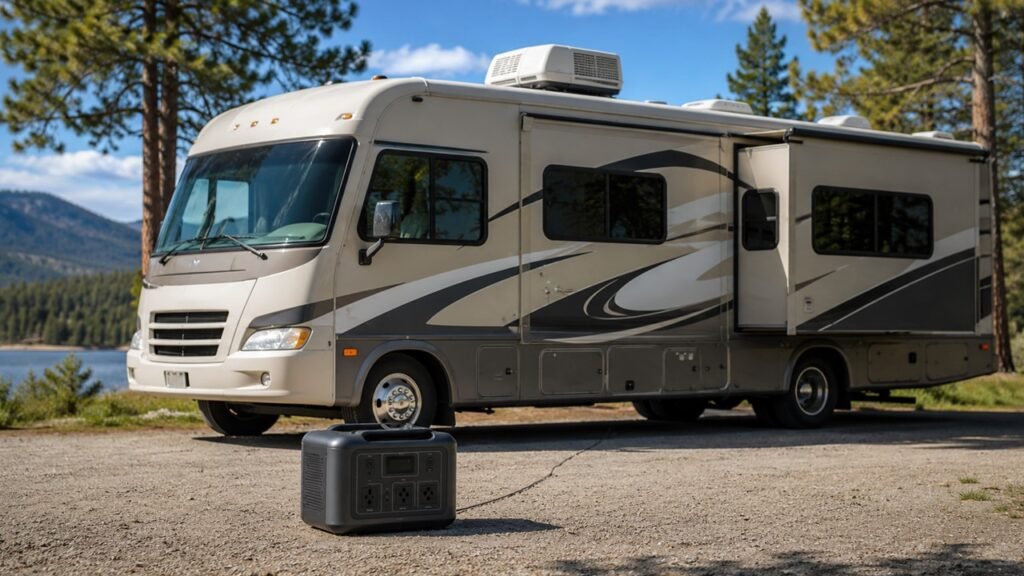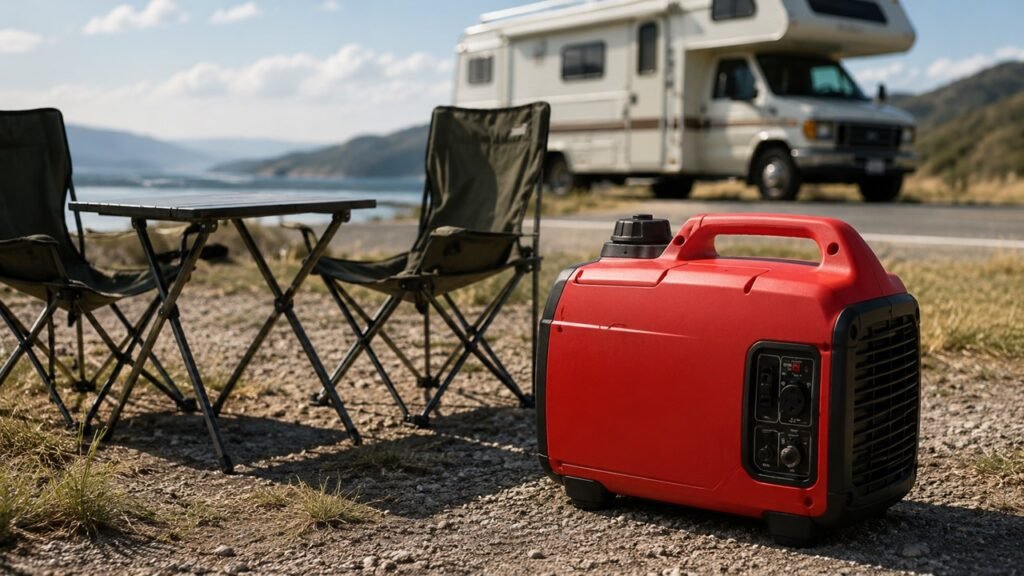
RV generator size depends on your air conditioner, RV amp service, appliance load, and camping style. Most RV owners need between 2,000W and 4,500W, while larger 50-amp or dual-AC RVs may need 6,000W to 8,000W or more.
The right generator is one that can handle your peak power needs with some extra headroom. This guide explains how to choose the right RV generator size for your setup.
Quick Answer: What Size Generator Does an RV Need?
Most RVs need a 2,000W to 4,500W generator, depending on air conditioner use and appliance load. A small camper may only need 2,000W to 2,400W, while a 30-amp RV with one rooftop AC usually needs 3,500W to 4,500W.
Large 50-amp RVs with two air conditioners may need 6,000W to 8,000W or more. Luxury motorhomes with three air conditioners, washer-dryer setups, and heavy simultaneous appliance use may need 10,000W to 12,500W.
| RV Type / Setup | Recommended Generator Size | Best For |
| Pop-up camper / teardrop | 2,000W-2,400W | Lights, fan, charging, small fridge |
| Small camper without AC | 2,400W-3,000W | Basic appliances and battery charging |
| Class B RV | 2,800W-3,600W | Compact RV with light AC or appliances |
| 30-amp travel trailer | 3,500W-4,500W | One rooftop AC and normal appliances |
| Class C RV | 3,600W-4,500W | One AC, microwave, fridge, converter |
| Fifth wheel with two ACs | 5,500W-7,000W+ | Larger appliance load and dual AC |
| 50-amp Class A motorhome | 6,000W-8,000W+ | Dual AC and heavier simultaneous use |
| Luxury RV with three ACs | 10,000W-12,500W | Full-load comfort setup |
The air conditioner is usually the biggest factor when choosing RV generator size.
The Simple Rule for Sizing an RV Generator
The simple rule is this: add the watts you use continuously, add the largest startup surge, then add extra headroom. This gives you a safer and more realistic generator size than guessing by RV length alone.
Recommended generator size = running watts + highest starting surge + 10% to 20% buffer
Running watts are the watts an appliance uses while operating. A microwave, coffee maker, air conditioner, TV, and battery converter all have running wattage.
Starting watts are short power surges used by appliances with motors or compressors. RV air conditioners, refrigerators, and some pumps may need more power for a few seconds when they start.
The buffer protects the generator from running at full load all the time. A 10% to 20% cushion helps reduce overload risk, improves comfort, and gives the generator breathing room in hot weather or high-demand situations.
Generator Size by RV Type
Different RV types have very different power requirements. The size of generator you need depends on factors such as air conditioner use, appliance load, RV electrical service, and how often you camp off-grid. The sections below provide general generator size recommendations for the most common RV categories.
Pop-Up Campers and Teardrops
Most pop-up campers and teardrops need a 2,000W to 2,400W generator. This size can usually handle LED lights, phone charging, a fan, a small fridge, and basic battery charging.
If your pop-up camper has no rooftop AC, you probably do not need a large generator. A compact inverter generator is often enough for quiet, simple camping power.
You may need to size up if your camper has an air conditioner, microwave, electric kettle, or other high-draw appliance. Moreover, small campers still need careful load management when using heating or cooking appliances.
Small Travel Trailers
Small travel trailers without AC usually need 2,400W to 3,000W. This range can handle basic campsite power, including lights, fridge controls, fans, chargers, laptops, and one small appliance at a time.
If the trailer has a rooftop air conditioner, the better range is usually 3,500W to 4,500W. The jump happens because AC startup surge requires much more power than lights or phone charging.
A small travel trailer does not always need a huge generator. The better choice depends on whether you expect to run the AC often.
30-Amp Travel Trailers
Most 30-amp travel trailers with one rooftop AC need a 3,500W to 4,500W generator. This gives enough headroom for AC startup, fridge use, lights, and battery charging.
A 30-amp RV uses 120V power, so its theoretical ceiling is about 3,600W. However, many RV owners still choose a 4,000W to 4,500W generator because starting watts and real-world loads can be demanding.
A 2,000W generator may run basic loads in a 30-amp RV, but it is usually not enough for reliable rooftop AC use.
Class B RVs
Most Class B RVs need 2,800W to 3,600W, depending on AC size and appliance use. Smaller vans without heavy AC use may stay closer to the lower range.
Class B RVs often have fewer appliances than large motorhomes. That means generator size depends more on the AC, induction cooking, microwave use, and battery charging system.
If your Class B has a small AC or a soft-start system, you may not need a huge generator. If you use electric cooking and AC together, you need more headroom.
Class C RVs
Most Class C RVs with one rooftop AC need 3,600W to 4,500W. This range works well for one AC, a microwave used carefully, fridge operation, lighting, and converter charging.
Larger Class C models may need more power if they have bigger appliances or more simultaneous loads. A Class C with one AC is often similar to a 30-amp travel trailer in generator needs.
If you want to run the AC and microwave at the same time, choose more headroom or manage loads carefully.
Fifth Wheels
A fifth wheel with one AC may need 4,000W to 5,500W. Larger fifth wheels with two AC units often need 5,500W to 7,000W or more.
Fifth wheels can have larger refrigerators, multiple TVs, fireplaces, washer-dryer hookups, and bigger battery chargers. These loads add up quickly when used together.
For one AC and normal appliances, a mid-size generator may work. For dual AC and heavy comfort use, a larger generator is safer.
50-Amp Motorhomes
Large 50-amp motorhomes often need 6,000W to 8,000W or more if running two AC units and several appliances together. Some luxury Class A motorhomes may use 10,000W to 12,500W generators for full-load comfort.
A 50-amp RV can support much more power than a 30-amp RV. That does not mean every 50-amp owner needs a 12,000W generator. It means the RV can use more power if you choose to run multiple large appliances at once.
If you only run one AC and a few basic loads, your real need may be lower than the full 50-amp rating.
Generator Size by Wattage Range
Looking at generator size by wattage is one of the easiest ways to narrow down your options. Each wattage range supports a different level of RV comfort, from basic battery charging to running multiple air conditioners and appliances.
What can a 2,000-watt generator run in an RV?
A 2,000W generator can usually run lights, fans, phone chargers, laptops, a small fridge, and light appliances used one at a time. It works best for pop-up campers, teardrops, small trailers, and low-power camping.
A 2,000W generator is usually too small for a standard rooftop RV air conditioner. It may also struggle with a microwave, electric kettle, space heater, or hair dryer if other loads are running.
Choose this size if you camp light, avoid AC use, and want a portable generator for basic power.
What can a 3,000-watt generator run in an RV?
A 3,000W generator can run more RV loads, including lights, fridge, battery charging, TV, router, coffee maker, and some smaller AC units with careful load management.
However, a 3,000W generator may still be tight for a 15,000 BTU rooftop air conditioner. It may start some AC units in mild conditions, especially with a soft-start kit, but it gives less comfort margin than a 3,500W to 4,500W generator.
Choose this size if you want more flexibility than a 2,000W unit but do not need to run heavy appliances together.
When do you need 3,500W to 4,500W?
You need 3,500W to 4,500W when you want to run one rooftop RV air conditioner reliably. This range is the common sweet spot for many 30-amp RVs, travel trailers, and Class C RVs.
This size gives better startup headroom than a 2,000W or 3,000W generator. It also helps when the battery converter, refrigerator, lights, and small electronics are running in the background.
If you own a 30-amp RV with one AC, this is usually the first range to consider.
When do you need 6,000W to 8,000W or more?
You usually need 6,000W to 8,000W or more for larger RVs, dual-AC setups, 50-amp rigs, or heavier simultaneous appliance use.
This range can support two air conditioners, larger refrigerators, microwaves, battery charging, and other comfort appliances with fewer interruptions. It is common for large fifth wheels and Class A motorhomes.
You may need even more power if your RV has three AC units or you want to run many high-draw appliances at the same time.
RV Appliance Wattage Chart
RV appliance wattage varies by model, age, efficiency, and operating conditions. Use this chart as a starting point, then check your appliance label or manual for exact numbers.
| RV Appliance | Typical Running Watts | Typical Starting Watts | Sizing Note |
| 13,500 BTU RV AC | 1,300W-1,500W | 2,800W-3,200W | Usually needs 3,500W+ |
| 15,000 BTU RV AC | 1,500W-1,800W | 3,000W-3,500W+ | Better with 3,500W-4,500W |
| Microwave | 900W-1,500W | Similar | Avoid using with AC on smaller units |
| Coffee maker | 800W-1,500W | Similar | Short but heavy load |
| RV refrigerator | 300W-700W | 600W-1,200W | Propane mode lowers electric demand |
| Converter/charger | 300W-1,000W | Varies | Higher when batteries are low |
| Hair dryer | 1,200W-1,875W | Similar | High temporary draw |
| Space heater | 750W-1,500W | Similar | Can overload small generators |
| TV/laptop/router | 50W-300W | Minimal | Usually not a major sizing factor |
| LED lights/phone charging | 5W-100W | Minimal | Low draw |
Always check the actual wattage label on your RV appliances because real numbers vary by model. A newer efficient refrigerator may use less power than an older one. A larger air conditioner may need much more startup power than expected.
Does Your RV Air Conditioner Decide Generator Size?
For many RVs, the rooftop air conditioner is the main reason generator size jumps from 2,000W to 3,500W or more. Lights, chargers, fans, and laptops use relatively little power. An RV AC uses more power while running and much more power when the compressor starts.
A 13,500 BTU or 15,000 BTU RV AC may use around 1,300W to 1,800W while running. However, startup demand can be much higher for a few seconds. That startup surge is why many AC-equipped RVs need a 3,500W to 4,500W generator.
A standard RV AC often needs 3,000W or more of starting capacity. One rooftop AC is usually better matched with a 3,500W to 4,500W generator. Two AC units often need 5,500W to 8,000W or more.
A soft-start kit can reduce AC startup surge. It does not remove the AC running load, but it can help a smaller generator handle compressor startup more easily.
30-Amp vs 50-Amp RV Generator Needs
RV amp service matters because it sets the electrical limit of the RV. A 30-amp RV and a 50-amp RV do not use power the same way.
| RV Service | Max Theoretical Power | Common Generator Range | Best For |
| 30 amp | 3,600W | 3,500W-4,500W | One AC and normal appliances |
| 50 amp | Up to 12,000W | 6,000W-8,000W+ | Dual AC and larger loads |
| Full 50-amp equivalent | 12,000W | 10,000W-12,500W | Heavy full-load use |
A 30-amp RV has a much lower power ceiling than a 50-amp RV. Furthermore, a 30-amp connection uses 120V power, so 30 amps times 120 volts equals 3,600 watts.
A 50-amp RV often has two 120V legs, which can provide up to 12,000 watts total. However, a 50-amp RV owner does not always need a 12,000W generator unless they want to run many large appliances at once.
Match generator size to your real load, not just the plug on the side of the RV.
How to Calculate Your Own RV Generator Size
Calculating your own generator size helps you avoid buying too little or too much power. By estimating your running load, startup surge, and safety margin, you can choose a generator that matches your actual camping needs.
Step 1: List what you run at the same time
Start by listing the appliances you realistically use together. Do not add every appliance in the RV unless you truly plan to run everything at once.
Common RV loads include:
- Air conditioner
- Refrigerator
- Microwave
- Coffee maker
- Converter/charger
- TV and router
- Lights
- Laptop and phone chargers
- Water pump
- Space heater or hair dryer
Your list should reflect your camping style. Someone who cooks outside and avoids AC needs less power than someone who runs AC, microwave, and electric appliances daily.
Step 2: Add running watts
Next, add the running watts for the appliances used at the same time. Running watts are the steady watts needed after the appliance is already operating.
For example, your AC may use 1,600W while running, your refrigerator may use 400W, and your converter may use 500W. Together, those loads already equal 2,500W before adding lights, TV, or other devices.
This step helps you see your normal operating load.
Step 3: Add the largest starting surge
After running watts, add the largest starting surge. The largest surge usually comes from the RV air conditioner.
You usually do not need to add every startup surge unless multiple motor loads start at the same time. For most RVers, the safest practical method is to add the largest surge load to the expected running load.
This is why AC startup matters so much. A generator may handle the AC running load but still fail during compressor startup.
Step 4: Add a safety buffer
Finally, add a 10% to 20% safety buffer. This keeps the generator from running at its limit all day.
A buffer is useful in hot weather, at higher loads, or when appliances cycle on and off. It also gives you flexibility when someone turns on a coffee maker, microwave, or charger unexpectedly.
A generator with healthy headroom usually performs better than one constantly pushed to maximum output.
Real-World Generator Sizing Examples
These examples show how generator sizing works in practical RV situations. While every RV setup is different, the examples below illustrate how appliance loads and air conditioner use affect the final generator recommendation.
Example 1: Small camper without AC
A small camper without AC has simple power needs. It may only use a few lights, a small fridge, a fan, and one short-use appliance.
Example load:
- Small fridge: 400W
- Lights and charging: 150W
- Fan: 100W
- Coffee maker: 1,000W
This setup reaches about 1,650W when the coffee maker is running. A 2,000W to 2,400W generator should work if high-draw appliances are used one at a time.
If you add a microwave, electric heater, or AC, this generator size may become too small.
Example 2: 30-amp RV with one AC
A 30-amp RV with one rooftop AC needs more starting power. The AC compressor usually becomes the deciding load.
Example load:
- 15,000 BTU AC running: 1,600W
- AC startup surge: 3,200W+
- Converter: 500W
- Refrigerator: 400W
- Lights and TV: 150W
A 3,500W generator may work, but 4,000W to 4,500W gives better comfort and headroom. This is especially true in hot weather or when the converter is charging low batteries.
If you want to use the microwave while the AC is running, you may need to turn off the AC briefly or choose more generator capacity.
Example 3: 50-amp RV with two AC units
A 50-amp RV with two AC units has a much heavier load. It may also have larger appliances and more background power use.
Example load:
- Two AC units running: 3,200W-3,600W
- Microwave: 1,200W
- Refrigerator: 700W
- Converter: 800W
- Other small loads: 300W
This setup can easily reach 6,000W or more during real use. A 6,000W to 8,000W generator is more realistic for dual-AC comfort.
If both AC compressors start close together, startup demand may be even higher. A soft-start system or staggered AC startup can help reduce stress on the generator.
Inverter Generator vs Open-Frame Generator for RVs
For most RV owners, an inverter generator is usually the better choice. It provides cleaner power, lower noise, and better fuel efficiency under changing loads.
| Feature | Inverter Generator | Open-Frame Generator |
| Noise | Quieter | Louder |
| Power quality | Cleaner power | Less refined power |
| Fuel use | More efficient at low loads | Often uses more fuel |
| Portability | Usually better in smaller sizes | Often heavier |
| Price | Higher | Lower |
| Best for | RVs and campgrounds | Jobsites and emergency backup |
An inverter generator is better for sensitive electronics such as laptops, TVs, routers, chargers, and some RV control systems. It is also more campground-friendly because many inverter models run quieter than open-frame jobsite generators.
An open-frame generator can provide a lot of watts for the money. However, it is often louder, heavier, and less pleasant for camping.
Portable vs Built-In RV Generators
RV generators are available as portable units or permanently installed built-in systems. The right choice depends on your RV type, budget, storage space, and how often you rely on generator power.
Portable RV generators
Portable RV generators are common for travel trailers, small campers, and many 30-amp RVs. They are flexible because you can move them, replace them, and upgrade them more easily.
Portable RV generators are:
- Good for travel trailers and small RVs
- Easier to replace or upgrade
- Usually cheaper than built-in units
- Useful when you want flexible power outside the RV
- Available in many inverter and dual-fuel models
They also have limits. A portable generator needs storage space, fuel storage, theft protection, and manual setup. You also need to place it safely away from the RV.
Built-in RV generators
Built-in RV generators are common in Class A motorhomes and larger Class C RVs. They are permanently installed and often start from inside the RV.
Built-in RV generators are:
- Common in Class A and larger Class C motorhomes
- Convenient for frequent generator use
- Often connected to the RV fuel system
- Better suited for larger power loads
- Designed as part of the RV system
The downside is cost and maintenance. Built-in units can be expensive to repair, add permanent weight, and require regular service.
Gas, Propane, Diesel, or Solar Generator for RV Use?
Different generator types fit different RV camping styles. The best choice depends on fuel access, noise needs, runtime, storage, and power demand.
| Generator Type | Best For | Main Advantage | Main Limitation |
| Gas | Travel trailers and weekend camping | Easy fuel access | Fumes and fuel storage |
| Propane | RVers already carrying propane | Cleaner storage | Lower energy density |
| Diesel | Diesel motorhomes | Shares RV fuel source | Higher cost |
| Dual-fuel | Flexible camping | Gas or propane option | More complex |
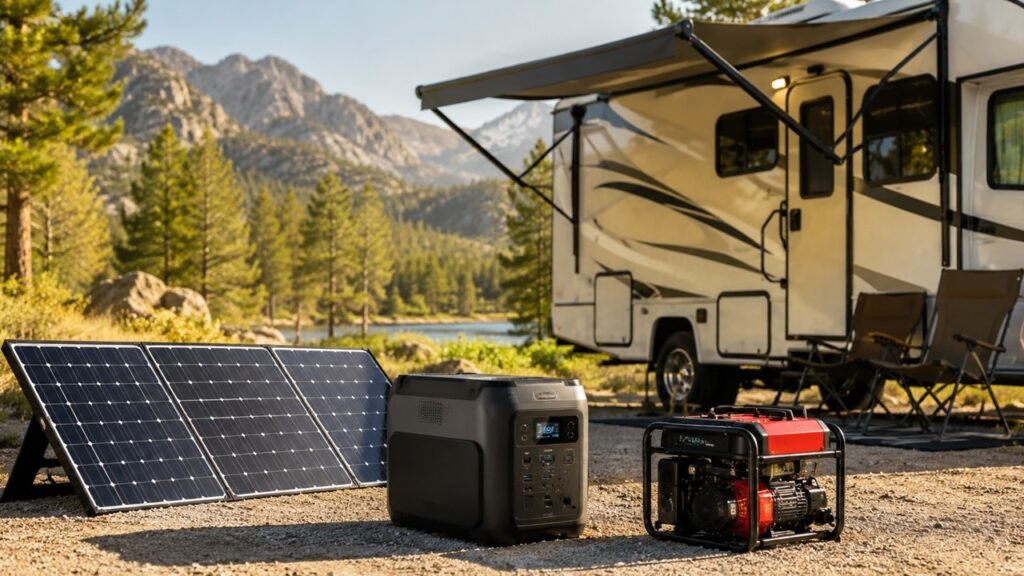
| Solar generator | Quiet low-load power | Silent and fume-free | Limited AC runtime |
Gas generators are popular because gasoline is easy to find. Propane generators are convenient if your RV already carries propane. Diesel generators make sense for diesel motorhomes because they can share the main fuel source.
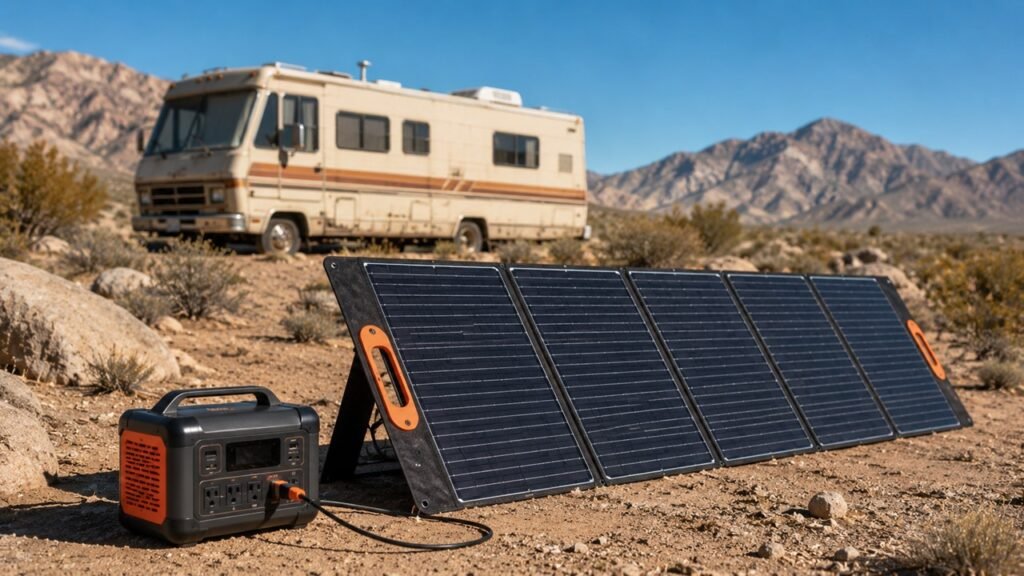
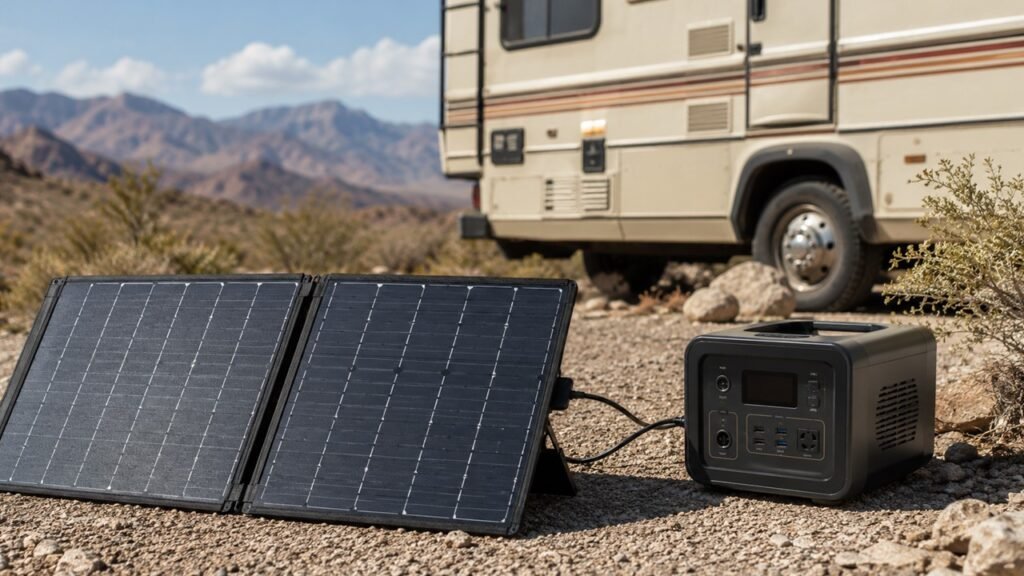
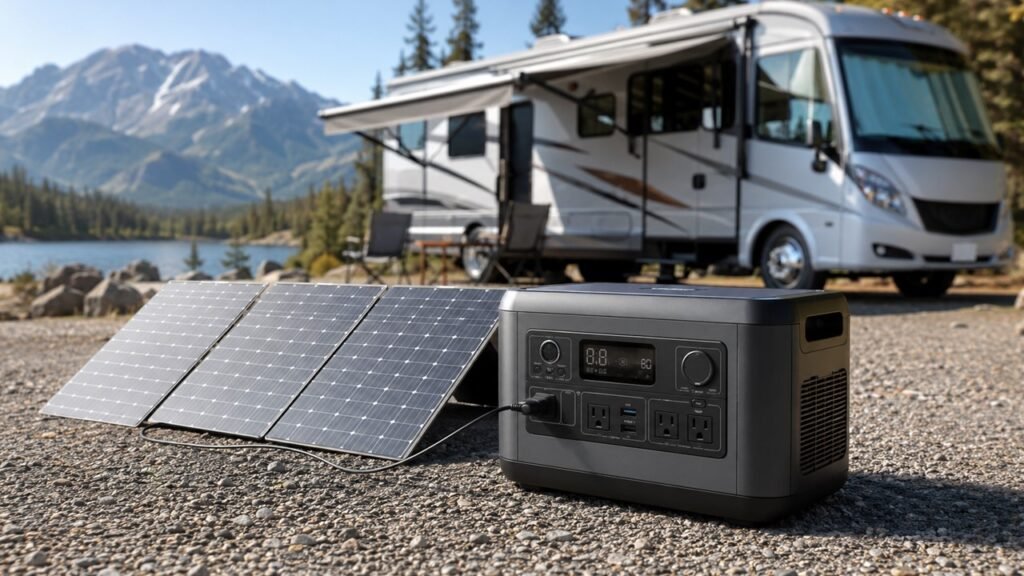
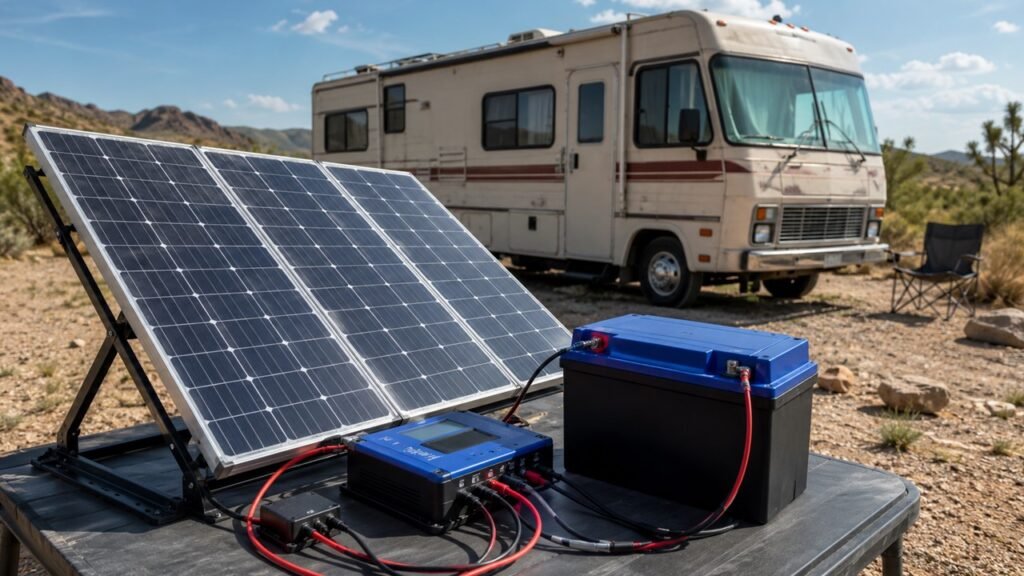
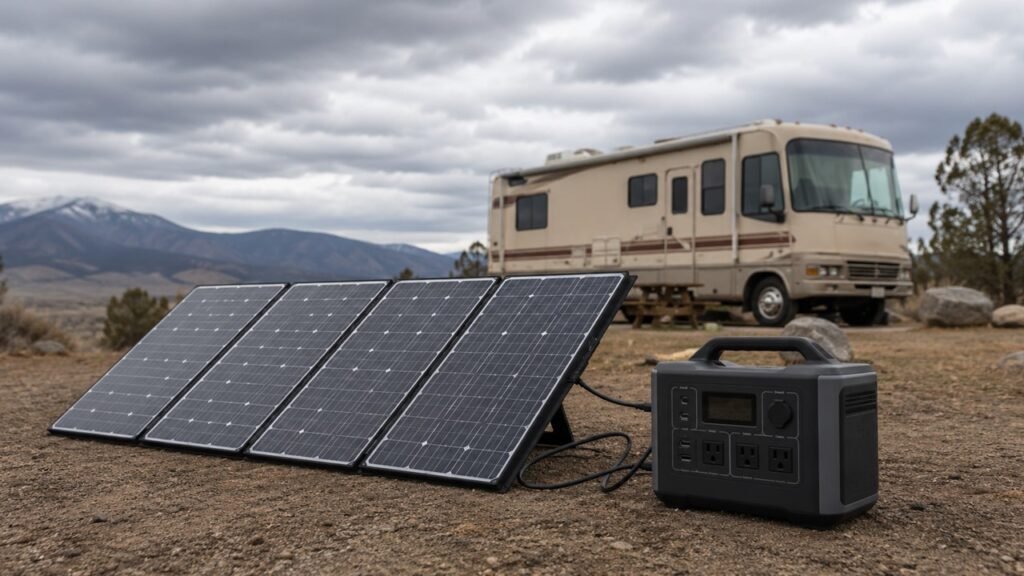
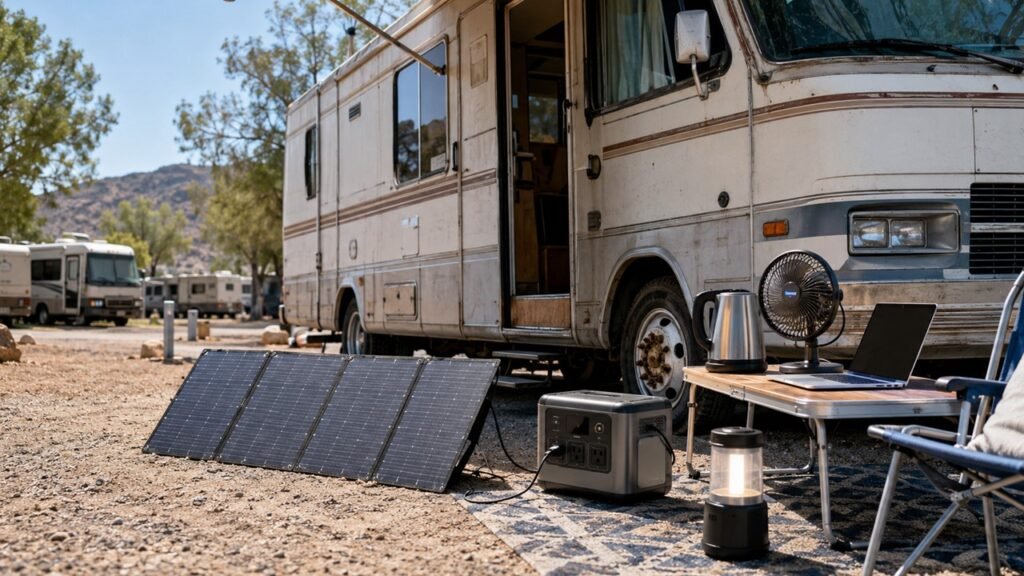
Solar generators, also called portable power stations, are useful for quiet low-load power. They work well for laptops, phones, lights, routers, fans, and some small appliances. However, running RV air conditioning for long periods usually requires a large battery system, high inverter output, and strong solar or charging input.
How Fuel Use and Runtime Affect Generator Size
Generator size affects fuel use and runtime. Larger generators can power more appliances, but they may burn more fuel under heavier loads. Smaller generators can be more efficient for lights, charging, and small appliances, but they may struggle with AC.
Fuel use depends on generator size, fuel type, load percentage, engine efficiency, and runtime. A generator running at light load usually burns less fuel than the same generator running near full capacity.
Running the RV air conditioner increases fuel consumption because AC is one of the largest loads in an RV. Microwave use, electric heat, battery charging, and dual-AC operation also increase fuel demand.
Continuous runtime depends on fuel tank size, oil level, cooling, maintenance condition, and manufacturer limits. Many portable generators can run for several hours on one tank, but you should follow the generator manual for safe runtime and service intervals.
What Happens If Your RV Generator Is Too Small?
A generator that is too small creates daily power problems. It may work for lights and charging, but fail when larger appliances start.
Common signs include:
- The air conditioner may not start.
- Breakers may trip.
- The generator may overload or shut down.
- Appliances may run poorly.
- Voltage may drop under heavy load.
- The generator may wear faster.
- You may need constant load management.
A generator should have enough headroom for startup surge and normal campground use. If the generator is always running at its limit, it is probably too small for your camping style.
Can You Use a Bigger Generator Than Your RV Needs?
Yes, you can use a bigger generator than your RV needs, but bigger is not always better. A larger generator gives more headroom, but it also costs more, weighs more, uses more fuel, and may be harder to store.
Oversizing can make sense if you plan to upgrade your RV, camp in hot weather, run AC often, or power heavy appliances. A little extra headroom is helpful.
However, a 30-amp RV cannot use unlimited power just because the generator is large. The RV’s electrical service still limits how much power can safely pass through the system.
The best generator is not the biggest one. It is the generator that matches your real peak load with a safe buffer.
RV Generator Safety Tips
Generator safety matters because fuel-powered generators produce carbon monoxide. This gas can be deadly because it has no smell, color, or warning before exposure becomes dangerous.
Follow these safety tips:
- Never run a fuel generator inside an RV, tent, garage, or storage bay.
- Keep the generator away from windows, doors, vents, and neighboring RVs.
- Use a working carbon monoxide detector inside the RV.
- Use RV-rated cords and adapters.
- Do not overload extension cords.
- Keep the generator dry and protected from direct rain.
- Follow the generator manual for grounding and maintenance.
- Respect campground generator hours and quiet rules.
- Use a qualified technician for built-in generator wiring.
A generator should always be placed outdoors with exhaust pointed away from people, windows, and air intakes. Safe placement is just as important as correct generator size.
Final Recommendation: What Size Generator Should You Get?
The right generator size depends on your RV and how you use power. Start with your AC load, then check your RV amp service, appliances, and real camping habits.
Use this quick guide:
- 2,000W-2,400W: Best for pop-ups, teardrops, lights, charging, fans, and small appliances.
- 2,400W-3,000W: Best for small campers without heavy AC use.
- 3,500W-4,500W: Best for most 30-amp RVs with one rooftop AC.
- 5,500W-7,000W: Best for fifth wheels and larger RVs with dual-AC use.
- 6,000W-8,000W+: Best for many 50-amp RVs and Class A motorhomes.
- 10,000W-12,500W: Best for luxury rigs with three AC units or full-load comfort.
For most RV owners, a 3,500W to 4,500W inverter generator is the best practical range if they want to run one rooftop air conditioner reliably.
Related FAQs
What size generator does an RV need?
Most RVs need a 2,000W to 4,500W generator. Small campers can use less, while larger 50-amp RVs with two AC units may need 6,000W to 8,000W or more.
Is a 2,000-watt generator enough for an RV?
A 2,000W generator is enough for lights, charging, fans, and small appliances. It is usually not enough for a standard rooftop RV air conditioner.
Is a 3,000-watt generator enough for an RV?
A 3,000W generator can run many basic RV loads and some smaller AC units. For reliable rooftop AC use, 3,500W to 4,500W is usually better.
What size generator do I need for one RV air conditioner?
Most RVs with one 13,500 or 15,000 BTU AC need a 3,500W to 4,500W generator. A soft-start kit may reduce startup demand.
What size generator do I need for two RV air conditioners?
Two RV AC units usually need 5,500W to 8,000W or more. The exact size depends on AC size, startup surge, soft-start use, and other appliances running at the same time.
Should I buy a generator bigger than my RV needs?
A little extra headroom is helpful, but oversizing too much adds weight, noise, fuel use, and cost. Match the generator to your real peak load.
Can a generator run an RV air conditioner?
Yes, a generator can run an RV air conditioner if it has enough starting watts and running watts. Most single rooftop AC setups need about 3,500W to 4,500W for reliable use.
Can you run two RV AC units on one generator?
Yes, but two RV AC units usually need a larger generator, often 5,500W to 8,000W or more. Soft-start kits and load management can make dual-AC operation easier.
How much fuel does an RV generator use?
RV generator fuel use depends on generator size, fuel type, load, and runtime. Running AC, electric heat, or multiple high-draw appliances increases fuel consumption.
How long can you run an RV generator continuously?
Continuous runtime depends on fuel supply, oil level, cooling, maintenance, and the generator manual. Many RV generators can run for hours, but you should follow manufacturer limits and campground rules.

Daniel Brooks writes about RV living, gear, and travel planning with a focus on everyday usability. His guides break down complex topics into simple advice for real RV owners. He reviews products with long-term use in mind, not marketing hype.