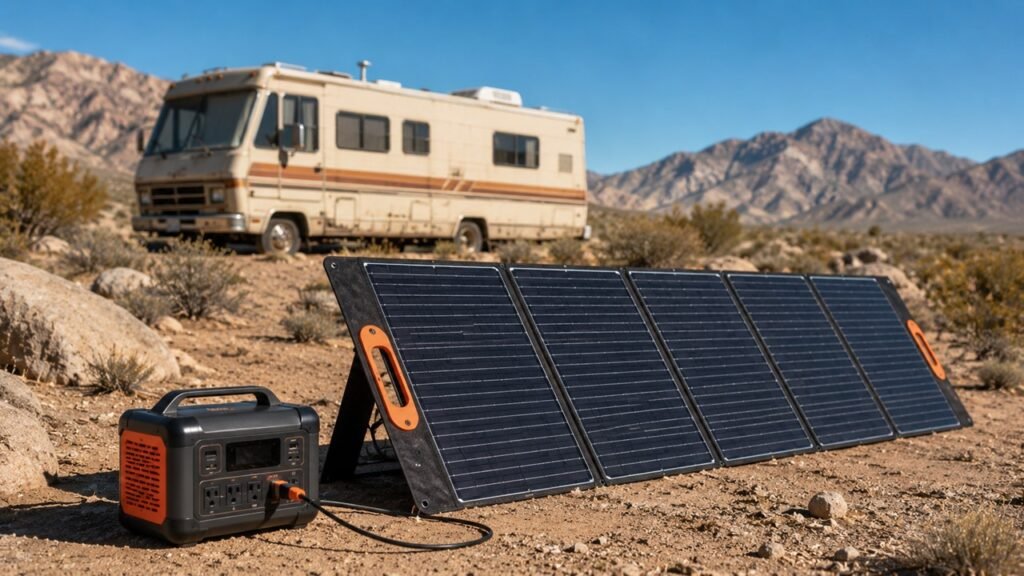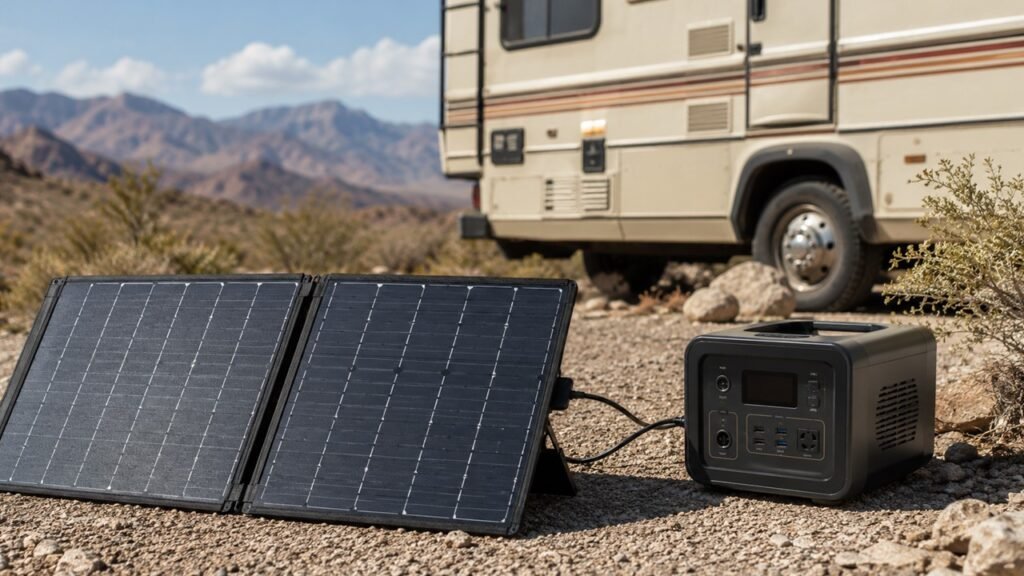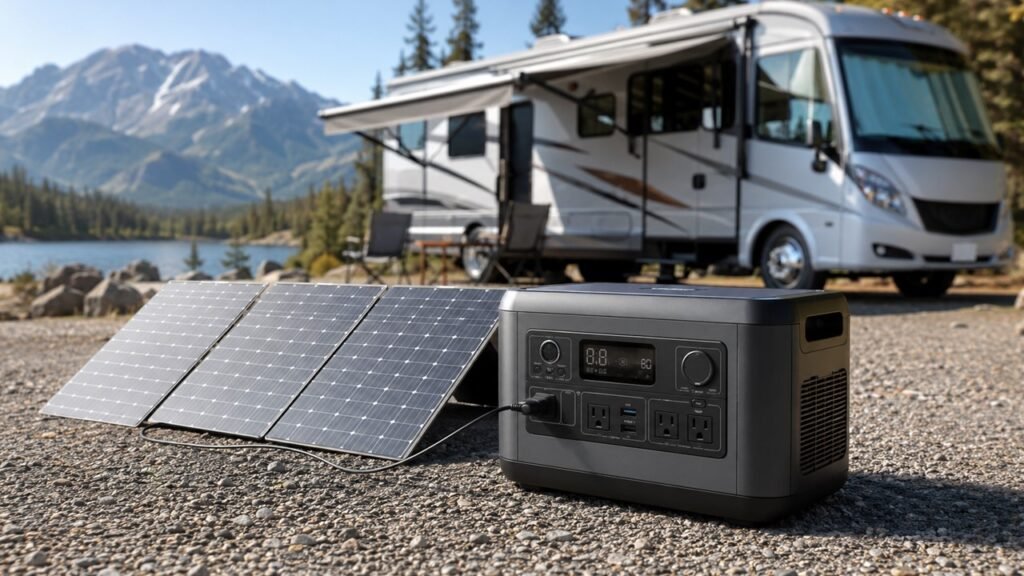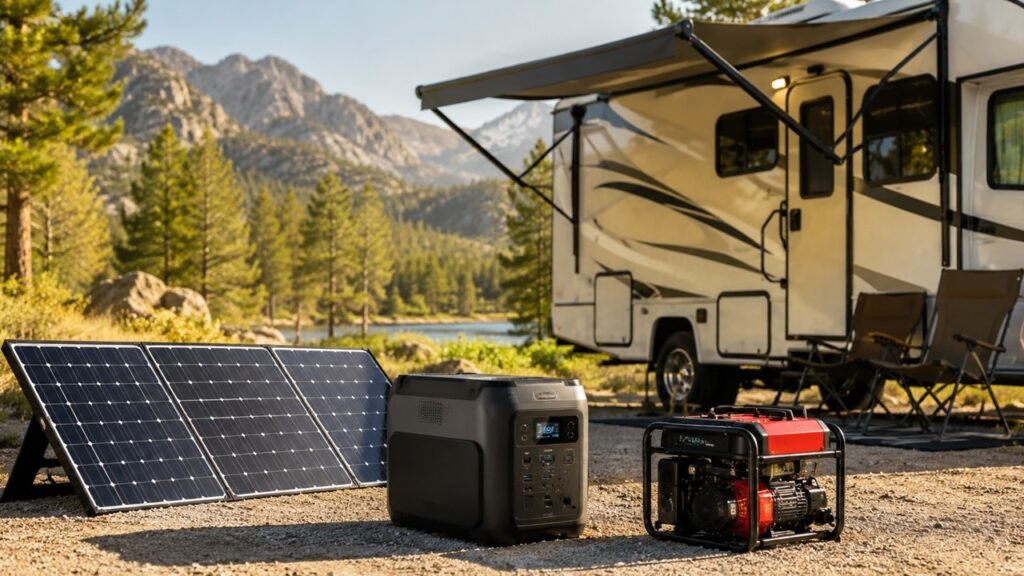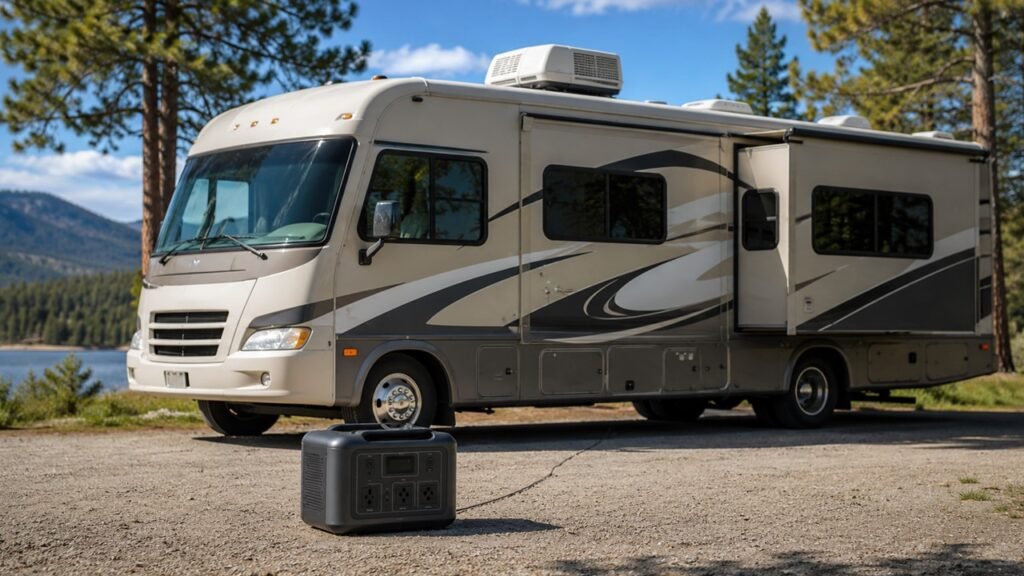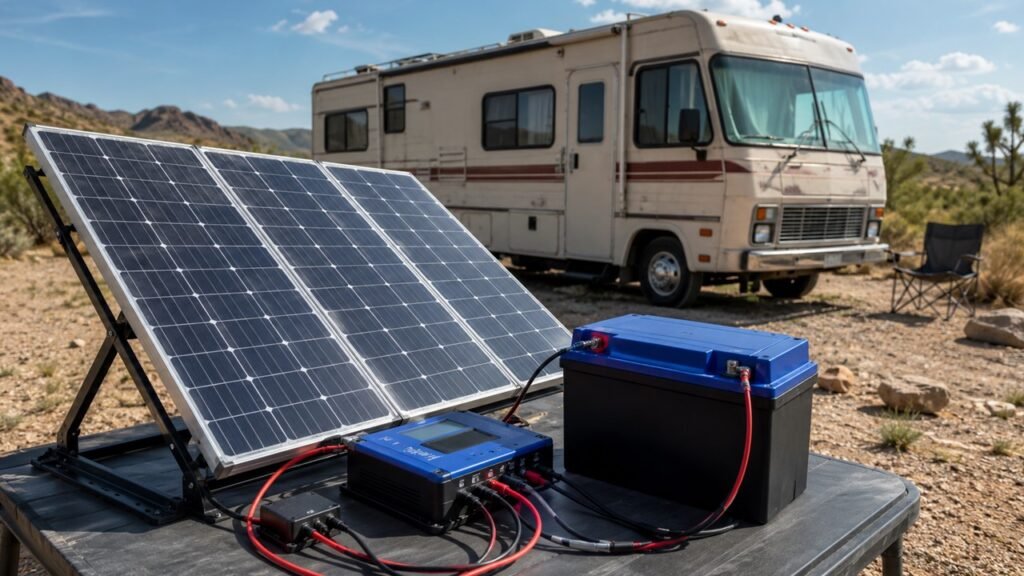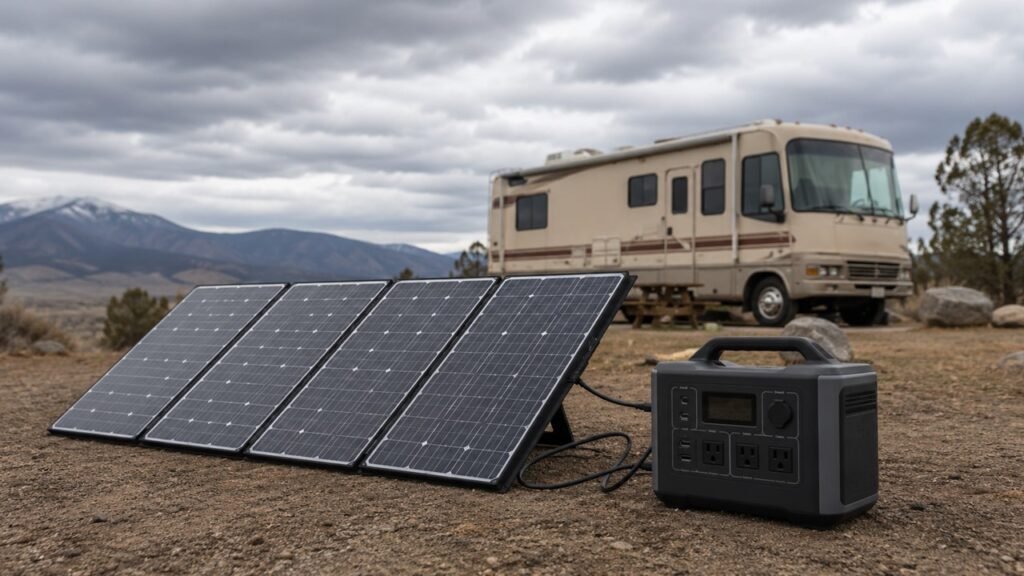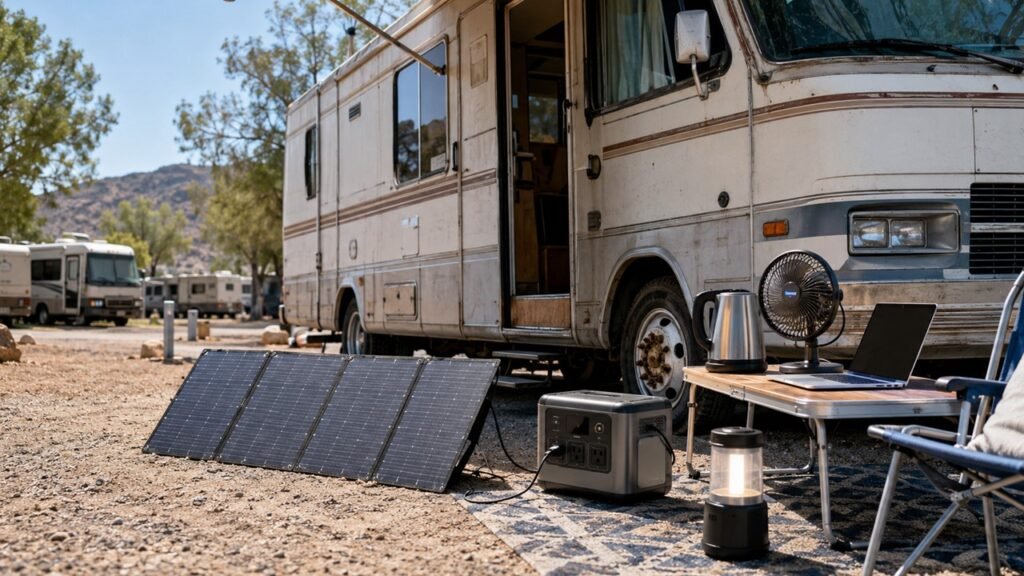
Most RVs need at least one 12-volt house battery, but many RV owners need two to four deep-cycle batteries for comfortable camping. The exact number depends on how much power you use, what type of battery you have, how long you camp off-grid, and whether you rely on shore power, solar, or a generator.
For basic campground camping, one battery may be enough. In case of weekend dry camping, 100Ah to 200Ah is more practical. For regular boondocking, many RVers are better served with 200Ah to 400Ah. Full-time off-grid RVers may need 400Ah to 800Ah or more, especially if they run a 12V fridge, laptops, Starlink, inverter appliances, or occasional air conditioning.
Motorhomes can also have two battery systems. One battery starts the engine, while the house battery bank powers the living area. When most people ask how many batteries an RV needs, they usually mean the house batteries, not the engine starter battery.
Key Takeaways
- Most RVs need at least one 12V house battery.
- One battery is often enough for campground camping with shore power.
- Weekend campers usually need 100Ah to 200Ah of battery capacity.
- Regular boondockers usually need 200Ah to 400Ah of battery capacity.
- Full-time off-grid RVers often need 400Ah to 800Ah or more.
- Battery capacity matters more than battery count.
- Lithium batteries provide more usable power than lead-acid batteries.
- Heavy appliances need a larger battery bank, inverter, and charging system.
- Solar panels recharge batteries, but they do not replace battery storage.
RV Battery Needs by Camping Style
The table gives a practical starting point. Your actual setup may need more or less capacity depending on your RV size, weather, appliance use, battery chemistry, and charging sources.
| Camping Style | Recommended Battery Capacity | Typical Battery Count | Best For |
| Shore power camping | 100Ah | 1 battery | Lights, pump, short stops |
| Weekend camping | 100Ah to 200Ah | 1 to 2 batteries | Light off-grid use |
| Moderate boondocking | 200Ah to 400Ah | 2 to 4 batteries | Fridge, fans, furnace, devices |
| Full-time off-grid | 400Ah to 800Ah+ | 4+ batteries or large lithium bank | Long stays and inverter loads |
| AC or heavy appliances | 600Ah to 1,000Ah+ | Large lithium bank | AC, microwave, induction cooking |
What Does an RV Battery Actually Power?
An RV house battery mostly powers 12V DC systems. These are the basic systems that keep the RV usable when you are not plugged into shore power.
A house battery does not automatically run every household-style appliance. Appliances that need 120V AC power usually require shore power, a generator, or an inverter connected to a large enough battery bank.
Common RV battery loads include:
- LED lights
- Water pump
- Furnace blower fan
- Vent fans
- Propane fridge control board
- 12V refrigerator
- Slide-outs and stabilizers
- Propane detector and control systems
- USB chargers and small electronics
A microwave, coffee maker, TV, residential fridge, induction cooktop, or air conditioner usually needs 120V AC power. If you want to run those from batteries, your RV needs an inverter and enough battery capacity to support the load.
RV Starter Battery vs House Battery: Know the Difference
A motorhome usually has a starter battery and a house battery bank. The starter battery turns over the engine. The house batteries power the living area, including lights, fans, water pump, and other 12V systems.
A travel trailer or fifth wheel does not have an engine starter battery because it is towed by another vehicle. It still needs a house battery for the 12V systems, breakaway switch, lights, pump, controls, and off-grid power.
So, when someone asks how many batteries an RV needs, the real question is usually this: how much house battery capacity does the RV need for camping?
For most RV owners, the answer should be measured in usable amp-hours, not just battery count. One large lithium battery can sometimes provide more usable power than two smaller lead-acid batteries.
The Simple Formula to Calculate RV Battery Needs
The best way to size RV batteries is to estimate your daily energy use. Start by listing each appliance, its wattage, and how many hours you use it per day.
Use this formula:
Watts × Hours Used = Watt-Hours Per Day
Then convert watt-hours to amp-hours:
Watt-Hours ÷ 12V = Amp-Hours
This gives you a simple estimate of how much battery capacity you need each day. For a more accurate setup, add extra capacity for inverter losses, cold weather, cloudy days, and battery aging.
Example Calculation
| Appliance | Watts | Hours Per Day | Daily Use |
| 12V fridge | 60W | 10 hours | 600Wh |
| LED lights | 20W | 4 hours | 80Wh |
| Water pump | 60W | 0.5 hour | 30Wh |
| Vent fan | 25W | 6 hours | 150Wh |
| Laptop and phones | 100W | 3 hours | 300Wh |
| Total | 1,160Wh |
In this example, the RV uses about 1,160Wh per day.
1,160Wh ÷ 12V = about 97Ah per day.
So, for one day off-grid, you need roughly 100Ah of usable battery capacity. For two days, you need around 200Ah of usable capacity. If you use lead-acid batteries, you need more rated capacity because only about half of the battery should be used regularly.
Lead-Acid vs AGM vs Lithium: Why Battery Type Changes the Number
Battery count depends on usable capacity, not only the number printed on the battery label. A 100Ah lead-acid battery and a 100Ah lithium battery do not give the same practical runtime.
Lead-acid and AGM batteries are usually sized with a shallower discharge limit because deeper discharges shorten battery life. Lithium LiFePO4 batteries provide more usable capacity, hold voltage better under load, and usually recharge faster.
That is why two RVs can both have “200Ah of batteries” but perform very differently. A 200Ah lead-acid bank may give about 100Ah of practical usable capacity. A 200Ah lithium bank may give about 160Ah to 200Ah of usable capacity, depending on the battery and manufacturer guidance.
Usable Capacity by Battery Type
| Battery Type | Safe Usable Capacity | 100Ah Battery Gives You | Best For |
| Flooded lead-acid | About 50% | About 50Ah usable | Budget setups |
| AGM | About 50% | About 50Ah usable | Maintenance-free lead-acid |
| Lithium LiFePO4 | About 80% to 100% | About 80Ah to 100Ah usable | Boondocking and solar |
If you are comparing battery setups, compare usable amp-hours first. Battery count alone can be misleading.
How Many Lead-Acid Batteries Does an RV Need?
Most basic RV setups can use one lead-acid battery for campground camping, short travel stops, and light 12V loads. But one lead-acid battery is limited because only about half of its rated capacity is practical for regular use.
Lead-acid batteries are cheaper upfront, but they are heavier and offer less usable capacity. If you dry camp often, you may need more batteries than you would with lithium.
A practical lead-acid setup often looks like this:
- 1 lead-acid battery: basic camping and shore power use
- 2 lead-acid batteries: light weekend camping
- 4 lead-acid batteries: better for boondocking
- 6 or more batteries: heavy off-grid use, but weight becomes a problem
Many RVers use two 6V golf cart batteries wired in series to create a 12V battery bank. This can provide better deep-cycle performance than some small 12V lead-acid batteries, but it still needs proper charging and maintenance.
If you use flooded lead-acid batteries, you also need to check water levels, keep terminals clean, avoid deep discharges, and recharge them fully after use.
How Many Lithium Batteries Does an RV Need?
Most RV owners need fewer lithium batteries than lead-acid batteries because lithium gives more usable capacity. A 100Ah LiFePO4 battery can often provide nearly the full rated capacity, depending on the battery design and manufacturer limits.
Lithium batteries are especially useful for boondocking, solar setups, full-time RVing, and inverter loads. They are lighter, recharge faster, and handle repeated deep cycling better than traditional lead-acid batteries.
A practical lithium setup often looks like this:
- 1 lithium battery, 100Ah: light use and short trips
- 2 lithium batteries, 200Ah: good weekend setup
- 3 to 4 lithium batteries, 300Ah to 400Ah: strong boondocking setup
- 600Ah+ lithium bank: full-time RV living or heavy inverter use
Lithium batteries may also require system upgrades. Your RV may need a lithium-compatible converter, solar charge controller, DC-to-DC charger, battery monitor, and cold-weather charging protection.
Do not assume a lithium battery is a simple drop-in upgrade for every RV. Check the battery manual, charger settings, alternator charging setup, and wiring capacity before upgrading.
How Many Batteries Do You Need for Weekend Camping?
Most weekend RV campers need one to two 100Ah batteries. The exact number depends on whether you use only basic 12V loads or also run a 12V refrigerator, furnace fan, laptops, fans, and inverter appliances.
If you camp at RV parks with shore power, one 12V battery is often enough. The battery mainly supports basic 12V systems while traveling, during brief stops, or during short power interruptions.
If you dry camp for a weekend, 200Ah gives more comfort. It gives you more room for lights, water pump, fans, phone charging, furnace use, and a refrigerator without worrying about the battery dropping too low overnight.
For weekend camping, a 100Ah lithium battery can work for light use. A 200Ah lithium setup is a better choice if you want more reserve capacity and less battery anxiety.
How Many Batteries Do You Need for Boondocking?
Most RV boondockers should start with 200Ah to 400Ah of battery capacity. This range supports common off-grid loads like LED lights, water pump, furnace blower, fans, phone charging, laptops, and a 12V refrigerator.
Boondocking battery needs increase quickly if you camp in cold weather, work remotely, use Starlink, run an inverter, or stay off-grid for several days without recharging.
A practical boondocking setup often looks like this:
- Light boondocking: 200Ah
- Regular boondocking: 300Ah to 400Ah
- Cold-weather boondocking: 400Ah+ because furnace fans use power
- Long off-grid stays: 400Ah to 800Ah with solar support
Cold weather matters because RV furnaces usually burn propane for heat but still use 12V electricity for the blower fan and controls. If the furnace cycles all night, it can drain a small battery bank faster than expected.
For regular boondocking, battery capacity and charging capacity should work together. A large battery bank helps at night and during cloudy weather. Solar, a generator, or alternator charging helps refill the bank during the day.
How Many Batteries Do You Need for Full-Time RV Living?
Full-time RVers usually need a larger battery bank because they use power every day. A practical full-time setup often starts around 400Ah of lithium capacity. Heavier users may need 600Ah to 1,000Ah or more.
Full-time RV power needs are higher because the RV becomes a real living space. You may run a 12V fridge, laptops, Starlink, fans, TV, microwave, CPAP machine, water pump, chargers, and cooking appliances.
A 400Ah lithium bank can support many full-time RVers who manage power carefully and have solar or generator backup. A 600Ah to 800Ah lithium bank gives more comfort for remote work, cloudy weather, and heavier inverter use.
If you want to run air conditioning from batteries, the battery bank needs to be much larger. AC use is one of the biggest reasons full-time RVers upgrade to high-capacity lithium systems.
How Many Batteries Do You Need to Run an RV Refrigerator?
The number of batteries you need for an RV refrigerator depends on the fridge type. A propane absorption fridge uses propane for cooling and only needs a small amount of 12V power for controls. A 12V compressor fridge uses battery power directly and needs more capacity.
A residential refrigerator usually needs 120V AC power through an inverter. That means you must account for the refrigerator draw, startup surge, inverter losses, and daily runtime.
RV Refrigerator Battery Needs
| Refrigerator Type | Typical Battery Use | Suggested Battery Setup |
| Propane RV fridge | Low 12V control power | 1 battery usually works |
| 12V compressor fridge | Moderate daily use | 200Ah is a safer start |
| Residential fridge | Higher inverter load | 300Ah to 600Ah+ lithium |
For a 12V compressor fridge, 200Ah is a practical starting point for weekend use. For longer boondocking trips, 300Ah to 400Ah gives more reserve capacity, especially when combined with solar.
Furthermore. gor a residential fridge, lithium is usually the better choice because the inverter load can drain lead-acid batteries quickly.
How Many Batteries Do You Need to Run an RV Air Conditioner?
An RV air conditioner needs a very large battery bank. A normal 100Ah battery is not enough for practical AC use.
Most rooftop RV air conditioners require a strong inverter, large lithium battery bank, soft start device, and reliable charging support. Even then, runtime depends on AC size, outside temperature, insulation, thermostat setting, and battery capacity.
For short AC use, many RVers need 600Ah to 1,000Ah or more of lithium capacity. For all-night or all-day cooling, batteries alone are usually not practical unless the RV has a major electrical system with large solar, alternator charging, or generator support.
If air conditioning is important, size the full system, not just the batteries. The inverter, wiring, charger, battery management system, and solar input all need to match the load.
How Solar Panels Affect the Number of RV Batteries You Need
Solar panels do not replace batteries. Solar panels recharge the battery bank during the day. Batteries power the RV at night, during cloudy weather, and whenever solar production is low.
A stronger solar setup can reduce how often you need a generator or shore power. But if your battery bank is too small, you may still run out of power overnight.
Solar affects RV battery needs in a few ways:
- More solar can reduce how much reserve battery capacity you need.
- More battery capacity helps during cloudy days.
- Weekend campers can use a smaller solar setup.
- Boondockers need both enough solar and enough battery storage.
- A generator or DC-to-DC charger can reduce battery stress.
For example, a weekend camper may be fine with 200Ah of lithium and a modest solar setup. A full-time boondocker may need 400Ah to 800Ah of lithium and enough solar to refill a large part of that daily use.
The best setup balances daily power use, battery capacity, and charging speed.
RV Battery Bank Examples by Real-World Setup
The table below gives practical battery bank examples based on daily power use. These are estimates, not fixed rules.
| RV Setup | Daily Power Use | Suggested Battery Bank |
| Minimal camper | 500Wh to 800Wh/day | 100Ah lithium or 200Ah lead-acid |
| Weekend family camper | 1,000Wh to 1,500Wh/day | 200Ah lithium or 400Ah lead-acid |
| Boondocking with 12V fridge | 1,500Wh to 2,500Wh/day | 300Ah to 400Ah lithium |
| Remote worker RV | 2,000Wh to 3,500Wh/day | 400Ah to 600Ah lithium |
| Heavy appliance user | 4,000Wh+/day | 600Ah to 1,000Ah+ lithium |
A minimal camper may only need lights, water pump, phone charging, and a fan. A remote worker may need laptops, Starlink, monitors, a 12V fridge, and longer daily charging time.
The more your RV feels like a small apartment, the more battery capacity you need.
Common Mistakes When Choosing RV Batteries
Many RV battery problems happen because the battery bank is chosen by guesswork. Counting batteries is not enough. You need to know usable capacity, daily power use, and recharge options.
Avoid these common mistakes:
- Buying batteries before calculating daily power use
- Comparing batteries by count instead of usable amp-hours
- Expecting one battery to run heavy appliances
- Forgetting inverter losses
- Ignoring furnace fan power use in cold weather
- Mixing old and new batteries in the same bank
- Mixing different battery types
- Undersizing solar charging
- Forgetting battery weight and storage space
- Using a car starter battery as a house battery
Another common mistake is adding more batteries without upgrading the charging system. If your charger cannot properly recharge the bank, the extra batteries may not solve the real problem.
How to Know If Your RV Needs More Batteries
Your RV may need more battery capacity if the current battery bank cannot support your normal camping habits. The easiest way to know is to use a battery monitor and track daily amp-hour use.
You may need more batteries if:
- Your lights dim quickly.
- Your battery drops below safe voltage overnight.
- Your fridge shuts down while camping.
- Your furnace fan drains the battery before morning.
- You need to run a generator every day.
- Your battery monitor shows heavy daily usage.
- You want to camp longer without shore power.
- You are adding solar, inverter loads, or a 12V fridge.
If your battery drains overnight, do not assume the battery count is the only problem. Parasitic loads, old batteries, poor charging, cold weather, and inverter standby draw can also drain power.
Start by measuring your usage, then decide whether you need more batteries, better charging, or lower power consumption.
Should You Add More Batteries or Reduce Power Use First?
Adding more batteries helps, but reducing power use is often cheaper. Many RV owners can extend battery life by switching to LED lights, using efficient fans, limiting inverter use, improving fridge habits, and running propane appliances when practical.
If your current setup almost works, small changes may be enough. Turning off the inverter when not needed, lowering furnace use, charging devices during the day, and reducing phantom loads can make a noticeable difference.
If you want longer boondocking trips, more comfort, remote work power, or heavy appliances, adding battery capacity makes sense. In that case, upgrade the battery bank as part of a full system that includes charging, monitoring, wiring, and safety protection.
Final Verdict
For most RV owners, one 12V battery is enough for basic campground use, but two to four deep-cycle batteries are better for dry camping and boondocking. In battery capacity terms, many weekend campers do well with 100Ah to 200Ah, while regular boondockers should consider 200Ah to 400Ah.
For full-time RV living, remote work, large inverters, residential refrigerators, or occasional air conditioner use, plan around 400Ah to 800Ah or more of lithium battery capacity. A heavy off-grid setup may need 1,000Ah or more if you want serious appliance use without plugging in often.
The safest method is simple: calculate your daily watt-hours, convert that number into amp-hours, then add enough reserve for cloudy days, cold nights, inverter losses, and battery aging. Battery count matters, but usable battery capacity matters more.
Related FAQs
How many batteries does a travel trailer need?
Most travel trailers need at least one 12V house battery. For weekend trips or dry camping, many campers prefer 100Ah to 200Ah of battery capacity for lights, water pump, fans, and basic 12V systems.
Is one battery enough for an RV?
One battery is enough for many RVs when camping with shore power. For off-grid camping, one battery can feel limited, especially if you use a furnace fan, 12V fridge, vent fan, or inverter.
How many 12V batteries do I need for boondocking?
Most boondockers need the equivalent of 200Ah to 400Ah of battery capacity. Light campers may manage with 200Ah, while longer stays, cold weather, and 12V fridges often need 300Ah to 400Ah or more.
How many lithium batteries do I need for my RV?
One 100Ah lithium battery can work for light RV use. For regular boondocking, 200Ah to 400Ah of lithium capacity is more practical and gives better reserve power.
How long will a 100Ah battery run an RV?
A 100Ah lithium battery can often support basic RV loads for about one day, depending on usage. A 100Ah lead-acid battery provides less usable power, so runtime is usually shorter if you avoid deep discharge.
Do I need two batteries in my RV?
You do not always need two batteries, but two batteries provide more reserve capacity. They are often recommended for dry camping, furnace use, 12V refrigerators, and longer stays without hookups.
Can I mix old and new RV batteries?
Mixing old and new RV batteries is generally not recommended. The weaker battery can reduce the performance of the whole bank and may shorten the life of the newer battery.
Can I use a car battery as an RV house battery?
A car battery is not ideal as an RV house battery. Car batteries are made for short engine-starting bursts, while deep-cycle RV batteries are made to provide steady power over longer periods.
How many batteries do I need for an RV inverter?
The number depends on inverter size and appliance load. Small inverter use may work with 100Ah to 200Ah, but larger inverters for microwaves, coffee makers, or residential fridges usually need a much larger battery bank.
How many batteries do I need with RV solar panels?
Solar panels recharge batteries, but they do not replace battery storage. Size your battery bank based on daily energy use, nighttime power needs, cloudy-day backup, and how often you can recharge.

Daniel Brooks writes about RV living, gear, and travel planning with a focus on everyday usability. His guides break down complex topics into simple advice for real RV owners. He reviews products with long-term use in mind, not marketing hype.