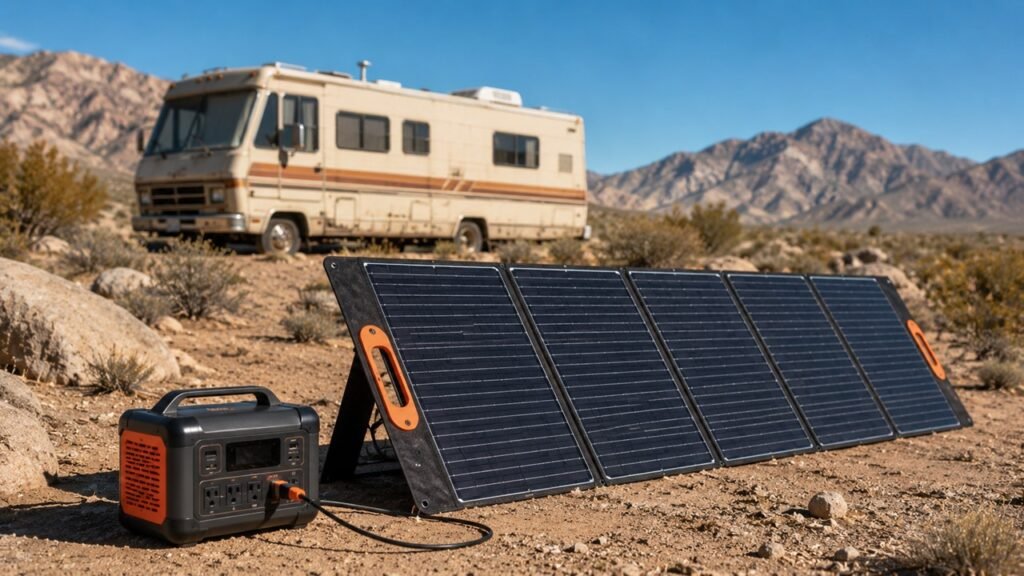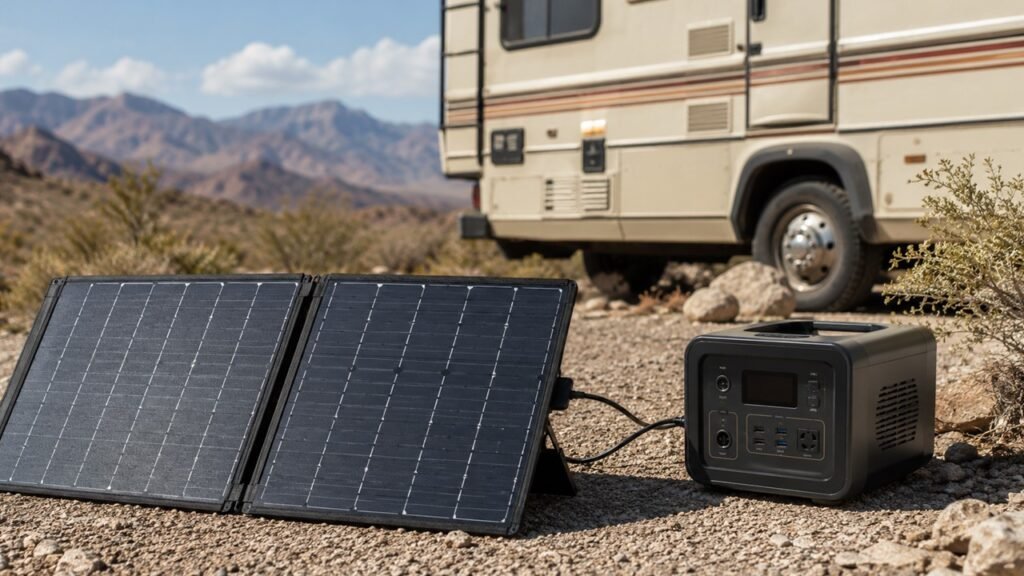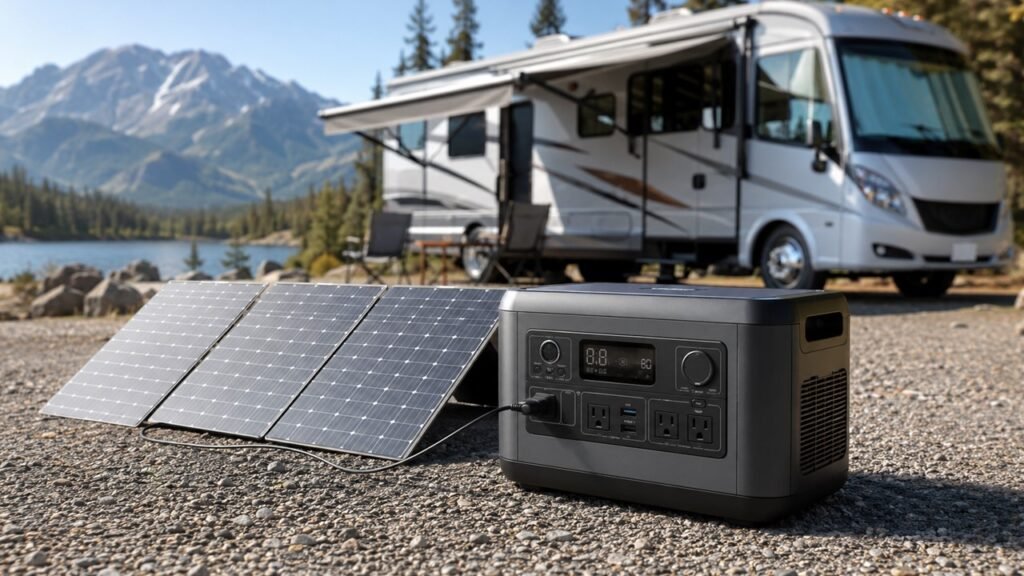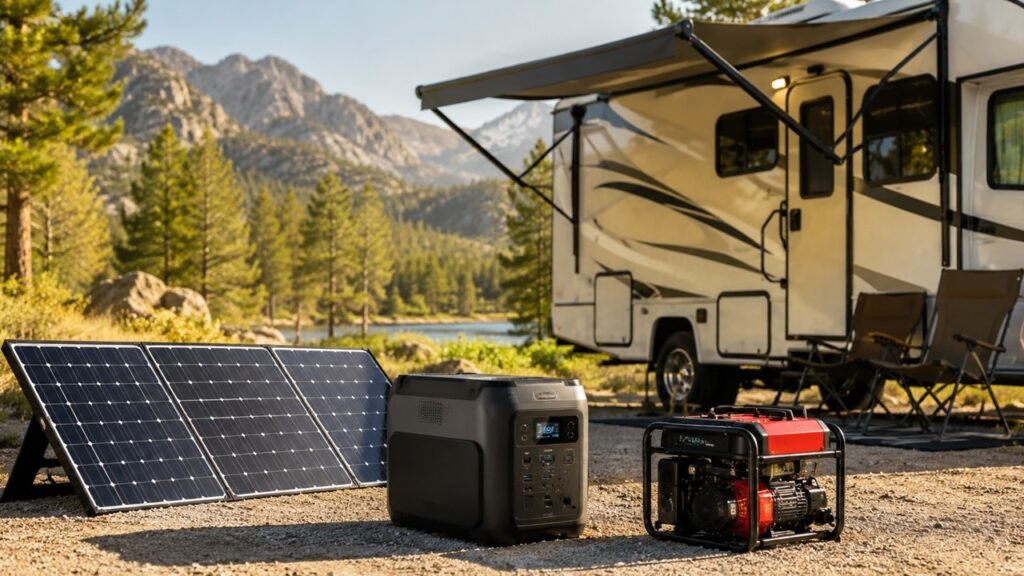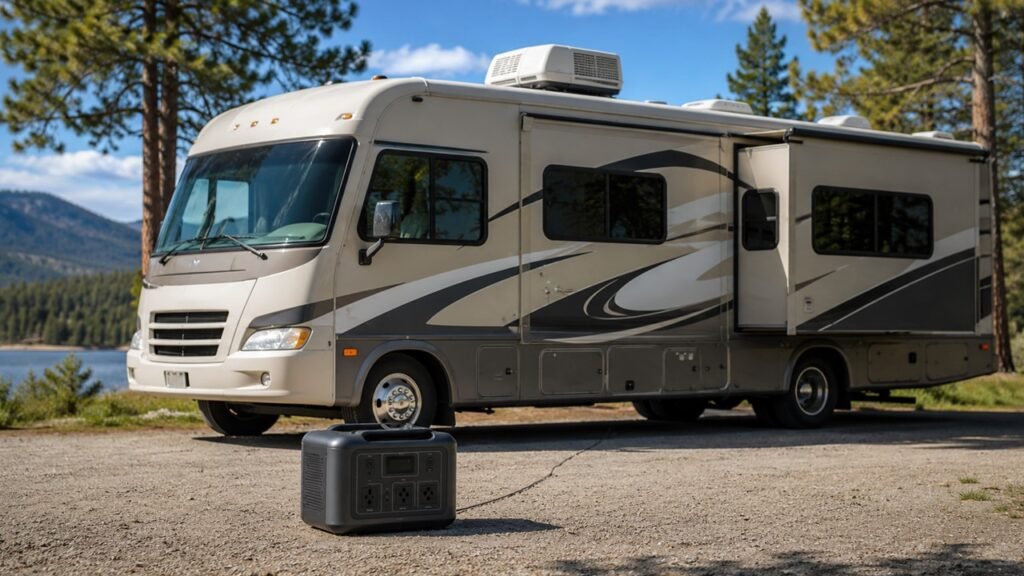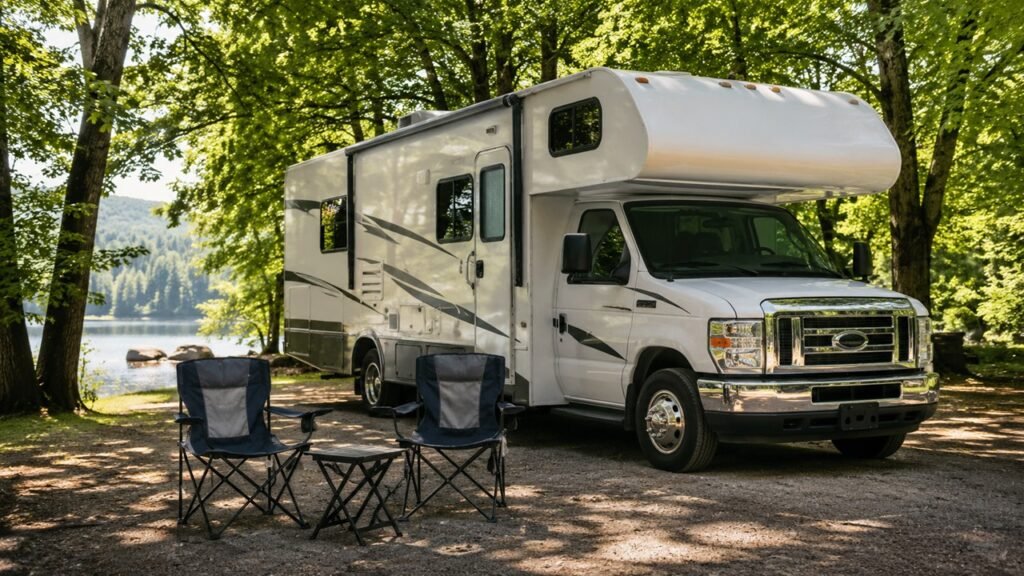
Yes, lithium batteries are safe in RVs when you use the right type of battery, install it correctly, and charge it with compatible equipment. For RV use, the safest and most common lithium option is Lithium Iron Phosphate, also called LiFePO4 or LFP.
The word “lithium” can sound risky because many people think of phone, laptop, scooter, or electric vehicle battery fires. However, most RV lithium batteries use a different chemistry than many of those batteries. LiFePO4 chemistry is more stable, less prone to overheating, and better suited for deep-cycle power systems.
RV lithium battery safety depends on four main things: battery chemistry, charging equipment, installation quality, and temperature protection. A quality LiFePO4 battery with a built-in Battery Management System, or BMS, is very safe for RVs. A cheap battery, wrong charger, poor wiring, or freezing-temperature charging can still create problems.
If you are worried about fire risk, off-gassing, overheating, freezing weather, or whether lithium is safer than AGM or lead-acid, this guide explains what actually matters.
Key Takeaways
- LiFePO4 is the safest lithium chemistry commonly used in RV batteries.
- A quality RV lithium battery includes a built-in Battery Management System, or BMS.
- LiFePO4 batteries do not normally vent hydrogen gas like flooded lead-acid batteries.
- Lithium batteries are safe inside an RV when they are installed in a dry, secure, protected location.
- The biggest lithium battery safety risks come from poor installation, wrong charging equipment, cheap batteries, mixed battery types, and charging below freezing.
- Lithium batteries are safe for RV solar systems, boondocking, and full-time RV living when the system is set up correctly.
- The real safety question is not only “Are lithium batteries dangerous?” It is also “Is my RV electrical system ready for lithium?”
Are Lithium Batteries Safe in RVs?
Yes, lithium batteries are safe in RVs when they are LiFePO4 batteries from a reputable brand and installed with the correct supporting equipment. Most modern RV lithium batteries are designed for deep-cycle use, which means they can power lights, fans, water pumps, fridges, inverters, and solar systems.
LiFePO4 batteries are different from many lithium-ion batteries used in phones, laptops, electric scooters, and some electric vehicles. Those batteries may use chemistries with higher energy density, but they can also be more sensitive to heat and damage. LiFePO4 batteries are popular in RVs because they trade some energy density for better stability and safety.
A lithium battery is not unsafe simply because it is lithium. However, it is also not a battery you should install anywhere without checking your system. Lithium batteries need the right charger, proper cable sizing, fuse protection, temperature limits, and secure mounting.
A safe RV lithium setup includes three things: a quality LiFePO4 battery, a compatible charging system, and a clean installation. When those pieces work together, lithium batteries are one of the safest and most reliable power options for RV owners.
Why LiFePO4 Is the Safest Lithium Battery Type for RVs
Not all lithium batteries use the same chemistry. For RV applications, LiFePO4 stands out because it offers a strong balance of safety, stability, performance, and long-term reliability.
LiFePO4 Chemistry Is More Stable
LiFePO4 batteries are safer because their chemistry is more stable than many other lithium battery types. The phosphate-based chemistry is more resistant to overheating, which lowers the chance of thermal runaway during normal RV use.
Thermal runaway happens when a battery cell overheats and triggers a chain reaction inside the battery. LiFePO4 batteries are less likely to enter this condition than many nickel-based lithium chemistries. That is one reason LiFePO4 is widely used in RVs, boats, solar systems, and off-grid battery banks.
This does not mean a LiFePO4 battery is indestructible. Any battery can become unsafe if it is crushed, shorted, overcharged, flooded with water, or installed with unsafe wiring. However, LiFePO4 gives RV owners a safer starting point than many other lithium options.
It Has a Lower Fire Risk Than Other Lithium Types
LiFePO4 batteries have a lower fire risk than many other lithium-ion batteries because they are less prone to severe overheating. This makes them a strong choice for RVs, where batteries may sit near living spaces, storage bays, inverters, solar controllers, and other electrical equipment.
The safest way to describe LiFePO4 fire risk is simple: the risk is low, but not zero. A quality LiFePO4 RV battery with a working BMS is very safe during normal use. Fire risk usually increases when the battery is damaged, poorly wired, charged incorrectly, overloaded, or made with low-quality parts.
Good installation matters. A safe battery can still become part of an unsafe system if the cables are undersized, terminals are loose, fuses are missing, or the charger is wrong.
It Is Designed for Deep-Cycle RV Use
RV batteries are not used like car starter batteries. They are used for repeated charging and discharging over many cycles. This is called deep-cycle use.
LiFePO4 batteries are well suited for deep-cycle RV power because they can handle frequent use more efficiently than traditional lead-acid batteries. They can support common RV loads such as lights, vent fans, water pumps, 12V fridges, furnace blowers, laptops, internet equipment, inverters, and solar charging.
This deep-cycle design is part of their safety advantage. A quality RV lithium battery is made for repeated energy storage and release. It is not being forced into a job it was not designed to do.
What Makes RV Lithium Batteries Safe?
Several built-in features and design advantages make LiFePO4 batteries a safe choice for RV owners. Understanding these features helps explain why lithium has become so popular in modern RV power systems.
Built-In Battery Management System
A Battery Management System is one of the most important safety features inside a quality lithium RV battery. The BMS works like the battery’s control and protection system. It monitors the battery and shuts it down when unsafe conditions appear.
A good BMS can protect against:
- Overcharging
- Over-discharging
- Short circuits
- Overcurrent
- High temperature
- Low-temperature charging
- Cell imbalance
The BMS is important because lithium batteries are more sensitive to charging limits than lead-acid batteries. A quality BMS helps prevent the battery from operating outside its safe range.
However, a BMS is not a replacement for proper installation. The RV still needs the right charger, correct fuse protection, proper wire size, secure mounting, and clean connections.
No Hydrogen Gas or Acid Spills
LiFePO4 batteries do not normally vent hydrogen gas during charging. This is a major safety difference between lithium and flooded lead-acid batteries.
Flooded lead-acid batteries contain liquid electrolyte and can release hydrogen gas while charging. Hydrogen gas can become dangerous if it builds up in a confined space. Lead-acid batteries can also spill acid if damaged or tipped.
LiFePO4 batteries are sealed and do not need water refilling. They also do not create the same acid spill risk as flooded lead-acid batteries. This makes lithium batteries easier to place inside an RV, as long as the location is dry, secure, and protected from heat or physical damage.
Stable Voltage Output
Lithium batteries hold voltage more steadily than lead-acid batteries. This helps RV appliances and electronics receive more consistent power.
With lead-acid batteries, voltage drops more noticeably as the battery drains. This can cause dim lights, low-voltage warnings, inverter shutdowns, and weaker performance from 12V devices. A LiFePO4 battery keeps a steadier voltage through most of its usable capacity.
Stable voltage is not only about convenience. It can also reduce stress on sensitive electronics that do not like low-voltage conditions.
Low Maintenance Design
Lithium RV batteries require very little maintenance compared with flooded lead-acid batteries. They do not need water checks, equalization charging, or acid corrosion cleanup.
Low maintenance can improve safety because there are fewer chances for owner error. You do not have to open battery caps, handle electrolyte, or clean acid residue. You still need to inspect cables, terminals, mounting points, and charging settings, but the battery itself requires less hands-on care.
Lithium vs Lead-Acid Battery Safety in RVs
Comparing lithium and lead-acid batteries side by side makes it easier to understand where each technology has strengths and limitations from a safety perspective.
| Safety Factor | LiFePO4 RV Battery | Flooded Lead-Acid Battery | AGM Battery |
| Off-gassing | No normal hydrogen venting | Can vent hydrogen gas | Very low, but still lead-acid |
| Acid spill risk | No liquid acid | Yes | Usually sealed |
| Maintenance | Very low | High | Low |
| Weight | Lighter | Heavier | Heavier |
| Charging sensitivity | Needs lithium profile | More forgiving | More forgiving |
| Cold charging | Must be protected below freezing | Can charge in cold, less efficiently | Can charge in cold, less efficiently |
| BMS protection | Usually built in | No | No |
LiFePO4 batteries are often safer than flooded lead-acid batteries in terms of gas, acid, weight, and maintenance. They do not normally vent hydrogen gas, they do not spill liquid acid, and they are easier to manage in daily RV use.
However, lead-acid batteries can be more forgiving in cold-weather charging. A LiFePO4 battery should not be charged below freezing unless it has low-temperature charging protection or a built-in heater. This is one area where RV owners need to pay close attention.
The best choice depends on the RV setup. For most modern off-grid RV systems, LiFePO4 is the safer and cleaner option when installed correctly.
What Are the Real Safety Risks of Lithium Batteries in RVs?
While lithium batteries are generally safe, there are still risks that RV owners should understand. Most problems come from installation or charging mistakes rather than the battery chemistry itself.
Charging With the Wrong Converter or Charger
The wrong charger is one of the most common lithium battery safety problems in RVs. Many older RV converters were designed for flooded lead-acid or AGM batteries. Those batteries use different charging profiles than LiFePO4 batteries.
A lithium battery needs a charger that matches its voltage requirements. If the charger is not compatible, the battery may not charge fully, may charge inefficiently, or may operate outside the ideal range.
Before switching to lithium, check these parts of your RV electrical system:
- RV converter/charger
- Inverter charger
- Solar charge controller
- DC-DC charger
- Alternator charging setup
A lithium-compatible charger is not optional for a safe and efficient system. It helps the battery charge correctly and supports long-term reliability.
Charging Below Freezing
Cold-weather charging is the most important lithium-specific safety concern for RV owners. LiFePO4 batteries should not be charged below 32°F / 0°C unless the battery has low-temperature cutoff, internal heating, or another approved cold-weather charging solution.
The issue is charging, not normal storage. Many lithium batteries can discharge in cold weather, but charging below freezing can damage the cells. This damage may not be obvious right away, but it can shorten battery life and increase future risk.
If you camp in cold climates, choose a battery with low-temperature charging protection. If you camp in freezing weather often, a heated lithium battery is usually a better choice.
Poor Installation
A good battery can become unsafe if the installation is poor. Most serious RV battery problems come from the system around the battery, not the battery chemistry alone.
Unsafe installation issues include:
- Undersized cables
- Missing fuses or breakers
- Loose terminals
- Poorly protected wiring
- Poor ventilation around electrical components
- No battery hold-down
- Wrong battery location
- Mixing lithium with lead-acid batteries
- Overloading the inverter
- Placing batteries where water can reach them
Lithium batteries can deliver high current. That is useful for RV power, but it also means the system must be protected correctly. The battery should be secured, the cables should be correctly sized, and the circuit should be protected by the proper fuse or breaker.
Cheap or Unbranded Batteries
Cheap lithium batteries may look attractive because the upfront price is lower. However, low-quality batteries can create safety and performance problems.
A poor-quality battery may have weak cells, a low-grade BMS, misleading capacity claims, thin internal connections, poor temperature protection, or little warranty support. Some may not provide clear technical documentation.
A safe RV lithium battery should come from a reputable brand with clear specifications, a real warranty, a built-in BMS, and published charging limits. If a battery listing does not clearly explain its protections, temperature range, or warranty, be careful.
Mixing Lithium and Lead-Acid Batteries
Lithium and lead-acid batteries should not usually be connected together in the same battery bank. They charge and discharge differently. They also rest at different voltages and respond differently under load.
Mixing battery types can cause imbalance, poor charging, reduced battery life, and system problems. A safe battery bank should use the same battery chemistry, same voltage, and preferably the same age, brand, and capacity.
If you are replacing lead-acid batteries with lithium, remove the old lead-acid batteries from the house battery bank. Do not simply add lithium beside them.
Can Lithium RV Batteries Catch Fire?
Fire concerns are one of the most common questions RV owners have about lithium batteries. Understanding the actual risk helps separate facts from myths.
LiFePO4 RV batteries have a low fire risk compared with many other lithium chemistries. However, no battery is completely fireproof.
A quality LiFePO4 battery with a working BMS is very safe during normal use. Most fire risks come from electrical faults, poor wiring, physical damage, wrong charging, water intrusion, overloaded circuits, or cheap batteries with weak internal protection.
The battery is only one part of the safety system. Fuses, proper cable sizing, tight terminals, safe mounting, and a compatible charger matter just as much as the battery itself.
A safe way to think about lithium RV battery fire risk is this: LiFePO4 chemistry lowers the risk, and proper installation keeps the risk low.
Are Lithium Batteries Safe Inside an RV?
Many RV owners install lithium batteries inside living or storage areas. The key is choosing the right battery type and following proper installation practices.
Yes, lithium batteries are generally safe inside an RV when they are LiFePO4 batteries and installed correctly. Since they do not normally vent hydrogen gas like flooded lead-acid batteries, many RV owners place them inside protected compartments.
Good indoor battery locations include:
- Under a bed platform with proper access
- Inside a dedicated electrical compartment
- Under a dinette bench
- In a protected storage bay
- Near the inverter, if cable sizing is correct
The battery location should be dry, secure, and accessible. It should be protected from water leaks, direct engine heat, loose cargo impact, and extreme temperatures.
Do not install a lithium battery where it can slide around while driving. Do not place it where tools, metal objects, or cargo can hit the terminals. Do not hide it in a location where you cannot inspect the wiring later.
Inside installation can be safe, but it still needs proper planning.
Are Lithium Batteries Safe for RV Solar Systems?
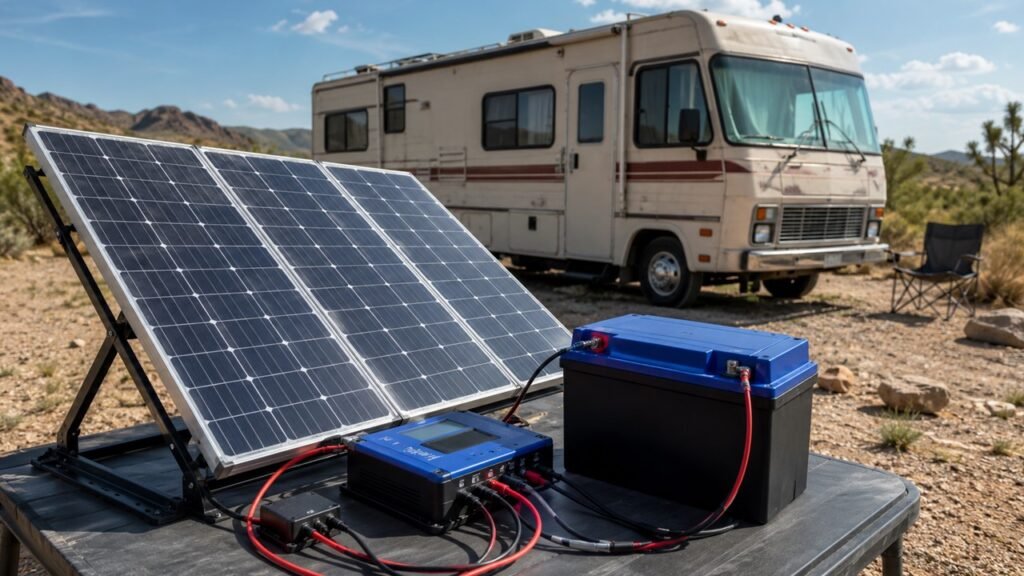
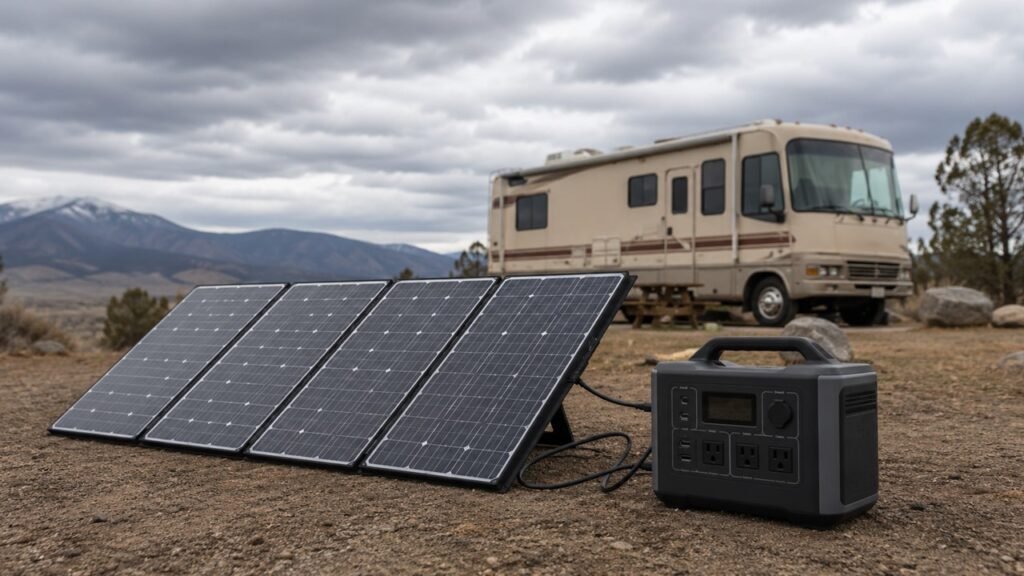
Yes, lithium batteries are safe for RV solar systems when the solar charge controller is set up correctly. In fact, LiFePO4 batteries are one of the best matches for RV solar because they charge efficiently and handle partial charging better than lead-acid batteries.
A solar charge controller should have a lithium charging profile or a custom voltage setting that matches the battery manufacturer’s recommendations. Many RVers prefer MPPT solar charge controllers because they are efficient and work well with larger solar setups.
Solar safety depends on system matching. The panels, controller, battery, fuses, wiring, and inverter should all be sized to work together. If one part of the system is wrong, the whole setup becomes less safe.
A lithium battery can make RV solar more reliable, but only when the controller is compatible and the installation follows the battery manual.
Are Lithium Batteries Safe for Boondocking and Full-Time RV Living?
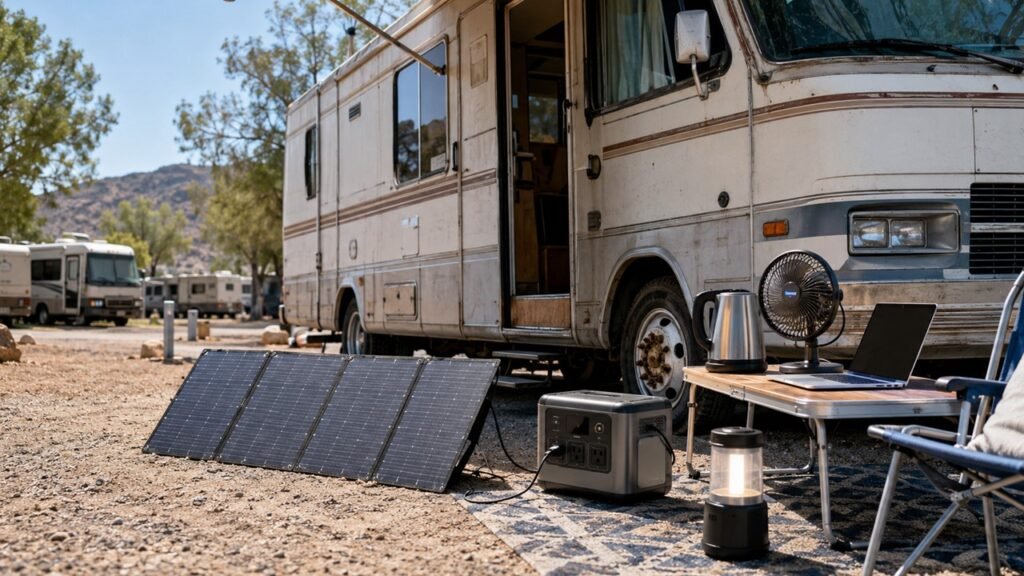
Yes, lithium batteries are safe for boondocking and full-time RV living when the system is designed correctly. They are popular with off-grid RVers because they provide more usable energy, faster charging, and steadier voltage than lead-acid batteries.
For boondocking, lithium batteries can safely power common RV loads such as a 12V fridge, lights, fans, water pump, furnace blower, laptops, internet equipment, inverter, and small appliances. They also pair well with solar panels and generator charging.
Full-time RVers often benefit from lithium because the batteries require less maintenance. There is no watering, no acid cleanup, and no regular equalization charging. This makes them easier to manage during daily travel.
The main safety rule is simple. A full-time or boondocking lithium setup should be built as a complete system, not just a battery swap. The charger, solar controller, DC-DC charger, inverter, cables, fuses, and battery monitor should all match the lithium battery bank.
RV Lithium Battery Safety Checklist Before Installation
Before upgrading to lithium, it helps to review the key safety requirements. This checklist covers the basics that every RV owner should verify before installation.
Before installing lithium batteries in an RV, use this safety checklist:
- Choose LiFePO4 chemistry.
- Buy from a reputable brand.
- Confirm the battery has a built-in BMS.
- Check for low-temperature cutoff if camping in cold weather.
- Use a lithium-compatible converter or charger.
- Set the solar charge controller to lithium mode or the correct custom profile.
- Use a DC-DC charger for alternator charging when required.
- Install the correct fuse or breaker near the battery.
- Use the correct wire gauge for the system.
- Secure the battery so it cannot move while driving.
- Keep terminals clean and tight.
- Keep the battery dry and protected.
- Do not mix lithium and lead-acid batteries in one bank.
- Follow the manufacturer’s installation manual.
- Get professional help if the system includes a large inverter, alternator charging, or a large battery bank.
This checklist is not a replacement for the battery manual or a professional RV electrician. It is a safety starting point for planning the upgrade.
When You Should Not Install Lithium Batteries Yourself
Many RVers can handle a simple battery replacement, especially if the RV is already lithium-ready. However, some lithium upgrades are more complex and should be handled by a professional.
Get professional help if:
- You are adding a large inverter.
- You are building a 300Ah to 800Ah battery bank.
- Your RV has alternator charging.
- You are unsure about wire gauge or fuses.
- You are adding solar at the same time.
- Your RV has an older converter.
- You are not sure whether your charger supports lithium.
- You smell burning near electrical parts.
- You see melted wires.
- You notice heat around terminals.
- Your battery compartment has signs of water damage.
A professional installer can check cable size, fuse protection, charger settings, battery placement, and alternator protection. That matters because lithium batteries can safely deliver high power, but only when the system is built to handle it.
How to Choose a Safe Lithium Battery for an RV
Choosing the right battery is one of the most important parts of a safe RV lithium upgrade. A few key features can help you identify a reliable option.
Choose LiFePO4 Chemistry
The safest lithium battery choice for most RV owners is LiFePO4. This chemistry is more stable than many other lithium types and is widely used in RV, marine, solar, and off-grid systems.
When shopping, look for terms like LiFePO4, Lithium Iron Phosphate, or LFP. Do not buy a battery only because it says “lithium.” The chemistry matters.
Look for a Quality BMS
A quality Battery Management System is one of the most important features in a safe lithium RV battery. The BMS should monitor the battery and shut it down when unsafe conditions appear.
The BMS should protect against:
- Overcharge
- Over-discharge
- Short circuit
- High temperature
- Low-temperature charging
- Overcurrent
- Cell imbalance
A battery without clear BMS details is not a good choice for an RV. The BMS is part of what makes lithium safe for mobile living.
Check Cold-Weather Protection
If you camp in cold weather, choose a lithium battery with low-temperature charging protection. This feature stops the battery from accepting a charge when the cells are too cold.
For winter camping, an internally heated lithium battery is often better. It warms the battery enough to charge safely in freezing conditions. This is especially useful if your battery sits in an outside storage bay.
Cold-weather protection is not just a convenience. It is a safety and lifespan feature.
Review Warranty and Brand Support
A safe battery should come with clear documentation, a strong warranty, and real customer support. Good support matters because RV electrical systems vary. You may need help with charging settings, temperature limits, or installation questions.
Look for a brand that provides:
- Clear product specifications
- Charging voltage recommendations
- Temperature limits
- BMS protection details
- Warranty terms
- Installation guidance
- Customer support
A battery with no manual, no real warranty, and vague specifications is not worth the risk.
Match the Battery to Your RV System
A safe lithium battery must match the RV system. Battery voltage, capacity, charger profile, inverter size, solar input, cable size, and fuse protection all need to work together.
For most RVs, the house battery bank is 12V. Larger systems may use 24V or 48V, but those setups require more planning. Do not assume every lithium battery works with every RV.
The safest battery is not always the largest battery. The safest battery is the one that matches your RV’s electrical system and power needs.
Lithium Battery Safety Mistakes to Avoid
Avoid these common RV lithium battery mistakes:
- Buying the cheapest battery without checking BMS features
- Using an old lead-acid-only converter
- Charging below freezing without protection
- Skipping fuses or breakers
- Using undersized cables
- Installing batteries where they can get wet
- Connecting lithium and lead-acid batteries together
- Ignoring manufacturer charging limits
- Overloading the battery with too large an inverter
- Leaving loose tools near exposed terminals
- Installing the battery where it can move while driving
- Ignoring heat around terminals, cables, or electrical components
Most lithium battery problems are preventable. A safe setup comes from using the right battery, matching the charging equipment, and installing the system carefully.
Quick Comparison: Safe vs Unsafe Lithium RV Setup
A safe lithium RV setup is not complicated, but it must be intentional. The battery, charger, wiring, fuse protection, and location all need to support the same goal: safe power delivery.
| Safe Setup | Unsafe Setup |
| LiFePO4 battery with BMS | Unknown lithium battery with unclear specs |
| Lithium-compatible charger | Old lead-acid-only converter |
| Proper fuse near battery | No fuse or breaker |
| Correct wire gauge | Undersized wiring |
| Low-temp cutoff or heater | Charging below freezing without protection |
| Secure battery mounting | Loose battery in storage bay |
| Same battery type in one bank | Mixed lithium and lead-acid batteries |
| Clear manufacturer manual | No documentation or support |
| Dry, protected location | Wet or exposed battery compartment |
| Professional help for complex upgrades | Guesswork on large electrical systems |
Expert Tips for Keeping RV Lithium Batteries Safe Long-Term
Use these habits to keep your lithium RV battery system safe:
- Check terminal tightness occasionally.
- Keep batteries dry and protected.
- Do not exceed the battery’s charge or discharge rating.
- Use a shunt-based battery monitor for accurate readings.
- Store lithium batteries partially charged if the RV will sit unused for months.
- Turn off unnecessary loads during storage.
- Inspect wiring after rough travel.
- Follow the battery maker’s temperature limits.
- Keep metal tools away from exposed terminals.
- Check charger settings after replacing electrical equipment.
- Do not ignore unusual heat, smells, swelling, or error codes.
- Read the battery manual before changing the system.
Lithium batteries are low maintenance, not no attention at all. A quick inspection routine can prevent small issues from becoming serious problems.
Final Verdict
Lithium batteries are safe in RVs when they are LiFePO4 batteries from a reputable brand and installed with the correct charging and protection equipment. They are stable, efficient, low maintenance, and do not normally vent hydrogen gas like flooded lead-acid batteries.
The main risks are not from LiFePO4 chemistry itself. The main risks come from cheap batteries, poor installation, wrong chargers, missing protection, mixed battery types, and charging below freezing.
For most RVers, the better question is not “Are lithium batteries dangerous?” The better question is “Is my RV electrical system ready for lithium?”
If your RV has a lithium-compatible charger, proper fuse protection, secure battery mounting, correct wiring, and cold-weather protection, LiFePO4 batteries are one of the safest battery choices for modern RV power.
Related FAQs
Are lithium batteries safer than AGM batteries in an RV?
Yes, LiFePO4 batteries can be safer than AGM batteries in several ways because they do not spill acid and do not normally vent hydrogen gas. However, lithium batteries require proper charging equipment and cold-temperature protection.
Can I sleep in an RV with lithium batteries inside?
Yes, you can sleep in an RV with quality LiFePO4 batteries inside when they are installed correctly. They should be secured, protected from water, and installed according to the manufacturer’s manual.
Do lithium RV batteries need ventilation?
Lithium RV batteries do not need hydrogen-gas ventilation like flooded lead-acid batteries. However, the battery area should still stay dry, accessible, and protected from heat buildup around electrical components.
Can lithium batteries explode in an RV?
A quality LiFePO4 battery with a working BMS has a very low risk of explosion during normal use. Most serious risks come from poor wiring, wrong charging, physical damage, water intrusion, or low-quality batteries.
Are lithium batteries safe in hot weather?
Yes, lithium batteries are safe in hot weather when used within the battery’s rated temperature range. Avoid installing them near engine heat, exhaust heat, or sealed spaces that can become extremely hot.
Are lithium batteries safe in freezing weather?
Lithium batteries can usually discharge in cold conditions, but they should not be charged below 32°F / 0°C unless they have low-temperature charging protection or internal heating.
Do I need a special charger for RV lithium batteries?
Yes, a lithium-compatible converter, inverter charger, or solar charge controller is recommended. LiFePO4 batteries use a different charging profile than lead-acid batteries.
Can I replace my RV lead-acid battery with lithium safely?
Yes, you can safely replace RV lead-acid batteries with lithium, but you should check the converter, solar controller, alternator charging setup, wire size, fuse protection, and battery location before switching.
Are lithium batteries safe for RV solar?
Yes, lithium batteries are safe for RV solar when the charge controller has a lithium profile or custom settings that match the battery manufacturer’s recommendations.
Can I mix lithium and lead-acid batteries in my RV?
No, you should not usually mix lithium and lead-acid batteries in the same battery bank. They charge and discharge differently, which can cause imbalance and system problems.
Where is the safest place to install lithium batteries in an RV?
The safest place is a dry, secure, protected, and accessible location. Many RVers install lithium batteries under a bed platform, under a dinette bench, inside an electrical compartment, or in a protected storage bay.
What is the biggest lithium battery safety mistake in RVs?
The biggest mistake is treating lithium as a simple drop-in upgrade without checking the charging system. A lithium battery needs compatible charging equipment, proper wiring, fuse protection, and temperature safeguards.

Daniel Brooks writes about RV living, gear, and travel planning with a focus on everyday usability. His guides break down complex topics into simple advice for real RV owners. He reviews products with long-term use in mind, not marketing hype.