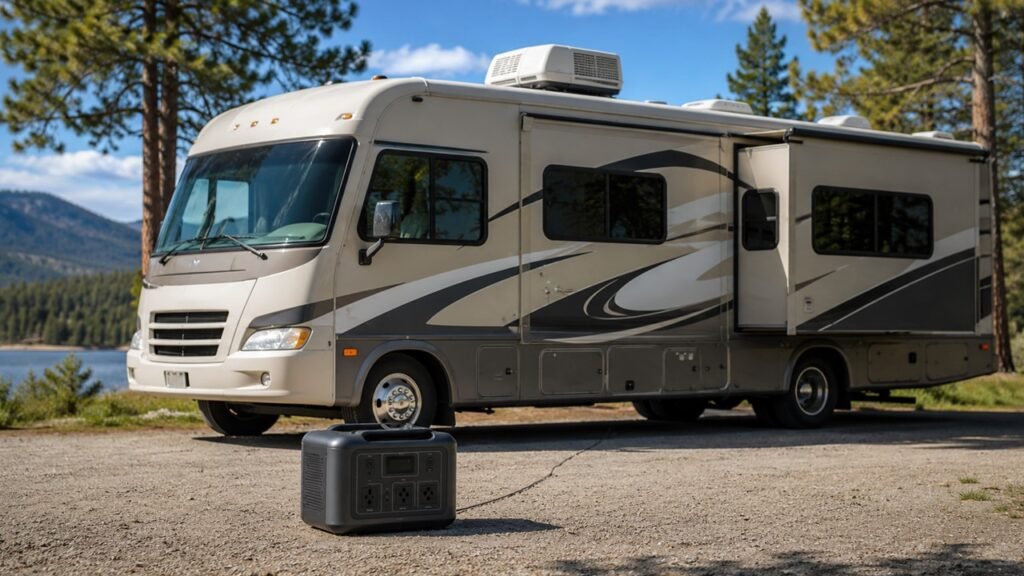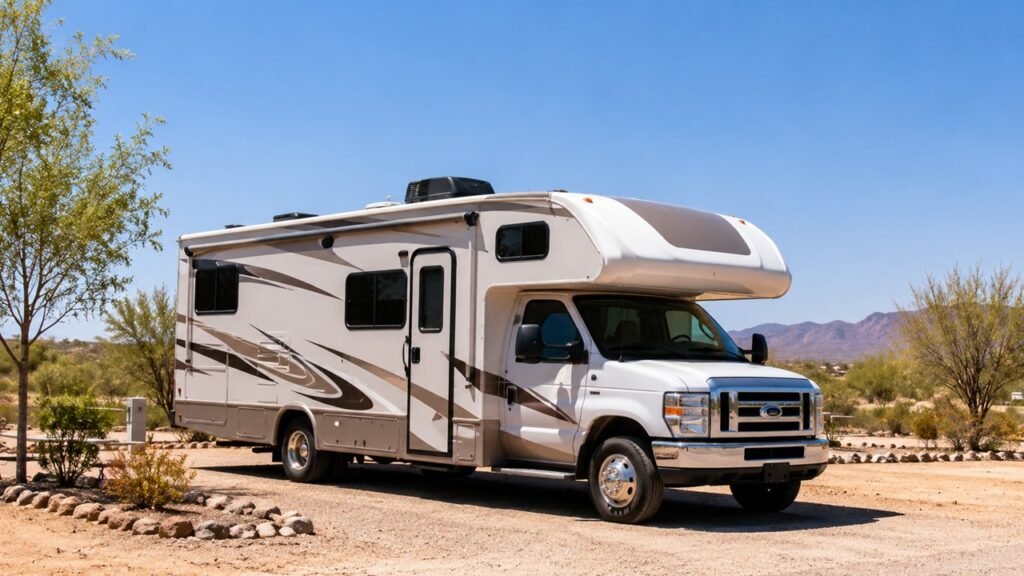
Yes, a generator can run an RV air conditioner if it is properly sized to handle both running watts and the higher starting surge from the compressor.
Most RVs need a 3,000 to 4,000-watt generator for one AC unit, though a 2,000 to 2,200-watt inverter generator may work with a soft starter and careful load management.
Key Takeaways
- Most RV AC units need 3,000–4,000 watts for reliable operation
- Starting watts (surge) matter more than running watts
- A soft starter can allow smaller generators to work
- Other appliances must be managed to avoid overload
- Conditions like heat and altitude affect performance
Can a Generator Run an RV Air Conditioner?
A generator can run an RV air conditioner if it produces enough power to start and operate the AC unit. The important part is not just the AC’s normal running power. The generator must also handle the short but heavy startup surge from the compressor.
Most RV rooftop air conditioners are either 13,500 BTU or 15,000 BTU. These units usually need around 1,300 to 2,000 running watts after they start. However, they may need 3,000 to 4,500 starting watts for a moment when the compressor kicks on.
That is why some generators can keep an RV AC running but fail when the compressor first starts. If the generator cannot handle that startup surge, it may trip, stall, shut off, or fail to start the air conditioner.
Quick Answer:
A generator can run an RV air conditioner if it has enough surge capacity. For one standard RV AC, a 3,000 to 4,000-watt generator is usually the safest choice. With a soft starter, some RV AC units can run on a 2,000 to 2,200-watt inverter generator.
Why RV Air Conditioners Need So Much Generator Power
RV air conditioners use a lot of power because they cool a small but often poorly insulated space in hot outdoor conditions. The compressor, fan motor, and control system all need electricity, but the compressor creates the biggest demand.
The highest power draw usually happens at startup. Once the compressor is running, the AC uses less power and becomes easier for the generator to support.
Starting Watts vs Running Watts
Starting watts are the short burst of power needed to start the AC compressor. This surge only lasts briefly, but it can be much higher than normal running power.
Running watts are the steady watts needed after the AC is already operating. These watts matter for long-term generator load, fuel use, and appliance management.
Here is the simple difference:
- Starting watts start the compressor.
- Running watts keep the AC operating.
- Surge wattage is often the hardest part for generators.
- A generator may run the AC but still fail during startup.
- Other appliances reduce the power available for the AC.
This is why generator sizing should always include both numbers. Buying a generator based only on running watts often leads to overload problems.
Compressor Surge Load
The compressor is the part of the RV air conditioner that creates cold air. When it starts, it needs a strong electrical push. This is called the compressor surge, startup surge, or inrush current.
A standard fixed-speed RV AC compressor can briefly demand two or three times more power than it uses while running. If the generator is too small, the AC may hum, the breaker may trip, or the generator may shut down.
This is also why hot weather makes the problem worse. When the RV is very hot, the AC works harder, and the compressor may cycle more often. Each restart creates another surge.
Why BTU Rating Alone Is Not Enough
BTU tells you how much cooling capacity an air conditioner has. It does not tell you the exact generator size by itself.
Two 13,500 BTU RV air conditioners can use different watts. One may be older and harder to start. Another may be newer, more efficient, or equipped with a soft starter. The age of the AC, compressor design, wiring condition, and maintenance all affect real-world performance.
So, BTU is a helpful starting point, but it is not the full answer. Always check your AC label, owner’s manual, or manufacturer specifications when possible.
How Many Watts Does an RV Air Conditioner Use?
Most RV air conditioners use between 700 and 2,000 running watts, depending on size and efficiency. Starting watts are much higher and can range from about 1,500 to 4,500 watts for one rooftop unit.
| RV AC Size | Approx. Running Watts | Approx. Starting Watts | Suggested Generator Size |
| 8,000 BTU | 700–1,000W | 1,500–2,200W | 2,000–2,500W |
| 10,000 BTU | 900–1,200W | 2,000–3,000W | 2,500–3,000W |
| 13,500 BTU | 1,300–1,800W | 2,800–4,000W | 3,000–4,000W |
| 15,000 BTU | 1,500–2,000W | 3,200–4,500W | 3,500–4,500W |
| Two RV AC Units | 3,000–4,000W+ | 5,000–7,000W+ | 5,500–7,000W+ |
These numbers are practical estimates, not exact guarantees. Your actual AC may use more or less power depending on model, age, temperature, voltage, and condition.
What Size Generator Do You Need to Run an RV AC?
The right generator size depends on the air conditioner’s BTU rating and startup surge. It also depends on whether you want to run anything else while the AC is on.
For a single RV air conditioner, most owners should look at 3,000 to 4,000 watts. This range gives enough room for the AC and a few smaller loads. It also gives more reliability in hot weather.
For a Small RV AC
A smaller RV air conditioner, such as an 8,000 or 10,000 BTU unit, may run on a 2,000 to 2,500-watt generator. This setup works best in small trailers, pop-up campers, and compact RVs.
However, you still need to manage loads carefully. A coffee maker, microwave, or battery charger can overload a small generator when the AC starts.
For a 13,500 BTU RV AC
A 13,500 BTU RV air conditioner is one of the most common rooftop AC sizes. Without a soft starter, it usually needs a 3,000 to 4,000-watt generator for reliable operation.
With a soft starter, some 13,500 BTU units can run on a 2,000 to 2,200-watt inverter generator. However, this usually requires careful power management. You may need to turn off the microwave, electric water heater, converter, and refrigerator electric mode.
For a 15,000 BTU RV AC
A 15,000 BTU RV air conditioner needs more generator headroom. A 3,500 to 4,500-watt generator is usually a better choice for this size.
Some 15,000 BTU units may start on a smaller generator with a soft starter. Still, a larger generator gives better reliability in hot weather, high elevation, and heavy-use situations.
For Two RV Air Conditioners
Two rooftop air conditioners usually need at least a 5,500-watt generator. Larger fifth wheels and Class A motorhomes may need 6,500 to 8,000 watts or more if several appliances run together.
The best method is to start one AC first, wait until it runs smoothly, and then start the second AC. Starting both at the same time can create a large surge and overload the generator.
Generator Size Chart for RV Air Conditioners
Use this chart as a practical starting point. The “minimum” size may work under ideal conditions. The “better choice” gives more real-world margin.
| RV AC Setup | Minimum Generator | Better Choice | Notes |
| One 10,000 BTU AC | 2,000W | 2,500–3,000W | Turn off heavy loads |
| One 13,500 BTU AC | 3,000W | 3,500–4,000W | Most common RV AC size |
| 13,500 BTU AC with soft starter | 2,000W | 2,200–2,500W | Best with inverter generators |
| One 15,000 BTU AC | 3,500W | 4,000–4,500W | Better for hot weather |
| Two rooftop AC units | 5,500W | 6,500–7,500W | Common for larger RVs |
| 50 amp RV with multiple loads | 6,500W | 8,000–12,000W | Depends on AC count |
A larger generator is not always better if it is noisy, heavy, and wasteful. But an undersized generator is frustrating because it may not start the AC when you need cooling most.
Can a 2,000-Watt Generator Run an RV Air Conditioner?
A 2,000-watt generator can run some RV air conditioners, but it is not enough for every setup. It works best with smaller AC units, newer efficient rooftop units, or AC systems fitted with a soft starter.
A 2,000-watt generator has very little extra capacity. That means you need to reduce other electrical loads before starting the air conditioner.
A 2,000-watt generator is more likely to work when:
- The AC has a soft starter installed.
- The AC is smaller or more efficient.
- The refrigerator is switched to propane.
- The electric water heater is turned off.
- The microwave is not used with the AC.
- The converter or battery charger is turned down or off.
- The generator is running on gasoline.
- The campsite is not at high altitude.
- The AC filter and coils are clean.
A 2,000-watt inverter generator is popular because it is quiet and portable. However, it leaves little room for mistakes. For a standard rooftop AC without a soft starter, it is often too small.
Can a 3,500-Watt Generator Run an RV Air Conditioner?
Yes, a 3,500-watt generator can usually run one standard RV air conditioner. It is one of the most practical generator sizes for many 30 amp RVs, travel trailers, and small motorhomes.
A 3,500-watt generator can often handle a 13,500 BTU air conditioner with better reliability than a 2,000-watt model. It may also run some 15,000 BTU units, depending on startup surge and other loads.
You still need to manage appliances. Do not run the microwave, electric water heater, hair dryer, and AC compressor startup at the same time. Even a 3,500-watt generator can overload if too many high-draw items run together.
For many RV owners, this size offers a good balance between power, portability, cost, and fuel use.
Can a 4,000-Watt Generator Run an RV Air Conditioner?
A 4,000-watt generator is a strong choice for one RV air conditioner. It gives more startup power and more running margin than smaller portable units.
This size is especially useful for a 15,000 BTU RV AC, hot weather camping, or running a few small loads while the air conditioner operates. It is also a practical match for many 30 amp RVs with one rooftop air conditioner.
However, it does not mean you can run everything at once. A microwave or electric water heater can still push the total load too high. The safest approach is to start the AC first and add other loads after the compressor stabilizes.
Can a Generator Run Two RV Air Conditioners?
Yes, a generator can run two RV air conditioners, but it must be much larger. Two rooftop AC units create a higher running load and a much higher startup surge.
Most dual-AC RVs need at least a 5,500-watt generator. Many larger RVs are better served by 6,500 to 7,500 watts. Luxury motorhomes with three AC units and heavy appliances may need even more.
Minimum Wattage for Two AC Units
Two RV air conditioners can easily require more than 3,000 running watts together. Their combined starting surge can be much higher.
A 5,500-watt generator is often the minimum practical size for two rooftop AC units. If you also want to run the microwave, battery charger, refrigerator, and water heater, a larger generator gives better comfort.
Starting Both AC Units
Starting both air conditioners at the same time is not ideal. The combined surge can trip breakers or overload the generator.
A better method is to start one AC first. Let it run smoothly for a few minutes. Then start the second AC. This staggered startup reduces the shock on the generator.
Soft Starters for Dual AC Setups
Soft starters can help dual-AC RVs by reducing compressor startup surge. Installing one soft starter on each AC can make startup smoother and reduce overload problems.
However, soft starters do not remove the normal running load. Two AC units still need enough generator power to keep both running.
What Other RV Appliances Affect Generator Size?
Your air conditioner is usually the biggest load, but it is not the only one. Many RV appliances use enough power to affect generator sizing.
| RV Appliance | Approx. Watts | Why It Matters |
| Microwave | 1,000–1,500W | Can overload smaller generators with AC |
| Converter/Battery Charger | 300–1,000W | Often runs automatically |
| Electric Water Heater | 1,200–1,500W | Should be off during AC startup |
| Refrigerator on Electric | 300–800W | Can often switch to propane |
| Coffee Maker | 600–1,200W | High short-term load |
| Hair Dryer | 1,200–1,800W | Too much with AC on small generators |
| TV and Small Electronics | 50–300W | Usually manageable |
Good load management makes a huge difference. You may not need a much larger generator if you avoid running high-draw appliances together.
Use these tips when running an RV AC on generator power:
- Start the AC before using other heavy appliances.
- Switch the refrigerator to propane when possible.
- Turn the water heater to propane or off.
- Avoid using the microwave during AC startup.
- Turn off the converter if batteries are already charged.
- Add small loads one at a time.
- Watch for generator overload lights or breaker trips.
Power management is especially important with 2,000 to 3,000-watt generators. A larger generator gives more freedom, but every setup still has limits.
How to Calculate Generator Size for Your RV AC
You can estimate generator size with a simple formula. First, add the AC running watts and other running loads. Then add a safety margin.
Minimum Generator Running Watts = AC Running Watts + Other Running Loads + 20% Safety Margin
You also need to check surge capacity:
Generator Surge Rating Must Be Higher Than AC Starting Watts
Running watts matter after the AC is already on. Starting watts matter when the compressor starts. Both numbers must fit within the generator’s ratings.
Example Calculation
Let’s say your RV has a 13,500 BTU air conditioner.
- RV AC running watts: 1,500W
- Converter or battery charger: 500W
- Refrigerator on electric: 400W
- Lights and small electronics: 200W
Your total running load is:
1,500W + 500W + 400W + 200W = 2,600W
Now add a 20% safety margin:
2,600W x 20% = 520W
Your recommended running wattage becomes:
2,600W + 520W = 3,120W
In this example, a generator around 3,500 watts is a practical choice. However, the generator must also have enough surge wattage to start the AC compressor.
Does a Soft Starter Help a Generator Run an RV AC?
Yes, a soft starter can make a big difference. It helps the AC compressor start more smoothly and reduces the heavy startup surge.
A soft starter is one of the best upgrades for RV owners who want to run an air conditioner from a smaller generator.
What a Soft Starter Does
A soft starter controls the way the AC compressor starts. Instead of demanding a sudden burst of power, it allows the compressor to ramp up more gradually.
This makes startup easier for the generator. It can reduce breaker trips, generator overloads, and hard starts. It can also reduce stress on the AC compressor.
When a Soft Starter Is Worth It
A soft starter is useful when:
- You want to run one RV AC on a smaller generator.
- Your generator trips when the AC starts.
- You use a 2,000 to 2,200-watt inverter generator.
- You camp without hookups often.
- You want a lighter and quieter generator setup.
- Your AC struggles during hot weather startup.
- You want smoother compressor operation.
For many RV owners, a soft starter is cheaper and easier than buying a much larger generator.
What a Soft Starter Cannot Do
A soft starter does not make your AC use zero power. It mainly reduces startup demand. The air conditioner still needs enough running watts after it starts.
It also cannot make a badly undersized generator act like a large one. If your AC and appliances need 3,500 running watts, a 2,000-watt generator will still be too small.
Inverter Generator vs Conventional Generator for RV AC
An inverter generator is usually the better choice for running an RV air conditioner. It produces cleaner power, runs quieter, and uses fuel more efficiently at partial load.
| Feature | Inverter Generator | Conventional Generator |
| Noise | Usually quieter | Usually louder |
| Power Quality | Cleaner and stable | Less refined |
| Fuel Efficiency | Better at partial load | Often less efficient |
| Portability | Usually compact | Often heavier |
| Cost | Higher upfront cost | Lower upfront cost |
| RV AC Use | Best for most RVers | Works but louder |
Conventional generators can provide strong output for less money. However, they are often loud and less campground-friendly. Many campgrounds have noise rules, so a quiet inverter generator is usually the better long-term option.
For RV AC use, look for an inverter generator with enough running watts, enough surge watts, a proper RV outlet, and low noise output.
Gas vs Propane vs Dual-Fuel Generators for RV AC
Fuel type matters because generators often produce different wattage on different fuels. Gasoline usually gives the highest output. Propane is cleaner and stores well, but it may produce slightly less power.
Gasoline Generators
Gasoline generators are common because gasoline is easy to find. They usually produce strong wattage and are a good choice for running high-demand loads like RV air conditioners.
The downsides are fuel storage, odor, maintenance, and shorter shelf life. Gasoline can also gum up the fuel system if the generator sits unused for too long.
Propane Generators
Propane generators burn cleaner and are convenient for RV owners who already carry propane. Moreover, propane stores longer than gasoline and creates fewer fuel storage problems.
However, many generators produce less wattage on propane than gasoline. That matters when starting an RV air conditioner. A generator that barely works on gasoline may struggle on propane.
Dual-Fuel Generators
Dual-fuel generators can run on gasoline or propane. This gives RV owners more flexibility.
You can use gasoline when you need maximum power for the AC. Then you can use propane for convenience or lighter loads. When sizing a dual-fuel generator, always check the wattage rating for the fuel you plan to use.
Built-In vs Portable Generator for Running RV AC
Both built-in and portable generators can run RV air conditioners. The better choice depends on your RV type, budget, and camping style.
| Type | Best For | Pros | Cons |
| Built-in RV Generator | Class A, Class C, large fifth wheels | Convenient, high output, integrated system | Expensive and fixed |
| Portable Inverter Generator | Travel trailers and smaller RVs | Quiet, flexible, replaceable | Manual setup and refueling |
| Open-Frame Generator | Budget backup use | Cheaper and powerful | Loud and less campground-friendly |
Built-in generators are common in motorhomes and large RVs. They are convenient because they are already wired into the RV power system.
Portable inverter generators are popular for travel trailers and smaller campers. They are quieter, more flexible, and easier to replace. However, you must carry them, set them up, secure them, and refuel them manually.
Open-frame generators can provide lots of power for less money. Still, they are usually too loud for many camping situations.
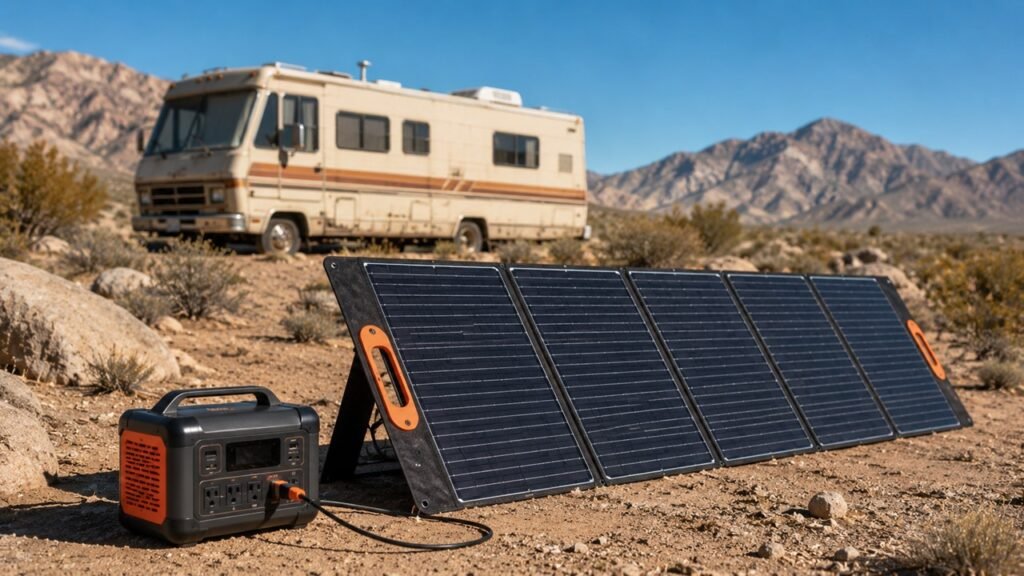
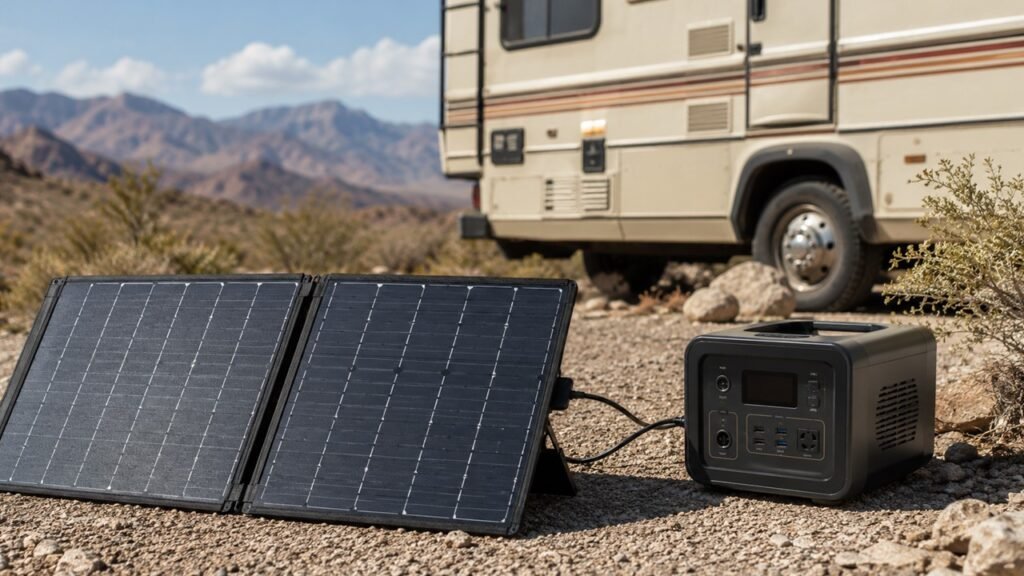
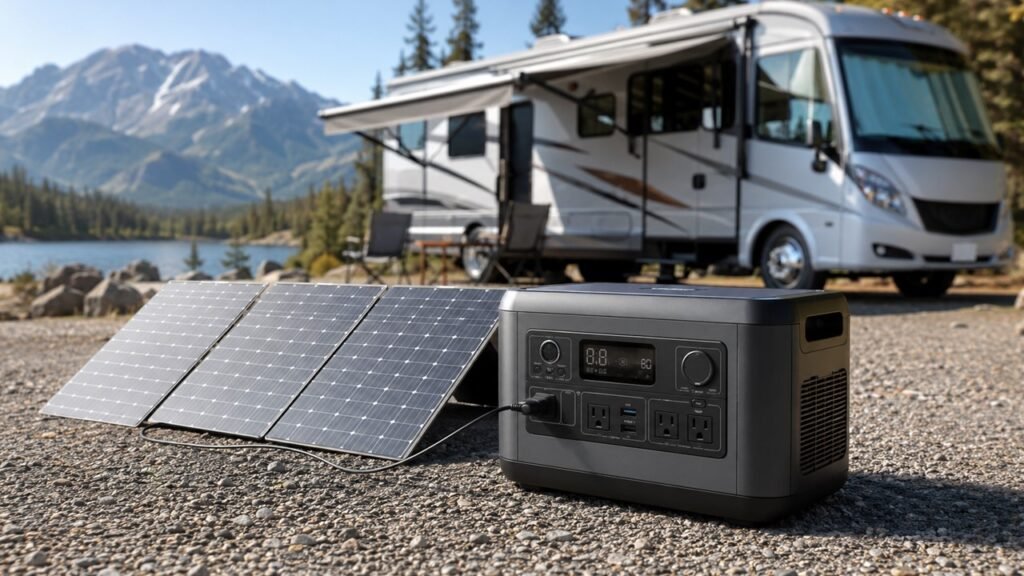
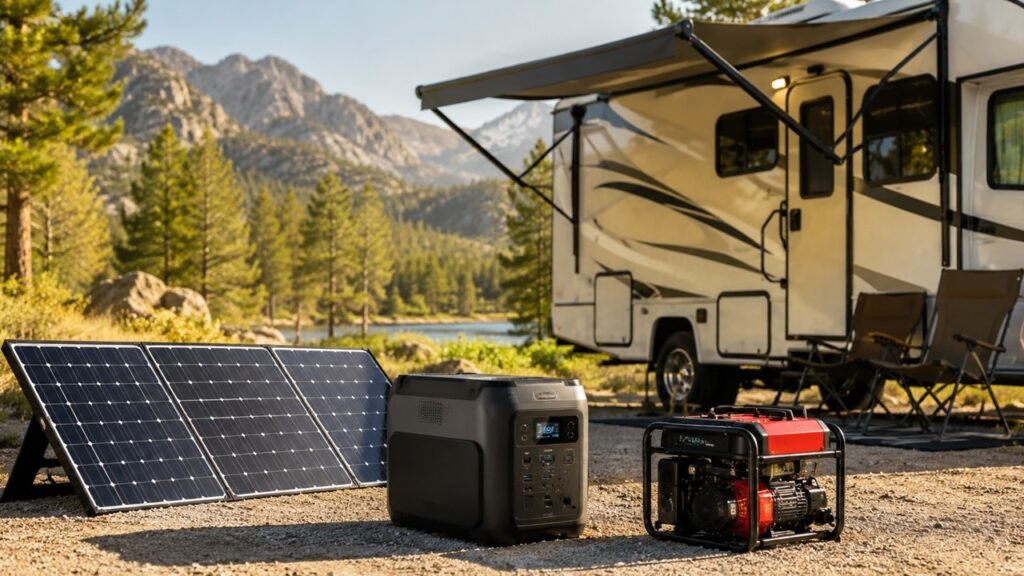
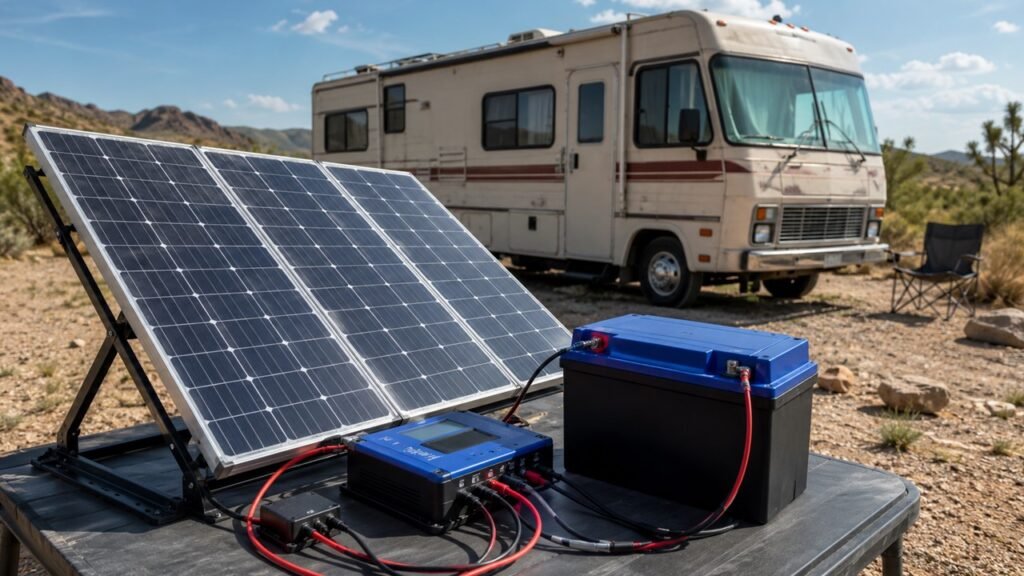
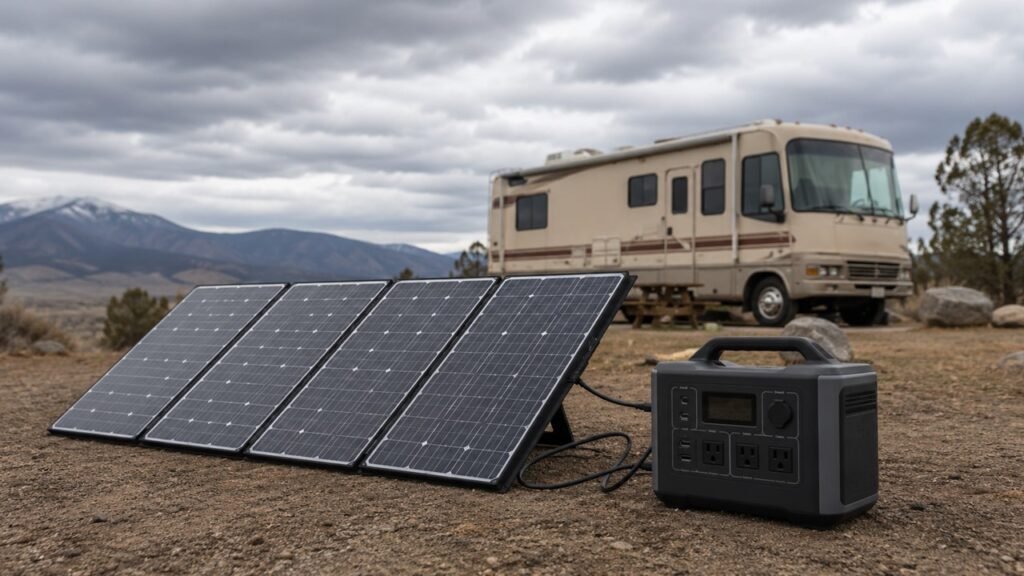
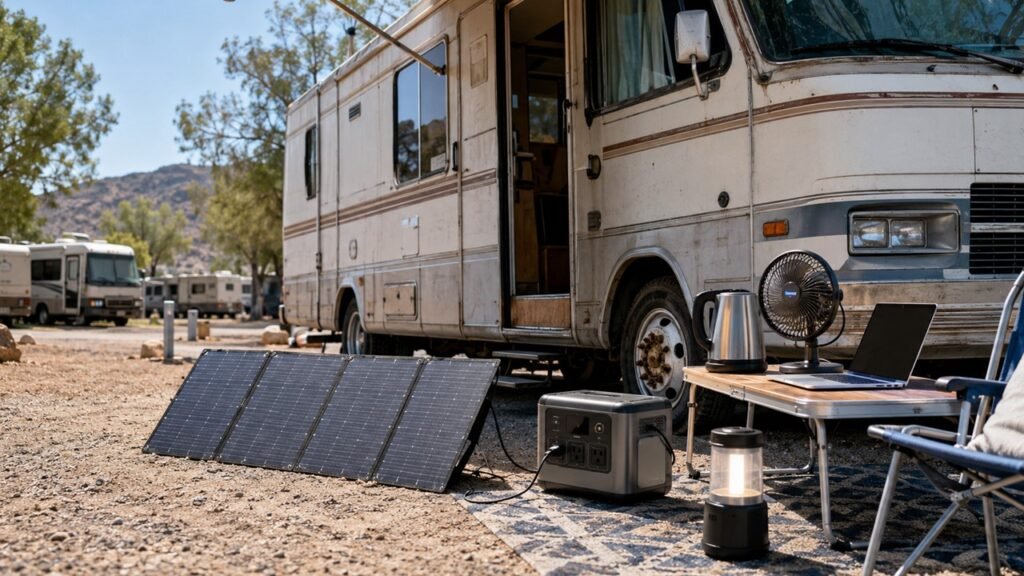
Can a Solar Generator Run an RV Air Conditioner?
A solar generator can run an RV air conditioner only if it has enough inverter output and battery capacity. It must handle both the AC running watts and startup surge.
The biggest problem is runtime. An RV air conditioner uses a lot of energy. A power station may run it for a short time, but all-day cooling requires a large battery system and strong solar input.
| Battery Capacity | 1,500W AC Estimated Runtime |
| 1,000Wh | 30–40 minutes |
| 2,000Wh | 1–1.2 hours |
| 3,000Wh | 1.5–2 hours |
| 5,000Wh | 2.5–3.5 hours |
These estimates include normal inverter losses. Real runtime depends on outside temperature, thermostat setting, compressor cycling, insulation, and battery condition.
Solar generators are quiet and clean, but they are not magic. For regular RV AC use, you need a large battery, high-output inverter, and enough solar panels to recharge the system.
Why Your Generator May Not Run Your RV AC
Sometimes a generator looks large enough on paper but still fails to run the RV air conditioner. This usually happens because real-world conditions are harder than ideal ratings.
The Generator Is Too Small
The most common reason is simple: the generator cannot handle the compressor surge. It may have enough running watts but not enough starting watts.
This is why a 2,000-watt generator may fail with a standard rooftop AC. The running load may look close, but startup demand can exceed the generator’s limit.
Too Many Appliances Are Running
Your RV may have hidden loads running in the background. The converter, refrigerator, water heater, and battery charger can all reduce available power.
If the microwave or coffee maker runs while the AC compressor starts, the generator may overload quickly.
High Altitude Reduces Generator Output
Generators lose power at higher elevation because the engine gets less oxygen. That means a setup that works near sea level may struggle in mountain campsites.
This matters for RVers who camp in Colorado, Utah, Arizona, or other high-elevation areas. Choose extra generator headroom if you often camp at altitude.
Hot Weather Increases AC Load
Extreme heat makes the air conditioner work harder. The compressor may run longer, restart more often, and struggle to cool the RV.
Hot weather can also reduce generator performance. That combination makes summer camping harder on both the generator and AC.
Dirty AC Filters or Poor Maintenance
A dirty AC filter restricts airflow. Dirty rooftop coils also reduce cooling efficiency. These problems make the AC work harder and can increase generator strain.
Generator maintenance matters too. Old fuel, dirty air filters, low oil, clogged spark arrestors, and worn spark plugs can all reduce output.
How to Run Your RV AC on a Generator Safely
Generator safety is just as important as generator sizing. A generator produces electricity, heat, and exhaust. Poor placement can create serious hazards.
Follow these safety steps:
- Place the generator outside in open air.
- Keep it away from doors, windows, and vents.
- Never run it inside the RV or storage bay.
- Never run it inside a garage or enclosed shelter.
- Keep the exhaust pointed away from the RV.
- Use a working carbon monoxide detector inside the RV.
- Use the correct RV power cord and adapter.
- Keep the generator dry and ventilated.
- Let the generator cool before refueling.
- Do not overload the generator.
- Follow campground generator-hour rules.
- Read both the RV and generator manuals.
Never treat generator exhaust casually. Carbon monoxide has no smell or color, and it can enter an RV through nearby openings.
Step-by-Step: How to Start an RV AC on Generator Power
Starting the AC correctly helps prevent overloads. It also protects the generator and air conditioner.
- Turn off the RV air conditioner at the thermostat.
- Turn off heavy loads like the microwave and water heater.
- Switch the refrigerator to propane if possible.
- Turn off or reduce the converter load if needed.
- Start the generator and let it warm up.
- Plug the RV shore power cord into the generator.
- Use the correct adapter for your RV connection.
- Turn on the RV main breaker if needed.
- Set the thermostat to cooling mode.
- Start the fan first if your system allows it.
- Turn on the AC compressor.
- Wait until the compressor runs smoothly.
- Add small loads one at a time.
This simple order reduces sudden load spikes. It is especially helpful when using a smaller generator.
Tips to Make Your RV AC Easier to Run on a Generator
You can reduce generator strain by lowering the cooling load inside your RV. Small changes can make a big difference during hot weather.
Use these tips:
- Install a soft starter on the RV AC.
- Clean the AC filter regularly.
- Clean rooftop coils before summer.
- Park in shade when possible.
- Use reflective window covers.
- Close blinds during peak sunlight.
- Pre-cool the RV before afternoon heat.
- Keep doors and windows closed.
- Use fans to move cool air.
- Set the thermostat to a realistic temperature.
- Switch the fridge to propane.
- Switch the water heater to propane.
- Avoid microwave use during AC startup.
- Maintain the generator before each trip.
- Use fresh fuel and correct oil.
- Give the generator enough airflow.
The goal is to help the AC cycle normally instead of running hard all day.
Common Mistakes to Avoid
Many RV generator problems come from simple sizing or setup mistakes. Avoid these common issues:
- Buying a generator based only on running watts.
- Ignoring the AC’s starting watts.
- Running too many appliances at once.
- Assuming propane output equals gasoline output.
- Using a loud generator in quiet campgrounds.
- Running the generator too close to the RV.
- Forgetting altitude reduces generator power.
- Expecting a small solar generator to cool all day.
- Skipping AC filter cleaning.
- Not checking the RV AC nameplate.
- Using the wrong adapter or cord.
- Refueling while the generator is hot.
- Running the generator in poor ventilation.
- Starting both AC units at the same time.
A little planning prevents most generator and AC problems.
Generator Recommendations by RV Type
Different RVs need different generator sizes. A small camper does not need the same generator as a large fifth wheel or Class A motorhome.
| RV Type | Common AC Setup | Practical Generator Size |
| Pop-up Camper | Small AC or portable AC | 2,000–2,500W |
| Small Travel Trailer | One 10,000–13,500 BTU AC | 2,500–3,500W |
| Medium Travel Trailer | One 13,500–15,000 BTU AC | 3,500–4,500W |
| 30 Amp RV | One rooftop AC | 3,500–4,000W |
| 50 Amp Fifth Wheel | Two rooftop AC units | 5,500–7,500W |
| Class A Motorhome | Two or three AC units | 7,000–12,000W |
Use this table as a starting point. Your exact generator size should still match your AC specs, other appliances, and camping conditions.
Final Verdict
A generator can run an RV air conditioner when it is sized for both startup surge and continuous running load. The safest size for one standard RV AC is usually 3,000 to 4,000 watts.
A 2,000 to 2,200-watt inverter generator may run some RV AC units if a soft starter is installed. However, this setup requires careful load management and ideal conditions.
For two RV air conditioners, most RVs need at least 5,500 watts. Larger rigs may need 6,500 to 8,000 watts or more, especially when other appliances run at the same time.
For the best balance of comfort and reliability, choose a quiet inverter generator with enough surge capacity. Add a soft starter if you want to use a smaller generator. Then manage your RV appliances so the AC has enough power when the compressor starts.
Related FAQs
Can a generator run an RV air conditioner?
Yes, a generator can run an RV air conditioner if it has enough starting watts and running watts. Most single RV AC units need a 3,000 to 4,000-watt generator for reliable use.
What size generator do I need for a 13,500 BTU RV AC?
A 13,500 BTU RV AC usually needs a 3,000 to 4,000-watt generator without a soft starter. With a soft starter, some units may run on a 2,000 to 2,200-watt inverter generator.
What size generator do I need for a 15,000 BTU RV AC?
A 15,000 BTU RV AC usually needs a 3,500 to 4,500-watt generator for reliable startup. A soft starter can help reduce surge, but you still need enough running watts.
Will a 2,000-watt generator run an RV air conditioner?
A 2,000-watt generator may run a smaller or soft-start-equipped RV AC. Many standard rooftop units need more startup power, especially in hot weather.
Will a 3,500-watt generator run an RV air conditioner?
Yes, a 3,500-watt generator can usually run one standard RV air conditioner. It is a practical size for many 13,500 BTU units and some 15,000 BTU units.
Will a 4,000-watt generator run an RV air conditioner?
Yes, a 4,000-watt generator is a strong choice for one RV air conditioner. It gives better startup margin and can support a few smaller loads.
Can I run two RV air conditioners on a generator?
Yes, but two RV air conditioners usually need a larger generator. Most dual-AC RVs need at least 5,500 watts, and larger rigs may need more.
Do I need a soft starter for my RV AC?
You do not always need one, but a soft starter helps smaller generators start the AC. It reduces startup surge and makes compressor startup smoother.
Is an inverter generator better for an RV air conditioner?
Yes, an inverter generator is usually better because it is quieter, cleaner, and more fuel-efficient. It is also better for sensitive electronics inside the RV.
Can a solar generator run an RV air conditioner?
A solar generator can run an RV AC only if it has enough inverter output and battery capacity. Many power stations can run AC briefly, but all-day cooling needs a large system.
Why does my generator shut off when the RV AC starts?
The generator may not have enough surge capacity, or too many appliances may be running. High altitude, hot weather, dirty AC filters, and poor generator maintenance can also cause shutdowns.
Should I run my RV refrigerator on propane while using AC?
Yes, that often helps when generator power is limited. Switching the refrigerator to propane frees more watts for the air conditioner.
Can I run the microwave while my RV AC is on?
You can with a large enough generator, but it may overload smaller units. With a small generator, avoid using the microwave when the AC compressor starts.
Is it safe to run an RV generator overnight?
It can be safe only with proper outdoor placement, ventilation, fuel level, and carbon monoxide protection. Always follow the generator manual and campground rules.

Daniel Brooks writes about RV living, gear, and travel planning with a focus on everyday usability. His guides break down complex topics into simple advice for real RV owners. He reviews products with long-term use in mind, not marketing hype.