A 30 amp RV can use up to about 3,600 watts, but you cannot run all appliances at once. That is why choosing the right generator size matters.
For most RV owners, the best generator size is 3,500 to 4,500 watts. Smaller units may work for light use, but larger ones handle air conditioners and peak loads more reliably.
This guide explains how to choose the right size based on your RV setup and usage.
Key Takeaways
- A 30 amp RV has a maximum capacity of about 3,600 watts.
- Most RV owners should choose a generator between 3,500 and 4,500 watts.
- Air conditioners are the biggest power draw and often determine generator size.
- Smaller generators can work for light use but require careful power management.
- Larger generators provide more comfort and reduce the risk of overloads.
Quick Answer: What Size Generator for a 30 Amp RV?
A 30 amp RV usually needs a 3,500 to 4,500-watt generator. This range gives enough power for one rooftop air conditioner, the refrigerator, lights, chargers, and occasional appliance use.
The best overall size for most people is around 3,500 to 4,000 watts. This gives enough power for common camping needs without becoming too heavy, loud, or fuel-hungry.
Here is the simple sizing guide:
| RV Use Case | Recommended Generator Size | Best For |
| Basic power without AC | 2,000–2,800 watts | Lights, charging, fridge, fan |
| Small AC with careful use | 3,000–3,500 watts | Light appliance use |
| Most 30 amp RVs with one AC | 3,500–4,500 watts | Normal RV camping |
| Hot weather or older AC | 4,000–4,500 watts | Better startup headroom |
| Two AC units | 5,500+ watts | Larger RVs or 50 amp setups |
For a typical 30 amp travel trailer or Class C RV with one air conditioner, choose a generator in the 3,500 to 4,500-watt range. This gives you the most useful balance of power, weight, fuel use, and comfort.
Why a 30 Amp RV Equals About 3,600 Watts
A 30 amp RV usually uses a 120-volt electrical system. To find the maximum wattage, you multiply volts by amps.
Watts = Volts × Amps
So, the math looks like this:
120 volts × 30 amps = 3,600 watts
This means a 30 amp RV can safely use about 3,600 watts at one time through its 30 amp service. Your RV does not constantly use 3,600 watts. It only draws what your appliances need at that moment.
For example, your LED lights and phone charger may only use a small amount of power. However, your air conditioner, microwave, coffee maker, water heater, and battery charger can use a lot more.
This is why generator sizing is not only about the 30 amp plug. You also need to think about what you want to run together.
A generator can be rated higher than 3,600 watts, but your RV will still be limited by its 30 amp electrical system. The extra generator capacity mainly helps with startup surge and short peak loads.
Running Watts vs Starting Watts
Understanding running watts and starting watts is one of the most important parts of sizing an RV generator.
What Are Running Watts?
Running watts are the watts an appliance uses while it is operating normally.
For example, an RV air conditioner may use around 1,300 to 1,800 running watts after it has already started. A microwave may use around 900 to 1,500 watts while heating food.
Running watts matter because they show how much power your generator must provide continuously.
What Are Starting Watts?
Starting watts are the extra watts some appliances need when they first turn on.
Appliances with motors or compressors often need a short burst of extra power. This includes air conditioners, refrigerators, pumps, and some power tools.
Your RV air conditioner is usually the biggest starting-watt load in a 30 amp RV. It may run at 1,500 watts but need 3,000 watts or more for a few seconds during startup.
That short startup surge is why a small generator may struggle even when the running wattage looks okay.
Why Starting Watts Matter for RV Air Conditioners
A rooftop RV air conditioner has a compressor. When that compressor starts, it draws more power for a short time. If the generator cannot handle that surge, the AC may fail to start, the generator may overload, or the breaker may trip.
Starting watts can increase in real-world conditions. Hot weather, high altitude, older AC units, dirty filters, and weak capacitors can all make startup harder.
That is why many RV owners choose a generator with more headroom than the exact math suggests.
Common 30 Amp RV Appliance Wattage Chart
Every RV is different, so always check the appliance label or manual. However, these estimates give you a useful starting point.
| Appliance | Typical Running Watts | Typical Starting Watts |
| 13,500 BTU RV air conditioner | 1,300–1,600W | 2,800–3,200W |
| 15,000 BTU RV air conditioner | 1,500–1,800W | 3,000–3,500W+ |
| Microwave | 900–1,500W | Usually similar |
| Coffee maker | 800–1,200W | Usually similar |
| Electric water heater | 1,200–1,500W | Usually similar |
| RV refrigerator | 300–700W | 600–1,200W |
| Converter/battery charger | 300–1,000W | Varies |
| Hair dryer | 1,200–1,800W | Usually similar |
| Toaster | 800–1,400W | Usually similar |
| TV | 50–200W | Minimal |
| Laptop charger | 50–100W | Minimal |
| Phone chargers | 5–30W | Minimal |
| LED lights | 20–100W total | Minimal |
These numbers are approximate. Your actual wattage may be higher or lower. The safest method is to check the data plate on each appliance.
What Size Generator Do You Need to Run a 30 Amp RV Air Conditioner?
For many RV owners, the air conditioner decides the generator size. You may be able to run lights, chargers, and the fridge with a smaller generator. However, starting the rooftop AC usually requires more power.
For a 13,500 BTU RV Air Conditioner
A 13,500 BTU RV air conditioner usually needs around 1,300 to 1,600 running watts. However, it may need around 2,800 to 3,200 starting watts.
A 3,000-watt generator may start some 13,500 BTU AC units, especially with careful load management. However, it can be tight if the fridge, converter, or other appliances are also running.
For better results, a 3,500 to 4,000-watt generator is usually a better choice.
For a 15,000 BTU RV Air Conditioner
A 15,000 BTU RV air conditioner usually needs more power than a 13,500 BTU unit. It may use around 1,500 to 1,800 running watts and require 3,000 to 3,500+ starting watts.
For this type of AC, a 4,000 to 4,500-watt generator is usually the more comfortable choice.
A smaller generator might work in perfect conditions, but it may struggle during hot weather. It can also trip when other appliances are running.
With a Soft-Start Kit
A soft-start kit reduces the startup surge of an RV air conditioner. This can make it easier for a smaller generator to start the AC.
With a soft-start kit, some RV owners can run their AC with a smaller generator. However, the exact result depends on your AC model, generator quality, temperature, and other loads.
A soft-start kit does not increase your RV’s 30 amp limit. It only helps reduce the short power spike when the AC compressor starts.
| RV AC Size | Possible Minimum Size | Better Choice |
| 13,500 BTU AC | 3,000–3,500W | 3,500–4,000W |
| 15,000 BTU AC | 3,500–4,000W | 4,000–4,500W |
| AC with soft-start | 2,800–3,500W | 3,500–4,000W |
For most RVers with one rooftop AC, the practical answer is simple: choose at least 3,500 watts, and consider 4,000 to 4,500 watts for better comfort.
Generator Size by Camping Style
The right generator size also depends on how you camp. Two RVs can have the same 30 amp plug but very different power needs.
Weekend Camper
If you only camp on weekends and use limited appliances, a 3,000 to 3,500-watt generator may be enough.
This works best if you use one heavy appliance at a time. For example, you may turn off the AC before using the microwave or coffee maker.
This setup can save money, weight, and fuel. However, it requires more attention to load management.
Average 30 Amp RV Owner
For the average 30 amp RV owner, a 3,500 to 4,500-watt inverter generator is the best range.
This size can usually handle one rooftop AC, lights, fridge, TV, charging, and careful use of appliances. It also gives more startup headroom than a smaller generator.
A 3,500-watt generator is often enough. A 4,000 to 4,500-watt generator gives more flexibility.
Full-Time RVer
A full-time RVer usually benefits from more generator headroom. Daily use puts more demand on the power system.
For full-time RV living in a 30 amp rig, a 4,000 to 4,500-watt generator is usually more practical. It reduces stress when running the AC, charging batteries, and using small appliances.
You still cannot run everything at once, but you get a more comfortable setup.
Hot Weather Camper
Hot weather increases AC demand. Your air conditioner may run longer, start harder, and cycle more often.
If you camp in hot states or during summer, choose the higher end of the range. A 4,000 to 4,500-watt generator gives better AC startup support.
This is especially helpful if you have a 15,000 BTU AC.
High-Altitude Camper
Gas generators lose power at higher elevations. Thin air affects combustion, which reduces output.
If you camp in mountain areas, avoid choosing a generator that is barely enough. A generator that works at sea level may struggle at higher elevations.
For high-altitude camping, choose more headroom. A 4,000 to 4,500-watt generator is safer than a smaller unit.
Is a 3,000-Watt Generator Enough for a 30 Amp RV?
A 3,000-watt generator can run some 30 amp RVs, but it is not ideal for everyone. It may work for light use, small AC units, or careful appliance management.
A 3,000-watt generator can usually handle basic loads like:
- LED lights
- Phone chargers
- Laptop chargers
- TV
- RV refrigerator
- Fan
- Battery charging
- Small appliances used one at a time
However, it may struggle with a rooftop air conditioner. It may also trip if you run the AC and microwave together.
A 3,000-watt generator is best for RVers who understand their loads and do not mind managing power. It is not the most comfortable choice for hot-weather camping or large rooftop AC units.
Is a 3,500-Watt Generator Enough for a 30 Amp RV?
Yes, a 3,500-watt generator is enough for many 30 amp RVs. It is often the minimum comfortable size for a 30 amp RV with one air conditioner.
A 3,500-watt generator can usually run a 13,500 BTU AC, refrigerator, lights, and small electronics. However, you may need to avoid running the microwave or coffee maker while the AC is starting.
This size is a good balance for many campers because it is not too large, too heavy, or too expensive. It can power normal RV essentials while still being portable.
However, it may feel tight with a 15,000 BTU AC, hot weather, or a large converter charging low batteries.
Is a 4,000-Watt Generator Too Big for a 30 Amp RV?
No, a 4,000-watt generator is not too big for a 30 amp RV when used correctly. In fact, it is one of the best sizes for many 30 amp setups.
Your RV will still be limited by its 30 amp breaker. That means the RV cannot continuously use more than about 3,600 watts through the 30 amp service.
The benefit of a 4,000-watt generator is extra headroom. It can help with AC startup, short surge loads, hot weather, and occasional appliance overlap.
A 4,000-watt inverter generator is a strong choice for RVers who want fewer power issues without going too large.
Can You Use a 4,500-Watt Generator on a 30 Amp RV?
Yes, you can use a 4,500-watt generator with a 30 amp RV. The important thing is using the correct outlet, cord, and adapter setup.
Many 4,500-watt inverter generators include a 30 amp RV outlet. This is often labeled as a TT-30 outlet. A TT-30 outlet is designed for 120-volt 30 amp RV service.
Your RV will only draw the power it needs, and the RV breaker protects the system. The generator being rated higher does not force extra power into the RV.
However, do not modify plugs, bypass breakers, or use unsafe adapters. Also, make sure the generator outlet is 120 volts, not a 240-volt outlet meant for other uses.
Should You Choose an Inverter Generator or Open-Frame Generator?
For most RV owners, an inverter generator is the better choice. It is usually quieter, more fuel-efficient, and better for sensitive electronics.
That said, open-frame generators can still provide strong power at a lower price. The best choice depends on your budget, camping style, and noise tolerance.
Inverter Generator
An inverter generator produces cleaner and more stable power. This is helpful for RV converters, battery chargers, TVs, laptops, routers, and other electronics.
Inverter generators also adjust engine speed based on load. This can reduce fuel use and noise when you are running lighter appliances.
For campgrounds, boondocking, and quiet camping, an inverter generator is usually the best fit.
Open-Frame Generator
An open-frame generator is often cheaper for the same wattage. It may be powerful enough to run a 30 amp RV, but it is usually louder and heavier.
Many open-frame generators are designed for job sites, backup power, and heavy-duty use. They can work for RVs, but they may not be campground-friendly.
Always check noise rules before using one in a campground.
| Feature | Inverter Generator | Open-Frame Generator |
| Noise level | Usually quieter | Usually louder |
| Power quality | Cleaner power | Varies by model |
| Fuel efficiency | Often better | Often lower |
| Weight | Often lighter in small sizes | Often heavier |
| RV comfort | Better | Less ideal |
| Price | Usually higher | Usually lower |
| Best use | Camping and RV electronics | Budget power and heavy loads |
For most 30 amp RVs, a 3,500 to 4,500-watt inverter generator is the best overall choice.
What Generator Outlet Does a 30 Amp RV Need?
Most 30 amp RVs use a TT-30 plug. This is a 120-volt, 30 amp RV plug.
The best generator for a 30 amp RV should have a dedicated TT-30 RV outlet. This makes the connection simpler and safer.
Look for these outlet features:
- 120V 30 amp RV outlet
- TT-30 receptacle
- RV-ready outlet labeling
- Correct matching RV power cord
- Enough continuous watts for your loads
- Proper overload protection
Avoid forcing plugs or using random adapters. Some generator outlets look similar but are not the same. A 30 amp RV plug is different from many 30 amp twist-lock or 240-volt outlets.
Using the wrong outlet or adapter can damage equipment or create a safety hazard. When unsure, check the generator manual and RV manual before plugging in.
Can You Run Everything in a 30 Amp RV With a Generator?
Even with a good generator, a 30 amp RV still has limits. A 30 amp system can handle about 3,600 watts at one time.
That means you usually cannot run every heavy appliance together. The air conditioner, microwave, coffee maker, water heater, and battery charger can quickly exceed the limit.
Here are some common examples:
| Appliance Combination | Likely Result |
| AC + fridge + lights + TV | Usually okay |
| AC + microwave | May trip smaller generators |
| AC + coffee maker | May be tight |
| Microwave + coffee maker + water heater | Often too much |
| AC + converter charging low batteries | Depends on converter size |
| AC + electric water heater + microwave | Usually too much |
The best way to avoid overloads is to use one high-draw appliance at a time. For example, turn off the AC for a few minutes before using the microwave.
You can also run your water heater and refrigerator on propane when possible. This reduces electrical demand and gives your generator more room for the AC.
How to Calculate Your Own Generator Size
The easiest way to size a generator is to list your appliances and calculate your real power needs.
Follow these steps:
- List every appliance you want to run.
- Find the running watts for each appliance.
- Find starting watts for motor-driven appliances.
- Add the running watts you may use together.
- Add the largest starting surge.
- Add 15–25% extra headroom.
- Choose the closest generator size above that number.
Here is a simple example.
Let’s say you want to run:
| Appliance | Estimated Watts |
| 13,500 BTU AC running | 1,500W |
| Refrigerator | 500W |
| Converter/battery charger | 500W |
| TV and lights | 200W |
| Microwave | 1,000W |
If you run the AC, fridge, converter, TV, and lights, your load is about:
1,500 + 500 + 500 + 200 = 2,700 watts
That is manageable for many 3,500-watt generators.
However, if you also use the microwave, the load becomes:
2,700 + 1,000 = 3,700 watts
Now you are above the 3,600-watt limit of a 30 amp RV. This is why many RVers turn off the AC before using the microwave.
Also, when the AC starts, it may briefly need 3,000 watts by itself. That startup surge can push a small generator too hard.
In this example, a 3,500-watt generator may work with management, but a 4,000 to 4,500-watt generator is more comfortable.
Gas, Propane, Dual-Fuel, or Solar Generator for a 30 Amp RV?
Generator fuel type also matters. The right fuel choice depends on your camping habits, storage space, noise preference, and power needs.
Gas Generator
Gas generators are popular because gasoline is easy to find. They often provide strong output for running RV air conditioners and other heavy loads.
The downside is fuel storage. Gasoline can smell, spill, degrade over time, and require careful handling.
Gas generators are a strong choice for RVers who need dependable AC power.
Propane Generator
Propane generators are convenient for RVers because many RVs already carry propane. Moreover, propane stores well and burns cleaner than gasoline.
However, some generators produce less power on propane than on gasoline. This matters when you are sizing close to your AC startup needs.
Propane can be a good option for moderate use, especially if you value easier fuel storage.
Dual-Fuel Generator
A dual-fuel generator can run on gasoline or propane. This gives you more flexibility while camping.
You can use gasoline when you need maximum output. You can use propane when you want cleaner storage and convenience.
Dual-fuel models usually cost more, but many RVers like the backup fuel option.
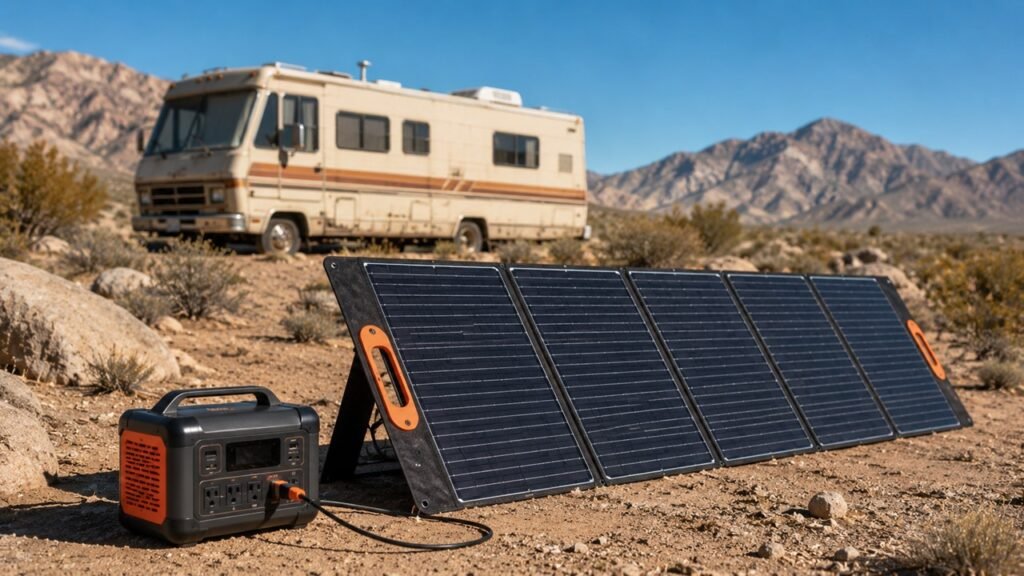
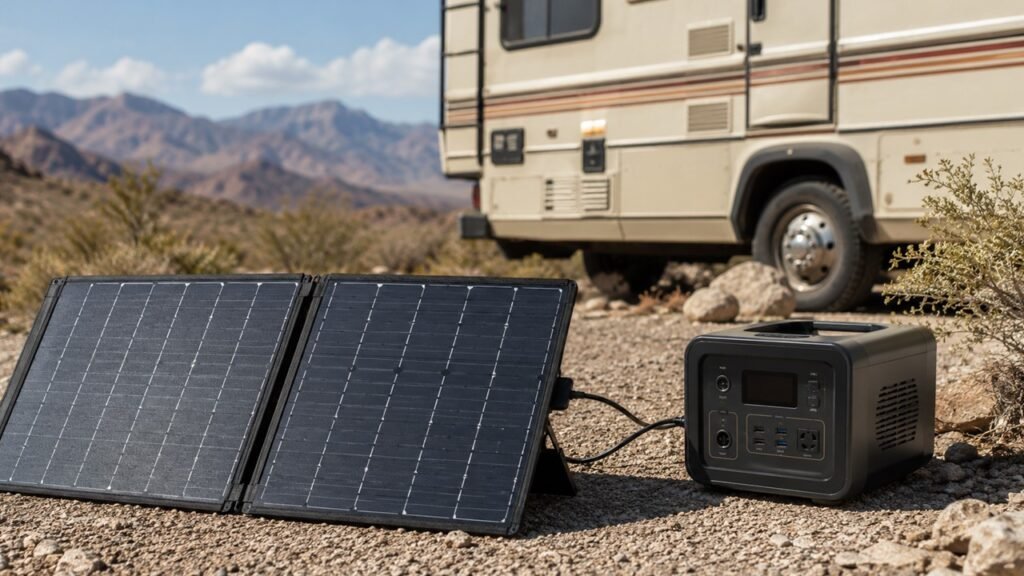
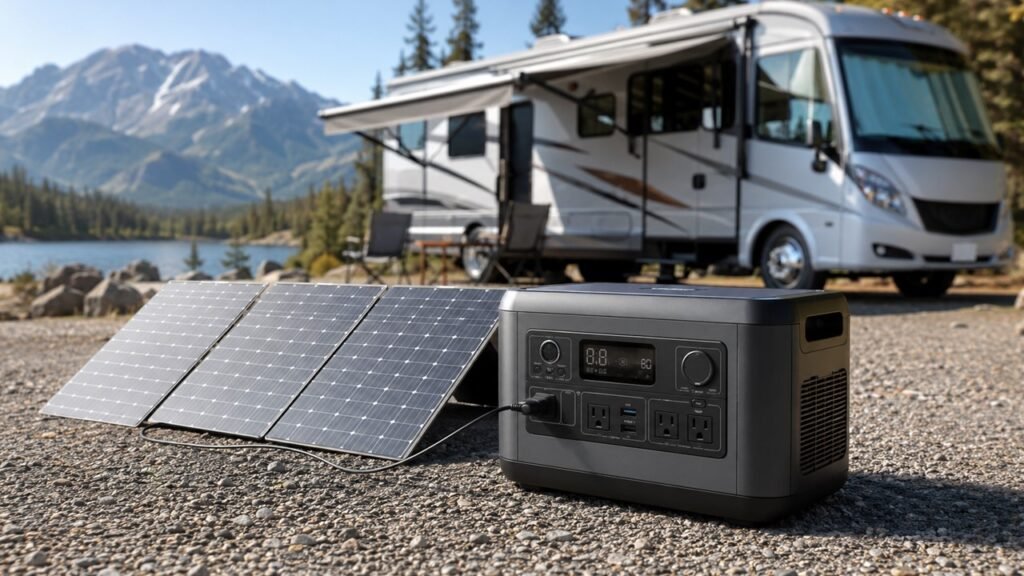
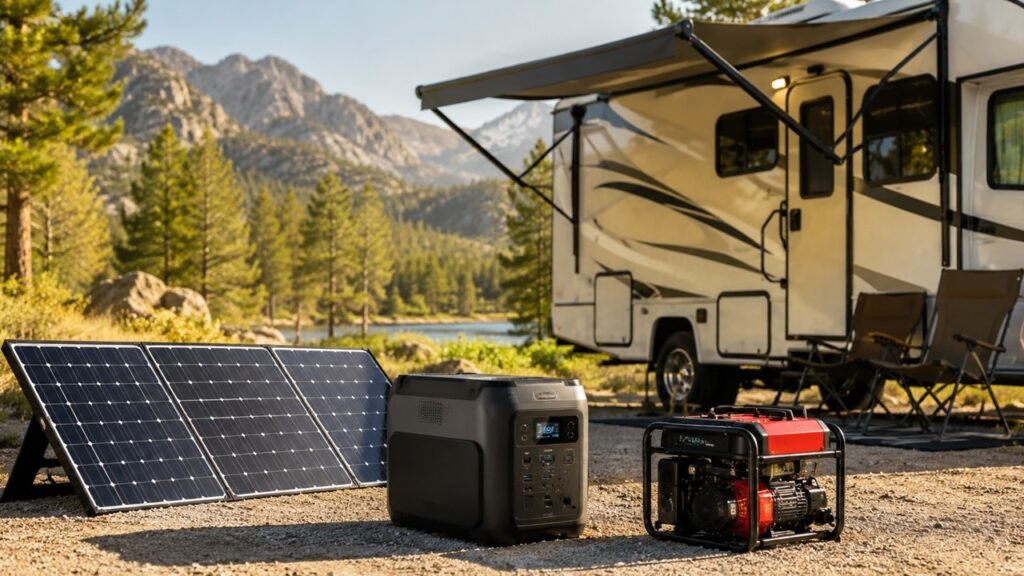
Solar Generator
A solar generator is really a portable power station with a battery and inverter. It can be charged from solar panels, shore power, or sometimes a vehicle.
Solar generators are quiet and clean. They are excellent for phones, laptops, lights, fans, small appliances, and light off-grid use.
However, running a rooftop RV air conditioner requires a large battery, strong inverter, and enough solar charging. This can become expensive and heavy.
For most 30 amp RVs, a solar generator is better for light loads than full AC use.
| Generator Type | Best For | Main Limitation |
| Gas | Strong AC power | Fuel storage and noise |
| Propane | Cleaner RV fuel setup | Lower output on some models |
| Dual-fuel | Flexible camping | Higher cost |
| Solar generator | Quiet light loads | Expensive for AC use |
For most 30 amp RV owners who want to run an air conditioner, a gas or dual-fuel inverter generator is the most practical choice.
Should You Use One Large Generator or Two Smaller Generators in Parallel?
Some RVers prefer one larger generator. Others prefer two smaller inverter generators connected in parallel.
Both setups can work, but they fit different camping styles.
One Large Generator
One large generator is simple. You set up one unit, plug in the RV, and manage your loads.
Advantages include:
- Simpler setup
- Fewer cables
- Stronger single-unit output
- Better for heavy loads
- Easier to understand for beginners
The downside is weight. A 4,000 to 4,500-watt generator can be heavy, especially if you move it often.
Two Smaller Generators in Parallel
Two smaller generators can be easier to carry because each unit weighs less. You can run one generator for light loads and connect both when you need air conditioning.
Advantages include:
- Easier lifting
- Flexible power use
- Better light-load efficiency
- Backup if one unit fails
- Useful for AC only when needed
The downside is complexity. You need compatible generators and the correct parallel kit. You also have more parts to store and maintain.
For many RVers, one 3,500 to 4,500-watt inverter generator is simpler. For those who value portability, two smaller parallel-capable units can make sense.
Important Safety Tips Before Using a Generator With a 30 Amp RV
A generator can make RV camping more comfortable, but it must be used safely. Poor generator placement can create serious carbon monoxide danger.
Follow these safety tips every time:
- Never run a generator inside your RV.
- Never run a generator in a storage bay.
- Keep exhaust away from windows, doors, and vents.
- Use working carbon monoxide detectors inside the RV.
- Keep the generator dry and well ventilated.
- Use the correct RV-rated power cord.
- Do not overload the generator.
- Let the generator cool before refueling.
- Keep fuel away from flames and heat.
- Follow campground generator-hour rules.
- Use a surge protector when possible.
- Read your RV and generator manuals.
- Do not modify plugs or bypass breakers.
- Keep children and pets away from hot generator parts.
- Place the generator on a stable surface.
Carbon monoxide has no smell or color. Never assume open air alone is enough if exhaust is near the RV.
Common Mistakes When Sizing a Generator for a 30 Amp RV
Choosing the wrong generator can lead to tripped breakers, poor AC performance, wasted fuel, and frustration. Here are the most common mistakes.
Only Looking at Running Watts
Many people only add the running watts of their appliances. This can lead to buying a generator that is too small.
Starting watts matter because your AC may need a large surge when the compressor starts. Always account for that short power spike.
Buying Too Small
A generator that is too small may overload often. It may struggle to start the AC or shut down when appliances overlap.
Small generators are lighter and cheaper, but they may not provide the comfort many RV owners expect.
Buying Too Large
A very large generator is not always better. It may cost more, use more fuel, weigh more, and take up more storage space.
For a 30 amp RV, you usually do not need a huge generator unless you have unusual power needs.
Ignoring AC Size
A 13,500 BTU AC and a 15,000 BTU AC may need different generator sizes. Larger AC units usually need more running and starting watts.
Always check your AC model before choosing a generator.
Ignoring Altitude and Heat
Generators can lose performance in hot weather and high elevation. Air conditioners can also become harder to start in hot conditions.
If you camp in mountains or hot climates, choose extra generator headroom.
Using the Wrong Adapter
A poor adapter setup can create electrical problems. A 30 amp RV should connect to the correct 120V RV outlet whenever possible.
Look for a generator with a TT-30 outlet if you want the easiest connection.
Conclusion
So, what size generator for a 30 amp RV is best? For most RV owners, the answer is 3,500 to 4,500 watts.
A 30 amp RV can use up to about 3,600 watts, but your generator also needs enough starting power for the air conditioner. That is why a 3,500-watt generator is often the minimum comfortable size, while a 4,000 to 4,500-watt generator gives better real-world performance.
Choose a smaller generator only if you do not use AC or you are comfortable managing loads carefully. Choose the higher end if you camp in hot weather, use a 15,000 BTU AC, charge batteries often, or want fewer power issues.
Before buying, check your RV appliance labels, air conditioner size, outlet type, and camping conditions. The right generator will keep your 30 amp RV powered comfortably without wasting money, fuel, or storage space.
Related FAQs
How many watts does a 30 amp RV use?
A 30 amp RV can use up to about 3,600 watts. This comes from the formula 120 volts × 30 amps = 3,600 watts.
Will a 3,500-watt generator run a 30 amp RV?
Yes, a 3,500-watt generator can run many 30 amp RVs. It can usually handle one AC, fridge, lights, and small electronics with careful appliance use.
Will a 4,000-watt generator run a 30 amp RV?
Yes, a 4,000-watt generator is a strong size for most 30 amp RVs. It gives better startup headroom for the air conditioner.
Can a 2,000-watt generator run a 30 amp RV?
A 2,000-watt generator can run basic loads in a 30 amp RV. However, it usually cannot reliably start a standard rooftop RV air conditioner.
What size generator do I need for a 30 amp RV with AC?
Most 30 amp RVs with one rooftop AC need a 3,500 to 4,500-watt generator. A larger AC or hot-weather use may need the higher end.
Is 4,500 watts too much for a 30 amp RV?
No, 4,500 watts is not too much for a 30 amp RV when used correctly. The RV will still be limited by its 30 amp breaker.
Can I plug my 30 amp RV into a larger generator?
Yes, you can plug a 30 amp RV into a larger generator with the correct 120V RV outlet or safe adapter. Never use mismatched or unsafe connections.
Do I need an inverter generator for a 30 amp RV?
You do not strictly need one, but an inverter generator is usually better. It is quieter, more fuel-efficient, and better for sensitive RV electronics.
Can a 30 amp RV run two air conditioners?
Most 30 amp RVs are not designed to run two rooftop air conditioners at the same time. Dual-AC RVs usually need a larger generator or a 50 amp setup.
What is the best generator size for a 30 amp travel trailer?
The best generator size for a 30 amp travel trailer is usually 3,500 to 4,500 watts. This range fits one AC and normal camping appliances.

Daniel Brooks writes about RV living, gear, and travel planning with a focus on everyday usability. His guides break down complex topics into simple advice for real RV owners. He reviews products with long-term use in mind, not marketing hype.