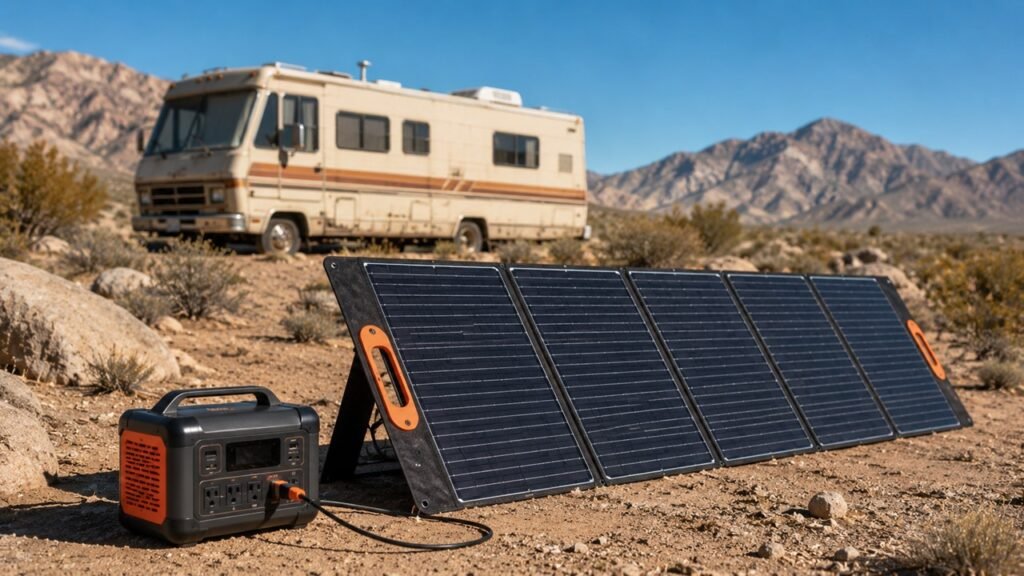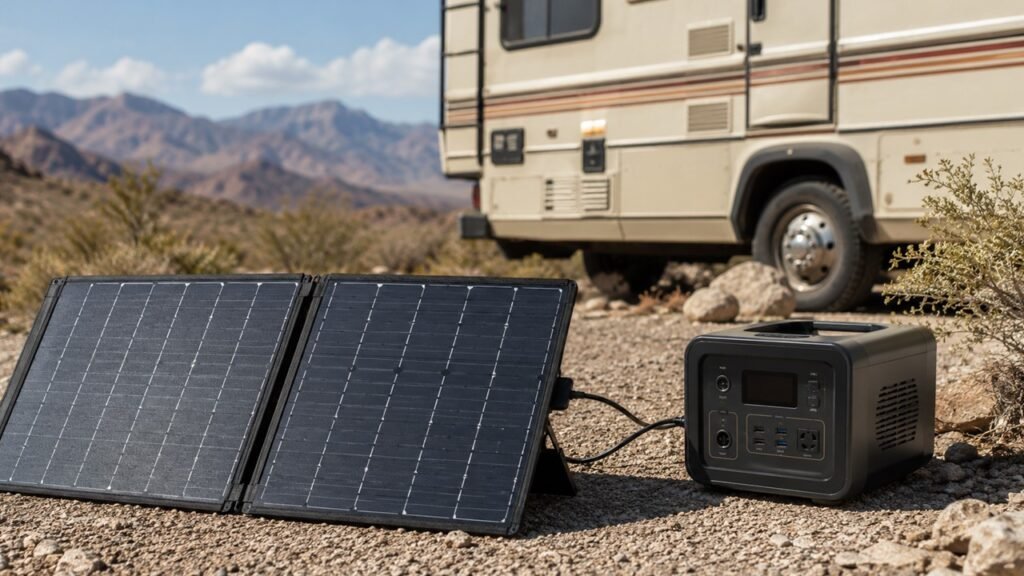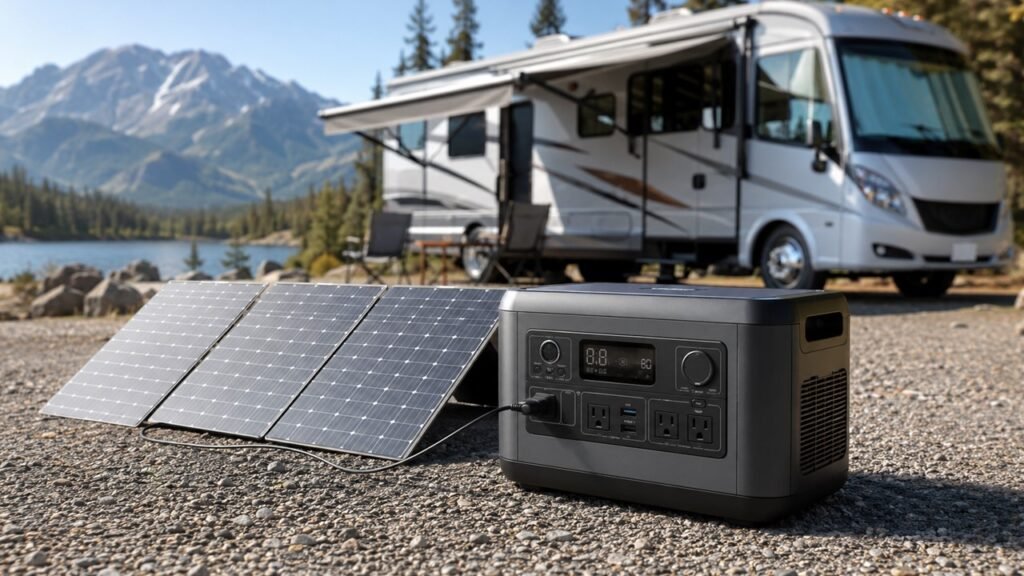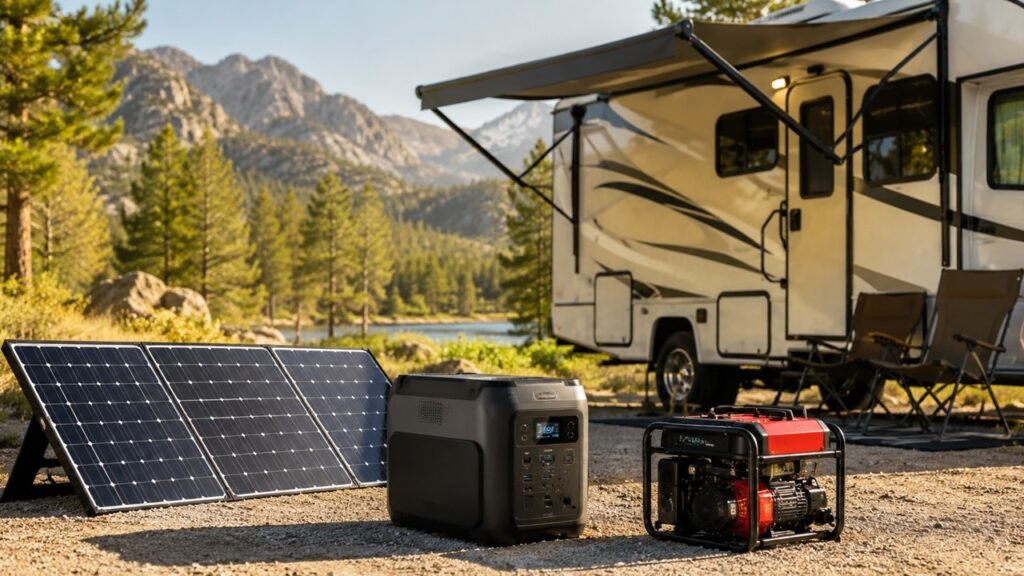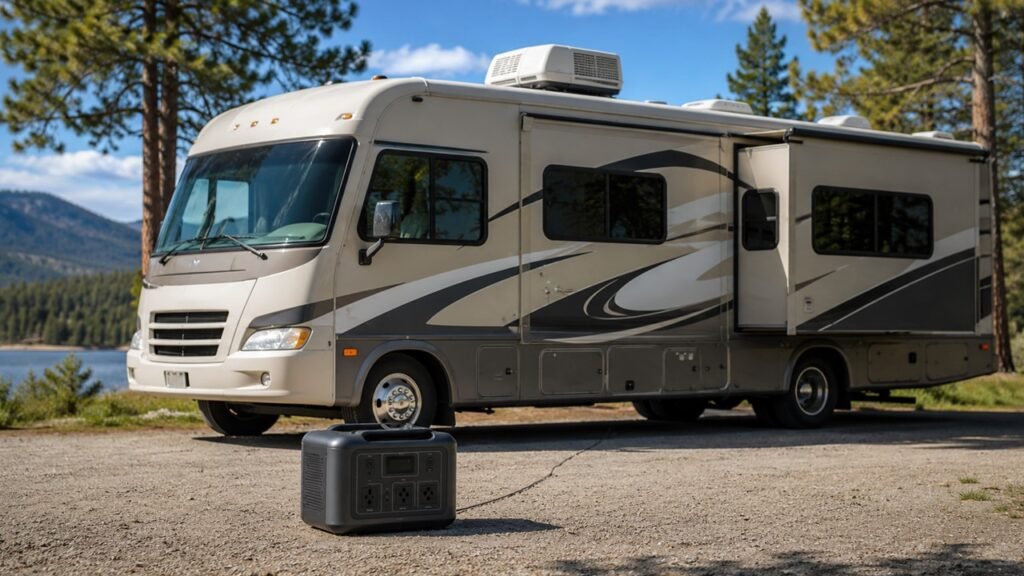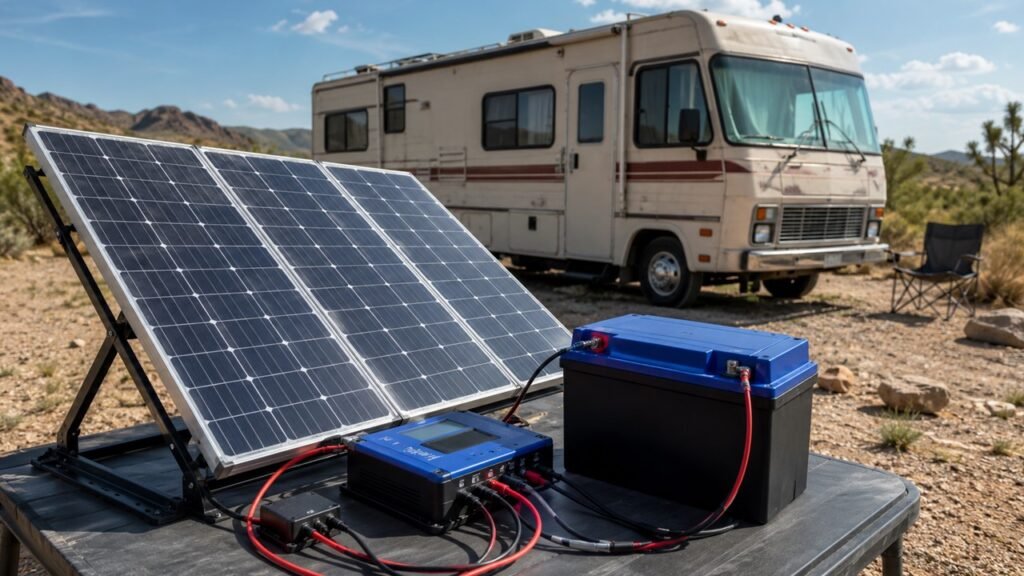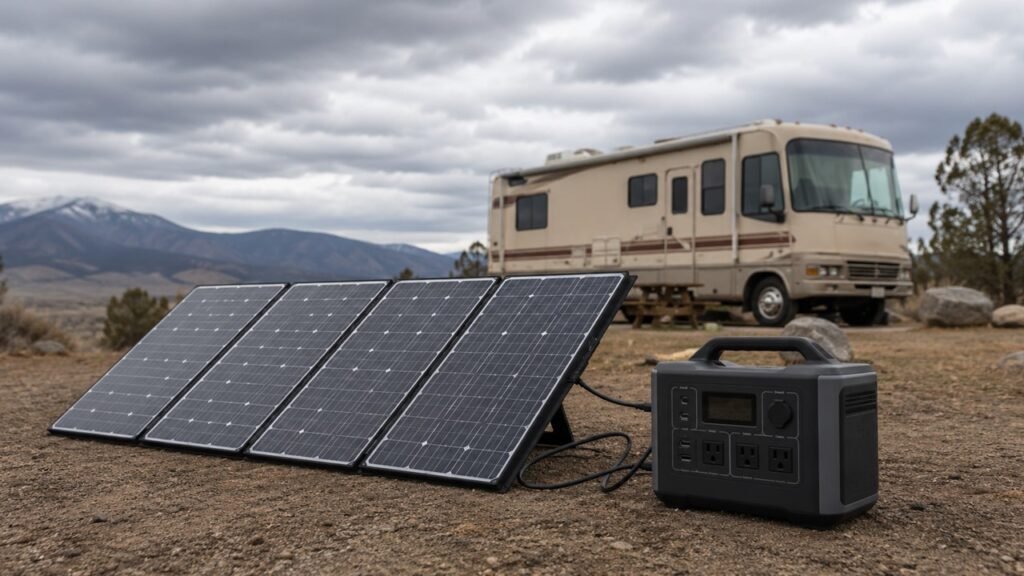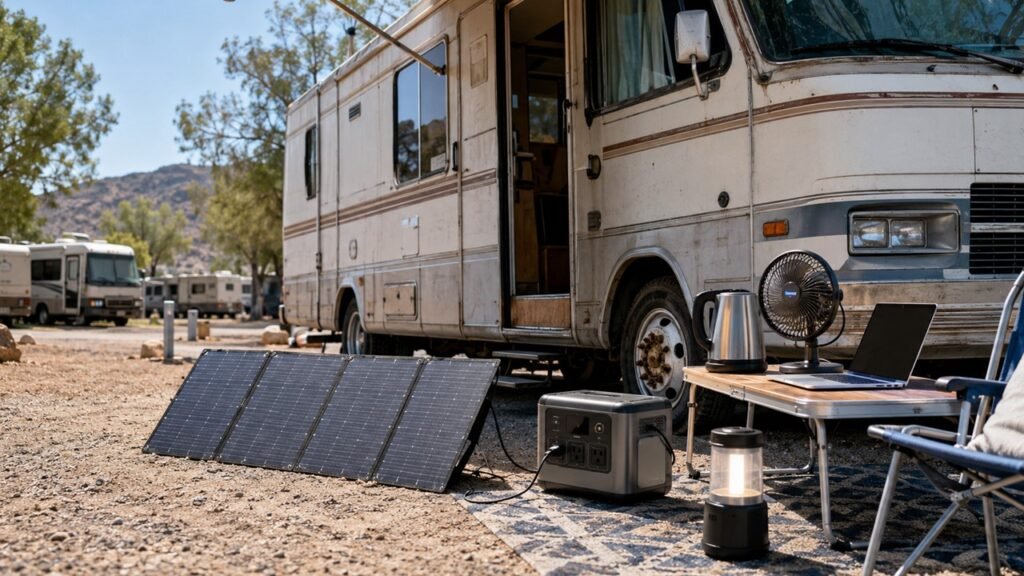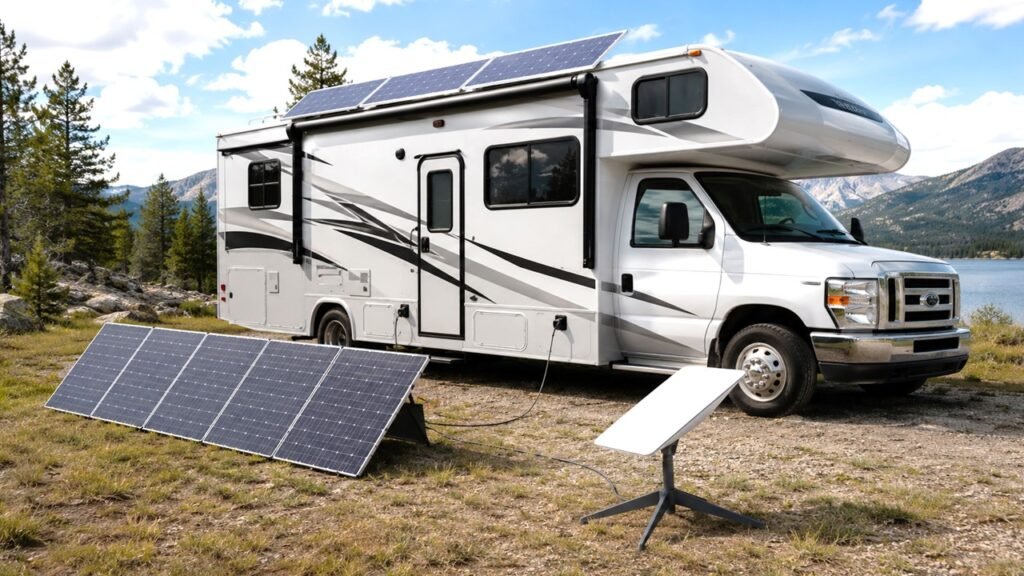
If you’re wondering how much solar power you need for Starlink in an RV, most setups need 200W to 600W of solar panels. Starlink Mini can work with a smaller solar setup, while Standard Starlink usually needs more solar power and a larger lithium battery.
For regular RV use, 300W to 600W of solar with a 100Ah to 200Ah LiFePO4 battery is a practical starting point. If you use Starlink all day, work remotely, or camp in cloudy areas, plan for more solar, more battery storage, and a backup charging option.
Key Summary
- Starlink Mini usually needs 100W to 300W of solar for light to moderate RV use.
- Standard Starlink usually needs 300W to 600W of solar for daily RV internet use.
- A 100Ah LiFePO4 battery can run Starlink Mini for a long time, but Standard Starlink usually works better with 200Ah or more.
- Running Starlink through a large RV inverter wastes power compared to a DC setup.
- Cloudy weather, snow-melt mode, trees, poor signal, and 24-hour use can increase solar and battery needs.
How Much Solar Power Do You Need for Starlink in an RV?
Most RV owners need 300W to 600W of solar panels to run Standard Starlink for several hours per day. This works best when the solar panels are paired with at least a 200Ah lithium battery bank, especially if you use Starlink for remote work, streaming, or daily internet access.
For Starlink Mini, 100W to 300W of solar can be enough because it uses much less power. If your internet use is light, a smaller solar generator or a 100Ah LiFePO4 battery may be enough for weekend trips.
The right setup depends on your Starlink model, daily runtime, peak sun hours, battery size, and whether you run it through AC or DC power.
| Starlink Setup | Average Power Use | Daily Runtime | Daily Energy Use | Recommended Solar | Recommended Battery |
| Starlink Mini, light use | 25W to 40W | 4 to 6 hours | 100Wh to 240Wh | 100W to 200W | 50Ah to 100Ah LiFePO4 |
| Starlink Mini, full workday | 25W to 40W | 8 to 12 hours | 200Wh to 480Wh | 200W to 300W | 100Ah LiFePO4 |
| Standard Starlink, light use | 55W to 75W | 4 to 6 hours | 220Wh to 450Wh | 200W to 400W | 100Ah to 200Ah LiFePO4 |
| Standard Starlink, workday use | 55W to 75W | 8 to 12 hours | 440Wh to 900Wh | 400W to 600W | 200Ah LiFePO4 |
| Standard Starlink, all-day use | 55W to 100W | 16 to 24 hours | 880Wh to 2,400Wh | 600W to 1,000W+ | 300Ah to 400Ah LiFePO4 |
| High-performance Starlink | 110W to 150W | 8 to 12 hours | 880Wh to 1,800Wh | 800W to 1,200W+ | 300Ah to 500Ah LiFePO4 |
Starlink Power Consumption by Model
Different Starlink models use different amounts of power, so the model you choose has a big effect on your RV solar setup. Moreover, Starlink Mini is the easiest to power, Standard Starlink needs a mid-size solar setup, and High Performance Starlink usually needs a much larger battery and solar system.
Starlink Mini Power Use
Starlink Mini is the easiest Starlink option to power in an RV because it usually draws around 25W to 40W during normal use. That lower power draw makes it a better fit for smaller RV solar systems, portable power stations, and weekend camping setups.
It is also a practical choice if you want internet without building a large off-grid electrical system.
- Starlink Mini uses less power than Standard Starlink.
- Starlink Mini works better for smaller solar generators and portable RV setups.
- Starlink Mini is easier to run from DC power.
- Starlink Mini is ideal for weekend campers, van lifers, and light internet users.
Standard Starlink Power Use
Standard Starlink usually uses around 55W to 75W during normal use. In real RV conditions, the power draw can rise higher because of weather, weak signal, router use, obstructions, and snow-melt mode.
This makes Standard Starlink better for heavier internet use, but it also means you need more solar and battery capacity.
- Standard Starlink needs more solar than Mini.
- Standard Starlink is better for remote work, streaming, and multiple users.
- Standard Starlink usually needs a larger battery bank for overnight use.
- Standard Starlink can drain a small power station quickly if used all day.
High-Performance Starlink Power Use
High-performance Starlink hardware is not the most solar-friendly choice for small RV systems. It can draw over 100W continuously, so it needs a larger battery bank and a stronger solar array.
This setup makes more sense for serious mobile work, larger RVs, marine use, or users who already have a large off-grid power system. For casual RV internet, Starlink Mini or Standard Starlink is usually easier to support with solar.
How to Calculate Solar Power for Starlink
You can calculate Starlink solar needs by starting with daily energy use. First, multiply the Starlink wattage by the number of hours you plan to use it each day.
Daily Starlink Energy Use = Starlink Watts × Hours Used Per Day
Then calculate the solar panel size based on your daily energy use, peak sun hours, and real-world system efficiency.
Solar Panel Watts = Daily Energy Use ÷ Peak Sun Hours ÷ System Efficiency
For example, if Standard Starlink uses 70W and you run it for 8 hours:
70W × 8 hours = 560Wh per day
If you get 4 peak sun hours and assume 75% real-world efficiency:
560Wh ÷ 4 ÷ 0.75 = about 187W of solar
In real RV use, you should round up. A 300W or 400W solar setup is safer because solar panels rarely produce their full rated output all day. Heat, clouds, shade, panel angle, wiring loss, and charge controller loss can all reduce real charging performance.
Starlink Solar Sizing Example Table
Use this quick reference table to estimate how much solar power you may need based on your Starlink model and daily usage habits. Actual requirements can vary depending on weather, battery size, and other RV power loads.
| Setup | Power Draw | Runtime | Daily Use | Solar Needed With Buffer |
| Mini for evening use | 30W | 4 hours | 120Wh | 100W to 150W |
| Mini for remote work | 35W | 8 hours | 280Wh | 200W to 300W |
| Standard for evening use | 70W | 4 hours | 280Wh | 200W to 300W |
| Standard for remote work | 70W | 8 hours | 560Wh | 300W to 500W |
| Standard for long daily use | 75W | 12 hours | 900Wh | 500W to 700W |
| Standard all day | 75W | 24 hours | 1,800Wh | 800W to 1,200W |
How Much Battery Capacity Do You Need for Starlink in an RV?
Solar panels recharge your system during the day, but batteries keep Starlink running at night, during cloudy weather, and when your RV is parked in shade. That is why battery capacity matters as much as solar panel wattage.
LiFePO4 batteries are usually the better choice for Starlink in an RV because they offer more usable capacity than lead-acid batteries. They also handle deeper discharge better, which makes them more reliable for off-grid internet use.
Battery Size for Starlink Mini
If you use Starlink Mini, battery requirements are relatively modest because of its lower power consumption. The table below shows estimated runtimes based on a typical 30W power draw.
| Battery Size | Approximate Energy | Runtime at 30W |
| 50Ah LiFePO4 | About 640Wh | About 21 hours |
| 100Ah LiFePO4 | About 1,280Wh | About 42 hours |
| 200Ah LiFePO4 | About 2,560Wh | About 85 hours |
Battery Size for Standard Starlink
Standard Starlink uses more power than the Mini version, so you’ll need a larger battery bank for extended off-grid use. These estimates assume an average power draw of 70W.
| Battery Size | Approximate Energy | Runtime at 70W |
| 100Ah LiFePO4 | About 1,280Wh | About 18 hours |
| 200Ah LiFePO4 | About 2,560Wh | About 36 hours |
| 300Ah LiFePO4 | About 3,840Wh | About 54 hours |
| 400Ah LiFePO4 | About 5,120Wh | About 73 hours |
Battery Size Recommendation
Choosing the right battery depends on how often you use Starlink and how long you stay off-grid. Here are practical battery size recommendations for common RV camping scenarios.
- Weekend RV use with Starlink Mini: 50Ah to 100Ah LiFePO4.
- Weekend RV use with Standard Starlink: 100Ah to 200Ah LiFePO4.
- Remote work with Standard Starlink: 200Ah to 300Ah LiFePO4.
- Full-time boondocking with Starlink: 300Ah to 400Ah or more.
- High-performance Starlink: 400Ah or more is safer.
Starlink Mini vs Standard Starlink for RV Solar Setups
Starlink Mini and Standard Starlink can both work well in an RV, but they fit different power setups. Mini is better when low power use and portability matter most, while Standard Starlink is better when you need stronger performance for heavier internet use.
| Feature | Starlink Mini | Standard Starlink |
| Power use | Lower | Higher |
| Solar requirement | Smaller | Larger |
| Battery requirement | Easier to support | Needs more capacity |
| Portability | Better | Less compact |
| RV remote work | Good for many users | Better for heavier use |
| 24-hour off-grid use | Easier | Requires larger setup |
| Best for | Weekend campers, van lifers, light remote work | Full-time RVers, families, heavier internet users |
Starlink Mini is usually the smarter choice if battery life matters most. It is easier to run from a smaller solar setup and makes more sense for weekend camping, van life, and light remote work.
Standard Starlink makes more sense if performance matters more than power savings. It is better for families, full-time RVers, video calls, streaming, and heavier internet use, but it needs more solar and battery capacity.
Can You Run Starlink From an RV Solar Generator?
Yes, you can run Starlink from an RV solar generator if the power station has enough battery capacity, enough solar input, and the right output ports. This can be a simple option if you do not want to build a full RV battery and inverter system.
The main thing is runtime. A small power station may run Starlink Mini for several hours, but Standard Starlink needs more capacity if you plan to stay online for a full workday.
- A small 300Wh power station can run Starlink Mini for short sessions.
- A 500Wh to 1,000Wh power station works better for Mini or short Standard Starlink use.
- A 1,000Wh to 2,000Wh power station is better for Standard Starlink workdays.
- A 2,000Wh+ power station is better for long daily Starlink use and cloudy-day backup.
| Power Station Size | Starlink Mini Runtime | Standard Starlink Runtime |
| 300Wh | 7 to 10 hours | 3 to 4 hours |
| 500Wh | 12 to 16 hours | 6 to 7 hours |
| 1,000Wh | 25 to 30 hours | 12 to 14 hours |
| 2,000Wh | 50 to 60 hours | 24 to 28 hours |
Real runtime can be lower when using AC outlets because inverter conversion wastes power. If you also charge laptops, phones, lights, fans, or a 12V fridge from the same power station, Starlink runtime will drop even more.
AC Power vs DC Power for Starlink in an RV
Starlink can be powered through AC or DC, depending on your setup and hardware. AC power is usually easier, but DC power can be more efficient because it avoids some inverter loss.
Running Starlink Through AC Power
Many RVers plug Starlink into a 120V AC outlet because it is simple and works with the original Starlink power supply. The downside is that AC power requires an inverter when you are running from batteries.
That inverter conversion wastes some energy. The loss becomes more noticeable if you leave a large RV inverter running all day just to power Starlink.
- AC power is easier to set up.
- AC power works with the original Starlink power supply.
- AC power wastes some energy through inverter loss.
- AC power can be inefficient if you leave a large 2,000W or 3,000W RV inverter running only for Starlink.
Running Starlink Through DC Power
DC power can reduce conversion losses, especially with Starlink Mini or modified Standard Starlink setups. This can help you get more runtime from the same battery bank.
The tradeoff is that DC setups need the right cables, voltage, connectors, and safe wiring. It is not something to guess on if you are not comfortable with RV electrical systems.
- DC power can improve efficiency.
- DC power can reduce inverter runtime.
- DC power is better for small battery banks.
- DC power requires compatible cables, adapters, or proper wiring.
RVers should avoid unsafe wiring, undersized cables, and cheap adapters that cannot handle the required voltage or current. A poor DC setup can cause overheating, unstable power, or equipment damage.
Factors That Change Your Starlink Solar Needs
Starlink power needs look simple on paper, but real RV camping conditions can change the numbers quickly. Sunlight, shade, weather, inverter loss, and other RV loads all affect how much solar and battery capacity you really need.
Peak Sun Hours
A 400W solar array does not produce 400W all day. Solar panels only reach strong output during peak sun hours, and most RVers should calculate based on 3 to 5 peak sun hours per day.
This is why a Starlink setup that looks small on paper may need more panel wattage in real use. More solar gives you a better buffer for weak sunlight and charging losses.
Cloudy Weather
Cloudy weather can reduce solar output sharply. On some days, your panels may only produce a small portion of their rated wattage.
This is why battery capacity matters as much as solar panel size. A larger battery bank can keep Starlink running when your panels are not producing enough power.
Shade and Trees
RV campsites often have trees, and shade can be a major problem for solar panels. Even partial shade on one panel can reduce charging output.
If you camp in wooded areas, portable solar panels can help because you can place them in the sun while parking the RV in shade.
Snow, Rain, and Cold Weather
Rain and heavy cloud cover can reduce solar charging. Cold weather may also increase Starlink power draw if heating or snow-melt behavior activates.
If you camp in winter or wet climates, it is safer to oversize your battery bank and keep a backup charging option available.
Inverter Loss
AC conversion can waste power, especially when the RV’s large inverter is left on all day. This can make Starlink use more battery energy than expected.
A smaller dedicated inverter or a safe DC setup can be more efficient if you only need to power Starlink and a few small devices.
Other RV Loads
Starlink is rarely the only load on your RV battery system. Your real solar setup should include internet use plus your other daily power needs.
- RV lights
- Water pump
- 12V fridge
- Laptop
- Phone charging
- Vent fan
- Camera gear
- Router or mesh Wi-Fi
- CPAP machine
Sample RV Solar Setups for Starlink
A good Starlink solar setup depends on how you camp. A weekend camper does not need the same system as a full-time remote worker, and a heavy internet user needs more battery reserve than someone who checks email at night.
Weekend Camper Setup
- Starlink model: Mini or Standard
- Solar panels: 200W to 300W
- Battery: 100Ah LiFePO4
- Best for: Short trips, evening internet, light browsing, route planning
This setup works best for light Starlink use and short trips. It is not ideal for running Standard Starlink all day while also powering a fridge, laptop, fan, and other RV loads.
Remote Worker Setup
- Starlink model: Standard or Mini
- Solar panels: 400W to 600W
- Battery: 200Ah to 300Ah LiFePO4
- Best for: Zoom calls, laptop work, email, cloud apps, moderate streaming
This is the better starting point if you work from your RV. It gives you enough power for daily Starlink use, laptop charging, and normal RV essentials.
Full-Time Boondocking Setup
- Starlink model: Standard
- Solar panels: 600W to 1,000W+
- Battery: 300Ah to 400Ah+ LiFePO4
- Best for: Daily work, longer stays, cloudy-day buffer, multiple devices
This setup is safer for RVers who stay off-grid for several days at a time. It gives you more room for cloudy weather, longer internet sessions, and extra RV loads.
Heavy Internet and High-Performance Setup
- Starlink model: High Performance
- Solar panels: 800W to 1,200W+
- Battery: 400Ah to 600Ah+ LiFePO4
- Best for: Heavy remote work, business use, larger RVs, demanding users
This setup is for serious off-grid internet use. It makes sense if Starlink is part of your work setup and you cannot afford to lose power during long travel days or remote stays.
How Long Can Starlink Run on an RV Battery?
Starlink runtime depends on your battery size and the Starlink model you use. Mini lasts the longest because it uses the least power, while High Performance Starlink drains an RV battery much faster.
The estimates below assume the battery is dedicated only to Starlink.
| Battery Bank | Starlink Mini at 30W | Standard Starlink at 70W | High Performance at 130W |
| 100Ah LiFePO4 | About 42 hours | About 18 hours | About 9 hours |
| 200Ah LiFePO4 | About 85 hours | About 36 hours | About 19 hours |
| 300Ah LiFePO4 | About 128 hours | About 54 hours | About 29 hours |
| 400Ah LiFePO4 | About 170 hours | About 73 hours | About 39 hours |
These are Starlink-only estimates. Real RV runtime will be lower when you also run lights, fans, a 12V fridge, laptops, phone chargers, water pumps, routers, and other appliances from the same battery bank.
How to Reduce Starlink Power Use While RV Camping
- Turn Starlink off when you are sleeping.
- Use Starlink during peak solar hours when possible.
- Choose Starlink Mini if low power use matters more than maximum performance.
- Avoid running a large RV inverter just for Starlink.
- Use DC power when your setup supports it safely.
- Place the dish where it has a clear view of the sky.
- Reduce unnecessary streaming when battery power is low.
- Use a smaller dedicated inverter instead of the main RV inverter if AC is required.
- Add more battery capacity before relying on solar alone.
- Carry a backup charging option for long cloudy stretches.
Common Mistakes When Sizing Solar for Starlink
- Sizing solar panels without calculating daily watt-hours. You need to know how many watts Starlink uses and how many hours you plan to run it each day.
- Assuming a 400W solar array produces 400W all day. Solar panels only reach strong output during good sunlight and peak sun hours.
- Forgetting inverter loss. Running Starlink through AC power can waste battery energy through conversion loss.
- Using lead-acid battery capacity as if it were fully usable. A 100Ah lead-acid battery does not give you the same usable energy as a 100Ah LiFePO4 battery.
- Running Standard Starlink 24/7 on a small power station. Standard Starlink can drain a small unit quickly if you leave it on all day and night.
- Parking under trees and expecting full solar charging. Even partial shade can reduce solar output.
- Ignoring cloudy-day battery reserve. Solar output can drop sharply in bad weather, so battery storage matters.
- Buying solar panels without checking the charge controller input limit. Your solar array must match your power station or RV charge controller.
- Running Starlink, laptop, fridge, and fans without adding their combined loads. Starlink is only one part of your total RV power use.
So, Is 300W of Solar Enough for Starlink in an RV?
Yes, 300W of solar can be enough for Starlink Mini or limited Standard Starlink use, especially with a 100Ah to 200Ah lithium battery. It works best for light internet use, short work sessions, weekend camping, and good sun conditions.
But 300W may feel tight if you run Standard Starlink all day, work remotely, camp in cloudy areas, or also power other RV appliances. For regular Standard Starlink use, 400W to 600W of solar is a safer range.
Is 400W of Solar Enough for Starlink in an RV?
Yes, 400W of solar is a strong starting point for Standard Starlink if you use it for several hours per day and have enough battery storage. It can support daily internet use better than a small 100W or 200W setup.
A 400W solar setup works best when paired with around 200Ah of lithium battery capacity. It will feel more limited if you only use a small 500Wh power station, especially when you also charge laptops, phones, fans, or a fridge.
Is 600W of Solar Enough for Starlink in an RV?
Yes, 600W of solar is enough for many RVers who use Standard Starlink daily. It is a more comfortable setup for remote work, longer internet sessions, and normal RV power needs when paired with 200Ah to 300Ah of LiFePO4 battery capacity.
Full-time users may still need more solar or a backup charging source. Shaded campsites, winter camping, cloudy weather, and 24-hour Starlink use can all push your power needs above 600W.
Wrapping it Up!
For most RV owners, Starlink Mini needs about 100W to 300W of solar, while Standard Starlink needs about 300W to 600W of solar for practical off-grid use. If you work remotely or run Starlink most of the day, start closer to 400W to 600W and pair it with at least a 200Ah LiFePO4 battery.
If you want a safer full-time boondocking setup, plan around 600W to 1,000W of solar and 300Ah to 400Ah of lithium battery capacity. That gives you more room for cloudy weather, inverter losses, laptops, lights, fans, and other RV loads.
Related FAQs
Can I Run Starlink on a 100W Solar Panel?
Yes, a 100W solar panel can run Starlink Mini for light use with a battery, but it is usually too small for Standard Starlink. For regular Standard Starlink use, 200W–400W of solar is recommended.
How Many Watts Does Starlink Use in an RV?
Starlink Mini typically uses 25W–40W, while Standard Starlink uses about 55W–75W. High Performance models can draw 110W–150W or more.
How Many Amp Hours Does Starlink Use Overnight?
Starlink Mini uses about 20Ah–35Ah overnight at 12V, while Standard Starlink uses roughly 45Ah–70Ah for an 8-hour period. Actual usage varies by runtime and setup.
Can a 100Ah Battery Run Starlink?
Yes, a 100Ah LiFePO4 battery can run Starlink Mini for around 40 hours or Standard Starlink for about 18 hours if no other devices are connected. Runtime decreases when powering additional RV appliances.
Do I Need an Inverter to Run Starlink in an RV?
Yes, if you use the original AC power supply, you need an inverter. Some DC-powered setups can run Starlink without an inverter using compatible adapters.
Is Starlink Mini Better for RV Solar?
Yes, Starlink Mini is better for small RV solar systems because it uses less power and requires smaller batteries and solar panels. It is the most energy-efficient Starlink option for off-grid camping.
Can I Run Starlink 24/7 on Solar?
Yes, but you need enough solar generation and battery storage to cover both daytime and nighttime use. Most full-time setups require around 600W–1,000W+ of solar and a large lithium battery bank.
What Size Solar Generator Do I Need for Starlink?
For Starlink Mini, a 500Wh–1,000Wh solar generator is usually sufficient. For Standard Starlink, a 1,000Wh–2,000Wh unit is recommended for longer runtimes.

Daniel Brooks writes about RV living, gear, and travel planning with a focus on everyday usability. His guides break down complex topics into simple advice for real RV owners. He reviews products with long-term use in mind, not marketing hype.