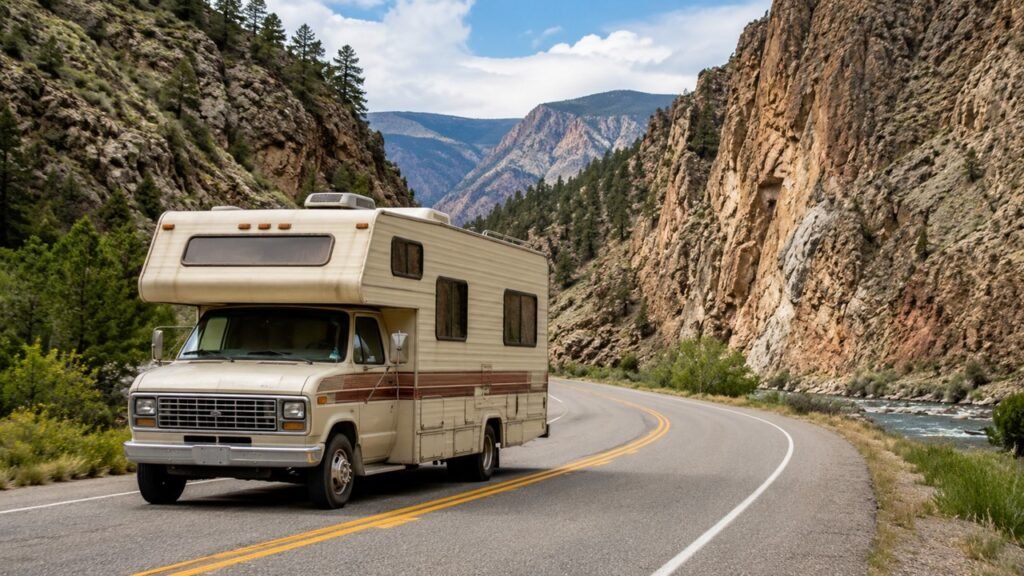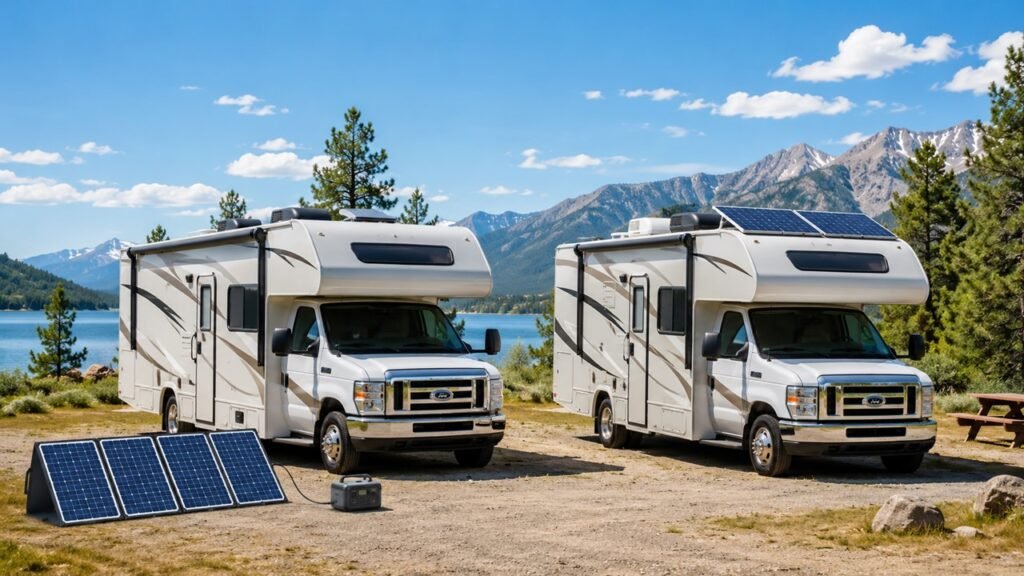
If you’re comparing portable solar panels vs roof-mounted solar panels for RV, the better choice depends on how you camp.
Portable solar panels give you more control because you can move them into direct sunlight while keeping your RV in the shade. Roof-mounted solar panels are easier for daily use because they charge your RV batteries automatically without setup.
For many RVers, the right option is not one or the other, but a hybrid setup that gives you steady roof charging plus flexible portable power when you need extra energy.
Key Summary
- Portable solar panels work best for RVers who park in shade but still want to place panels in direct sunlight.
- Roof-mounted solar panels work best for RVers who want automatic charging while parked, driving, or storing the RV.
- Portable panels need setup, storage space, and theft protection, while roof-mounted panels need installation and roof space.
- Roof-mounted panels provide better convenience, but portable panels can often produce more power when aimed correctly.
- A hybrid RV solar setup gives you baseline roof charging plus extra portable power when sunlight conditions change.
Portable vs Roof-Mounted Solar Panels for RVs: Quick Comparison
Portable solar panels vs roof-mounted solar panels for RVs mainly comes down to convenience, placement, and how often you camp off-grid. Moreover, portable panels give you more flexibility, while roof-mounted panels give you easier daily charging.
| Feature | Portable Solar Panels | Roof-Mounted Solar Panels | Better Choice |
| Setup effort | Need to be unfolded, placed, angled, connected, and packed away | Installed once and charge automatically | Roof-mounted |
| Sun positioning | Can be moved and angled toward the sun | Fixed to the RV roof | Portable |
| Shade flexibility | Lets you park the RV in shade and place panels in sun | RV usually needs to sit in direct sun | Portable |
| Charging while driving | Usually not practical while driving | Can charge while driving if wired correctly | Roof-mounted |
| Theft risk | Higher because panels sit on the ground | Lower because panels are mounted to the roof | Roof-mounted |
| Storage needs | Needs interior or exterior storage space | Does not use interior storage | Roof-mounted |
| Installation difficulty | Easier for beginners and often plug-and-play | Requires mounting, wiring, sealing, and planning | Portable |
| Cost | Lower entry cost, but suitcase kits can cost more per watt | Higher upfront cost due to hardware and installation | Portable for beginners, roof-mounted for long-term use |
| Expansion | Easy to add another portable panel, but setup gets bulkier | Easier to build a larger permanent system if roof space allows | Depends on RV size |
| Best user type | Weekend campers, shaded campers, solar generator users | Full-time RVers, boondockers, low-maintenance travelers | Depends on camping style |
What Are Portable RV Solar Panels?
Portable RV solar panels are movable solar panels that you can set up outside your RV when you arrive at a campsite. They may sit on the ground, fold out like suitcase panels, or connect directly to a portable solar generator or RV battery system.
Most portable RV solar panels are designed for simple setup. You place them in the sun, aim them toward the best sunlight, and connect them to your system using the right cable or adapter.
Depending on the setup, portable panels may use MC4 connectors, Anderson plugs, solar charge controllers, or direct solar input ports on portable power stations. Some kits include a built-in charge controller, while others need a separate controller to safely charge an RV battery.
The biggest benefit is flexibility. You are not forced to park your RV in direct sunlight. You can keep the RV under shade and move the panels to a sunnier spot nearby.
What Are Roof-Mounted RV Solar Panels?
Roof-mounted RV solar panels are permanently installed on top of the RV. They are usually attached with brackets, adhesive mounts, mounting hardware, or a combination of hardware and sealant.
These panels connect to the RV battery bank through a solar charge controller. Once installed, they charge automatically whenever sunlight hits the panels. You do not need to unpack anything, move panels around, or reconnect cables every time you stop.
Rigid roof-mounted panels are the most common choice for long-term RV use because they are durable, framed, and built for outdoor exposure. Flexible panels are lighter and lower profile, but they may run hotter and may not last as long in harsh conditions.
For RVers who travel often, roof-mounted solar panels are the easier daily option. They turn sunlight into battery power in the background while you drive, camp, or store the RV.
How Portable Solar Panels Work for RV Camping
Portable solar panels work by giving you moveable solar power at the campsite. Instead of relying on where your RV is parked, you place the panels where the sun is strongest.
Setup Process
Setting up portable RV solar panels is usually simple, but it does take a few steps. First, you unfold the panels or open the suitcase-style kit. Then you place the panels in direct sunlight and angle them toward the sun.
After that, you connect the panel cables to your RV battery system, charge controller, solar port, or portable power station. Once everything is connected, the panels begin sending solar power into the battery.
You should also secure the panels before leaving them outside. Wind can knock over lightweight panels, and loose cables can become a trip hazard around the campsite.
Best Use Cases
Portable RV solar panels work best when you want flexible charging without permanent installation.
- Weekend camping
- Shaded campsites
- Small RV solar generator setups
- Occasional boondocking
- Campers who do not want roof drilling
- Extra charging during cloudy or high-demand days
Main Limitations
Portable panels are useful, but they are not completely hands-free.
- They take time to set up and pack away.
- They take up storage space inside the RV.
- They can be stolen if left unattended.
- They can be damaged by wind, pets, vehicles, or foot traffic.
- They usually cannot charge while driving.
How Roof-Mounted Solar Panels Work for RV Camping
Roof-mounted solar panels work in the background. Once installed, they become part of your RV power system and charge your batteries whenever sunlight is available.
Installation and Charging Process
Roof panels are installed once and wired into the RV electrical system. The panels send power to a solar charge controller, and the charge controller safely sends that power into the RV battery bank.
This setup is convenient because you do not need to unpack or connect panels every time you camp. If sunlight hits the roof, your batteries can start charging automatically.
Roof-mounted panels can also be helpful when your RV sits in storage. If the system is wired correctly and receives enough sunlight, it can help maintain the battery and reduce the chance of coming back to a low battery.
Best Use Cases
Roof-mounted RV solar panels make the most sense when you want steady, automatic charging.
- Full-time RV living
- Long-term boondocking
- Travel days with battery charging
- Campers who dislike daily setup
- Larger lithium battery systems
- RVers with rooftop space available
Main Limitations
Roof-mounted solar is convenient, but it has a few important limits.
- They require installation.
- They may require roof drilling or adhesive mounting.
- They only work well when the RV roof gets direct sun.
- They can be harder to clean, inspect, or upgrade.
- Roof vents, AC units, antennas, and shade can limit panel placement.
Power Output: Which System Produces More Energy?
Solar panel wattage does not tell the full story. A 200W panel does not always produce 200W in real RV conditions. Sun angle, shade, temperature, wiring, panel tilt, and charge controller efficiency all affect real-world output.
Portable panels can produce more energy per watt when you aim them directly at the sun. That is why a smaller portable panel can sometimes perform better than a flat roof panel during certain parts of the day.
Roof-mounted panels can still produce more total daily energy if the array is larger and charging all day. The main advantage is consistency. You do not have to remember to set anything up.
| Solar Size | Ideal Daily Output | Realistic RV Output | Good For |
| 100W panel | 400Wh to 600Wh | 250Wh to 400Wh | Phones, lights, small fans, battery maintenance |
| 200W panel | 800Wh to 1,200Wh | 500Wh to 800Wh | Weekend camping, small solar generator use |
| 400W panel | 1,600Wh to 2,400Wh | 1,000Wh to 1,600Wh | Fridge support, laptops, lights, fans, light boondocking |
| 600W roof array | 2,400Wh to 3,600Wh | 1,500Wh to 2,400Wh | Regular off-grid camping and larger battery banks |
| 800W roof array | 3,200Wh to 4,800Wh | 2,000Wh to 3,200Wh | Longer boondocking, full-time RV use, higher daily loads |
Shade Performance: Portable Panels Have the Advantage
Shade is one of the biggest reasons RVers choose portable solar panels. With portable panels, you can park your RV under trees, beside a shelter, or in a cooler shaded spot while placing the panels in direct sunlight nearby.
Roof-mounted panels do not give you that same freedom. If the RV roof is shaded, the panels are shaded too. That can reduce charging performance, especially when branches, roof vents, AC shrouds, antennas, or nearby RVs block part of the panel.
This matters even more in hot weather. Parking your RV in full sun can help roof panels charge, but it can also make the inside of the RV warmer. Portable panels solve that problem by separating your parking spot from your solar charging spot.
Convenience: Roof-Mounted Panels Are Easier Day to Day
Roof-mounted panels are easier because they work automatically. You park the RV, and the solar system starts charging when sunlight is available. There is no daily setup, no folding panels, and no cable management around the campsite.
Portable panels are more hands-on. You need to unpack them, place them in the sun, angle them, connect them, secure them, and pack them away before leaving.
If you do not want solar to feel like another campsite chore, roof-mounted panels are the easier choice. They are especially helpful for full-time RVers, families, and travelers who move often.
Cost Comparison: Which RV Solar Setup Is Cheaper?
Portable solar panels are usually cheaper to start with, while roof-mounted solar panels often cost more upfront. The better value depends on how often you use your RV and how much convenience matters to you.
Portable Solar Panel Cost
Portable panels usually have a lower entry cost because there is no permanent installation. You can buy a folding panel, suitcase kit, or solar generator panel and start using it with minimal setup.
However, portable suitcase kits can cost more per watt than basic rigid roof panels. You are also paying for folding hardware, kickstands, handles, protective casing, and portability.
Roof-Mounted Solar Panel Cost
Roof-mounted systems often cost more because they need more components. You may need mounting brackets, roof entry glands, wiring, fuses, a charge controller, sealant, and professional installation.
The cost rises more if you are building a larger system with lithium batteries, a bigger inverter, and multiple panels. But for long-term RV use, the convenience can be worth the extra cost.
Long-Term Value
- Portable panels are better for beginners and seasonal campers.
- Roof-mounted panels are better for long-term RV owners.
- Roof-mounted systems may add practical resale value.
- Portable panels can move between RVs, vehicles, cabins, and backup power setups.
Installation Difficulty and Roof Drilling
Roof-mounted panels require more planning because they become part of the RV. Before installing them, you need to check the roof layout, roof material, available space, wiring route, and waterproofing method.
Some installations require drilling into the roof. Others use adhesive mounts or a combination of adhesive and hardware. Either way, sealing is critical because a poor installation can lead to leaks.
Before installing roof-mounted solar panels, check these things first:
- Available roof space
- Roof material
- Weight capacity
- Vent and AC placement
- Wire routing path
- Charge controller location
- Battery bank size
- Waterproof sealing method
Portable panels avoid most of these issues. You do not need roof drilling, permanent wiring, or roof layout planning. That makes portable solar easier for beginners.
Security and Theft Risk
Roof-mounted solar panels are generally safer from theft because they are bolted, bonded, or mounted to the RV roof. Removing them takes tools, time, and effort, which makes them less attractive to steal.
Portable solar panels are easier to steal because they sit on the ground. This is not a dealbreaker, but it does mean you need to be more careful in busy campgrounds, public land areas, or roadside stops.
Many RVers use cable locks, keep panels close to camp, avoid leaving them unattended, or bring them inside at night. If you leave camp often during the day, roof-mounted panels provide better peace of mind.
Durability and Maintenance
Both portable and roof-mounted panels need basic care, but they wear differently. Portable panels deal with handling and storage. Roof-mounted panels deal with constant sun, weather, road vibration, and rooftop dirt.
Portable Panel Maintenance
- Keep panels clean before storage.
- Avoid dragging cables across rough ground.
- Dry panels before packing them away.
- Protect folding panels from hard impacts.
- Inspect connectors for dust, moisture, and corrosion.
Roof-Mounted Panel Maintenance
- Clean dust, pollen, and bird droppings from the panels.
- Inspect mounting brackets and sealant.
- Check wiring after long trips.
- Watch for shade from new roof accessories.
- Confirm the charge controller is working properly.
Storage Space and Travel Practicality
Portable panels need storage space, and that can become annoying in smaller RVs. If you have a small travel trailer, camper van, teardrop trailer, or Class B RV, every inch of storage matters.
Folding panels are easier to store than rigid panels, but they still take up room. You also need to protect them from heavy gear, moisture, and hard impacts during travel.
Roof-mounted panels save interior space because they stay outside permanently. This makes roof-mounted solar more practical for RVers who already struggle with storage or want a cleaner travel setup.
Battery and Solar Generator Compatibility
Solar panels only work well when they match the battery system, charge controller, and solar input limits. This is especially important when connecting portable panels to RV batteries or solar generators.
Portable Panels with RV Batteries
Portable panels can charge RV batteries through a charge controller, external solar port, or direct battery connection if the system is designed for it.
The charge controller is important because it regulates the voltage and current going into the battery. Without the right controller, the battery can be charged incorrectly or damaged.
Portable Panels with Solar Generators
Many RVers use portable panels with solar generators from brands like Jackery, Bluetti, EcoFlow, Anker, and similar power stations. This setup is popular because it is simple and does not require changing the RV electrical system.
Before buying panels, match the panel voltage, current, connector type, and solar input limit with the power station. A panel may fit physically but still be wrong electrically.
Roof Panels with RV Battery Banks
Roof-mounted panels usually connect to the RV house battery bank. This setup works best with a properly sized solar charge controller, inverter, and LiFePO4 battery system.
A larger roof array can support more serious off-grid camping, but the battery bank must be large enough to store the power. Solar panels collect energy during the day, but batteries decide how much of that energy you can use later.
Which Setup Is Better for Different Types of RVers?
The best RV solar setup depends on how you camp. A weekend camper and a full-time boondocker do not need the same system.
| RVer Type | Better Solar Setup | Why |
| Weekend camper | Portable solar panels | Lower cost, easy setup, enough for short trips |
| Full-time RVer | Roof-mounted solar panels | Charges daily with less effort |
| Boondocker | Hybrid setup | Roof panels provide baseline power, portable panels add flexible charging |
| RV park camper | Portable solar panels | Useful as a backup or small charging source |
| Van lifer | Roof-mounted or hybrid | Saves storage space and supports daily charging |
| Small trailer owner | Portable solar panels | Easier than installing panels on limited roof space |
| Snowbird | Roof-mounted solar panels | Good for long stays in sunny areas |
| Hot-weather camper | Portable solar panels | Lets the RV stay in shade while panels sit in sun |
| Beginner | Portable solar panels | Less commitment and easier to understand |
| Large fifth wheel owner | Roof-mounted or hybrid | More roof space and higher power needs |
When Portable Solar Panels Make More Sense
Portable solar panels make more sense if flexibility matters more than convenience. They are a good fit when you want solar power without making permanent changes to your RV.
- You camp mostly on weekends or short trips.
- You park in shaded campsites.
- You use a portable power station.
- You want solar without roof drilling.
- You need a backup charging option.
- You move between different vehicles or setups.
- You want to angle panels toward the sun manually.
When Roof-Mounted Solar Panels Make More Sense
Roof-mounted solar panels make more sense if you want a cleaner, more automatic RV solar system. They are better for RVers who travel often and do not want to set up panels every day.
- You RV full-time or travel often.
- You want automatic daily charging.
- You have enough roof space.
- You use a larger lithium battery bank.
- You want to charge while driving or parked.
- You do not want to set up panels every day.
- You want a cleaner, permanent RV solar system.
The Hybrid Setup: Why Many RVers Use Both
A hybrid setup gives you the best of both systems. Roof-mounted panels provide steady baseline charging, while portable panels add flexible power when the RV is shaded or when your energy use increases.
This is often the most practical setup for boondocking. You can rely on roof panels for daily charging, then bring out portable panels when you need extra solar input for cloudy days, fridge use, laptops, fans, or longer off-grid stays.
The main benefits of a hybrid RV solar setup are:
- Roof panels charge automatically every day.
- Portable panels help when the RV is shaded.
- Extra solar helps during cloudy weather.
- You can expand power without filling the roof.
- It works well for boondocking and long trips.
How Much Solar Do You Need for Your RV?
The right amount of RV solar depends on your daily power use, battery capacity, and appliances. Small loads like lights, phones, and fans need much less solar than refrigerators, laptops, coffee makers, microwaves, or air conditioners.
A simple way to think about it is this: solar panels collect power, but batteries store it. If your battery bank is too small, extra solar will not help much after the battery is full. If your solar array is too small, a large battery bank may take too long to recharge.
| RV Usage Level | Recommended Solar Size | Recommended Battery Capacity | Better Setup |
| Light use | 100W to 200W | 500Wh to 1,000Wh or 12V 50Ah to 100Ah | Portable |
| Regular camping | 200W to 400W | 1,000Wh to 2,000Wh or 12V 100Ah to 200Ah | Portable or small roof setup |
| Boondocking | 400W to 800W | 2,000Wh to 4,000Wh or 12V 200Ah to 300Ah | Roof-mounted or hybrid |
| Heavy appliance use | 800W to 1,200W+ | 4,000Wh to 6,000Wh+ or 12V 300Ah to 500Ah+ | Hybrid |
| Full-time RV living | 800W to 1,600W+ | 4,000Wh to 8,000Wh+ or larger lithium bank | Roof-mounted or hybrid |
Common Mistakes to Avoid
RV solar works best when the whole system is matched correctly. The panel size, battery bank, charge controller, inverter, wiring, and camping style all need to work together.
Avoid these common mistakes when choosing between portable and roof-mounted RV solar panels:
- Choosing panels based only on wattage.
- Ignoring battery capacity.
- Parking roof panels in shade.
- Buying portable panels without checking input limits.
- Using cables that are too thin or too long.
- Forgetting to secure portable panels against wind.
- Installing roof panels without proper waterproofing.
- Expecting solar to run every RV appliance without enough battery and inverter capacity.
Final Verdict
Portable solar panels are better if you want flexibility, shade camping, lower commitment, and easy setup with a solar generator. They let you park your RV in a cooler spot while placing the panels where the sun is strongest.
Roof-mounted solar panels are better if you want passive charging, long-term convenience, better security, and a cleaner RV power system. They work automatically once installed, which makes them ideal for full-time RVers and frequent travelers.
For many RVers, the best choice is a hybrid setup. Roof panels handle daily baseline charging, while portable panels add extra power when you boondock often, park in shade, or need the most reliable off-grid charging.
Related FAQs
Are Portable Solar Panels Better Than Roof-Mounted Panels for RVs?
Portable solar panels are better for shaded campsites, flexible placement, and RVers who want a simple setup. Roof-mounted panels are better for automatic charging, convenience, and a permanent solar solution.
Do Roof-Mounted RV Solar Panels Work While Driving?
Yes, roof-mounted solar panels can generate power while driving if they are properly connected through a charge controller. They charge whenever sunlight reaches the panels, whether the RV is moving or parked.
Can I Use Portable Solar Panels With My RV Battery?
Yes, portable solar panels can charge an RV battery when connected through a compatible solar charge controller. Make sure the panel specifications match your battery system requirements.
Can I Use Portable Solar Panels With a Solar Generator?
Yes, many portable solar panels are designed to work with solar generators and power stations. Always verify that the panel’s voltage, wattage, and connector type are compatible.
How Many Solar Panels Does an RV Need?
Most RVs need 200W–400W of solar for basic power needs and 400W–800W for regular off-grid camping. Larger energy demands may require 800W–1,200W or more with adequate battery storage.
Is a Hybrid RV Solar Setup Worth It?
Yes, a hybrid setup combines the convenience of roof-mounted panels with the flexibility of portable panels. It is especially useful for boondocking and camping in partially shaded locations.
Do Portable Solar Panels Get Stolen at Campsites?
Portable solar panels can be more vulnerable to theft because they are placed outside on the ground. Using locks and keeping them within sight can help reduce the risk.
Are Roof-Mounted Solar Panels Bad for an RV Roof?
No, roof-mounted solar panels are safe when installed and sealed properly. Problems usually occur only when mounting hardware or waterproofing is done incorrectly.
Which RV Solar Setup Is Better for Boondocking?
A hybrid setup is often the best choice for boondocking because it provides both steady charging and flexible panel placement. If choosing one option, roof-mounted panels suit long stays, while portable panels work better in shaded areas.

Daniel Brooks writes about RV living, gear, and travel planning with a focus on everyday usability. His guides break down complex topics into simple advice for real RV owners. He reviews products with long-term use in mind, not marketing hype.