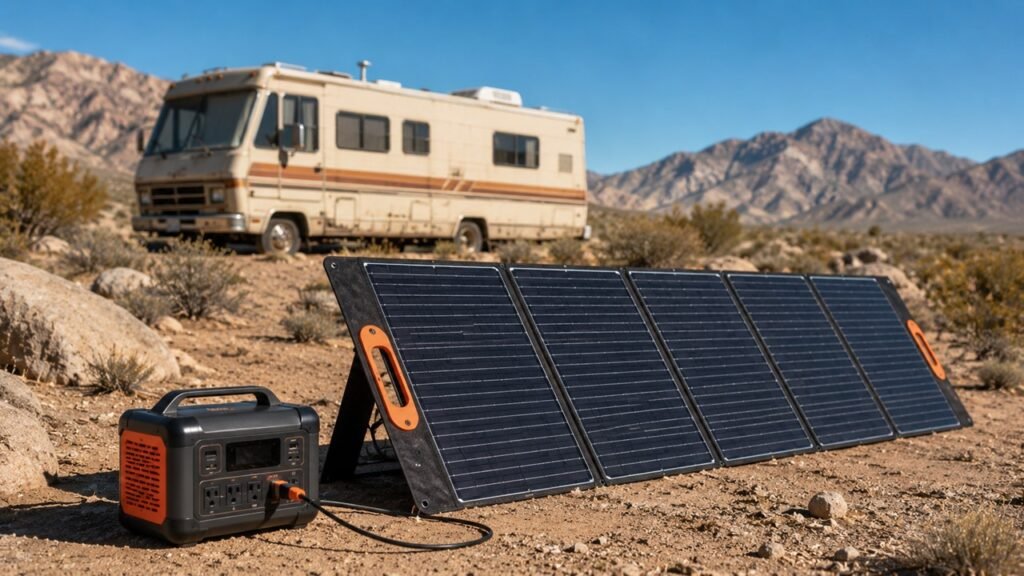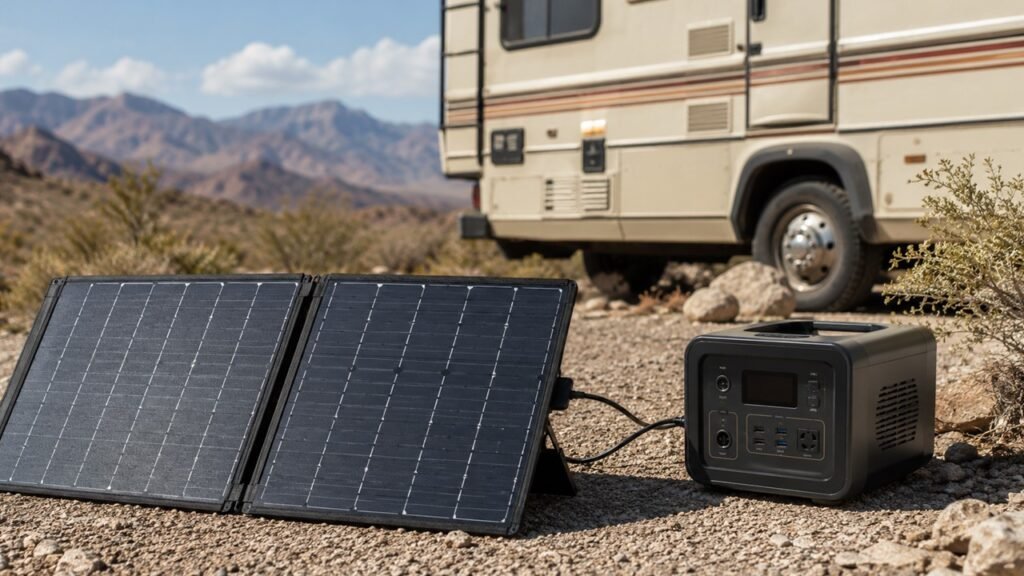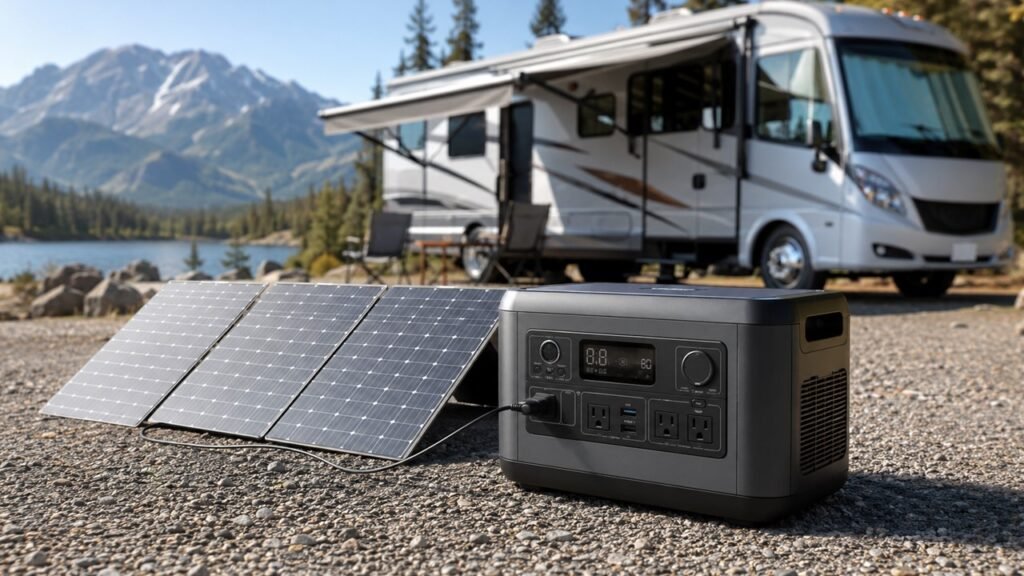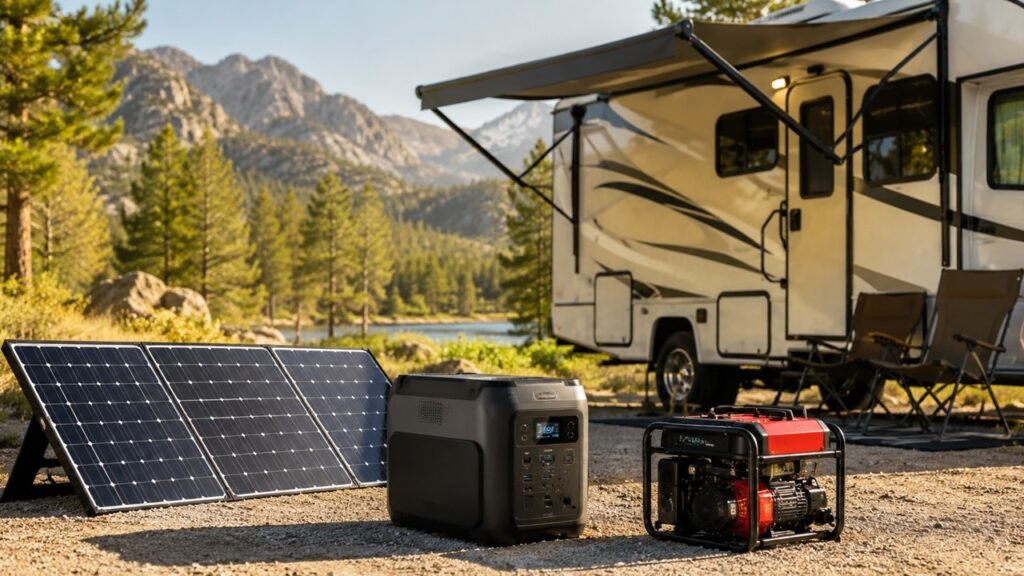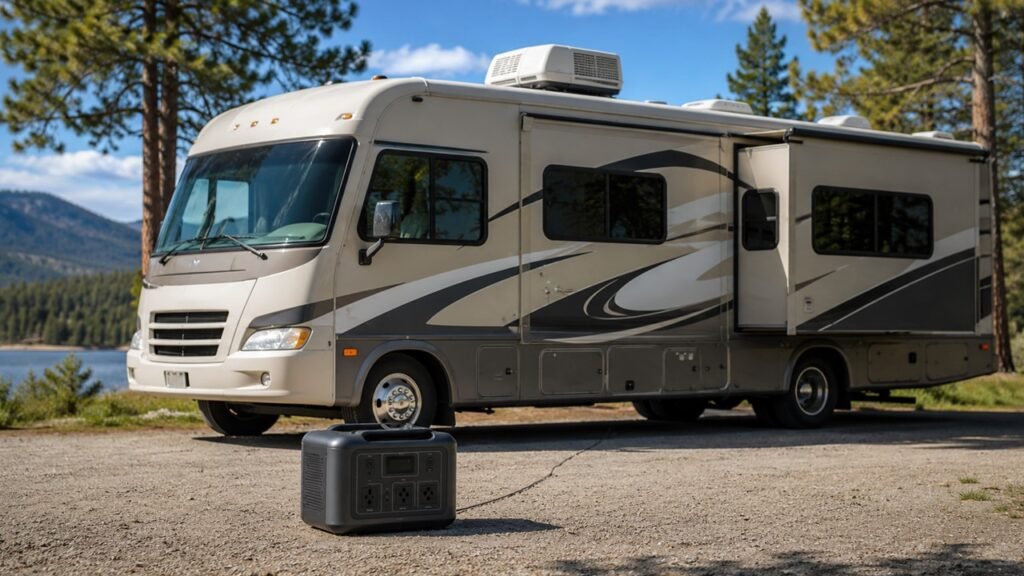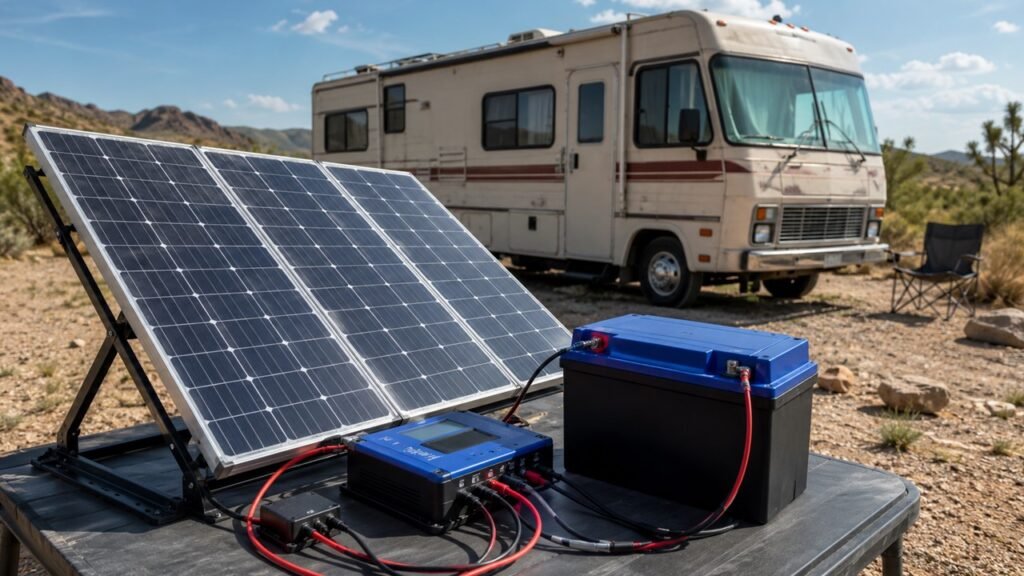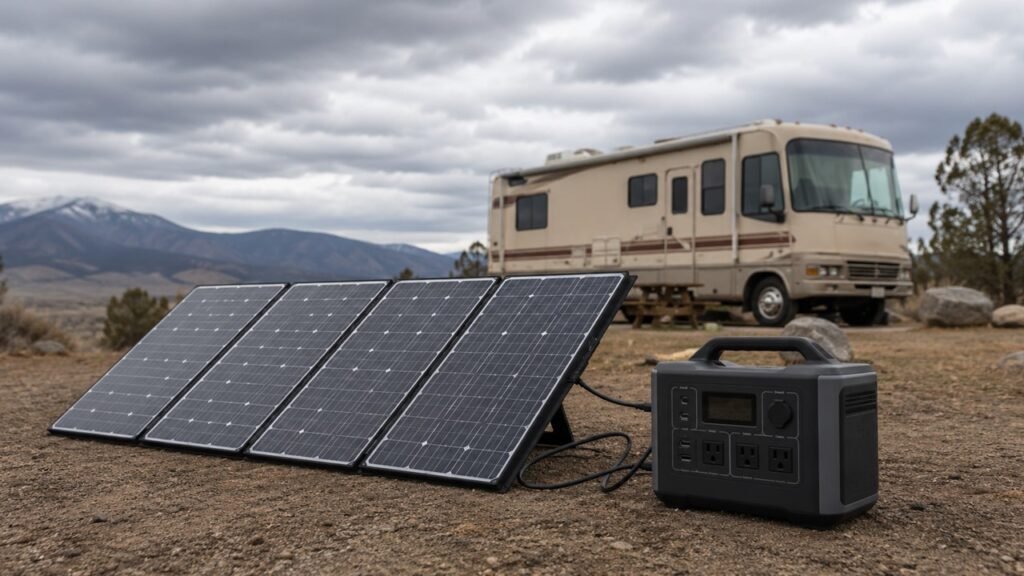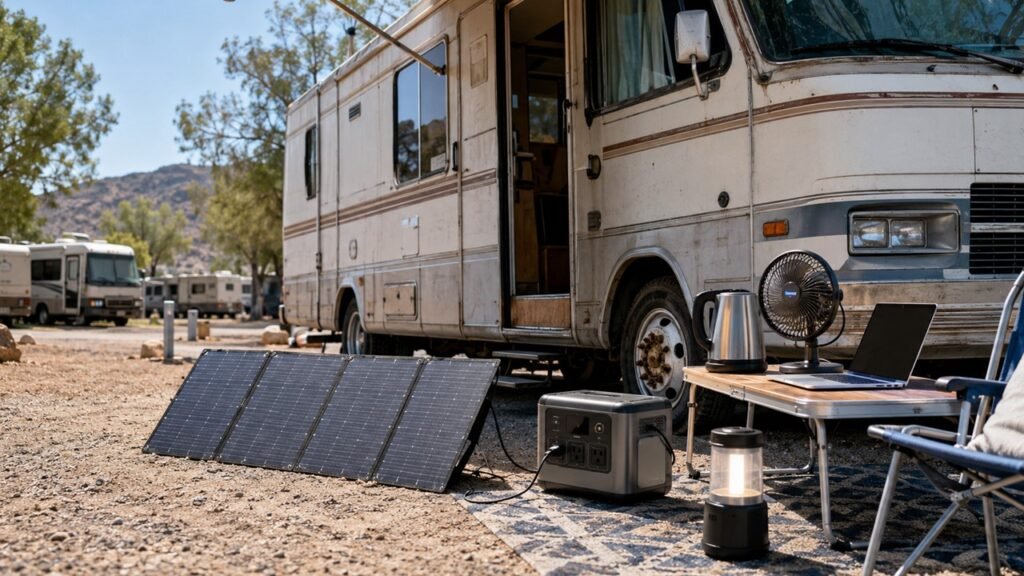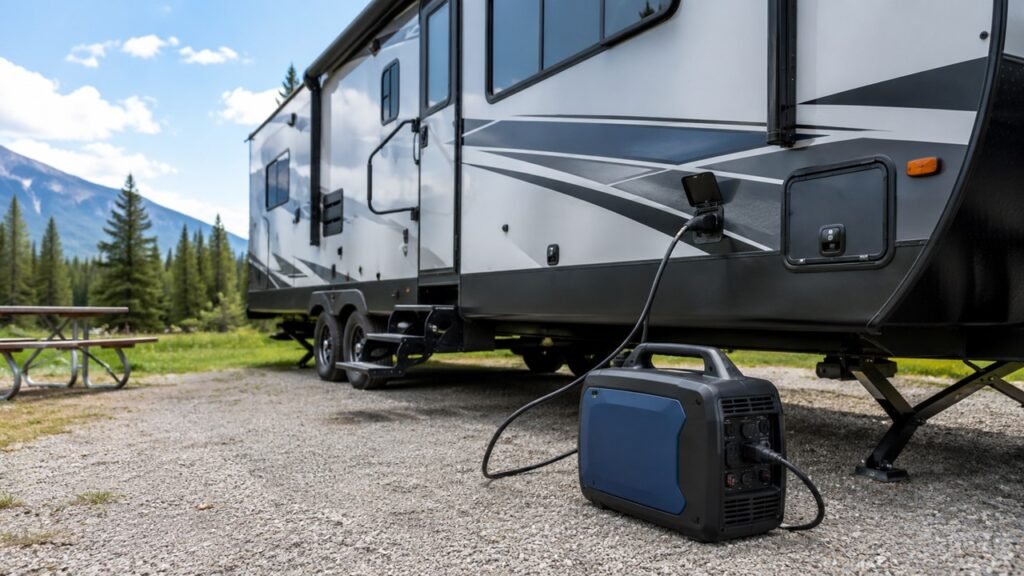
You can run many built-in RV generators continuously for 24 hours or longer if they have enough fuel, proper oil, and safe ventilation. Portable RV generators typically run 6 to 18 hours per tank before needing refueling and checks.
The real question isn’t just how long a generator can run, but how long it can run safely without overheating, running low on oil, or creating carbon monoxide risks.
In this guide, we’ll cover how long RV generators can run, what affects runtime, and how to use them safely.
Key Takeaways
- Built-in RV generators can often run 24+ hours with proper fuel and maintenance
- Portable generators usually run 6–18 hours per tank
- Runtime depends on fuel type, load, and maintenance
- Safety factors like ventilation and carbon monoxide are critical
- Managing power use can extend generator runtime
How Long Can You Run an RV Generator Continuously?
A built-in RV generator can often run continuously for a full day, and sometimes longer, as long as it has fuel and oil. These generators are made for RV electrical systems, so they can power air conditioners, battery chargers, outlets, microwaves, and other RV appliances for extended periods.
A portable RV generator usually cannot run as long without attention. Most portable inverter generators run about 6 to 18 hours on a full tank, depending on the tank size and electrical load. After that, you need to shut it off, let it cool, refuel it safely, and check the oil.
Here is a simple overview:
| Generator Type | Typical Continuous Runtime | Main Limiting Factor | Best Use Case |
| Built-in gas RV generator | 12–24+ hours | RV fuel tank and oil level | Motorhome AC, travel days, overnight use |
| Built-in diesel RV generator | 24+ hours possible | Fuel supply and maintenance | Large Class A RVs, long off-grid stays |
| Built-in propane RV generator | Depends on LP tank size | Propane supply | Cleaner fuel storage, moderate RV loads |
| Portable inverter generator | 6–18 hours per tank | Small fuel tank | Travel trailers and small campers |
| Dual-fuel portable generator | 6–20+ hours | Gasoline or propane supply | Flexible boondocking power |
So, yes, an RV generator can run continuously. But it should not be ignored while running. Fuel, oil, load, heat, airflow, and carbon monoxide safety all matter.
The Real Runtime Limit: Fuel, Oil, Load, and Safety
The real limit is not just the generator’s engine. It is the full operating condition around the generator.
A generator running one air conditioner all night works much harder than a generator only charging batteries and running LED lights. A generator in hot weather works harder than one running in mild weather. A generator with dirty oil or a clogged air filter may struggle even if it has enough fuel.
The biggest runtime factors include:
- Fuel supply: The generator stops when gasoline, diesel, or propane runs low.
- Oil level: Long runtime can lower oil level and increase engine wear.
- Electrical load: Air conditioners, microwaves, and heaters shorten runtime.
- Cooling airflow: Generators need fresh air to stay cool.
- Maintenance condition: Dirty filters, old spark plugs, and bad oil reduce reliability.
- Outside temperature: Hot weather makes the generator and AC work harder.
- Altitude: Higher elevations can reduce engine output.
- Carbon monoxide safety: Exhaust must stay away from people, windows, and vents.
Continuous runtime is possible, but safe continuous runtime requires monitoring. That is especially true when you are running the generator overnight or during hot summer boondocking.
Built-In RV Generators vs Portable RV Generators
The answer changes a lot depending on whether your RV has a built-in generator or you are using a portable unit outside the camper.
Built-In RV Generators
Built-in RV generators are commonly found in Class A, Class B, and Class C motorhomes. Some larger fifth wheels may also have generator compartments, though many trailers rely on portable generators.
A built-in generator is mounted inside a dedicated compartment and connected to the RV’s electrical system. Many gas and diesel models draw fuel from the RV’s main fuel tank. Propane models draw from the RV’s LP system.
Because of this setup, built-in RV generators are usually better for long continuous operation. They do not need to be manually refueled every few hours like small portable generators.
Many built-in gasoline generators also have a fuel cutoff design. They may stop drawing fuel when the RV fuel tank drops near the one-quarter level. This helps prevent you from using all your driving fuel while parked.
That feature is useful, but it also means your generator may stop earlier than expected if your motorhome fuel tank is already low.
Portable RV Generators
Portable generators are common for travel trailers, pop-up campers, smaller fifth wheels, and camper vans. They are useful because they can be moved, stored, and upgraded more easily.
However, a portable generator usually has a smaller fuel tank. That means it may run through the night at light load, but it may not run all night when powering an RV air conditioner.
Portable generators also need more hands-on attention. You must place them safely outside, protect them from rain, keep them away from RV openings, and shut them down before refueling.
Common portable generator limits include:
- Smaller fuel tanks
- More frequent refueling
- Manual oil checks
- Higher theft risk
- Noise restrictions at campgrounds
- Unsafe exhaust if placed too close to the RV
- Overload risk with air conditioners and appliances
Portable inverter generators can be very fuel-efficient, especially in eco mode. Still, they are usually not the best choice for ignored, nonstop, multi-day operation.
Which One Can Run Longer?
A built-in RV generator usually runs longer because it connects to a larger fuel source and is built into the RV system. It is also easier to use for overnight AC, long travel days, and extended boondocking.
A portable generator can still run for many hours, but it needs more active management. You usually need to plan refueling, oil checks, placement, noise control, and weather protection more carefully.
How Fuel Type Affects RV Generator Runtime
Fuel type has a major impact on generator runtime. Gasoline, diesel, and propane all work, but they behave differently.
Gasoline RV Generators
Gasoline generators are common in gas-powered motorhomes and portable RV generators. Gasoline is easy to find and provides strong output for air conditioners and other high-draw appliances.
A built-in gas RV generator may draw from the motorhome’s main fuel tank. This gives it a longer practical runtime than a portable generator with a small tank.
The downside is that gasoline burns faster under heavy loads. It also does not store as well as propane or diesel over long periods. If gasoline sits too long, it can cause fuel system problems.
Gasoline is a good choice for RVers who use their generator regularly and want strong power for air conditioning, microwave use, and battery charging.
Diesel RV Generators
Diesel generators are common in larger diesel Class A motorhomes. They are often built for heavier use and can be more efficient under steady loads.
Diesel is a strong option for long continuous runtime because many diesel motorhomes have large fuel tanks. A diesel generator can support long boondocking stays, multiple appliances, and extended air conditioner use when properly maintained.
The downside is cost. Diesel RV generators are often more expensive to buy and service. They are usually found in larger rigs rather than small trailers.
Propane RV Generators
Propane generators burn cleaner and propane stores well for long periods. This makes propane appealing for RVers who do not use their generator often.
However, propane has lower energy density than gasoline or diesel. That means a propane generator may use fuel faster for the same electrical demand. If you are running an air conditioner for many hours, propane can disappear quickly.
Propane generators are convenient if your RV already has large LP tanks. They can be a good choice for moderate generator use, battery charging, and occasional overnight power.
Dual-Fuel RV Generators
Dual-fuel portable generators can run on gasoline or propane. This gives you more flexibility while boondocking.
You can use gasoline when you need maximum output and propane when you want cleaner storage or backup fuel. However, power output and runtime may change depending on the fuel used.
| Fuel Type | Runtime Strength | Runtime Weakness | Best For |
| Gasoline | Strong output and easy access | Shorter storage life | Gas motorhomes and portable generators |
| Diesel | Efficient under heavy load | Higher cost | Large Class A motorhomes |
| Propane | Clean storage and cleaner burning | Lower energy density | RVs with large LP tanks |
| Dual fuel | Flexible fuel options | Output changes by fuel | Boondocking and backup power |
How Long Will an RV Generator Run on a Full Tank?
An RV generator’s full-tank runtime depends on the tank size, generator size, fuel type, and electrical load.
A small inverter generator running lights and battery charging may run a long time on one gallon of gas. A larger generator running an RV air conditioner may burn through that same gallon much faster.
Here are general estimates:
| Fuel Available | Light Load Runtime | Medium Load Runtime | Heavy AC Load Runtime |
| 1 gallon gasoline | 4–10 hours | 2–4 hours | 1–3 hours |
| 5 gallons gasoline | 20–50 hours | 10–20 hours | 5–15 hours |
| 20 lb propane tank | 8–20 hours | 6–12 hours | 4–8 hours |
| 100 lb propane tank | 40–100+ hours | 30–60 hours | 20–40 hours |
These numbers are only estimates. Your real runtime can be higher or lower depending on the generator model, outside temperature, elevation, fuel quality, and appliance use.
For example, if your generator is running a 15,000 BTU air conditioner in 95°F heat, runtime will be shorter. If it is only charging batteries and running a few lights, runtime will be much longer.
How Much Fuel Does an RV Generator Use Per Hour?
Many RV generators use about 0.3 to 1 gallon of fuel per hour, depending on size and load.
A small inverter generator at light load may use far less than 0.5 gallons per hour. A larger built-in generator running one or two air conditioners may use closer to 0.5 to 1 gallon per hour.
Here is a simple fuel-use guide:
| Generator Load | Common RV Appliances Running | Estimated Fuel Use |
| Light load | Battery charging, LED lights, TV, fans | 0.1–0.3 gal/hr |
| Medium load | Converter, fridge, small appliances, light AC cycling | 0.3–0.6 gal/hr |
| Heavy load | One AC, microwave use, water heater | 0.5–0.9 gal/hr |
| Very heavy load | Two AC units and multiple appliances | 0.8–1.2+ gal/hr |
The heavier the load, the faster fuel disappears. This is why power management matters so much during long generator use.
How Electrical Load Changes Generator Runtime
Your electrical load is one of the biggest runtime factors. A generator does not burn the same amount of fuel every hour in every situation.
A generator running only small devices may run quietly and efficiently. A generator running an air conditioner, microwave, and electric water heater together will burn more fuel and run hotter.
Light Load
Light loads are best for long runtime. These loads do not demand much power, so the generator can work less aggressively.
Common light loads include:
- LED lights
- Phone chargers
- Laptop chargers
- TV
- WiFi router
- Small fans
- Battery charging
- Water pump used briefly
If you are only running light loads, a portable inverter generator may run many hours on a small fuel tank.
Medium Load
Medium loads are still manageable, but they reduce runtime.
Common medium loads include:
- RV refrigerator on electric
- Converter charging low batteries
- Coffee maker used briefly
- Microwave used briefly
- Electric kettle used briefly
- Small kitchen appliances
- One appliance used at a time
You can still run a generator for many hours under medium load, but fuel use will increase.
Heavy Load
Heavy loads shorten runtime quickly. They also increase heat and wear.
Common heavy loads include:
- Rooftop air conditioner
- Electric water heater
- Microwave
- Space heater
- Hair dryer
- Toaster
- Air fryer
- Multiple AC units
Heavy loads are not always a problem. The issue is running too many of them together for too long. If you want the generator to run longer, avoid stacking high-wattage appliances.
Can You Run an RV Generator All Night?
Yes, you can run an RV generator all night if it is properly installed, safely vented, and maintained. Many RVers run a generator overnight to power an air conditioner in hot weather.
However, overnight generator use requires extra care because you may be sleeping while the generator is running. Carbon monoxide safety becomes extremely important.
Before running an RV generator overnight, check these items:
- Make sure carbon monoxide detectors are working.
- Keep generator exhaust away from windows and vents.
- Do not run the generator in an enclosed space.
- Check fuel level before going to sleep.
- Check oil level before long overnight use.
- Avoid unnecessary high-watt appliances overnight.
- Follow campground quiet hours.
- Be mindful of nearby RVs and tents.
Built-in generators are more common for overnight use because they are properly mounted and vented. Portable generators can also run overnight, but placement is critical.
Never place a portable generator under the RV, near the door, near an open window, inside a storage bay, or close to another camper’s sleeping area.
Can You Sleep With an RV Generator Running?
You can sleep with an RV generator running, but only when the setup is safe. The generator must be outside, properly vented, and far enough from RV openings. Your carbon monoxide detectors must also be working.
This matters because carbon monoxide has no smell or color. You may not notice a problem before it becomes dangerous. That is why every RV should have working CO detectors inside the living area.
For safer overnight generator use:
- Test your CO detector before the trip.
- Replace weak detector batteries.
- Keep windows closed near the exhaust side.
- Watch wind direction before sleeping.
- Do not run the generator in a garage or enclosed shelter.
- Do not trust distance alone if exhaust can blow back toward the RV.
If a carbon monoxide alarm sounds, shut off the generator if it is safe to do so, get fresh air immediately, and treat the alarm seriously.
Can You Run an RV Generator While Driving?
Many motorhome owners run a built-in generator while driving. This is often done to power rooftop air conditioners, outlets, or appliances while traveling.
However, this only applies to properly installed built-in generators. These generators are designed to operate as part of the RV system, with correct fuel supply, exhaust routing, and electrical wiring.
Built-In Generator While Driving
A built-in motorhome generator can often run while driving. This is useful when the dash air conditioner cannot cool the whole RV, especially in large Class A or Class C motorhomes.
Some RVers also use the generator while driving to charge house batteries or keep appliances powered. The key is that the generator must be installed correctly and maintained properly.
Before doing this, check your RV and generator manuals. Some RVs may have specific rules or limitations.
Portable Generator While Driving
You should not run a portable generator while driving. Portable generators are not designed for that use.
Running one in a truck bed, on a rear rack, or on a trailer tongue while moving can create safety problems. Vibration, fuel spills, poor exhaust control, unstable mounting, and fire risk all make it a bad idea.
Portable generators should be used only when parked, placed safely outside, and positioned according to safe ventilation rules.
How Often Should You Check Oil During Continuous Generator Use?
Oil is one of the most important parts of continuous generator operation. A generator running for many hours needs proper oil level to stay protected.
You should check the oil before starting the generator. For long continuous use, it is smart to recheck oil during extended runtime periods, especially in hot weather or heavy AC use.
Follow these basic oil-check habits:
- Check oil before starting the generator.
- Recheck oil during long runtime periods.
- Check more often during hot weather.
- Check more often when running air conditioning for hours.
- Use the oil type recommended in the manual.
- Turn the generator off before checking or adding oil.
- Do not rely only on the low-oil shutdown system.
Many RV generator owners use 100 to 150 hours as a common oil-change window, but the exact interval depends on your model. Always follow your generator owner’s manual.
If your generator has been working hard in high heat, dusty campsites, or long boondocking conditions, servicing it sooner may be better.
Can Running an RV Generator Too Long Damage It?
Running an RV generator for a long time does not automatically damage it. In fact, generators are built to run under load. A generator that is properly maintained can handle extended use.
The problem comes from poor operating conditions. Low oil, dirty filters, old fuel, blocked airflow, heavy overloads, and poor maintenance can all cause damage over time.
Long generator runtime becomes risky when:
- The oil level is low.
- The generator overheats.
- The air filter is clogged.
- The load stays near maximum for too long.
- The generator runs in extreme heat.
- The generator is not serviced on time.
- Fuel quality is poor.
- Exhaust flow is blocked.
A generator running at a reasonable load with clean oil, good airflow, and enough fuel can run much longer than one pushed hard in bad conditions.
So the goal is not just longer runtime. The goal is safe, steady, well-managed runtime.
How Long Can an RV Generator Run an Air Conditioner?
An RV generator can run an air conditioner for many hours if it is sized correctly and has enough fuel. However, air conditioning is usually the biggest generator load in an RV.
A 13,500 BTU or 15,000 BTU rooftop AC can demand a lot of starting power and steady running power. Once the compressor cycles on and off, fuel use changes throughout the day or night.
One RV Air Conditioner
One RV air conditioner is manageable for many built-in generators and larger portable inverter generators. A properly sized generator can run one AC overnight if the fuel supply is enough.
Runtime depends on:
- AC size
- Generator size
- Outside temperature
- Thermostat setting
- RV insulation
- Shade
- Battery charging load
- Other appliances running at the same time
A hot, sunny campsite will shorten runtime. A shaded RV with good insulation will help the AC cycle less often, saving fuel.
Two RV Air Conditioners
Running two RV air conditioners requires a larger generator. This setup is common in 50-amp RVs, large fifth wheels, and Class A motorhomes.
A 5,500-watt or larger built-in generator is often used for two AC units. However, fuel use will be much higher than running one AC.
You also need to avoid turning on several high-watt appliances at the same time. Two AC units plus a microwave, electric water heater, or hair dryer may overload the generator.
AC Runtime Impact
| RV AC Setup | Generator Demand | Runtime Impact |
| No AC, battery charging only | Low | Longest runtime |
| One 13,500 BTU AC | Medium to high | Moderate fuel use |
| One 15,000 BTU AC | High | Shorter runtime |
| Two AC units | Very high | Heavy fuel use |
| AC + microwave + water heater | Very high | Overload risk |
If air conditioning is your main reason for running the generator, focus on reducing cooling demand. Shade, fans, window covers, and better thermostat settings can all stretch runtime.
How to Extend RV Generator Runtime
The easiest way to run your RV generator longer is to reduce electrical load. You do not always need a bigger generator. Sometimes you just need better power management.
Use these tips to extend runtime:
- Run only the appliances you need.
- Turn off the electric water heater before using the microwave.
- Use propane mode for the RV refrigerator when possible.
- Set the air conditioner a few degrees higher.
- Use fans to move cool air around the RV.
- Park in shade when possible.
- Close blinds and reflective window covers during hot afternoons.
- Keep doors and windows closed while cooling.
- Avoid using a space heater on generator power.
- Use the microwave, coffee maker, and toaster one at a time.
- Keep the generator air filter clean.
- Change oil on schedule.
- Use eco mode on portable inverter generators when load is light.
- Install an AC soft starter to reduce startup surge.
- Charge batteries during the day instead of running all night.
- Add solar panels to reduce generator hours.
Small changes can add hours of runtime. For example, turning off the electric water heater and running the refrigerator on propane can leave more generator power for the air conditioner.
When Should You Shut Down an RV Generator?
Even if your generator can run continuously, there are times when you should shut it down.
Turn off your RV generator when:
- The oil level is low.
- Fuel is nearly empty.
- The generator sounds abnormal.
- The generator vibrates more than usual.
- Exhaust is blowing toward your RV.
- Exhaust is blowing toward another camper.
- A carbon monoxide alarm sounds.
- You need to refuel.
- You need to check or add oil.
- The generator overheats.
- You smell fuel.
- You see a fuel leak.
- Campground quiet hours begin.
- The generator is overloaded.
- Weather makes operation unsafe.
Do not ignore warning signs. A generator that sounds different, smells unusual, or shuts down unexpectedly should be checked before restarting.
RV Generator Safety Rules for Continuous Use
Safety matters even more during continuous generator operation. A generator that runs for hours creates heat, exhaust, vibration, and fuel-handling risks.
Carbon Monoxide Safety
Carbon monoxide is the biggest generator safety concern. It can enter an RV through windows, vents, doors, roof openings, and small gaps.
Follow these carbon monoxide safety rules:
- Keep working CO detectors inside the RV.
- Test detectors before each trip.
- Replace old or expired detectors.
- Never sleep without a working CO detector.
- Keep exhaust away from doors and windows.
- Do not run a generator in a garage.
- Do not run a generator in an enclosed shelter.
- Be careful when parked close to other RVs.
- Watch wind direction before overnight operation.
Carbon monoxide risk is one reason portable generator placement matters so much. The generator should be outside and far enough away that exhaust cannot drift back into the RV.
Refueling Safety
Never refuel a gasoline generator while it is running. You should shut it off and let it cool before adding fuel.
Gasoline spilled on hot engine parts can ignite. Even small spills can be dangerous around a hot muffler or exhaust area.
For safer refueling:
- Turn the generator off.
- Let it cool before adding fuel.
- Refuel in a well-ventilated area.
- Wipe up spills immediately.
- Keep fuel containers away from heat.
- Store gasoline safely and legally.
- Do not smoke near fuel.
Built-in RV generators usually avoid frequent manual refueling because they draw from the RV’s fuel tank. Portable generators need more caution because refueling happens more often.
Noise and Campground Etiquette
Generator noise matters at campgrounds. Some campgrounds allow generator use only during specific hours. Others may not allow generators at all.
Even in boondocking areas, quiet operation is still respectful. Avoid running a loud generator close to tents, neighboring RVs, or sleeping areas.
If you need generator power at night, use the quietest safe setup possible. A well-maintained inverter generator or built-in RV generator is usually better than a loud open-frame generator.
Monthly Exercise: How Long Should You Run an RV Generator for Maintenance?
RV generators should not sit unused for months. Regular exercise helps keep the generator healthy.
Running the generator under load helps remove moisture, lubricate parts, and keep the fuel system from sitting idle too long. This is especially important for gasoline generators.
A common practice is to run the generator every month under load for a short period. Some owners run the air conditioner or another meaningful load during this exercise. However, the exact timing and load should follow your owner’s manual.
Generator exercise is important because a generator that sits too long may become harder to start. Fuel can gum up parts, moisture can build inside the system, and electrical components may not stay in good working condition.
If you want reliable continuous runtime during trips, do not wait until the first hot camping day to test your generator.
Common RV Generator Runtime Mistakes
Many RV generator problems come from simple mistakes. Avoiding these mistakes can help your generator run longer and safer.
Common mistakes include:
- Assuming every generator can run 24/7
- Running the generator without checking oil
- Refueling a hot portable generator
- Placing a portable generator too close to the RV
- Ignoring carbon monoxide detectors
- Running too many appliances at once
- Using the electric water heater during AC use
- Forgetting campground generator hours
- Letting gasoline sit too long
- Skipping air filter maintenance
- Ignoring spark plug service
- Running near full load for too many hours
- Blocking generator ventilation
- Using damaged extension cords
- Running a portable generator in wet weather without protection
A generator is most reliable when it is treated as an engine, not just a power outlet. It needs fuel, oil, airflow, service, and safe placement.
Simple Runtime Formula for RV Owners
You can estimate generator runtime with a simple formula:
Estimated runtime = usable fuel ÷ gallons burned per hour
For example, if your generator burns 0.5 gallons per hour and you have 5 usable gallons, your estimated runtime is:
5 ÷ 0.5 = 10 hours
This formula gives you a starting point. It will not be perfect because generator load changes during real RV use.
Air conditioners cycle on and off. Battery chargers draw more power when batteries are low. Microwaves and coffee makers only run for short periods. Outside temperature also changes throughout the day.
Still, this formula helps you plan fuel needs before a boondocking trip.
Real-World RV Generator Runtime Examples
Different RVers use generators in different ways. Here are a few realistic examples.
Weekend Camper With a Portable Generator
A weekend camper with a small travel trailer may use a portable inverter generator to charge batteries, run lights, power a TV, and use a coffee maker in the morning.
With light loads, the generator may run most of the day on a small amount of fuel. But if the camper runs a rooftop air conditioner, runtime drops quickly.
This setup works best when the owner uses high-watt appliances one at a time and avoids running the AC all day.
Class C Motorhome Running One AC Overnight
A Class C motorhome with a built-in gas generator can often run one rooftop AC overnight if the RV has enough fuel and the generator is in good condition.
Before sleeping, the owner should check fuel level, oil level, carbon monoxide detectors, and exhaust direction. It is also smart to turn off unnecessary appliances so the generator is not overloaded during the night.
This is one of the most common reasons RVers run generators continuously.
50-Amp Class A Running Two AC Units
A large Class A motorhome may have two rooftop AC units and a larger built-in generator. This setup can run for long periods, but fuel use will be much higher.
The owner should avoid using the microwave, electric water heater, washer/dryer, and two AC units all at once. Power management helps the generator run cooler and more efficiently.
For long summer boondocking, fuel planning becomes very important.
Boondocking With Solar and Generator Backup
Many RVers use solar panels during the day and the generator only when needed. Solar can help charge batteries, run small 12-volt loads, and reduce generator hours.
The generator then handles heavy jobs like air conditioning, microwave use, or fast battery charging. This setup can greatly reduce fuel use and noise.
For long off-grid stays, a solar-and-generator combination is often better than running the generator all day.
Should You Run an RV Generator Continuously?
You can run an RV generator continuously when needed, but it should not always be your first choice.
Continuous generator use makes sense during hot weather, overnight AC needs, long travel days, battery charging, or off-grid camping without enough solar. It may also be needed during emergencies or power outages.
However, running the generator all day wastes fuel if your needs are small. Batteries, solar panels, propane appliances, fans, shade, and smart power management can reduce generator time.
The best approach is simple: run the generator when you truly need it, maintain it properly, and avoid unnecessary heavy loads.
Final Verdict
A built-in RV generator can often run continuously for 24 hours or longer if it has enough fuel, proper oil level, good airflow, and safe exhaust clearance. A portable RV generator usually runs 6 to 18 hours per tank and should be shut down for refueling, cooling, and oil checks.
The real runtime depends on generator type, fuel source, fuel tank size, electrical load, outside temperature, maintenance condition, and carbon monoxide safety. For long generator use, always follow your owner’s manual, check oil regularly, manage heavy appliances, and keep working carbon monoxide detectors inside the RV.
Related FAQs
Can I run my RV generator 24 hours a day?
Yes, many built-in RV generators can run 24 hours a day when properly maintained. You still need enough fuel, correct oil level, safe ventilation, and working carbon monoxide detectors.
Can I sleep with my RV generator running?
Yes, you can sleep with an RV generator running if the exhaust is safely vented away from the RV. Always use working carbon monoxide detectors and never run a generator in an enclosed space.
How long can a portable RV generator run continuously?
Most portable RV generators run around 6 to 18 hours per tank, depending on tank size and load. They should be shut down before refueling and checked during long use.
Is it bad to run an RV generator all night?
It is not automatically bad if the generator is maintained and safely positioned. Problems happen when oil is low, exhaust is unsafe, fuel is mishandled, or the generator is overloaded.
How much fuel does an RV generator use per hour?
Many RV generators use about 0.3 to 1 gallon per hour. Light loads use less fuel, while air conditioners, microwaves, and electric heaters increase fuel use quickly.
Can I run my RV generator while driving?
Many built-in motorhome generators can run while driving to power rooftop AC or appliances. Portable generators should not be operated while driving because they are not designed for that use.
How often should I check oil when running an RV generator continuously?
Check oil before starting the generator and recheck it during long runtime periods. Follow your owner’s manual for exact oil-check and oil-change intervals.
Will my RV generator shut off when the fuel tank is low?
Many built-in gas RV generators stop drawing fuel when the motorhome fuel tank reaches around one-quarter full. This helps leave enough fuel for driving.
Can an RV generator overheat from running too long?
Yes, overheating can happen if airflow is blocked, the load is too high, the weather is very hot, or maintenance is poor. Keep vents clear and avoid running near maximum load for long periods.
What is the safest way to run an RV generator continuously?
Check fuel and oil, reduce unnecessary loads, keep exhaust away from openings, follow the manual, and use working carbon monoxide detectors. Never refuel a hot or running portable generator.

Daniel Brooks writes about RV living, gear, and travel planning with a focus on everyday usability. His guides break down complex topics into simple advice for real RV owners. He reviews products with long-term use in mind, not marketing hype.