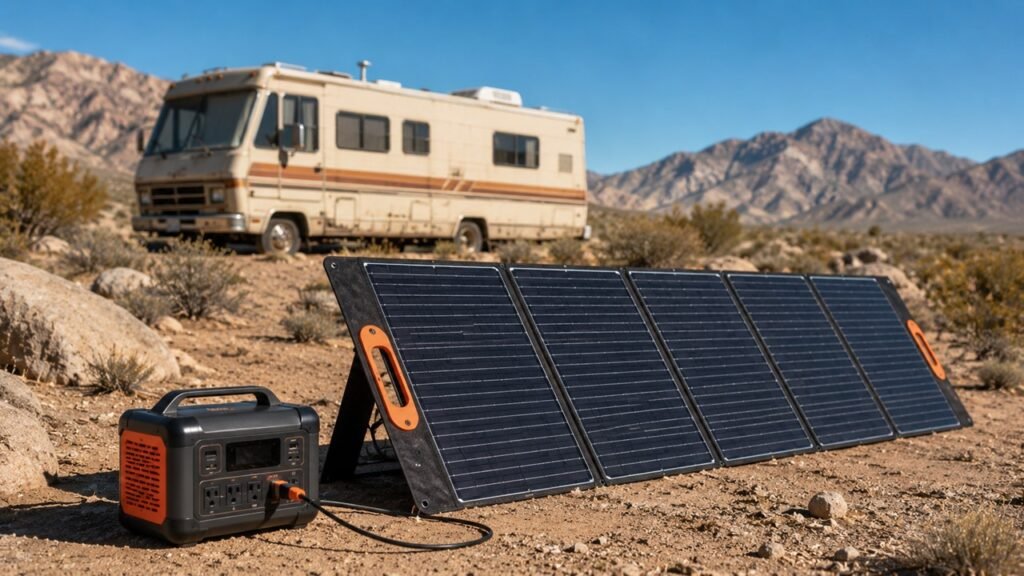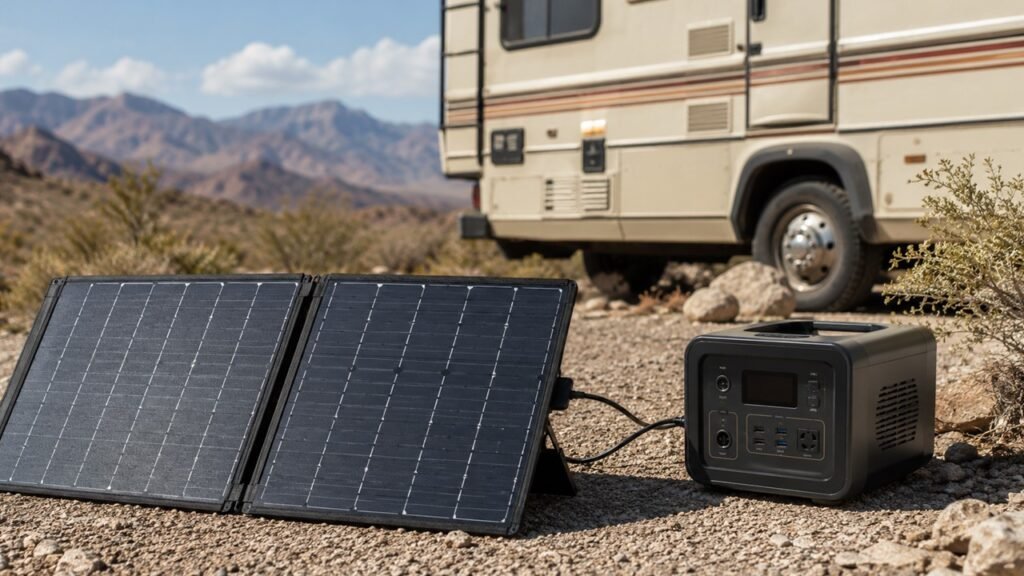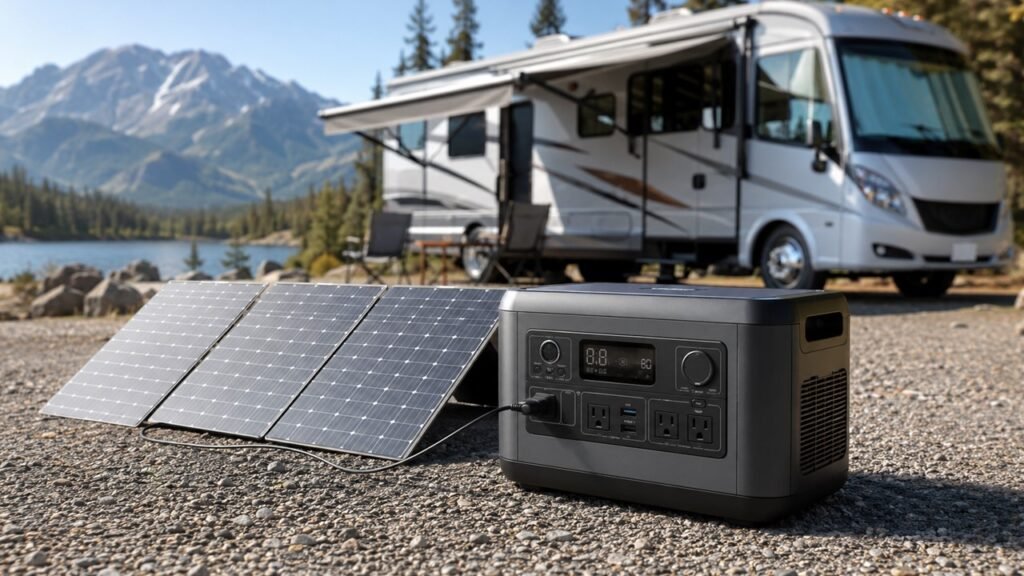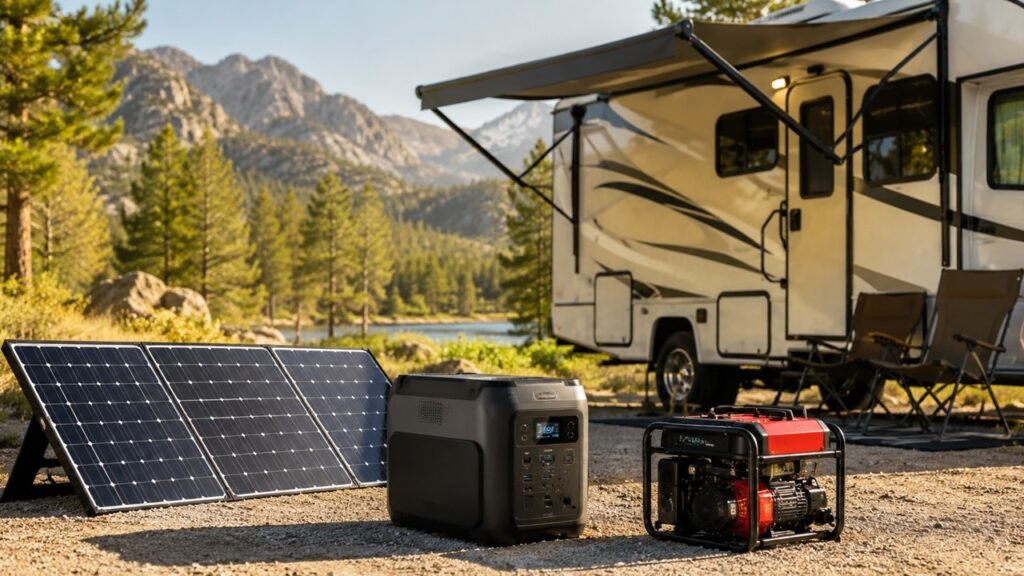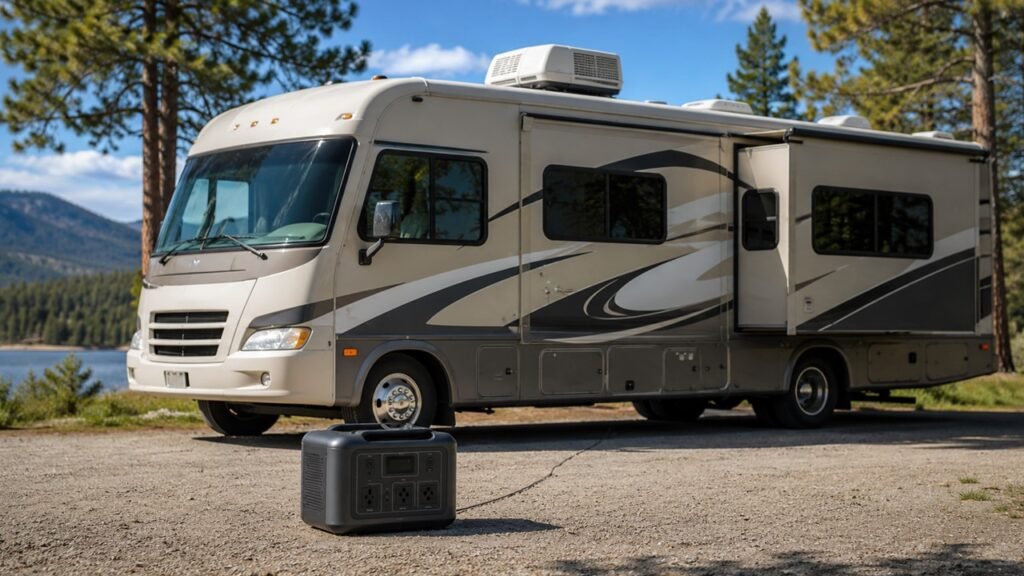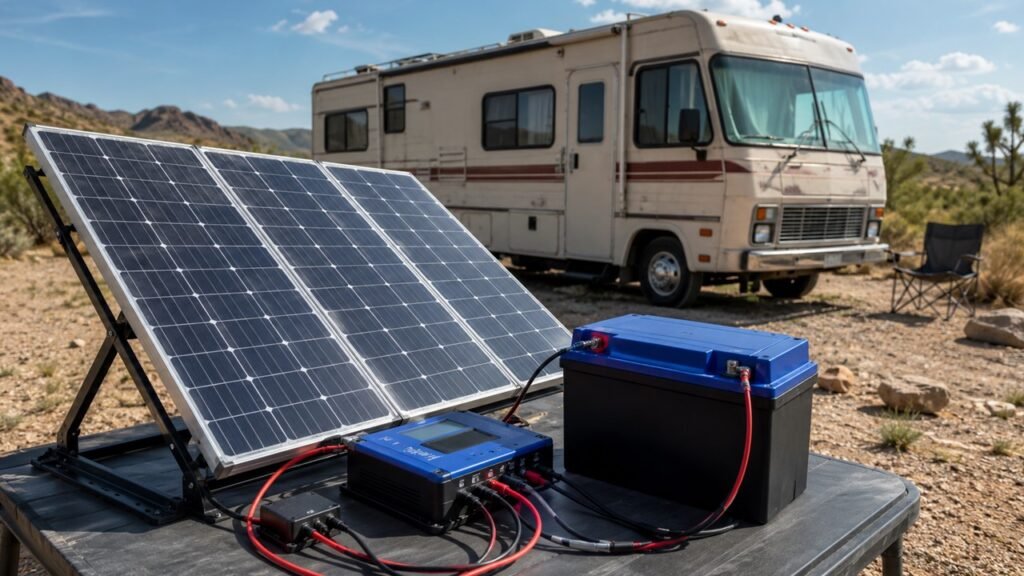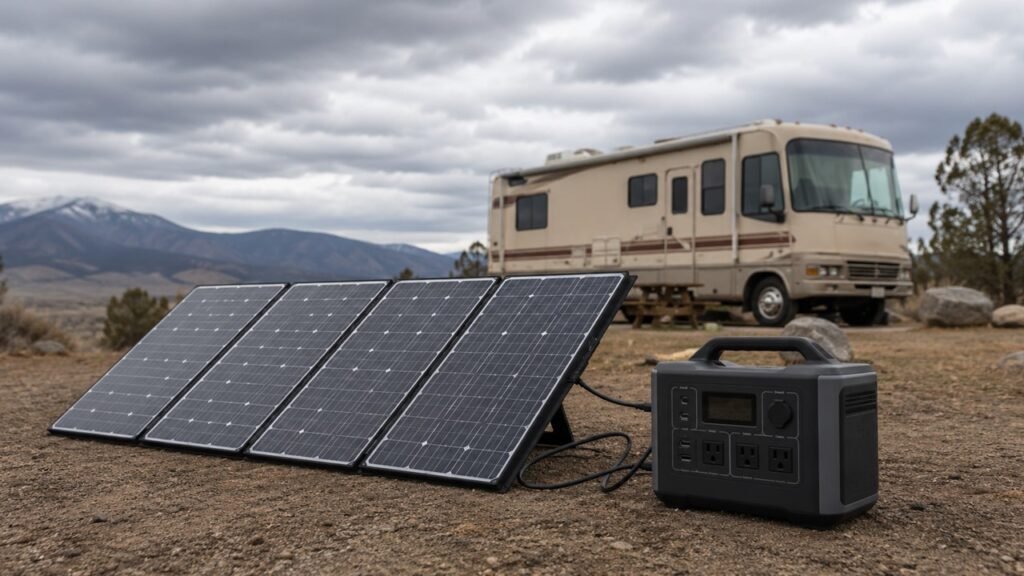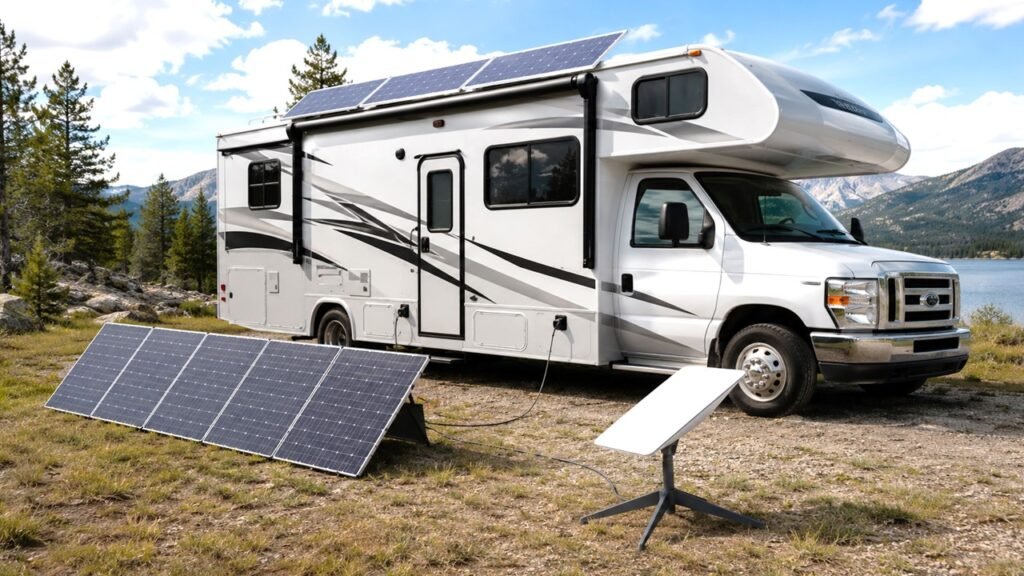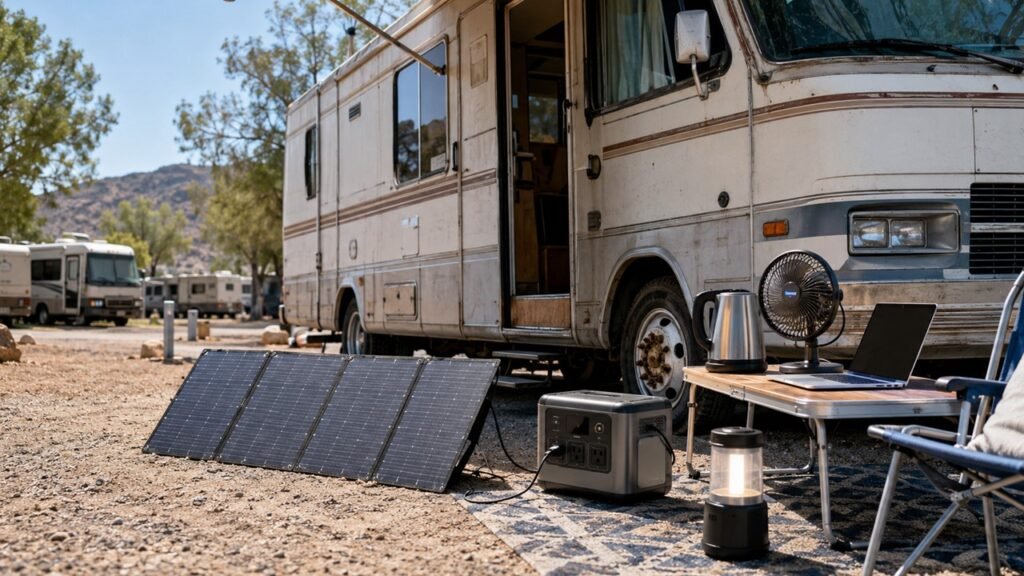
If you’re wondering what appliances an RV solar generator can power, the simple answer is this: it can run most everyday RV essentials, including lights, phones, laptops, fans, TVs, CPAP machines, water pumps, and many RV refrigerators. With a larger setup, it can also power microwaves, coffee makers, induction cooktops, and even some RV air conditioners.
The key is matching the solar generator to the appliance. Small devices need very little power, while heat-making appliances and compressor-based appliances need more inverter output and battery capacity. So before you plug everything in, you need to look at watts, surge power, and runtime.
Key Summary
- RV solar generators power small devices easily because phones, laptops, lights, fans, and routers use low wattage.
- RV refrigerators, TVs, CPAP machines, water pumps, and portable ice makers need moderate battery capacity for reliable use.
- Microwaves, coffee makers, hair dryers, induction cooktops, and toaster ovens require a strong inverter because they draw high watts.
- RV air conditioners need a large solar generator, usually 3,000W or higher inverter output, a big battery, and often a soft start device.
- Runtime depends on watt-hours, appliance wattage, inverter efficiency, and how many devices run at the same time.
Can an RV Solar Generator Power Appliances?
Yes, an RV solar generator can power many RV appliances, but only when the system is sized correctly. It is not about whether solar power works. It is about whether your solar generator has enough inverter output and battery capacity for the appliances you want to run.
A solar generator is basically a portable power station with a battery, inverter, charge controller, outlets, and solar input. The inverter decides which appliances can start and run. The battery capacity decides how long those appliances can keep running before the unit needs to be recharged.
Low-watt devices are easy for most RV solar generators. Phones, laptops, LED lights, fans, routers, and small TVs usually do not stress the system much. Heat-producing appliances and compressor-based appliances are harder because they either use a lot of power or need extra startup surge watts.
RV Solar Generator Appliance Power Chart
This chart gives you a quick idea of what an RV solar generator can usually power. The exact result depends on your generator size, inverter rating, battery capacity, and the appliance’s real wattage.
| Appliance | Typical Running Watts | Surge Watts? | Can Most RV Solar Generators Power It? | Notes |
| Phone charger | 5W to 20W | No | Yes | Easy load |
| Laptop | 45W to 100W | No | Yes | Good for small systems |
| LED lights | 5W to 30W | No | Yes | Very solar-friendly |
| Fan | 20W to 80W | No | Yes | Good for overnight use |
| Wi-Fi router | 10W to 30W | No | Yes | Low continuous load |
| TV | 50W to 150W | No | Yes | Runtime depends on screen size |
| CPAP machine | 30W to 90W | No | Yes | Use DC mode when possible |
| RV fridge | 100W to 300W | Yes | Usually | Compressor surge matters |
| Water pump | 50W to 150W | Yes | Usually | Runs in short cycles |
| Microwave | 900W to 1,500W | Sometimes | Large units only | High draw but short runtime |
| Coffee maker | 600W to 1,500W | No | Large units only | Drains battery quickly |
| Hair dryer | 1,200W to 1,875W | No | Large units only | Very high draw |
| Induction cooktop | 1,000W to 1,800W | No | Large units only | Use lower heat settings |
| Toaster oven | 1,200W to 1,800W | No | Large units only | Heat loads drain fast |
| RV air conditioner | 1,200W to 2,000W running | Yes | Only high-capacity systems | Soft start often helps |
| Electric space heater | 750W to 1,500W | No | Not ideal | Uses too much battery |
Small Appliances an RV Solar Generator Can Power Easily
Small appliances are the easiest match for an RV solar generator. These devices use low wattage, so even a smaller portable power station can handle them without draining the battery too quickly.
Phones, Tablets, Cameras, and Laptops
Phones, tablets, cameras, and laptops are some of the easiest devices to run from an RV solar generator. They use very little power compared with kitchen appliances, heaters, or air conditioners.
Even a small 300Wh to 500Wh power station can charge phones and laptops multiple times. This makes a small solar generator useful for weekend campers, remote workers, and RVers who mainly need basic charging power.
LED Lights, Fans, and Wi-Fi Routers
LED lights, fans, and Wi-Fi routers are ideal solar generator loads because they use low wattage and can often run for many hours. These are the types of appliances that make RV life more comfortable without putting heavy stress on the battery.
A fan may run overnight on many mid-sized power stations, while LED lights can run for a very long time. A Wi-Fi router also uses very little power, although your total runtime will drop if you pair it with a laptop, TV, or satellite internet system.
CPAP Machines and Medical Devices
Many CPAP machines use around 30W to 90W, which makes them possible to run from many RV solar generators. Runtime depends on the CPAP model, pressure settings, battery size, and whether the heated humidifier is turned on.
Humidifier heating can increase power use, so it is always better to check the device label or manual before relying on a solar generator overnight. Use manufacturer-approved power settings and cables when available.
Safety note: do not rely on a solar generator as your only power source for critical medical equipment. Keep backup power available, especially during long off-grid trips or cloudy weather.
Mid-Sized RV Appliances a Solar Generator Can Usually Power
Mid-sized RV appliances need more planning than small electronics, but many solar generators can still run them. The main things to check are running watts, startup surge, and how long you need the appliance to operate.
RV Refrigerator or Mini Fridge
An RV solar generator can usually power an RV refrigerator or mini fridge if the inverter is strong enough to handle the compressor startup surge. The fridge may not use high wattage all the time, but it can pull extra power for a moment when the compressor starts.
A portable power station with a pure sine wave inverter is usually the better choice for fridge compressors and sensitive electronics. Pure sine wave output delivers cleaner power and is safer for appliances designed for household-style AC power.
DC compressor fridges are usually more efficient than residential AC refrigerators. If you camp off-grid often, a 12V fridge can stretch battery life much better than a full-size AC fridge.
TV, Sound System, and Entertainment Gear
TVs, sound systems, and basic entertainment gear are manageable loads for most mid-sized RV solar generators. A modern TV may only use 50W to 150W, depending on its size and brightness settings.
Runtime drops when you add more devices to the same setup. A TV, gaming console, speaker system, streaming device, and Starlink-style internet setup can use much more power together than the TV alone.
Water Pump and Small Kitchen Appliances
An RV water pump is usually easy for a solar generator to handle because it runs in short bursts. It may need startup surge, but it does not usually run long enough to drain much battery.
Small kitchen appliances like blenders, rice cookers, and slow cookers can also work if the inverter supports their wattage. The key is to check the appliance label and avoid running several high-draw appliances at the same time.
High-Watt Appliances That Need a Large RV Solar Generator
High-watt appliances are where many RV owners run into problems. These appliances may work with a large solar generator, but they need strong inverter output and enough battery capacity to avoid quick drain.
Microwave
A microwave can run from an RV solar generator if the inverter is large enough. In most cases, you should look for at least a 1,500W to 2,000W inverter, depending on the microwave.
One thing many RVers miss is that microwave cooking wattage and input wattage are not the same. A microwave advertised as 900W may actually pull 1,300W or more from the power source, so always check the input rating on the label.
Coffee Maker
A coffee maker can run on a large RV solar generator, but it uses a lot of power for a short time. Many coffee makers draw 600W to 1,500W while heating water.
That means it may only run for a few minutes, but it can still take a noticeable chunk out of your battery. If you want to save power, a manual coffee method is usually more solar-friendly.
Hair Dryer and Electric Kettle
Hair dryers and electric kettles are technically possible with a large enough solar generator, but they are not solar-friendly appliances. They demand high inverter output and drain battery capacity fast.
A hair dryer can use 1,200W to 1,875W, which is more than many small solar generators can handle. An electric kettle also pulls heavy power because it heats water quickly.
Induction Cooktop and Toaster Oven
Induction cooktops and toaster ovens can run on high-capacity RV solar generators, but they need careful use. Both appliances can pull 1,000W to 1,800W, depending on the setting.
If you use an induction cooktop, lower heat settings will help reduce power draw. Avoid running it with a microwave, coffee maker, air conditioner, or hair dryer at the same time because the combined load may overload the inverter.
Can an RV Solar Generator Run an RV Air Conditioner?
Yes, an RV solar generator can run an RV air conditioner, but only with a high-capacity system. This is one of the hardest appliances to power because an RV AC needs both high startup power and steady running power.
Most rooftop RV AC units need a strong inverter, a large battery bank, and enough solar input to recharge the system. For realistic use, a 3,000W+ inverter, 4,000Wh to 6,000Wh+ battery capacity, and a soft start device are usually better starting points.
Small solar generators are not practical for RV air conditioners. They may overload when the compressor starts, or they may drain too quickly even if they can run the AC for a short time.
Appliances an RV Solar Generator Should Not Power for Long
Some appliances may technically run from a solar generator, but that does not mean they are practical for off-grid RV use. These loads can drain your battery fast or overload a smaller inverter.
- Electric space heaters because they convert battery power directly into heat and drain capacity very fast.
- Large electric water heaters because they need high sustained wattage.
- Full-size ovens because they use heavy heating elements.
- Multiple high-watt appliances at once because the inverter may overload.
- Old or inefficient refrigerators because they may have high surge demand.
- Any appliance with damaged cords, loose plugs, or unknown wattage.
How to Know If Your RV Solar Generator Can Power an Appliance
Before you plug in an appliance, check two things: whether your RV solar generator can start it, and whether it can run it long enough to be useful. This comes down to running watts, surge watts, inverter output, and battery capacity.
Step 1: Check the Appliance Running Watts
Running watts show how much power an appliance needs during normal operation. For example, a fan may use 60W, while a microwave may use 1,200W or more while running.
You can usually find this number on the appliance label, in the user manual, or on the manufacturer’s website. For a more accurate reading, you can also use a plug-in power meter to see how many watts the appliance actually pulls during use.
Step 2: Check the Startup Surge Watts
Some appliances need extra power for a few seconds when they first start. This is called startup surge, peak wattage, or starting watts.
Fridges, RV air conditioners, water pumps, and other compressor-based appliances often need more power at startup than they need while running. This is why an appliance may look safe based on running watts but still trip or overload a small solar generator when it turns on.
Step 3: Compare It With Inverter Output
The inverter is the part of the solar generator that turns battery power into usable AC power for household-style outlets. It has two important ratings: continuous watts and surge watts.
Continuous watts tell you how much power the generator can supply steadily. Surge watts tell you how much extra power it can provide for a short startup burst. Your solar generator’s continuous output should be higher than the total running load of all appliances you plan to use at the same time.
Step 4: Compare It With Battery Capacity
Battery capacity is measured in watt-hours, or Wh. This tells you how much stored energy the solar generator has and how long it can run an appliance.
A bigger battery usually gives you longer runtime, but it does not always mean the inverter is stronger. One solar generator may have a large battery but a smaller inverter, while another may have a stronger inverter but less storage. For RV appliances, you need to check both battery capacity and inverter output.
Simple Runtime Formula for RV Appliances
You can estimate appliance runtime with a simple formula. It will not be perfect, but it gives you a useful real-world starting point before you depend on your solar generator off-grid.
Runtime = Battery Capacity in Wh × 0.85 ÷ Appliance Watts
The 0.85 accounts for inverter loss and real-world efficiency. Solar generators lose some power when converting stored battery energy into AC power, so using the full battery number without a buffer can make runtime estimates look too high.
| Appliance | Watts | 1,000Wh Solar Generator Runtime | 2,000Wh Solar Generator Runtime | 4,000Wh Solar Generator Runtime |
| Phone charger | 10W | 85 hours | 170 hours | 340 hours |
| LED lights | 30W | 28 hours | 56 hours | 113 hours |
| Fan | 60W | 14 hours | 28 hours | 56 hours |
| TV | 100W | 8.5 hours | 17 hours | 34 hours |
| CPAP | 60W | 14 hours | 28 hours | 56 hours |
| Mini fridge | 150W | 5.6 hours | 11 hours | 22 hours |
| Microwave | 1,200W | 42 minutes | 1.4 hours | 2.8 hours |
| Coffee maker | 1,000W | 51 minutes | 1.7 hours | 3.4 hours |
| RV AC | 1,500W | 34 minutes | 1.1 hours | 2.2 hours |
Actual fridge and AC runtime can vary because compressors cycle on and off. A fridge may not pull full wattage all day, while an RV air conditioner may use more or less power depending on heat, thermostat setting, insulation, and startup surge.
What Size RV Solar Generator Do You Need by Appliance Type?
The right size depends on what you want to run, not just the number printed on the solar generator. Small electronics need very little power, while cooking appliances and air conditioners need a much larger inverter and battery.
| Usage Type | Appliances You Want to Run | Suggested Inverter Output | Suggested Battery Capacity |
| Light use | Phones, lights, fans, laptop, router | 300W to 700W | 500Wh to 1,000Wh |
| Weekend RV use | Lights, fan, TV, laptop, small fridge | 1,000W to 1,800W | 1,000Wh to 2,000Wh |
| Regular off-grid camping | Fridge, TV, CPAP, microwave, coffee maker | 2,000W to 3,000W | 2,000Wh to 4,000Wh |
| Heavy appliance use | Microwave, induction cooktop, hair dryer, fridge | 3,000W+ | 3,000Wh to 6,000Wh |
| RV air conditioner use | Rooftop AC plus essentials | 3,000W to 5,000W+ | 4,000Wh to 8,000Wh+ |
Can You Power Multiple RV Appliances at the Same Time?
Yes, you can power multiple RV appliances at the same time if their combined wattage stays below the solar generator’s continuous inverter rating. You also need enough surge capacity if one of those appliances has a compressor or motor.
This is where many RV owners get caught. A fridge, TV, lights, and laptop may look fine, but if you add a microwave or hair dryer, the total load can jump quickly.
- Safe combination: LED lights, phone chargers, fan, laptop, and router.
- Usually safe combination: fridge, TV, lights, and water pump.
- Risky combination: microwave, coffee maker, fridge, and hair dryer.
- Not ideal combination: RV air conditioner plus induction cooktop or microwave.
Appliances to Use With an RV Solar Generator
The best appliances for an RV solar generator are useful, efficient, and low to moderate in wattage. These appliances give you the most comfort without draining the battery too fast.
- LED lights because they provide high usefulness with very low power use.
- 12V fridge because it is more efficient than many AC refrigerators.
- Portable fan because it improves comfort without heavy battery drain.
- Laptop and phone chargers because they are easy low-watt loads.
- CPAP machine because it can run overnight on many mid-sized systems.
- Slow cooker because it uses moderate power over time, depending on model.
- TV because most modern TVs use manageable wattage.
Worst Appliances to Use With an RV Solar Generator
The worst appliances for an RV solar generator are usually heat-making appliances or old compressor-based appliances. They can work with a large enough system, but they drain battery capacity quickly.
- Electric space heater because it drains batteries very quickly.
- Hair dryer because it uses high wattage for a short task.
- Electric kettle because it creates heavy instant load.
- Toaster oven because it uses sustained heat.
- Full-size electric oven because it needs too much energy.
- Old window AC unit because startup surge may overload the inverter.
Practical Tips to Power More Appliances From an RV Solar Generator
You can get more usable power from your RV solar generator by lowering heavy loads and using energy-efficient appliances. Small habits make a big difference when you are camping without hookups.
- Use propane for heating, water heating, and heavy cooking when possible.
- Use DC appliances instead of AC appliances when available.
- Run one high-watt appliance at a time.
- Pre-cool your fridge before leaving shore power.
- Add more solar panels if your generator supports higher solar input.
- Use a soft start device for RV air conditioners.
- Avoid using heat-producing appliances for long periods.
- Recharge during peak sunlight hours whenever possible.
Common Mistakes RV Owners Make
Most RV solar generator problems come from sizing mistakes. The appliance may be fine, but the generator may not have enough inverter output, battery capacity, or surge support for the way it is being used.
Looking Only at Battery Capacity
Battery capacity tells you how long an appliance might run. It does not tell you whether the appliance can start or operate safely.
For example, a solar generator may have a decent-size battery but still have a weak inverter. In that case, it may charge phones and laptops easily but fail to run a microwave, fridge, or air conditioner.
Ignoring Surge Watts
Surge watts matter for appliances with compressors, pumps, and motors. A fridge or RV AC may run at a reasonable wattage after startup, but it can need a much higher power burst for a few seconds.
If your solar generator cannot handle that startup surge, the appliance may trip the overload protection even when the running watts look safe.
Running Too Many Appliances Together
Several small loads can add up quickly. Lights, a TV, a laptop, a router, and a fridge may all seem small on their own, but together they can use a lot of your available inverter output.
The risk gets higher when a compressor starts while other devices are already running. This is why it is smart to run one high-watt appliance at a time.
Expecting Solar Panels to Instantly Refill the Battery
Solar panels do not recharge a generator instantly. Solar charging depends on panel wattage, peak sun hours, weather, panel angle, shade, and the generator’s solar input limit.
A 400W solar panel setup will not deliver 400W all day in real conditions. Clouds, heat, poor angle, and partial shade can reduce output, so it is better to plan with a buffer.
Safety Tips Before Powering RV Appliances
An RV solar generator is safer and quieter than a gas generator, but it still needs to be used correctly. Always match your appliances to the generator’s ratings and follow the manufacturer’s instructions.
- Use only appliances that match the generator’s rated output.
- Keep the solar generator in a ventilated area.
- Do not expose non-weatherproof power stations to rain.
- Avoid overloaded extension cords.
- Use pure sine wave output for sensitive electronics and compressor appliances.
- Follow the appliance and generator manufacturer’s instructions.
- Keep backup power available for medical devices.
Final Verdict
An RV solar generator can power most daily RV appliances, including phones, laptops, LED lights, fans, TVs, CPAP machines, water pumps, refrigerators, and some small kitchen appliances. For basic RV comfort, these are the easiest and most practical loads to run from solar power.
Heavy appliances are different. Microwaves, coffee makers, hair dryers, induction cooktops, toaster ovens, and RV air conditioners need a much larger setup because they pull high wattage or require startup surge power.
For normal RV comfort, a 1,000Wh to 2,000Wh solar generator can cover essentials. For cooking appliances and RV air conditioning, plan for a 3,000W+ inverter and 3,000Wh to 6,000Wh+ of battery capacity.
Related FAQs
Can an RV Solar Generator Run a Refrigerator?
Yes, many RV solar generators can run a refrigerator if the inverter can handle the compressor startup surge and the battery has enough capacity. A 12V RV fridge is usually easier to power than a full-size residential refrigerator.
Can an RV Solar Generator Run a Microwave?
Yes, but most microwaves need a larger solar generator with around 1,500W to 2,000W or more inverter output. Always check the microwave’s input wattage, not just the cooking wattage.
Can an RV Solar Generator Run an Air Conditioner?
Yes, but only a high-capacity solar generator can run an RV air conditioner. A soft start device often helps reduce startup surge and makes the AC easier to start.
Can I Run My Whole RV on a Solar Generator?
You can run many RV appliances, but running your whole RV depends on total wattage, battery capacity, solar input, and whether you use heavy appliances. Lights, fans, fridges, and electronics are much easier than AC, heaters, or large cooking appliances.
What Size Solar Generator Do I Need for RV Appliances?
For basic RV appliances, 1,000Wh to 2,000Wh is often enough. For microwaves, cooking appliances, and AC, 3,000Wh to 6,000Wh or more is a much safer range.
What Appliances Drain an RV Solar Generator Fastest?
Air conditioners, space heaters, hair dryers, microwaves, toaster ovens, electric kettles, and induction cooktops usually drain the battery fastest. These appliances create heat or need high startup power, so they are harder on solar generators.

Daniel Brooks writes about RV living, gear, and travel planning with a focus on everyday usability. His guides break down complex topics into simple advice for real RV owners. He reviews products with long-term use in mind, not marketing hype.