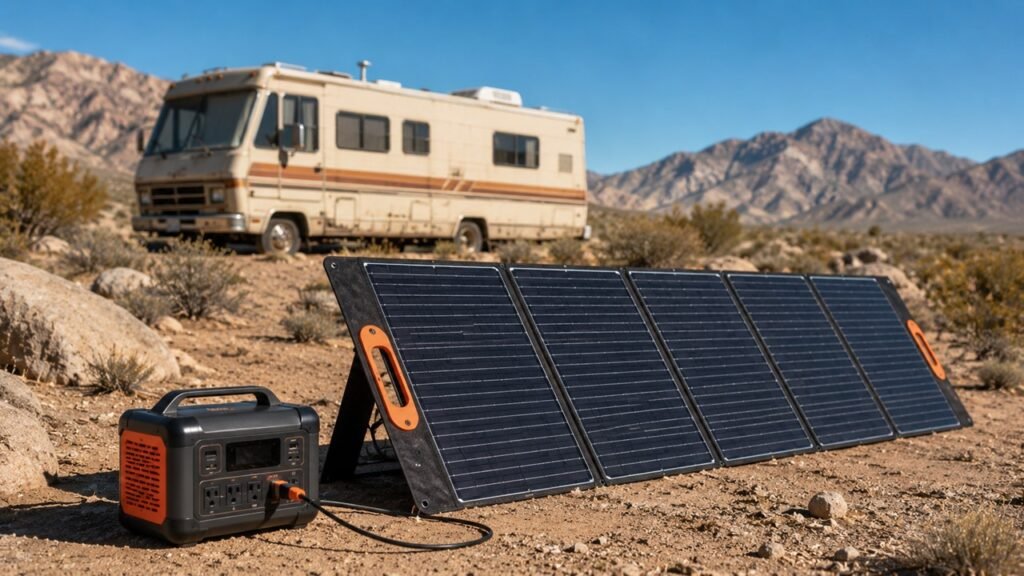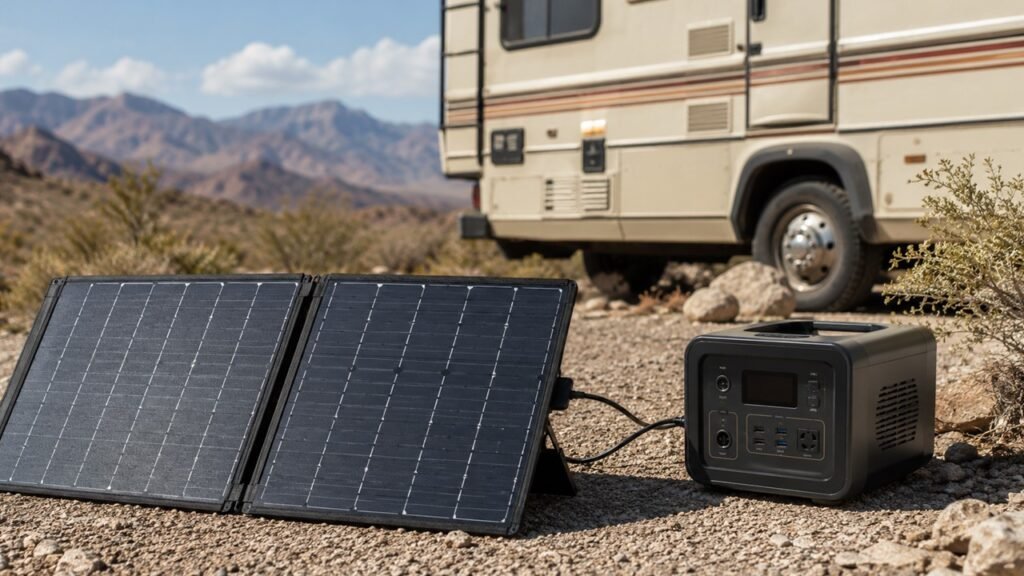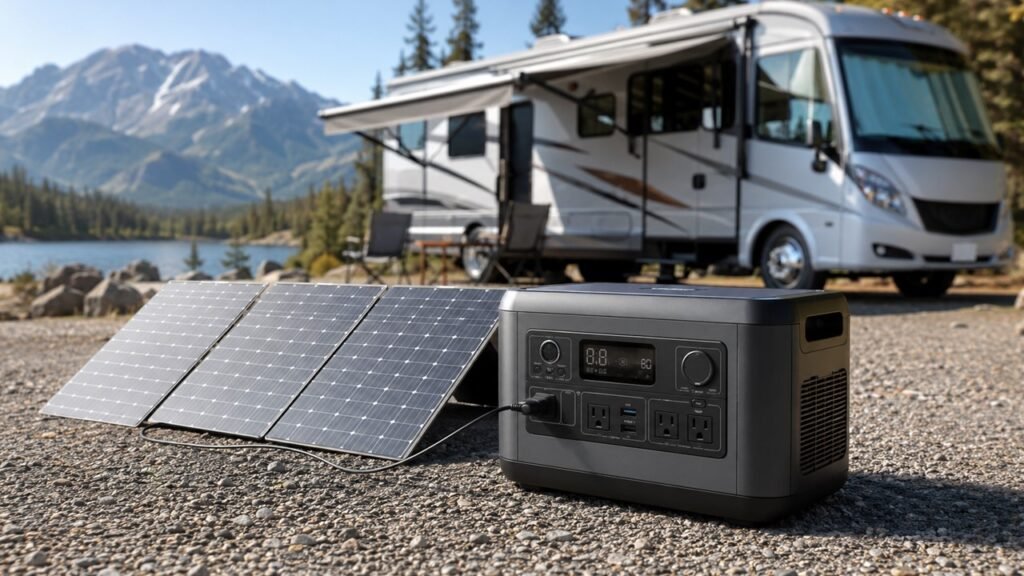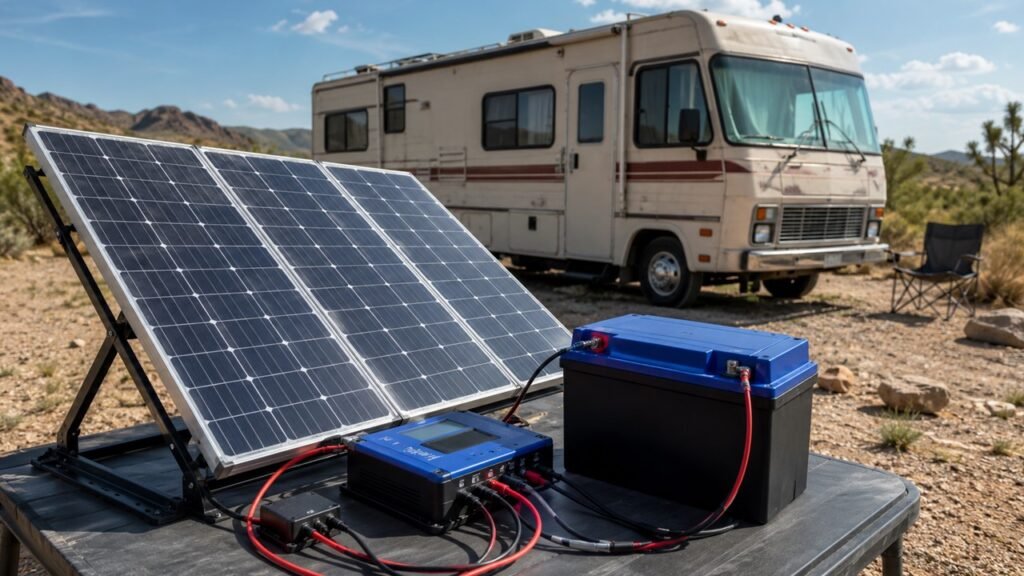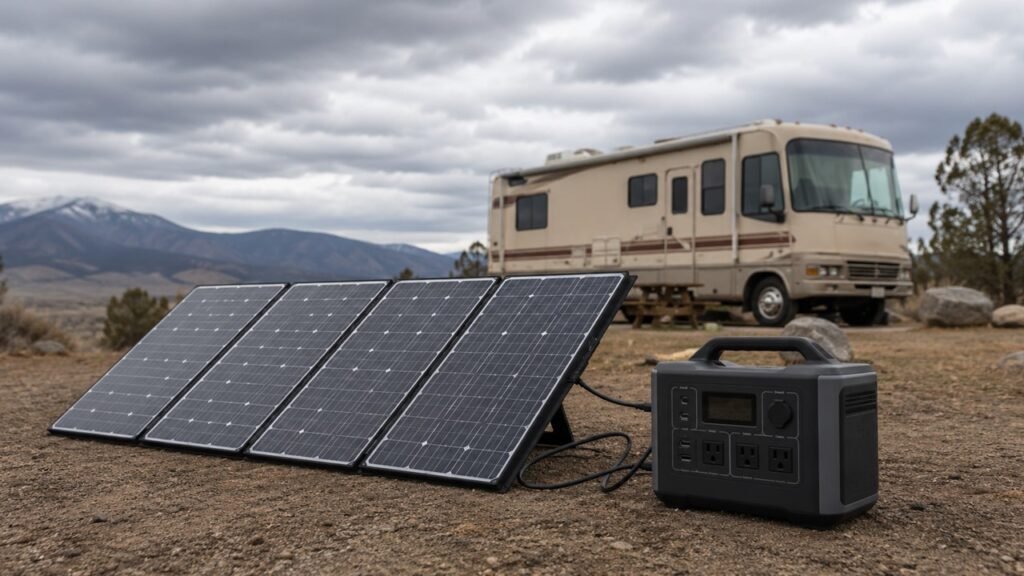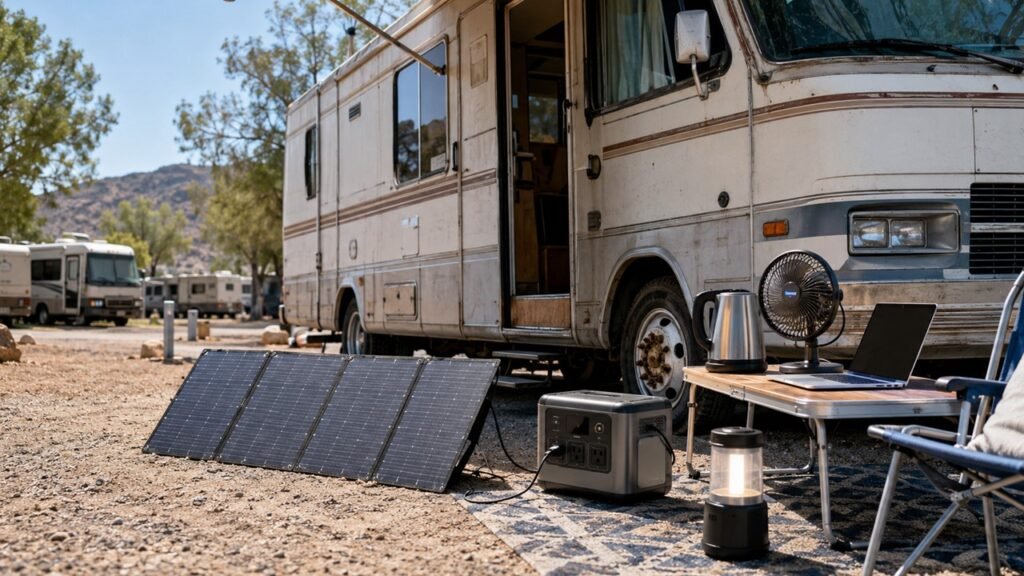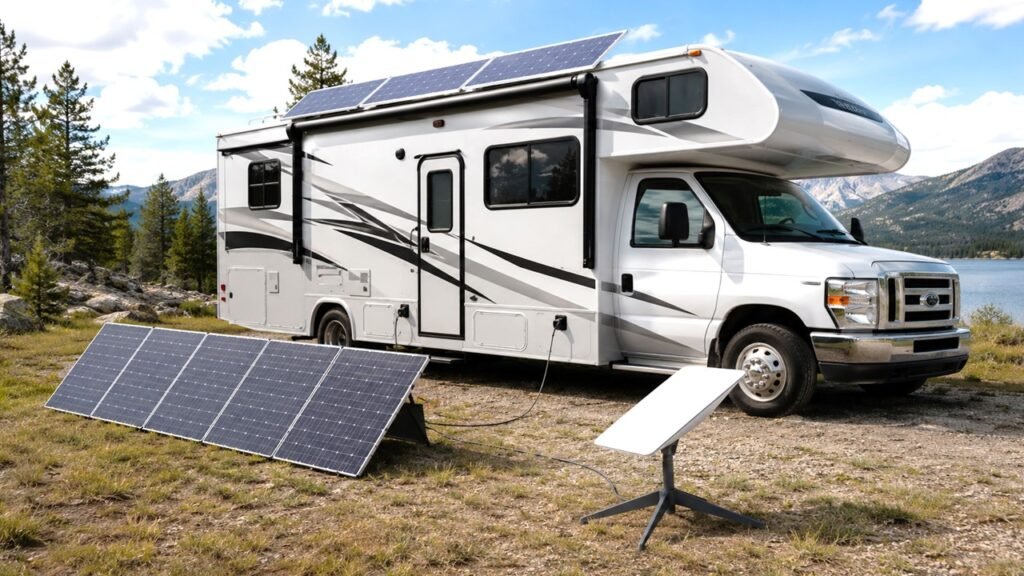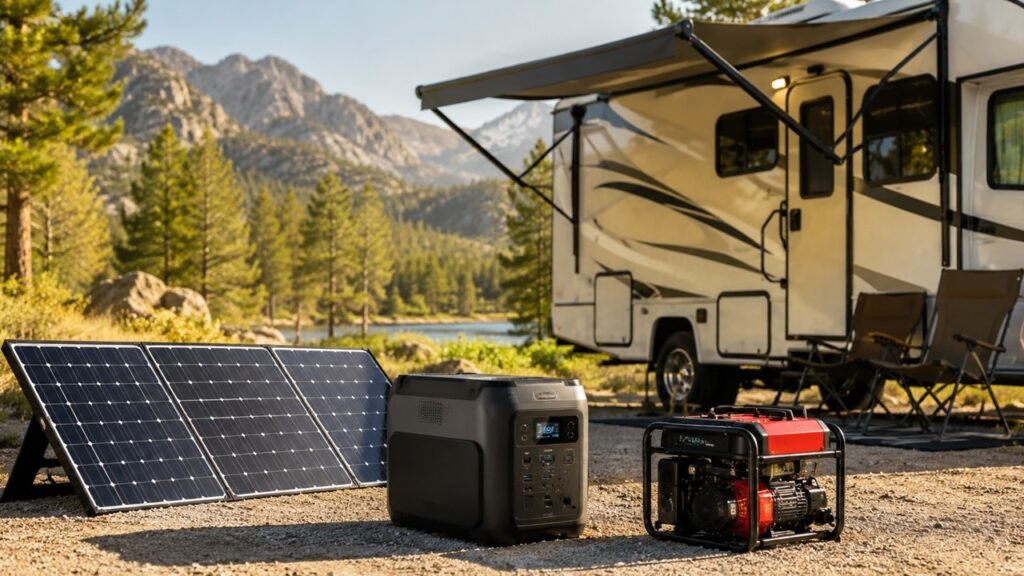
An RV solar generator can replace a gas generator for many RV owners who mostly run lights, fans, phones, laptops, CPAP machines, small appliances, and an RV fridge. It offers quiet, fuel-free power without exhaust fumes or regular engine maintenance.
However, solar may not fully replace gas if you often run an RV air conditioner, microwave, electric heater, or other high-wattage appliances for long periods.
The right choice depends on your daily power use, battery capacity, inverter output, solar panel size, weather, and how long you camp off-grid.
Key Summary
- An RV solar generator can replace a gas generator for lights, device charging, CPAP machines, laptops, TVs, small kitchen appliances, and efficient 12V fridges.
- A solar generator may struggle to replace gas power if you run an RV air conditioner, microwave, electric heater, or induction cooktop for long periods.
- Solar generators are quiet, fuel-free, low-maintenance, and safer for enclosed RV living because they do not produce exhaust while operating.
- Gas generators still offer faster refueling and more dependable high-wattage power during cloudy weather, shaded camping, or emergency backup situations.
- The best replacement depends on battery capacity, inverter wattage, solar panel input, daily watt-hour use, and how many days you camp off-grid.
Can an RV Solar Generator Fully Replace a Gas Generator?
If you’re wondering whether an RV solar generator can fully replace a gas generator, the honest answer is: it depends on how you camp and how much power you use.
For some RV owners, the answer is absolutely yes. If you mainly use essentials like lights, fans, phones, laptops, CPAP machines, small appliances, and your RV fridge, a solar generator can often handle everything you need.
However, if you regularly run high-wattage appliances, things get a little different. Equipment like an RV air conditioner, microwave, electric heater, coffee maker, or induction cooktop can drain a battery much faster than basic camping gear. In those situations, a solar generator may only replace part of what a gas generator does.
That’s why many RVers prefer a solar-first, gas-backup approach. Your solar generator takes care of quiet everyday power, while a gas generator is there when you need extended air conditioner runtime, extra power during cloudy weather, or emergency charging.
Here’s a simple way to think about it:
- If your power needs are low to moderate, a solar generator can often replace a gas generator completely.
- If you occasionally use power-hungry appliances, a solar generator may replace most of your generator use.
- If you need long periods of high-wattage power on demand, a gas generator can still be helpful.
- If you spend a lot of time boondocking, combining solar and gas gives you the most flexibility.
What Is an RV Solar Generator?
An RV solar generator is basically a portable power station that stores electricity and can recharge from solar panels. Most units combine a battery, inverter, charge controller, and multiple outlets into one convenient package.
The battery stores energy for later use. The inverter converts that stored DC power into AC power so you can run many of the same appliances and devices you use at home. The charge controller manages incoming solar energy and helps charge the battery safely and efficiently.
One thing that often confuses people is the term “solar generator.” Unlike a gas generator, it doesn’t actually generate electricity on its own. Instead, it stores energy and can recharge from solar panels, a wall outlet, your vehicle, or even an EV charger on some models.
For RV travel, the biggest advantage is simple: you get power without fuel, exhaust fumes, or constant engine noise.
How Does a Gas Generator Work in an RV?
A gas generator works in an RV by burning fuel to power an engine. That engine creates mechanical energy, which is then converted into electricity for your RV outlets and appliances.
One reason gas generators remain popular is that they can provide continuous power as long as you have fuel available. That makes them useful for running high-demand appliances, powering an air conditioner for long periods, or serving as emergency backup power.
The tradeoff is maintenance. You’ll need to keep up with fuel, oil changes, air filter cleaning, spark plug inspections, and other routine service. Gas generators also create noise and exhaust while they’re running.
And here’s an important safety reminder: never use a gas generator inside an RV, tent, garage, or any enclosed space. It produces carbon monoxide and must always be operated outdoors, away from windows, doors, and vents.
RV Solar Generator vs Gas Generator: Quick Comparison
When you compare the two, an RV solar generator shines when you want quiet, clean, low-maintenance power. A gas generator still has the advantage when you need quick refueling and extended high-wattage output. For many RV owners, solar handles everyday essentials, while a gas generator serves as a backup for heavy power demands or stretches of bad weather.
| Factor | RV Solar Generator | Gas Generator |
| Power Source | Battery, solar panels, wall charging, or vehicle charging | Gasoline, propane, or diesel |
| Noise Level | Very quiet | Loud during operation |
| Fuel Need | No fuel needed when using solar | Needs fuel to run |
| Indoor Use | Power station can be used inside the RV | Never safe indoors |
| Exhaust Fumes | No exhaust during use | Produces fumes and carbon monoxide |
| Maintenance | Low maintenance | Needs oil, filters, spark plugs, and servicing |
| Refueling or Recharging | Slower if using solar only | Fast if fuel is available |
| Air Conditioner Use | Possible, but runtime is limited by battery size | Better for longer AC runtime |
| Cloudy Weather | Solar charging becomes weaker | Works normally if fuel is available |
| Campground Comfort | Better for quiet campsites | May be restricted by noise rules |
| Long-Term Cost | Higher upfront cost, lower running cost | Lower upfront cost, ongoing fuel and maintenance cost |
When an RV Solar Generator Can Replace a Gas Generator
An RV solar generator can replace a gas generator when your daily power needs are predictable and not too heavy. If you’re mostly running the basic comforts of RV life, solar can do the job without the noise, fuel smell, or engine maintenance.
This is where solar power makes the most sense. You charge the power station before the trip, top it off with solar panels during the day, and use stored battery power when you need it.
A solar generator can usually replace gas for:
- LED lights
- Roof vent fans
- Phone charging
- Laptop charging
- WiFi routers
- CPAP machines
- Small TVs
- Camera batteries
- Portable fridges
- Efficient 12V RV fridges
- Small kitchen appliances used briefly
If you’re a weekend camper, this switch is even easier. You may leave home with a full battery, use moderate power for two or three days, and recharge with portable solar panels when sunlight is available.
Solar also works well if you camp in quiet places. Many RVers choose solar because they do not want to hear an engine running while they are relaxing outside, sleeping at night, or parked close to other campers.
In simple terms, solar can replace gas when your RV power use is steady, moderate, and easy to calculate.
When a Solar Generator Cannot Fully Replace a Gas Generator
A solar generator cannot fully replace a gas generator when your RV needs more power than the battery can store or the solar panels can refill. This usually happens when you use high-wattage appliances for long periods.
The biggest challenge is the RV air conditioner. A large solar generator may run an AC unit, but the battery can drain quickly. Running an air conditioner for one hour is very different from running it all afternoon.
A solar generator may struggle with:
- RV air conditioners
- Microwaves
- Electric heaters
- Induction cooktops
- Hair dryers
- Toasters
- Coffee makers
- Power tools
- Multiple high-wattage appliances at once
Weather also matters. If you camp under trees, in cloudy weather, or during rainy days, your solar panels may not refill the battery fast enough. A large battery is helpful, but it still needs a dependable way to recharge.
This is where gas still has an advantage. If you have fuel, a gas generator can keep running and refuel quickly. A solar generator needs time, sunlight, and enough panel wattage.
So, if you depend on long AC runtime, electric heating, or heavy cooking appliances, solar may replace most of your gas generator use, but not all of it.
How Much Solar Generator Capacity Do You Need to Replace Gas?
To replace a gas generator, you need to look at battery capacity, not just wattage. The most important number is watt-hours, often written as Wh.
Here is the simple formula:
Watts × Hours Used = Watt-Hours
For example, if your RV fridge uses around 60 watts and runs for 10 total hours in a day, it uses about 600Wh per day.
Here is a practical sizing guide:
| RV Use Case | Daily Power Need | Suggested Battery Capacity | Suggested Solar Input |
| Light Weekend Camping | 500Wh to 1,000Wh per day | 1,000Wh to 2,000Wh | 200W to 400W |
| Regular Off-Grid RV Use | 1,500Wh to 3,000Wh per day | 2,000Wh to 4,000Wh | 400W to 800W |
| Heavy Boondocking | 3,000Wh to 6,000Wh per day | 4,000Wh to 8,000Wh+ | 800W to 1,600W+ |
| AC-Heavy Camping | 5,000Wh+ per day | 6,000Wh to 10,000Wh+ | 1,200W+ or backup power |
For most RV owners, a 2,000Wh to 4,000Wh solar generator is a practical starting point. It can handle lights, fans, charging, a fridge, and short use of small appliances.
If you want to run an air conditioner, you need a much larger setup. You also need enough inverter output to start the AC and enough solar input to recover the battery during the day.
A good rule is simple: size your solar generator around your daily power use, then add extra capacity for cloudy weather, inverter losses, and unexpected appliance use.
Solar Generator Replacement Scenarios: Which RVer Are You?
Not every RVer needs the same power setup. Your camping style decides whether solar can fully replace gas or only reduce how often you use it.
| RVer Type | Can Solar Replace Gas? | Why |
| Weekend Camper | Yes, usually | Short trips and low daily power use make solar practical |
| Minimalist RVer | Yes | Fewer appliances mean lower battery demand |
| National Park Camper | Often yes | Quiet solar power is better for restricted generator areas |
| Part-Time Boondocker | Sometimes | Solar works well if battery and panel size are matched properly |
| Full-Time Boondocker | Partly | Larger daily loads may require a bigger system or backup |
| AC-Heavy Camper | Not fully | Air conditioners drain batteries quickly |
| Cloudy-Weather Camper | Not always | Weak sunlight can slow down solar recharging |
| Emergency Backup User | Hybrid is better | Gas backup helps when sunlight is limited |
If you’re a light or moderate power user, an RV solar generator can probably replace your gas generator most of the time. If you’re a heavy power user, solar can still reduce fuel use, noise, and maintenance, but keeping a backup source makes more sense.
The easiest way to decide is to look at your biggest appliance. If your biggest load is a fridge, fan, laptop, or CPAP machine, solar is usually a strong fit. If your biggest load is an air conditioner or electric heater, you need a larger solar setup or a gas backup.
Pros of Replacing a Gas Generator With an RV Solar Generator
Replacing a gas generator with an RV solar generator makes sense if you want quieter, cleaner, and easier power at the campsite. You still need to size the system correctly, but the everyday experience is much simpler.
Here are the biggest benefits:
- Quiet operation makes camping more peaceful, especially at night or around nearby RVers.
- No fuel is needed when charging from solar panels.
- No exhaust fumes are produced while the power station is running.
- Lower maintenance means no oil changes, spark plugs, fuel filters, or carburetor issues.
- Indoor-friendly power station use makes it easier to run devices inside the RV safely.
- Lower long-term running cost can help frequent campers save on fuel.
- Portable design lets you use the power station inside the RV, outside at camp, or at home during outages.
- Solar charging gives you more independence when camping away from hookups.
The biggest advantage is comfort. You can run your essentials without the constant engine sound, fuel smell, or worry of disturbing other campers.
Cons of Replacing a Gas Generator With an RV Solar Generator
An RV solar generator is not perfect for every camper. It has limits, especially when your power needs are high or the weather does not cooperate.
Here are the main drawbacks:
- Higher upfront cost makes large solar generators more expensive than many gas generators.
- Limited battery capacity means you can run out of power if your daily use is too high.
- Solar charging depends on sunlight, panel angle, weather, and shade.
- Long air conditioner runtime usually needs a large and expensive battery setup.
- Recharging can be slow if your solar panel input is too small.
- Large power stations can be heavy and harder to move around.
- High-wattage appliances can drain the battery quickly.
- Cloudy or rainy camping can make solar less dependable.
The main issue is not whether solar works. It does. The real question is whether your battery and solar panels can keep up with your RV lifestyle.
Should You Go Fully Solar or Keep a Gas Backup?
You should go fully solar if your RV power needs are light, predictable, and easy to recharge with solar panels. You should keep a gas backup if you need long periods of high-wattage power or camp in places where sunlight is unreliable.
Go Fully Solar If
- You mostly run lights, fans, phones, laptops, CPAP machines, and a fridge.
- You take weekend trips or short off-grid stays.
- You rarely use your RV air conditioner away from shore power.
- You camp in sunny areas with good solar exposure.
- You want quiet power without fuel storage.
- You prefer low-maintenance camping gear.
- You have enough battery capacity for at least one full day of use.
For this type of RVer, a solar generator can become your main power source without much stress.
Keep a Gas Backup If
- You run an RV air conditioner for hours.
- You use electric heat in cold weather.
- You cook often with high-wattage electric appliances.
- You camp in cloudy, rainy, or heavily shaded areas.
- You boondock for several days without hookups.
- You need emergency power that does not depend on sunlight.
- You travel with critical medical equipment and need extra backup security.
In these cases, solar can still reduce your fuel use, but it may not replace gas completely.
Choose a Hybrid Setup If
A hybrid setup is often the most practical choice for RVers. You use the solar generator for everyday power and keep a gas generator only for backup.
This setup gives you the best of both sides. Solar handles quiet daily loads like lights, fans, devices, and the fridge. Gas stays available for long AC use, poor weather, or emergency charging.
If you are not sure which route to take, start with solar as your primary power source and keep gas as a backup until you know your real daily power needs.
Safety Differences Between Solar and Gas Generators
Safety is one of the biggest differences between a solar generator and a gas generator. A solar generator stores electricity in a battery. A gas generator burns fuel and produces exhaust.
That difference matters a lot inside an RV.
An RV solar generator does not produce exhaust while running, so the power station can usually be used inside the RV. You still need to keep it dry, avoid overloading it, and follow the manufacturer’s instructions.
A gas generator is different. It should never be used inside an RV, tent, garage, storage bay, or enclosed space. Gas generators produce carbon monoxide, which can be extremely dangerous because you cannot see or smell it.
Follow these basic safety rules:
- Never run a gas generator inside or beside an open RV door.
- Keep gas generators outdoors and away from windows, vents, and doors.
- Use working carbon monoxide alarms inside the RV.
- Do not place a running gas generator under the RV awning.
- Keep fuel away from heat, sparks, and open flames.
- Use properly rated extension cords and RV adapters.
- Do not overload your solar generator or gas generator.
- Keep portable power stations away from rain unless the unit is rated for outdoor exposure.
- Let gas generators cool before refueling.
From a safety standpoint, solar is easier to live with inside an RV. Gas can be safe too, but only when it is used outdoors with proper ventilation and careful fuel handling.
Common Mistakes When Switching From Gas to Solar
Switching from gas to solar is a smart move for many RV owners, but the setup has to match your real power use. Most problems happen when people buy too small, expect too much, or forget about recharging.
Here are the most common mistakes:
- Buying based only on inverter watts instead of battery capacity.
- Forgetting to calculate daily watt-hour use before choosing a solar generator.
- Assuming a solar generator can run an RV air conditioner all day.
- Pairing a large power station with too few solar panels.
- Ignoring cloudy weather, shade, and short winter sunlight.
- Running too many high-wattage appliances at the same time.
- Forgetting that microwaves, heaters, and coffee makers drain batteries quickly.
- Not checking whether the unit has a pure sine wave inverter.
- Ignoring surge watts for appliances with motors or compressors.
- Buying a power station without checking RV plug compatibility.
- Expecting portable solar panels to produce their full rated wattage all day.
- Not keeping a backup option for emergency power needs.
The safest approach is simple: calculate your daily power use first, then choose the battery size, inverter output, and solar panel wattage around that number. Solar works best when it is planned around your actual camping habits, not just the biggest number on the product box.
Final Verdict
Yes, an RV solar generator can replace a gas generator for many RV owners, especially if your power needs are light to moderate. If you mainly run lights, fans, phones, laptops, CPAP machines, an RV fridge, and small appliances, solar can handle most daily camping power without noise, fuel, or exhaust fumes.
However, a solar generator may not fully replace gas if you often use an RV air conditioner, microwave, electric heater, or other high-wattage appliances for long periods. These loads can drain even a large battery quickly, especially when sunlight is weak or your solar panel input is limited.
For most RVers, the smartest choice is solar-first and backup-ready. Use an RV solar generator for quiet everyday power, then keep a gas generator or another backup option for long AC runtime, cloudy weather, and emergency charging.
In the end, solar can replace gas when your system is sized around your real power use. It becomes less reliable when you expect one battery to do the job of unlimited fuel.
Related FAQs
Can an RV solar generator replace a gas generator completely?
Yes, an RV solar generator can completely replace a gas generator for light and moderate power use. It may not fully replace gas if you run an RV air conditioner or other high-wattage appliances for long periods.
What size solar generator do I need for an RV?
Most RV owners should start with at least 2,000Wh of battery capacity for basic off-grid use. Heavy users may need 3,000Wh to 6,000Wh or more, especially if they run larger appliances.
Can a solar generator run an RV air conditioner?
Yes, some large solar generators can run an RV air conditioner. The bigger issue is runtime, because AC units can drain a battery quickly.
Is a solar generator better than a gas generator for camping?
A solar generator is better for quiet camping, low maintenance, and fuel-free power. A gas generator is better for fast refueling and long high-wattage use.
Can I use a solar generator inside my RV?
Yes, the power station part of a solar generator can usually be used inside an RV because it does not produce exhaust. Solar panels should be placed outside where they can receive sunlight.
Do I still need a gas generator if I have solar panels?
You may not need a gas generator if your solar setup covers your daily power use. However, keeping gas backup can be useful for air conditioning, cloudy weather, or emergency situations.
How many solar panels do I need to replace a gas generator?
Many RVers need 400W to 800W of solar panels for regular off-grid use. Heavy boondockers may need 1,000W or more, depending on battery size and daily energy use.
Is an RV solar generator worth it?
An RV solar generator is worth it if you camp often, value quiet power, and want to reduce fuel use. It is less ideal if you need cheap upfront power for frequent air conditioner use.

Daniel Brooks writes about RV living, gear, and travel planning with a focus on everyday usability. His guides break down complex topics into simple advice for real RV owners. He reviews products with long-term use in mind, not marketing hype.